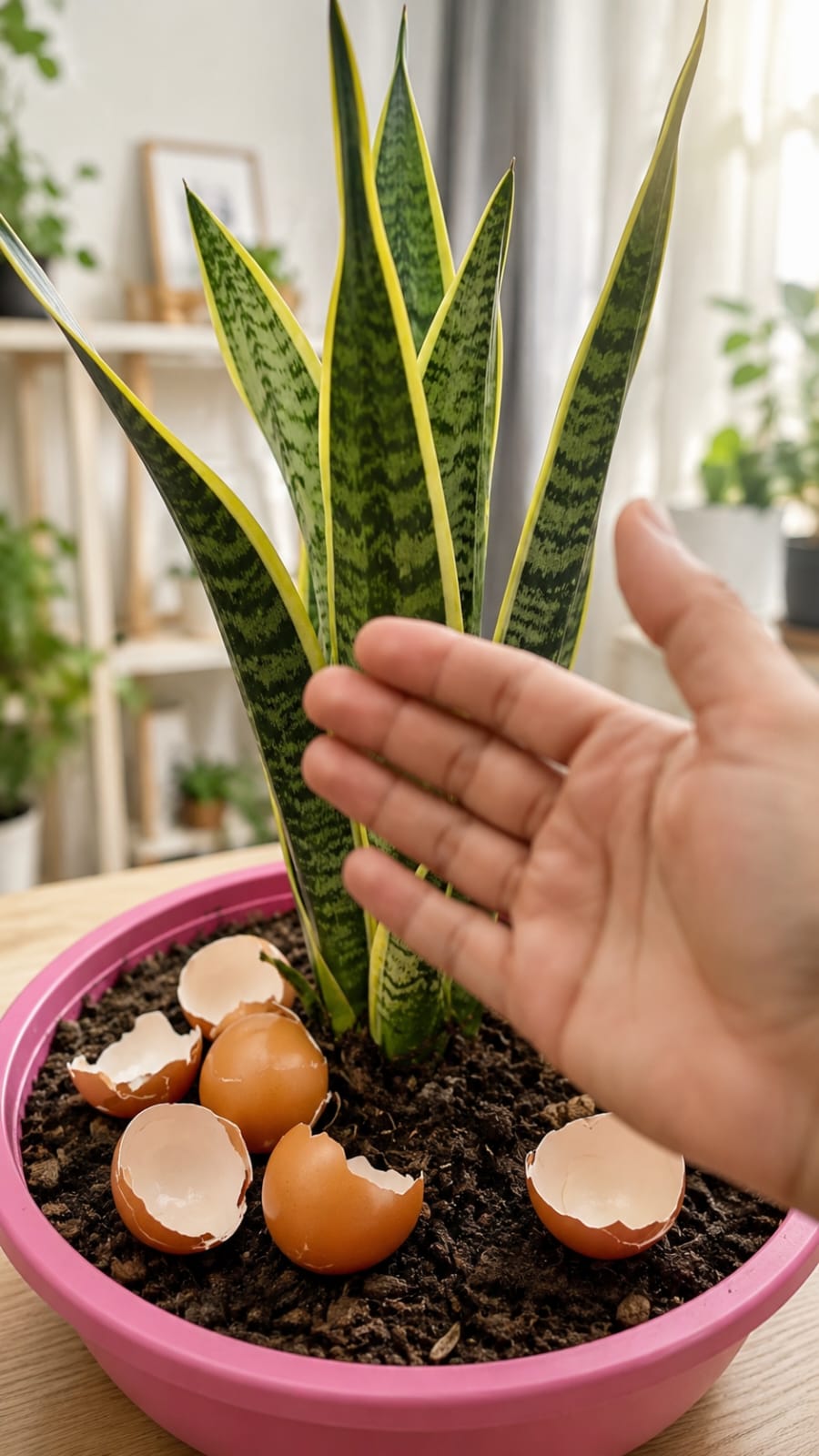
A healthy snake plant can make an indoor room feel cleaner, calmer, and more refined without needing a complicated care routine. Its upright leaves add structure, its yellow-edged or green-banded pattern brings natural contrast, and its low-maintenance nature makes it one of the most practical houseplants for apartments, bedrooms, patios, home offices, entryways, and modern living rooms. When the leaves look firm, the soil surface looks clean, and the plant sits in a well-chosen decorative pot, the whole arrangement can feel more polished and more expensive.
That is why the crushed eggshell powder snake plant trick is so interesting. The idea is not to throw large eggshell pieces on top of the soil and expect a dramatic result. The better version of the trick is to dry the eggshells, crush them into a finer powder, and use a small amount around the soil area as a gentle support step. The goal is to refresh the top layer, support the root zone gradually, and keep the plant looking cleaner and healthier as part of a balanced care routine.
This trick needs to be explained carefully because eggshells are often misunderstood in houseplant care. Eggshells are mostly associated with calcium, but they do not work like an instant fertilizer. Large pieces can sit on the soil for a long time without breaking down quickly, and they may make the pot look messy if they are scattered heavily. Crushed eggshell powder is a more controlled approach because it is lighter, cleaner, and easier to blend into the upper soil surface.
The safest way to understand this method is to treat crushed eggshell powder as a slow, mild soil-support idea, not as a miracle solution. A snake plant still needs a well-draining cactus mix, a suitable pot with drainage, careful watering, bright indirect light, and occasional support from a gentle indoor plant fertilizer when the timing is right. Eggshell powder may help as one small part of the routine, but the full result still depends on the plant’s overall growing conditions.
What the Crushed Eggshell Powder Snake Plant Trick Is
The crushed eggshell powder trick is a dry soil-support method for snake plants. Instead of placing large broken shells on top of the soil, the shells are dried and crushed into a finer powder or very small granules. A small amount is then sprinkled lightly over the soil surface or mixed gently into the top layer of the potting mix.
The purpose is to support the soil area gradually, not to feed the plant instantly. Eggshell powder breaks down slowly, so it should be seen as a long-term support material rather than a fast plant food. This makes it very different from liquid indoor plant fertilizer, succulent fertilizer, or a complete nutrient product. It may support the soil routine, but it should not replace proper feeding if the plant actually needs nutrients.
This trick works best when it is clean, light, and controlled. A thin dusting or small amount of finely crushed eggshell is usually more reasonable than covering the entire pot with large pieces. The goal is to help the soil surface look neater and support the root zone without creating clutter, smell, pests, or drainage problems.
Why Eggshells Should Be Crushed Instead of Left in Large Pieces
Large eggshell pieces may look natural, but they are not the most practical choice for an indoor snake plant pot. Big shell pieces break down slowly, can make the soil surface look untidy, and may not blend well with the potting mix. They can also attract attention for the wrong reason, especially when the plant is used as part of home decor.
Crushed eggshell powder is a cleaner approach. When the shells are dried and crushed finely, they are easier to distribute in a small amount. They can be mixed lightly into the top layer of soil without covering the plant base too heavily. This helps the method feel more controlled and more suitable for an indoor houseplant routine.
The difference matters because snake plants look best when the pot surface is neat. A clean soil surface, a suitable drainage mix, and a decorative pot can make the plant look intentional. Large eggshell chunks can make the same plant look neglected if they are used too heavily. Powder keeps the trick more refined.
Why This Trick Targets the Soil Instead of the Leaves
The crushed eggshell powder trick belongs on the soil surface, not on the leaves. Snake plant leaves are thick, upright, and decorative, but the root zone is where long-term strength begins. If the soil is healthy and the roots are stable, the plant has a better chance of maintaining firm leaves, stronger posture, and cleaner growth over time.
Applying eggshell powder to the soil makes more sense than using it on the leaf surface. The leaves do not need eggshell residue. They can be cleaned gently with a soft damp cloth if dust builds up. The eggshell support belongs near the soil area where it can slowly interact with the potting mix.
This is why the method should stay focused on the base of the plant. Snake plants depend on a stable root environment. Better drainage, better soil texture, and careful watering are far more important than any surface trick applied to the leaves.
What Crushed Eggshell Powder May Help Support
Crushed eggshell powder may help support the soil routine in a mild and gradual way. Because eggshells are commonly associated with calcium, many homeowners use them as a natural soil-support ingredient. However, the important point is that eggshells do not release their benefits instantly. They break down slowly, especially in indoor pots, so the effect is gradual and limited.
Used lightly, eggshell powder may help refresh the upper soil surface and fit into a broader care routine for a healthier snake plant. It may support the idea of stronger, cleaner growth when the plant is already receiving proper light, drainage, and watering. It may also make the grower more attentive to the soil surface, which can be helpful in itself.
Still, it is important not to overclaim. Eggshell powder does not guarantee faster growth, fuller leaves, or instant recovery. It should not be used as the main treatment for root rot, yellowing leaves, soft leaves, or serious plant decline. It works best as a light support step for a plant that is already healthy or mostly healthy.
Why Soil Quality Matters More Than Eggshell Powder Alone
The best soil for snake plants is usually a loose, fast-draining mix that does not stay soggy around the roots. Snake plants store moisture in their leaves and underground rhizomes, so they are more vulnerable to overwatering than many people realize. If the soil stays wet for too long, the plant may develop root rot, yellowing leaves, soft growth, or an unstable base.
A well-draining cactus mix, succulent mix, or houseplant drainage mix is usually a better foundation than heavy standard potting soil. Many homeowners improve drainage with perlite, pumice, coarse sand, bark, or another aerating material. These ingredients help water move through the pot and allow air to reach the root zone.
Crushed eggshell powder may support the soil surface, but it cannot fix a poor potting mix. If the soil is compacted, wet, and slow to dry, the first step should be improving the drainage mix. A good soil structure supports the plant every day, while eggshell powder is only a small occasional addition.
Snake Plant Soil and Drainage Support Table
| Soil or Drainage Choice | Why It Matters | Best Use for Snake Plants |
|---|---|---|
| Well-draining cactus mix | Helps water move through the pot instead of sitting around the roots | Useful as a base mix for most indoor snake plants |
| Houseplant drainage mix | Improves airflow and reduces heavy soil compaction | Helpful when regular potting soil stays wet too long |
| Perlite or pumice | Adds air pockets and helps prevent soggy root conditions | Good for improving drainage in decorative indoor pots |
| Coarse sand or bark | Creates a chunkier texture and supports faster drying | Useful in small amounts for a looser snake plant blend |
| Pot with drainage holes | Allows extra water to escape after watering | Essential for reducing root rot risk |
| Crushed eggshell powder | May offer slow soil-surface support when used lightly | Best as a small occasional addition, not a complete fertilizer |
How to Prepare Eggshell Powder More Safely
The safer version of this trick starts with clean eggshells. The shells should be rinsed well so no egg residue remains. After rinsing, they should be dried completely. Dry shells are easier to crush, easier to store, and less likely to create odor or attract pests.
Once the shells are dry, they can be crushed into a fine powder or very small pieces. A finer texture is usually better for indoor pots because it blends more neatly with the soil surface. Large shell pieces are less attractive, slower to break down, and easier to overuse.
Only a small amount should be used. A light sprinkle over the soil surface or a gentle mix into the top layer is enough. The powder should not be piled heavily against the base of the plant. Snake plants need airflow around the crown and upper soil area, so any soil-support material should be applied with restraint.
How to Use the Crushed Eggshell Powder Trick More Safely
The safest way to use crushed eggshell powder is to begin with the condition of the plant. The snake plant should have firm leaves, stable upright growth, and no strong signs of root rot. The potting mix should be loose and well-draining. The pot should have drainage holes or a removable inner pot that allows excess water to escape.
The eggshell powder should be sprinkled lightly over the soil surface or mixed gently into the upper layer. The amount should be modest. The goal is to support the soil gradually, not to create a thick white crust or bury the plant base under powder. After applying it, the normal watering routine should continue carefully.
This trick should not be repeated too often. Because eggshells break down slowly, frequent application is usually unnecessary. A small amount used occasionally is more reasonable than adding more every week. Snake plants usually benefit more from stable watering, good drainage, and proper light than from repeated soil additives.
When This Trick Makes the Most Sense
The crushed eggshell powder trick makes the most sense when the snake plant is already stable and the grower wants to support the soil routine gently. It may fit well when the plant is healthy, the leaves are firm, the potting mix drains well, and the plant is receiving enough light to maintain steady growth.
It is less suitable when the plant is struggling with soft leaves, soggy soil, root rot, or heavy yellowing caused by overwatering. In those cases, adding eggshell powder is not the solution. The better first step is to check the roots, improve the soil mix, adjust watering, and make sure the pot drains properly.
This method also works best as a light maintenance step rather than an emergency rescue treatment. If the snake plant is already in poor condition, the plant needs corrected care conditions before any homemade soil support can make sense.
How Indoor Plant Fertilizer Fits Into the Routine
A snake plant does not need heavy feeding, but a gentle indoor plant fertilizer can support stronger growth when used correctly. During active growth, a diluted fertilizer may help the plant maintain firm leaves, better color, and a fuller upright shape. However, feeding should stay light because snake plants are slow, steady growers and do not usually need aggressive nutrition.
A succulent fertilizer or balanced indoor plant fertilizer may be useful when the plant is healthy, growing in good light, and planted in a proper drainage mix. It should not be used heavily on a stressed plant. If the leaves are soft, yellow, or collapsing, the first step is to check the roots and watering routine, not to add more fertilizer.
Crushed eggshell powder should not automatically replace fertilizer. Eggshells are not a complete indoor plant fertilizer. They may add slow mineral-style support, but they do not provide a full nutrient balance. If a homeowner wants to support long-term growth, proper soil, correct light, and careful fertilizer use are usually more reliable than eggshell powder alone.
Snake Plant Fertilizer and Root Support Table
| Support Option | What It May Help With | Important Caution |
|---|---|---|
| Gentle indoor plant fertilizer | May support active growth, stronger leaves, and better color | Use lightly and avoid feeding a stressed or waterlogged plant |
| Succulent or cactus fertilizer | Can fit the lower-feeding needs of many snake plants | Follow label directions and avoid overuse |
| Crushed eggshell powder | May support the soil surface gradually | Does not replace a complete fertilizer |
| Slow-release plant food | Can provide gradual nutrient support over time | Use only when the plant is healthy and the soil drains well |
| Fresh potting mix | Improves the root environment and helps reduce stale soil problems | Repot carefully and avoid overwatering after repotting |
| Clean watering routine | Supports steady root moisture without flooding | Do not water on a fixed schedule if the soil is still wet |
Why Eggshell Powder Should Not Be Used as a Root Rot Treatment
Root rot is one of the most serious snake plant problems, and crushed eggshell powder is not a root rot treatment. Root rot usually happens when the soil stays wet too long, the pot does not drain properly, or the plant is watered too often. The leaves may become soft, yellow, limp, or unstable when the roots are damaged.
Root rot treatment begins by correcting the root environment. The plant may need to be removed from the pot, the roots inspected, damaged roots trimmed with clean tools, and the plant repotted into a fresh well-draining cactus mix or houseplant drainage mix. Watering should be reduced until the plant stabilizes.
Adding eggshell powder to rotting soil does not solve the main problem. If the roots are already damaged, the priority is fresh soil, drainage, airflow, and careful watering. Eggshell powder may fit into a healthy maintenance routine later, but it should not be used as the main solution for root rot.
Common Snake Plant Problems and Better Support Options
| Problem | Possible Cause | Better Support Choice |
|---|---|---|
| Soft or mushy leaves | Overwatering, poor drainage, cold stress, or root rot | Check the roots, reduce watering, and repot into a well-draining cactus mix if needed |
| Yellowing leaves | Soggy soil, weak light, old soil, or watering stress | Improve drainage, move to brighter indirect light, and avoid repeated soil additives |
| Brown leaf tips | Dry air, inconsistent watering, mineral buildup, or stress | Use clean watering habits and avoid harsh treatments |
| Slow growth | Low light, compact soil, lack of nutrients, or cool temperatures | Improve light, refresh the soil mix, and consider gentle indoor plant fertilizer |
| Root rot | Dense soil, no drainage holes, or watering too often | Remove damaged roots and repot in fresh houseplant drainage mix |
| Messy soil surface | Large shell pieces, old mulch, debris, or compact topsoil | Use a cleaner top layer and apply only finely crushed eggshell powder if desired |
Why Better Drainage Creates Cleaner Snake Plant Growth
Cleaner growth often starts with healthier roots. When a snake plant sits in a mix that drains well, the roots can breathe more easily. This supports firmer leaves, steadier growth, and a more attractive upright shape. When the mix is heavy and wet, the plant may eventually show stress through yellowing, soft leaves, or poor structure.
Better drainage does not mean the plant should be ignored or kept dry forever. It means water should move through the pot instead of sitting around the roots. A houseplant drainage mix with the right texture can help create that balance. This is especially important when any soil-support method is used, including crushed eggshell powder.
If the potting mix is already draining properly, a small dry soil addition is less risky. If the mix is dense and slow to dry, even a natural support material will not fix the main issue. The plant’s root environment should always come first.
Best Pot Choice for Snake Plants
The pot is both a care choice and a design choice. A snake plant looks best when the pot matches the upright structure of the leaves, but the roots also need a practical growing setup. Decorative ceramic pots, terracotta planters, nursery pots, self-watering pots, and cachepots can all work differently depending on drainage, light, and watering habits.
Decorative ceramic pots can create a refined, premium home decor look, especially in living rooms, offices, bedrooms, patios, and entryways. A clean ceramic planter can make variegated snake plant leaves look more modern and expensive. Terracotta pots can help moisture dry more naturally, which may be useful for people who tend to overwater. Plastic nursery pots are practical because they are lightweight and usually drain well.
Self-watering pots should be used carefully with snake plants. They can be helpful for some indoor plants, but if the reservoir keeps the soil too moist, the risk of root rot can increase. A self-watering pot works best only when the soil mix is airy, the light is strong enough, and the grower understands how slowly snake plants use water indoors.
Continue to Page 2
Continue to page 2 for more details about this article and the key points many readers miss on the first page.