Snake plants are some of the most reliable and adaptable indoor plants you can grow. Their tall, upright leaves and striking patterns make them a popular choice for modern living rooms, offices, entryways, and simple minimalist spaces. Since they are known for being easy to care for, many plant lovers are always looking for gentle ways to help them grow stronger and look healthier.
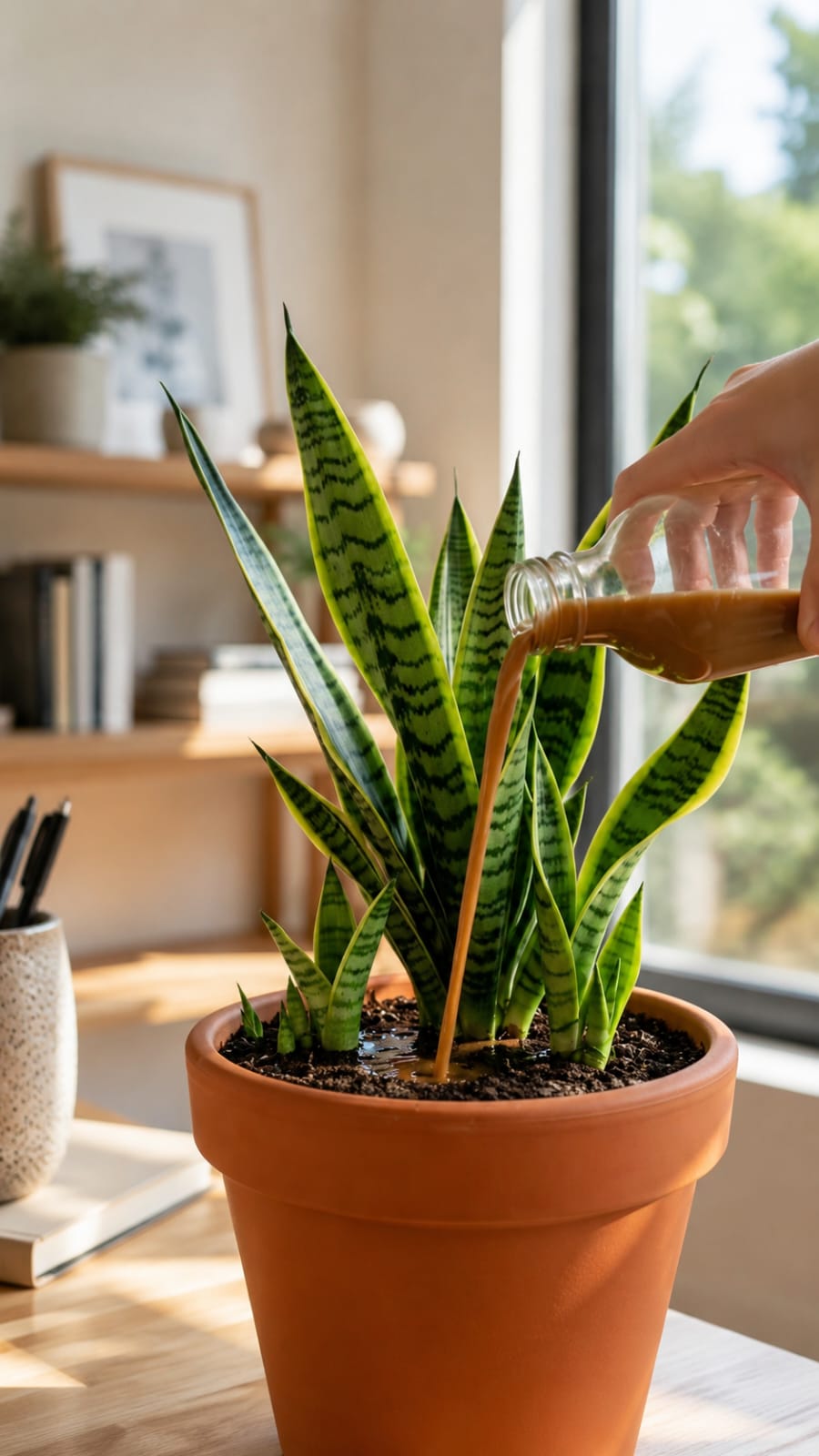
Lately, some indoor gardeners have been applying dark natural liquids lightly to the soil around snake plants. These mixtures are usually diluted organic solutions that may help support the soil, provide mild nutrients, and encourage overall plant vitality.
When used in small amounts and as part of a balanced care routine, they can be a helpful addition to regular snake plant care.
What Is the Dark Liquid Used on Snake Plants?
The dark liquid usually refers to a mild natural feeding solution that has been diluted with water before being poured into the soil.
Common examples include diluted compost tea, weak coffee-water mixtures, organic liquid plant food, and diluted natural soil conditioners.
These solutions should always be used sparingly, because snake plant roots do not respond well to heavy feeding or overly wet soil.
Why Snake Plants May Respond Well to Gentle Liquid Feeding
Snake plants are slow-growing plants, and they do not need strong fertilizer. However, a mild nutrient boost from time to time may help support steady growth when the plant is already in good conditions.
Gardeners usually use these liquids to support healthy soil activity, add small amounts of nutrients, encourage stronger root development, and help maintain balanced soil conditions.
Since snake plants naturally store water in their thick leaves, they should only receive light feeding during their active growing season.
How Gardeners Usually Apply the Dark Liquid
Most plant owners pour the diluted mixture directly onto the soil, close to the base of the plant.
A simple method is to mix the natural liquid with enough water, pour a small amount around the plant base, avoid heavy soaking, and use it only occasionally during warmer growing months.
Too much liquid fertilizer or too much moisture can stress the roots, so careful use is very important.
Common Mistakes When Caring for Snake Plants
Snake plants are strong, but they can still suffer when their basic needs are ignored.
Common mistakes include watering too often, using too much fertilizer, keeping the plant in a pot with poor drainage, planting it in dense moisture-holding soil, and placing it in extremely dark corners.
Snake plants usually do best in a fast-draining soil mix and should be watered only when the soil has had time to dry.
Best Growing Conditions for Snake Plants
For healthier growth, snake plants usually prefer bright indirect light, a well-draining cactus or succulent soil mix, infrequent watering, warm indoor temperatures, and light seasonal feeding.
When grown in the right conditions, mature snake plants may produce new baby shoots around the base and may even bloom occasionally.
Snake Plant Care Overview
| Factor | Best Condition | Why It Matters |
|---|---|---|
| Light | Bright indirect light | Supports steady, healthy growth |
| Soil | Fast-draining mix | Helps prevent root rot |
| Water | Infrequent watering | Protects the roots from staying wet |
| Temperature | Warm indoor climate | Encourages stable growth |
| Feeding | Light seasonal nutrients | Supports strong foliage |
Snake Plant FAQ
1. Why are snake plants popular for indoor spaces?
They are tough, attractive, easy to maintain, and fit many decor styles.
2. How often should I water a snake plant?
Most snake plants need water every two to three weeks, depending on light, temperature, and soil dryness.
3. Can snake plants survive in low light?
Yes, they can tolerate low light, but they usually grow more slowly.
4. Why are my snake plant leaves turning yellow?
Yellow leaves are often linked to overwatering or poor drainage.
5. Do snake plants need fertilizer regularly?
No. They only need very light feeding during the growing season.
6. Can a snake plant flower indoors?
Yes, mature snake plants can sometimes produce fragrant flowers.
7. What soil is best for snake plants?
A cactus or succulent mix with good drainage is usually ideal.
8. When should I repot a snake plant?
Repot every few years or when the roots become crowded.
9. Are snake plants good for beginners?
Yes, they are one of the easiest indoor plants to grow.
10. Do snake plants grow baby plants?
Yes, they often produce small offsets around the base.
Interior Design Appeal of Snake Plants
Snake plants are loved in interior design because of their clean vertical shape and bold architectural leaves.
They are often used in living room corners, home offices, entryways, and minimalist apartments.
Their upright form works beautifully with modern, Scandinavian, contemporary, and simple luxury interiors.
Continue to Page 2
Continue to page 2 for more details about this article and the key points many readers miss on the first page.