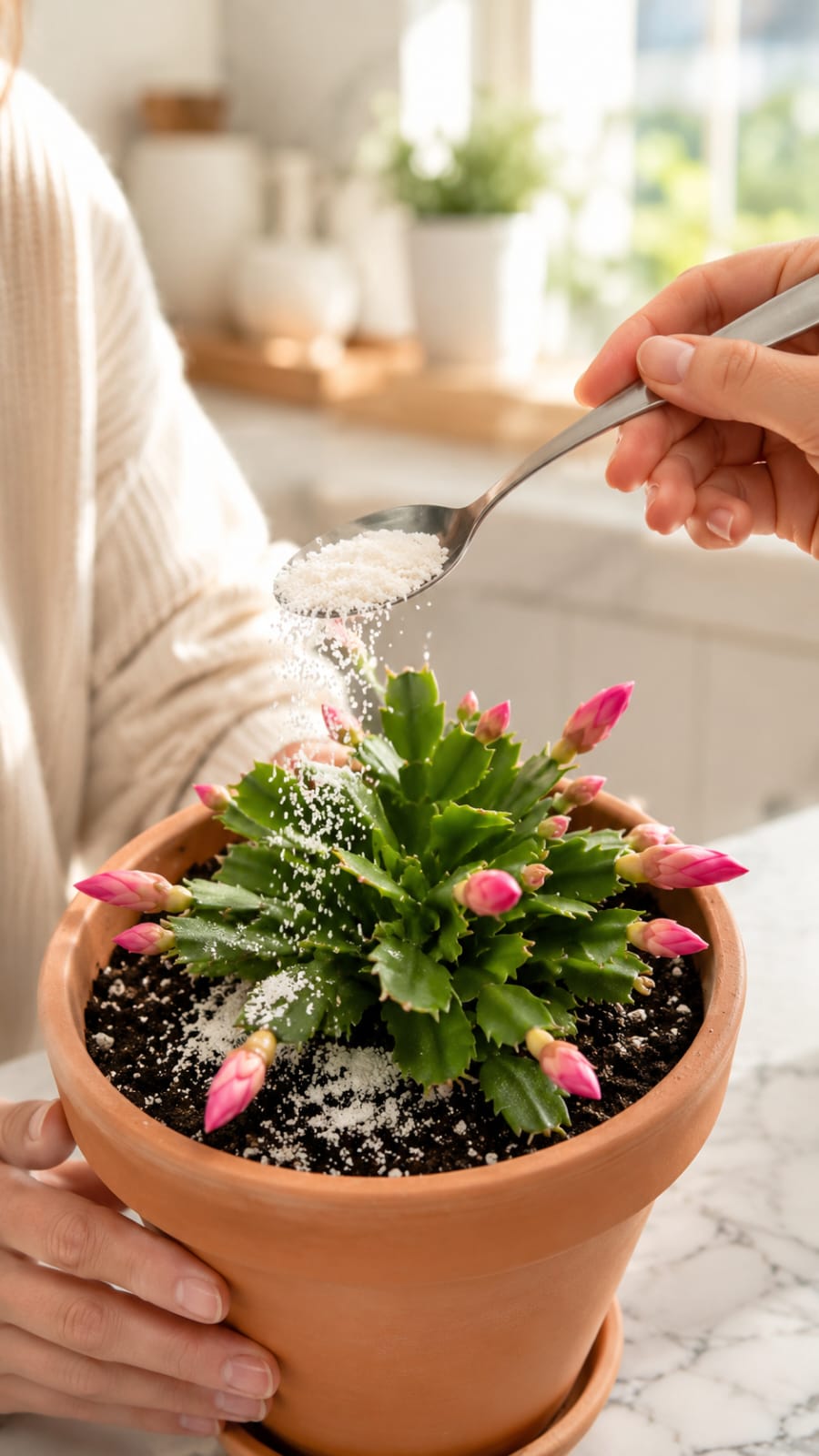
If your Christmas cactus looks weak, limp, wrinkled, or almost beyond saving, do not rush to throw it away too quickly. In many cases, the plant may not be dead at all. It may simply be stressed and struggling because of watering, soil, temperature, or light conditions.
You may notice soft segments, drooping stems, slow growth, no flowers, or a tired appearance that makes the plant look like it is failing. This is when many indoor gardeners try a simple soil-support trick: applying a small amount of white powder to the top layer of the soil.
At first, this method can seem surprising. With the right care routine, the Christmas cactus may slowly begin to look greener, firmer, and healthier. In some cases, it may even return to blooming when the growing conditions become balanced again.
However, it is important to understand the truth. The white powder may help support the plant, but it only works when it is used correctly and when the Christmas cactus is already growing in suitable conditions.
What Is the White Powder Used for Christmas Cactus?
The white powder used around Christmas cactus plants is usually a natural soil-support ingredient. Different gardeners may use different materials depending on the problem they are trying to improve.
The most common types include crushed eggshell powder, baking soda used very lightly, cinnamon powder, or crushed bone meal. Each one works differently, so it is important not to treat every white powder as the same thing.
Crushed eggshell powder is often used as a natural calcium source. Cinnamon powder is commonly used by gardeners because it may help discourage fungal problems around the soil surface. Bone meal contains calcium and phosphorus, which may support root strength and blooming when used carefully. Baking soda is sometimes used in very small amounts for fungal-related concerns, but it should be used with caution because too much can disturb the soil balance.
Why This White Powder May Help a Christmas Cactus
Depending on which powder is used, it may help improve the plant’s root-zone environment. Christmas cactus plants do not usually need heavy feeding, but they can benefit from gentle support when the soil, watering, and light are already correct.
A small amount of the right powder may help support soil health, provide natural minerals, reduce certain fungal issues, encourage stronger root structure, or support future blooming. The key point is that the benefit happens around the roots and soil, not instantly on the leaves or stems.
This means you should not expect overnight results. A stressed Christmas cactus usually recovers slowly. The plant needs time to rebuild strength, absorb moisture properly, and adjust to better growing conditions.
Important Truth Before Using Any White Powder
The white powder is not a miracle treatment. It cannot save a Christmas cactus if the roots are already completely dead, if the potting mix is staying wet for too long, or if the plant is sitting in poor light and unstable temperatures.
This method works best when the roots are still alive, the soil drains well, and the watering routine is balanced. If the potting mix is heavy, soggy, compacted, or smells bad, the powder alone will not solve the problem.
Before using any powder, always check the basic conditions first. A Christmas cactus needs breathable soil, moderate moisture, stable warmth, and bright indirect light to recover properly.
Why Christmas Cactus Plants Struggle Indoors
Christmas cactus plants are popular indoor plants, but they can react quickly when their environment changes. Many problems begin with small care mistakes that build up over time.
Common causes of stress include overwatering, heavy soil, low light, dry indoor air, sudden movement, cold drafts, or placing the plant too close to heat sources. These conditions can make the stems droop, wrinkle, soften, or stop producing flowers.
Because Christmas cactus plants are not desert cacti, they do not like being treated exactly like dry-loving cactus varieties. They prefer a more balanced routine with light moisture, good drainage, and stable indoor conditions.
Ideal Temperature for Christmas Cactus Recovery
Temperature plays a very important role in helping a Christmas cactus recover and bloom. This plant prefers stable indoor conditions rather than sudden heat or cold.
The best temperature range is usually between 15°C and 24°C. Within this range, the plant can recover more comfortably, maintain stronger growth, and prepare for blooming when the season is right.
Temperatures above 28°C can stress the plant, especially if the air is dry or the soil dries too quickly. High heat may also cause flower buds to drop before opening.
Temperatures below 10°C can damage the plant, especially if the soil is wet at the same time. Cold roots and wet soil are a risky combination that can lead to serious stress.
For best results, keep the Christmas cactus in a place where the temperature stays steady. Stability is one of the biggest secrets behind recovery and blooming.
The Best Soil for Reviving a Christmas Cactus
Soil is one of the most important factors in saving a weak Christmas cactus. Even the best powder will not help much if the plant is sitting in the wrong potting mix.
A good soil mix should feel light, airy, and fast-draining. A helpful blend may include regular potting soil mixed with perlite, orchid bark, or a cactus and succulent mix. The goal is to create soil that holds a little moisture but does not stay soggy.
Heavy soil can trap water around the roots for too long. This may lead to root rot, weak stems, yellowing, and poor blooming. If the soil feels dense, compacted, or constantly wet, repotting may be more important than adding powder.
A healthy Christmas cactus needs oxygen around the roots. Good drainage allows the roots to breathe, absorb water properly, and recover from stress more easily.
Watering Balance That Helps Save the Plant
Watering is another major part of Christmas cactus recovery. Many weak plants are not dying because they need more treatment. They are struggling because the watering routine is wrong.
The best method is to water when the top layer of soil begins to dry. The soil should stay lightly moist during active growth, but it should never remain soaked for long periods.
Overwatering can cause root rot, soft stems, and a limp appearance. Underwatering for too long can cause wrinkled segments, dry tips, and slow growth. The goal is balance, not extremes.
Always check the soil before watering. If it still feels wet, wait longer. If it feels dry on top and slightly dry below the surface, the plant may be ready for water.
How to Use the White Powder Properly
To use white powder safely on a Christmas cactus, start with a very small amount. This plant does not need heavy treatment, and too much powder can create more problems than benefits.
Sprinkle a light amount on the top layer of the soil. Gently mix it into the surface without disturbing the roots. After that, water lightly so the material can begin moving into the upper soil layer.
This method should only be used occasionally. A common schedule is once every three to four weeks during active growth, depending on the type of powder and the condition of the plant.
Avoid using large amounts, applying powder every day, or mixing several different powders together without knowing how they interact. Too much mineral material, baking soda, or fertilizer-like powder can damage the root zone.
When in doubt, use less. Christmas cactus plants respond better to gentle, consistent care than aggressive treatment.
Light: The Hidden Trigger for Christmas Cactus Blooms
Light is one of the most important parts of Christmas cactus health. A plant that receives too little light may survive, but it may not grow strongly or produce flowers.
The ideal location is bright indirect light. A spot near a bright window, protected from harsh direct sun, is usually a good choice.
Too much direct sun can scorch the segments or make the plant look stressed. Too little light can lead to weak growth, fewer blooms, and a dull appearance.
If your Christmas cactus is not flowering, light and temperature are often two of the first things to check. The white powder may support the soil, but proper light helps trigger stronger growth and blooming potential.
Christmas Cactus Recovery Table
| Factor | Ideal Condition | Expected Result |
|---|---|---|
| Soil | Light, airy, and well-draining | Supports healthier roots |
| Water | Balanced moisture | Helps prevent stress and rot |
| Temperature | 15°C to 24°C | Encourages stable recovery |
| Light | Bright indirect light | Supports growth and blooming |
| White Powder | Small occasional amount | Provides gentle soil support |
Christmas Cactus FAQ
1. What is the white powder used on Christmas cactus?
It is usually a natural powder such as crushed eggshell, cinnamon, bone meal, or a small amount of baking soda depending on the purpose.
2. Can white powder revive a dying Christmas cactus?
It may help if the roots are still alive and the plant is growing in proper soil, light, and temperature conditions.
3. How often should I use white powder?
In most cases, once every three to four weeks is enough. Overuse can harm the roots or disturb the soil balance.
4. What temperature is best for Christmas cactus?
A stable range between 15°C and 24°C is usually best for recovery, growth, and blooming.
5. Can I use too much white powder?
Yes. Too much powder can stress the roots, change the soil balance, or create buildup on the soil surface.
6. Why is my Christmas cactus not flowering?
Lack of blooms is often linked to poor light, unstable temperature, incorrect watering, or general plant stress.
7. What soil works best for Christmas cactus?
A light, well-draining mix with potting soil, perlite, orchid bark, or cactus mix usually works well.
8. Should I repot a weak Christmas cactus?
If the soil is heavy, soggy, compacted, or smells bad, repotting may be necessary before using any soil-support powder.
9. What is the biggest mistake with Christmas cactus care?
Overwatering is one of the most common mistakes, especially when the plant is grown in dense soil with poor drainage.
10. Is Christmas cactus beginner-friendly?
Yes. It is beginner-friendly when given the right soil, balanced watering, bright indirect light, and stable indoor temperatures.
Christmas Cactus as a Luxury Interior Plant
In modern homes, indoor plants are more than simple decoration. They help create atmosphere, softness, and a sense of natural comfort. A healthy Christmas cactus can be especially beautiful because it combines green foliage with seasonal blooms.
This plant adds soft color, natural texture, and a warm decorative touch to indoor spaces. When placed carefully, it can make a room feel more welcoming and polished.
Christmas cactus plants look beautiful in living rooms, on coffee tables, near bright windows, or in entryway displays. Their soft cascading stems and colorful flowers can create a cozy yet elegant effect.
Indoor Styling for a Modern Premium Look
To make a Christmas cactus look more refined, pair it with the right container and placement. A simple decorative pot can change the entire appearance of the plant.
Ceramic pots, neutral colors, stone-style planters, and soft lighting work especially well. These combinations help the plant blend into modern, Scandinavian, farmhouse, and luxury-inspired interiors.
For a clean premium look, avoid overcrowding the area around the plant. Let the Christmas cactus become a small focal point instead of hiding it among too many decorative items.
Christmas Cactus Styling Table
| Placement | Design Effect | Result |
|---|---|---|
| Living Room | Adds warmth | Makes the space feel inviting |
| Coffee Table | Creates a focal point | Adds elegance and seasonal charm |
| Bright Window Area | Supports plant health | Balances beauty and growth |
Continue to Page 2
Continue to page 2 for more details about this article and the key points many readers miss on the first page.