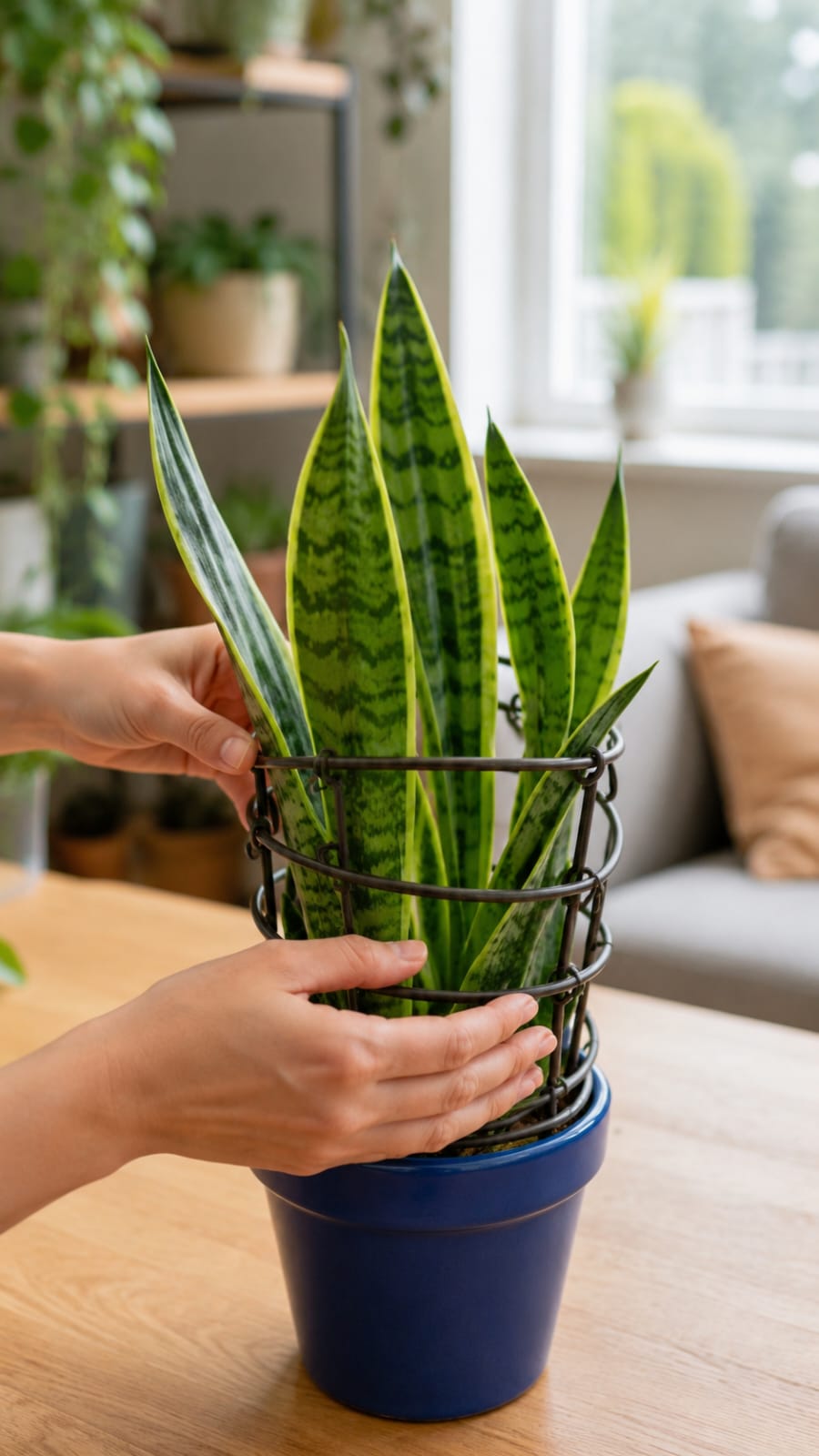
Snake plants are already among the most loved indoor plants for modern homes, but when they are trained into spiral shapes, they become much more than ordinary greenery. A regular snake plant brings structure, height, and elegance to a room. A spiral-trained snake plant adds an artistic, custom-designed look that can make the entire space feel more polished and intentional.
This is why many homeowners are becoming interested in decorative snake plant training. Instead of simply letting the plant grow upright, they use gentle supports, rings, and careful shaping methods to guide the leaves into curved forms. Over time, the plant begins to look less like a standard houseplant and more like a living sculpture.
The result can be striking. A simple potted snake plant can slowly transform into a sculptural indoor decor piece with twisting leaves, graceful movement, and a premium visual effect. It is not just a plant-care project. It is a home-styling idea that combines greenery, design, patience, and creativity.
However, the spiral effect does not happen instantly. Smart homeowners understand that shaping a snake plant requires time, healthy leaves, proper support, and a gentle approach. The plant should never be forced into a dramatic curve too quickly, because the leaves can crack, crease, or become permanently damaged.
The most beautiful spiral snake plants are created slowly. They are guided little by little, supported carefully, and kept healthy throughout the process. When done correctly, the final result looks elegant, natural, and expensive instead of forced or artificial.
Why Snake Plants Are Perfect for Decorative Shaping
Snake plants have a natural advantage when it comes to decorative styling. Their leaves are tall, firm, upright, and architectural. Even without training, they already look clean and sculptural in modern interiors.
This makes them especially useful in living rooms, offices, entryways, minimalist apartments, neutral interiors, and shelf styling. A healthy snake plant can instantly make a space feel more structured, balanced, and refined.
Because the leaves are long and strong, they can sometimes be guided into decorative forms more easily than softer houseplants. This is why spiral designs, trained patterns, and sculptural plant styling have become so appealing for people who want their indoor plants to look more unique.
Why the Spiral Shape Looks More Luxurious
A spiral shape changes the entire feeling of a snake plant. A normal upright snake plant looks modern and neat. A spiral snake plant looks curated, artistic, and more intentional.
The luxury effect comes from the movement of the leaves. Instead of only growing straight upward, the plant appears to twist and flow. This creates rhythm, height, and visual interest.
In interior design, those small details matter. A plant that looks shaped and intentional can feel more valuable than a common plant left in its natural form. The spiral shape gives the impression of custom styling, which helps the plant feel more like decor and less like a simple pot of greenery.
Why Homeowners Love Spiral Snake Plant Styling
Many homeowners enjoy this type of plant project because it feels creative and personal. Instead of only watering the plant and waiting for growth, they become part of the design process.
Training a snake plant into a spiral can feel satisfying because the result develops gradually. Each small adjustment helps create the final shape. Over time, the plant becomes a reflection of patience, care, and personal style.
This kind of project also feels affordable compared with buying expensive decorative objects. A well-shaped snake plant can look like a designer piece without requiring a full room makeover.
When guests notice it, the plant becomes a conversation starter. It immediately looks unusual, creative, and carefully maintained.
How Spiral Snake Plant Training Works
The spiral look usually comes from slow guided shaping. Snake plant leaves do not naturally grow into tight spiral patterns. Instead, the grower uses supports to gently guide the leaves into a curved position over time.
Common tools may include support rings, soft plant ties, clips, flexible frames, or shaping forms. These tools help hold the leaves in place while the plant gradually adapts.
The most important word is gentle. The leaves should be guided, not forced. If the plant is bent too quickly, the leaves may develop cracks, scars, stress marks, or sharp unnatural bends.
A careful method usually begins by choosing healthy upright leaves, placing a support structure around the plant, gently positioning the leaves along the support, securing them with soft ties, and making small adjustments over time.
The finished spiral is the result of patience. A clean sculptural shape is not created in one day.
Why Mature Leaves Are Better for Spiral Training
Not every snake plant is ready for shaping. A small, weak, or unhealthy plant is not the best choice for dramatic training.
The best candidates usually have leaves that are long, firm, mature, healthy, and free from major damage. Strong leaves are more likely to hold a trained form without bending awkwardly or breaking.
If the leaves are too young, soft, or weak, they may not respond well to shaping. If the plant is already stressed from poor soil, overwatering, or low light, decorative training can make the problem worse.
This is why plant health should always come before design. A spiral snake plant only looks luxurious when the plant itself is strong enough to support the shape.
Why Gradual Training Creates Better Results
The secret to an elegant spiral snake plant is slow progress. Many people make the mistake of trying to create the final shape too quickly.
Fast bending can cause cracks, folds, weak spots, or an unnatural look. Instead of appearing sculptural and refined, the plant may look damaged or stressed.
Gradual training allows the leaves to adjust more safely. Small movements over time are much better than one aggressive bend. This helps the final shape look smoother, healthier, and more natural.
A beautiful spiral snake plant should still look alive and graceful. The goal is not to force the plant into a perfect artificial curl. The goal is to guide its natural structure into a more decorative form.
Why the Support Structure Matters
The rings and supports used during training are not just accessories. They create the framework for the entire design.
A good support system should be stable, smooth, gentle on the leaves, easy to adjust, and strong enough to hold the shape without squeezing the plant.
Rough ties, sharp rings, or unstable frames can damage the leaves or make the final result look messy. Soft plant ties and smooth supports are usually better because they reduce the risk of scars and pressure marks.
The support should help the plant, not fight against it. When the framework is balanced, the spiral shape looks cleaner and more intentional.
Why the Final Result Looks Like Living Sculpture
Once the leaves begin to hold their spiral form, the snake plant becomes more than foliage. It starts to look like a living sculpture.
This happens because the eye begins to notice repeated curves, symmetry, height, and movement. Instead of seeing random plant growth, the viewer sees design.
That is why spiral-trained snake plants work so well in decorative interiors. They can function almost like a ceramic art piece, but with the added softness and freshness of a living plant.
This balance between nature and sculpture is what makes the look feel so premium.
Why Good Light Still Matters
A trained snake plant still needs proper care. The spiral shape does not replace healthy growing conditions.
Bright indirect light helps keep the leaves strong, firm, colorful, and visually attractive. Good light also helps maintain the rich green tones and patterned markings that make snake plants so appealing.
If the plant is kept in very dark conditions, the leaves may become weaker or less vibrant. This can reduce the clean sculptural effect of the spiral design.
For the best appearance, place the plant where it receives enough natural brightness without harsh direct sun that could scorch the leaves.
Why Overwatering Can Ruin the Spiral Look
Even a beautifully trained snake plant can decline if the roots are unhealthy. Overwatering remains one of the biggest problems for snake plants.
When the soil stays wet for too long, the roots may weaken or rot. This can cause the plant to soften, lean, yellow, or lose the firm structure needed to hold a decorative shape.
Strong roots help the plant stay upright, keep the leaves firm, support the trained form, and maintain a cleaner indoor decor appearance.
This is why watering should always be controlled. Let the soil dry properly between watering sessions, and always use a pot with drainage holes.
Why Pot Choice Matters for Decorative Snake Plants
A spiral snake plant needs a pot that supports the overall design. The container is not only functional. It also affects how luxurious the plant looks in the room.
A bold pot color can create contrast, while a neutral ceramic pot can make the display feel calm and high-end. The best choice depends on the room’s style and the color of the leaves.
A good pot for a trained snake plant should have proper drainage, enough weight for stability, a clean shape, and a color that highlights the plant instead of competing with it.
Because a spiral snake plant has more visual movement than a normal plant, the pot should help anchor the design. A weak or lightweight pot may make the display feel unstable or unfinished.
Where Spiral Snake Plants Look Best in the Home
A spiral snake plant works best where it can be seen clearly. Since the shape is the main feature, it should not be hidden in a crowded plant corner.
Good locations include entryways, side tables, home office corners, modern living rooms, minimalist bedrooms, and clean shelf displays.
The plant looks especially strong in simple spaces. When the surrounding area is calm and uncluttered, the spiral shape becomes a true focal point.
This is one reason shaped snake plants are so effective in modern interiors. They add interest without making the room feel busy.
Continue to Page 2
Continue to page 2 for more details about this article and the key points many readers miss on the first page.