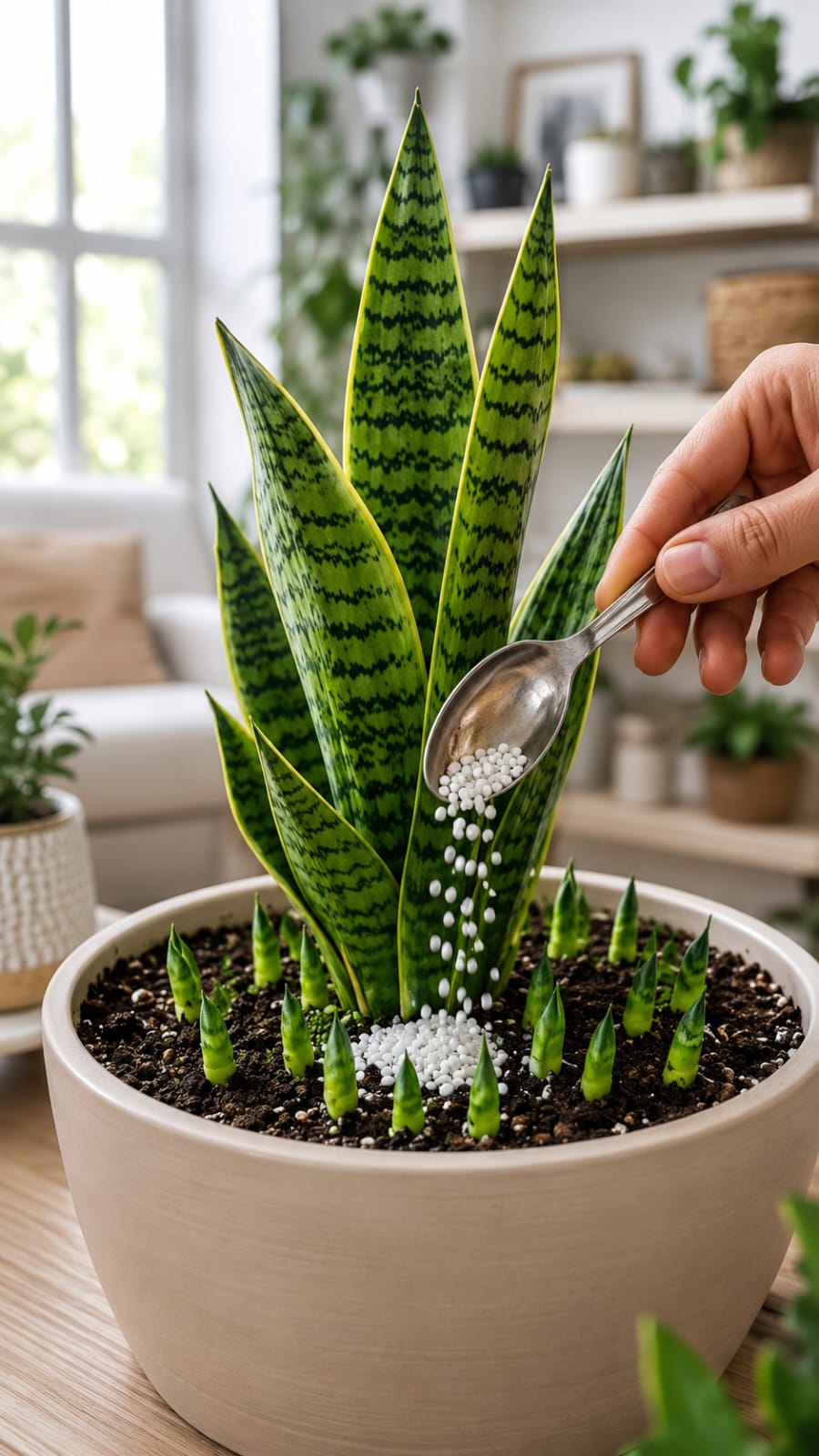
Snake plants, also known as Sansevieria trifasciata, are among the most popular indoor plants in modern homes. Their upright leaves, bold structure, and low-maintenance nature make them a favorite for apartments, offices, bedrooms, and minimalist interiors. A healthy snake plant can instantly make a room feel cleaner, calmer, and more refined.
However, one of the biggest mistakes many plant owners make is using nitrogen incorrectly. A lot of people assume that more fertilizer means faster growth and healthier leaves. In reality, snake plants usually perform best with a much lighter approach.
Too much nitrogen can actually stress the plant instead of helping it. Overfeeding often leads to weak growth, yellow leaves, root problems, and a less attractive appearance overall.
The truth is simple: snake plants thrive when nutrients are used carefully, gently, and only when the plant actually needs them.
Why Nitrogen Matters for Snake Plants
Nitrogen is one of the most important nutrients for plant growth. It supports leaf development, deep green color, energy production, and overall plant strength.
For snake plants, nitrogen helps maintain the firm upright leaves that give the plant its structured and architectural look. Healthy nitrogen levels can support stronger foliage and balanced growth when used properly.
However, snake plants are naturally slow-growing plants. They do not need heavy feeding the way fast-growing outdoor plants often do. This is where many people make mistakes.
Instead of helping the plant, excessive fertilizer can overload the root zone and create unnecessary stress.
The Most Common Nitrogen Mistake
Overfeeding is one of the biggest problems in indoor snake plant care. Many plant owners apply fertilizer too often or use products that are far too strong for a slow-growing indoor plant.
Common mistakes include adding too much nitrogen, feeding too frequently, using concentrated fertilizer without dilution, fertilizing dry soil, or feeding the plant during winter dormancy.
These mistakes can lead to yellow or faded leaves, soft growth, brown edges, root stress from salt buildup, and slowed development.
Instead of creating a healthier snake plant, overfeeding can weaken the roots and damage the clean, structured appearance that makes the plant so attractive indoors.
The Right Way to Use Nitrogen
The safest way to feed a snake plant is through light and controlled nutrition. Snake plants usually respond much better to gentle feeding than aggressive fertilizer routines.
A balanced method starts by using a diluted liquid fertilizer at half strength or even weaker. Feeding should generally happen only during spring and summer when the plant is actively growing.
Before adding fertilizer, lightly water the soil first. This helps reduce stress on the roots and lowers the risk of fertilizer burn.
Only a small amount of fertilizer is needed. In most cases, feeding every four to six weeks during active growth is more than enough for healthy indoor snake plants.
The goal is not explosive growth. The goal is balanced, steady, healthy development.
Best Fertilizer Choices for Snake Plants
Choosing the right fertilizer matters just as much as the amount used. Snake plants usually prefer mild feeding solutions rather than aggressive high-strength formulas.
Balanced liquid fertilizers such as 10-10-10 formulas are commonly used because they provide nutrients in moderate proportions. Some plant owners also use very small amounts of slow-release granules or gentle organic indoor plant nutrients.
Heavy outdoor fertilizers designed for fast-growing garden plants are usually too strong for snake plants. These can easily overload the roots and create salt buildup inside the soil.
When feeding a snake plant, mild and controlled nutrition is usually safer than strong concentrated feeding.
Simple Snake Plant Care Guide
| Factor | Ideal Condition | Why It Matters |
|---|---|---|
| Light | Bright indirect light | Supports stronger and healthier leaves |
| Soil | Well-draining mix | Helps prevent root problems |
| Water | Moderate watering | Protects the roots from rot |
| Fertilizer | Light nitrogen feeding | Supports balanced growth |
| Airflow | Good indoor circulation | Helps maintain healthier conditions |
The Powerful Tip Many Plant Owners Ignore
Nitrogen only works properly when the plant receives enough light. This is one of the most overlooked parts of indoor fertilizing.
If a snake plant sits in very poor lighting, it cannot use nutrients efficiently. Even the best fertilizer routine may fail if the plant does not receive enough brightness.
Without proper light, the leaves may become pale, weak, or soft, and growth may slow dramatically.
This is why fertilizing should always be combined with bright indirect light. Light and nutrients work together.
Signs You May Be Using Nitrogen Incorrectly
Snake plants often show visible signs when fertilizer is being overused.
Yellow leaves may suggest too much fertilizer or poor watering balance. Soft or drooping leaves can sometimes point to overfeeding stress. Brown leaf tips may appear from salt buildup in the soil. Slow or stalled growth can also happen when feeding is poorly timed or lighting conditions are weak.
If these problems appear, stop fertilizing temporarily and flush the soil gently with clean water to help remove excess buildup.
In many cases, reducing fertilizer is more helpful than adding more.
Snake Plant FAQ
1. Do snake plants need fertilizer?
Yes, but only in small amounts. They are slow-growing plants and do not require heavy feeding.
2. How often should snake plants be fertilized?
Usually every four to six weeks during spring and summer growth periods.
3. Can too much nitrogen damage a snake plant?
Yes. Excess fertilizer can stress the roots and weaken the plant.
4. What is the safest fertilizer type?
A diluted balanced fertilizer is usually one of the safest choices.
5. Should snake plants be fertilized during winter?
No. It is usually better to avoid feeding during winter dormancy.
6. Is organic fertilizer safer?
Organic plant nutrients are often gentler and easier to control indoors.
7. Why are my snake plant leaves turning yellow?
Yellow leaves are commonly linked to overwatering or overfeeding.
8. Can nitrogen speed up snake plant growth?
It may support growth slightly, but snake plants naturally grow slowly.
9. Are slow-release fertilizers safe?
Yes, if used in very small amounts and not overapplied.
10. What is the biggest fertilizing mistake?
Using too much fertilizer too often is one of the most common mistakes.
Continue to Page 2
Continue to page 2 for more details about this article and the key points many readers miss on the first page.