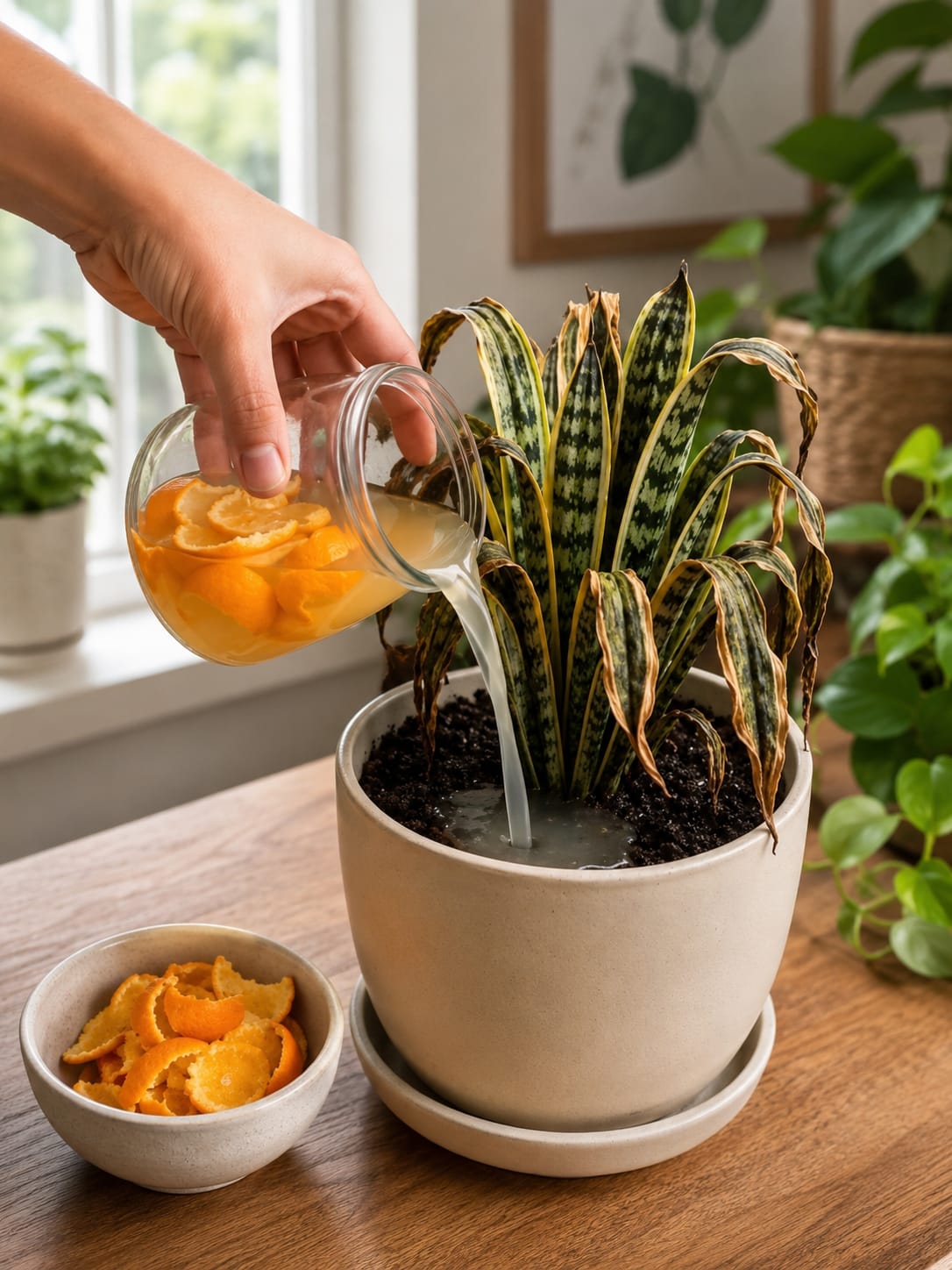
A healthy snake plant can instantly make a room feel cleaner, calmer, and more refined. Its tall upright leaves and structured shape fit perfectly into modern interiors, minimalist decor, and bright indoor spaces. But once a snake plant begins curling, browning, or collapsing, the entire atmosphere changes. The plant no longer feels polished or elegant — it starts making the room look neglected.
That is why videos showing homemade rescue tricks often spread quickly online. One method attracting attention involves pouring orange-peel water or citrus-infused liquid into the soil of a struggling snake plant. The idea looks simple and affordable, leading many people to wonder whether citrus water can actually revive damaged indoor plants.
However, experienced plant owners understand that recovery rarely depends on one homemade liquid alone. A snake plant usually improves because the root system, soil conditions, drainage, watering habits, and lighting are corrected properly. The real solution is almost always bigger than the visual trick itself.
What the Visual Suggests
The image or video typically shows:
- A stressed or damaged snake plant
- Brown, curled, or weakened leaves
- Cloudy citrus-peel water being poured into the soil
- An attempt to revive the plant naturally
The treatment appears to involve orange-peel water or a citrus-based homemade mixture. While it may seem harmless, snake plants are sensitive when their soil stays wet or overloaded with organic residue.
Why Snake Plants Usually Start Declining
Snake plants can develop crispy edges, weak leaves, or collapsing growth for several reasons. Many of these problems look similar at first, which is why homeowners often misdiagnose the issue.
Common causes include:
- Overwatering
- Compacted soil that traps moisture
- Long-term underwatering
- Poor drainage
- Damaged or rotting roots
- Cold drafts or temperature stress
- Very low light combined with excess moisture
- Salt or residue buildup in old soil
In most cases, the root environment is already unhealthy long before the leaves show visible damage.
What Orange-Peel Water Is Supposed to Do
People who use orange-peel water often believe it may:
- Add mild nutrients
- Create a more natural care routine
- Refresh the soil
- Support root recovery
- Act as a homemade fertilizer alternative
But snake plants are not heavy-feeding plants, especially when stressed. Random homemade mixtures can sometimes create more problems than benefits.
Why Root Health Matters More Than Any Homemade Remedy
The real condition of a snake plant depends heavily on its roots. If the roots are damaged, mushy, or suffocating in wet soil, no homemade liquid will truly fix the plant.
Healthy roots allow the plant to:
- Hold leaves upright
- Manage moisture properly
- Push healthy new growth
- Recover after stress
- Maintain stronger structure over time
That is why checking the roots is often the smartest first step when a snake plant starts looking unhealthy.
How to Tell if the Plant Is Too Dry or Too Wet
Signs of Underwatering
- Wrinkled or thinner leaves
- Very dry soil pulling away from the pot
- Leaves bending without becoming mushy
- Dry-looking roots that are not rotten
Signs of Overwatering
- Soft or collapsing leaf bases
- Soil staying damp for long periods
- Sour smell coming from the pot
- Black or mushy roots
- Yellowing before browning
Many people see brown leaf edges and immediately add more liquid, even when excess moisture is already the main problem.
Why Orange-Peel Water Can Sometimes Cause Problems
Snake plants generally prefer simple and stable care routines. Homemade citrus mixtures may introduce:
- Extra organic residue
- Unnecessary acidity
- Moisture imbalance
- Fungus gnat attraction
- Slow soil breakdown
In small diluted amounts, some homeowners may use citrus water without immediate issues. But it is not considered a reliable rescue treatment for damaged snake plants.
What Actually Helps a Weak Snake Plant Recover
The biggest improvements usually happen when homeowners focus on the plant’s growing conditions instead of quick visual fixes.
Helpful recovery steps include:
- Inspecting the root system
- Removing rotted roots if necessary
- Repotting into a fast-draining soil mix
- Reducing watering frequency
- Using a pot with proper drainage holes
- Providing bright indirect light
- Removing badly damaged leaves
If healthy roots remain, snake plants often recover surprisingly well once their environment improves.
Continue to Page 2
Continue to page 2 for more details about this article and the key points many readers miss on the first page.