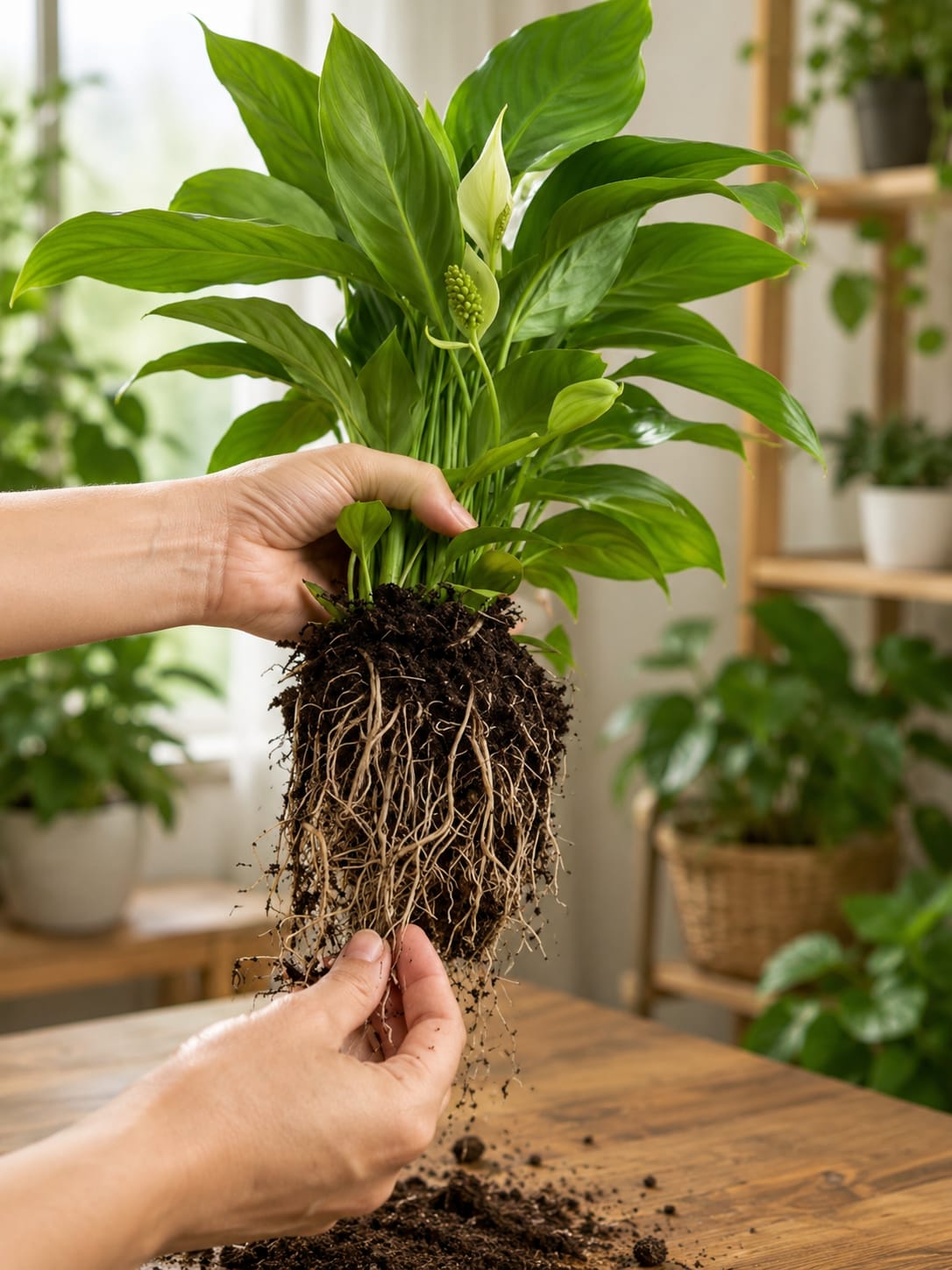
A healthy peace lily instantly changes the atmosphere of a room. Its glossy green leaves, elegant white blooms, and soft tropical shape create a calmer and more refined interior without adding visual clutter. That is one reason peace lilies continue to dominate modern home decor, luxury apartment styling, and minimalist indoor plant collections.
But over time, even a beautiful peace lily can begin struggling in compacted soil. The leaves may droop more frequently, growth can slow down, and the roots often become overcrowded underneath the surface. Instead of replacing the plant completely, many homeowners now prefer resetting the root system and rebuilding the plant from the bottom up.
One increasingly popular method involves removing old soil entirely, rinsing the roots thoroughly, trimming damaged sections, and repotting the plant into a cleaner, more breathable setup. The result is not only healthier root growth, but also a more polished and premium indoor plant display.
Why Root Cleaning Matters So Much for Peace Lilies
Peace lilies rely heavily on healthy roots to maintain their rich green appearance and elegant upright structure. When old soil becomes dense and compacted, airflow around the roots decreases. Moisture can stay trapped too long, which sometimes leads to weak growth, drooping leaves, and stressed root systems.
Completely cleaning the roots before repotting helps:
- Remove compacted old soil
- Improve airflow around the roots
- Reveal damaged or unhealthy sections
- Create a cleaner growing environment
- Support healthier future growth
- Refresh the overall appearance of the plant
This type of root reset has become especially popular among homeowners focused on indoor wellness spaces, premium decor styling, and healthier long-term plant care.
What Healthy Peace Lily Roots Usually Look Like
Strong healthy roots are usually:
- Light cream or pale white in color
- Firm and flexible
- Long and evenly structured
- Free from slime or dark rot
- Well spread instead of heavily compacted
Once the roots are fully visible, it becomes much easier to identify which sections should stay and which parts may need trimming.
Why Some Homeowners Rinse the Roots Completely
Removing all the old soil allows the root system to breathe again and creates a cleaner foundation before repotting. Many homeowners prefer this approach because hidden problems become easier to spot once the roots are exposed.
A full rinse can help remove:
- Old compacted soil residue
- Excess moisture buildup
- Weak tangled root sections
- Decaying organic material
- Salt and mineral accumulation
The cleaner root system often looks healthier and more visually refined after rinsing.
Why Root Trimming Can Improve Growth
Light root trimming is often used to remove damaged or overcrowded sections before repotting. This process may help:
- Encourage cleaner regrowth
- Reduce overcrowding
- Improve airflow between roots
- Remove unhealthy tissue
- Support stronger moisture balance
However, excessive cutting can stress the plant unnecessarily. Gentle cleanup is usually safer than aggressive pruning.
Why Decorative Clay Balls Are Becoming So Popular
Many modern indoor plant setups now include clay pebbles or decorative growing balls around the base of the plant. These materials are popular because they combine plant health with high-end interior styling.
They may help:
- Improve drainage support
- Create airflow around the roots
- Reduce surface compaction
- Keep the setup cleaner visually
- Support semi-hydro growing methods
At the same time, they give the container a more premium and minimalist appearance that fits modern home decor trends.
Why Peace Lilies Work So Well in Luxury Interior Design
Peace lilies remain one of the most popular indoor plants for upscale interiors because they soften a room naturally without overwhelming the design. Their flowing leaves and white blooms work beautifully with:
- Neutral color palettes
- Wood furniture
- Stone textures
- Minimalist apartment decor
- Bright living rooms
- Modern office styling
- Wellness-inspired interiors
A thriving peace lily often makes a space feel:
- Cleaner
- Calmer
- More balanced
- More expensive-looking
- More intentionally designed
Best Conditions After Repotting
Once the plant has been cleaned and repotted, recovery usually improves with:
- Bright indirect light
- Moderate watering
- Good airflow
- Containers with drainage
- Stable indoor temperatures
- Clean breathable growing media
Peace lilies generally prefer consistency instead of extreme dryness or heavy overwatering.
Common Mistakes to Avoid
- Using dense heavy soil again
- Leaving the roots constantly waterlogged
- Cutting too much of the root system
- Using oversized containers
- Ignoring root rot signs
- Keeping the plant in dark low-light corners
Balanced care and clean growing conditions usually produce the best long-term results.
Peace Lily Root-Care Table
| Care Step | Purpose | Benefit |
|---|---|---|
| Removing old soil | Expose root system | Helps identify hidden problems |
| Rinsing the roots | Clean compacted buildup | Improves airflow and freshness |
| Trimming damaged roots | Remove unhealthy sections | Supports stronger regrowth |
| Adding clay pebbles | Improve drainage support | Creates cleaner premium styling |
| Repotting into fresh setup | Reset growing environment | Encourages healthier long-term growth |
Continue to Page 2
Continue to page 2 for more details about this article and the key points many readers miss on the first page.