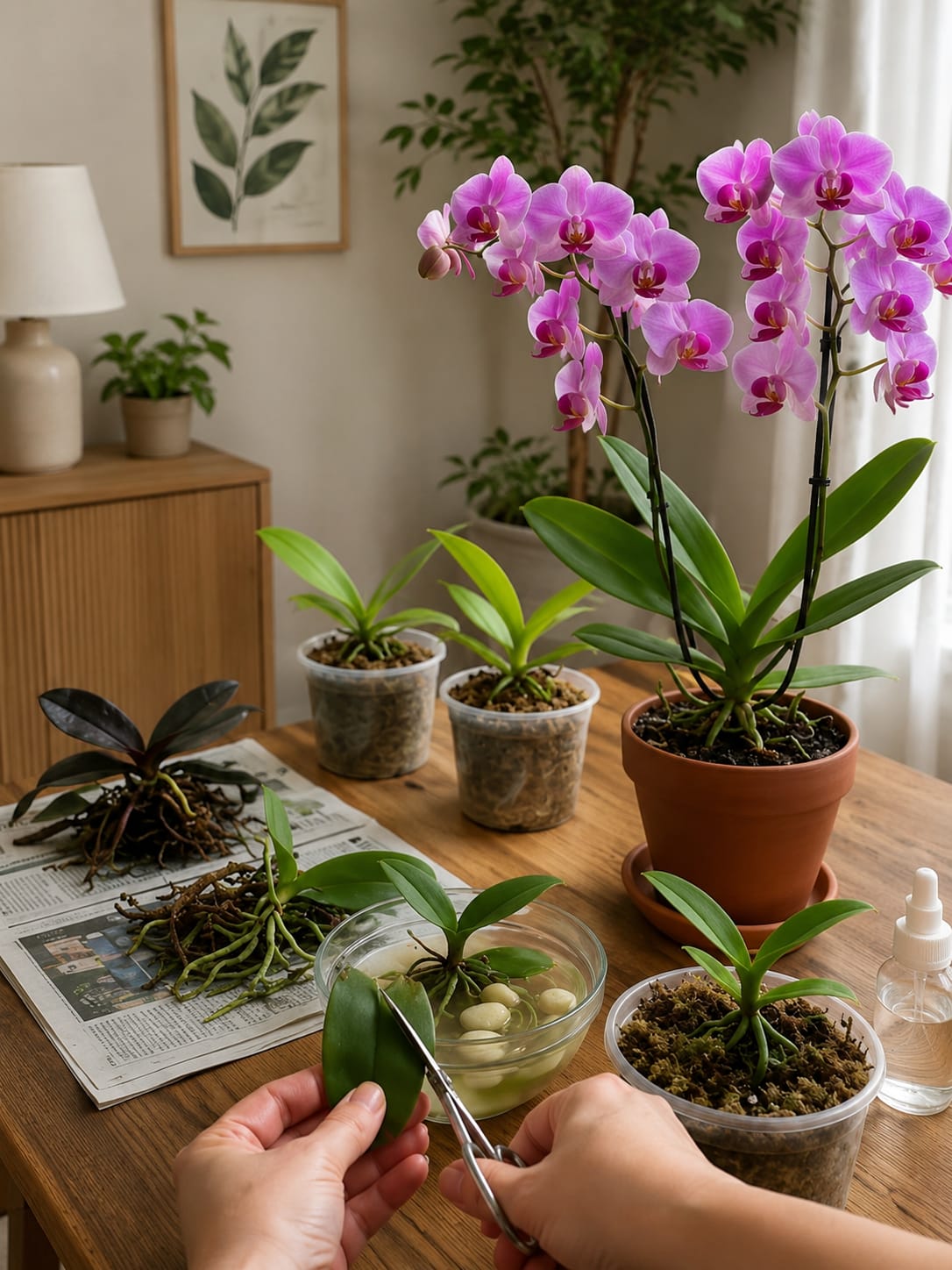
Orchids have a special way of making a home feel elegant. Their long arching flower stems, glossy green leaves, and delicate blooms bring a refined, luxury feeling into a room without needing much extra decor. A single healthy orchid near a bright window can make a shelf, table, or windowsill feel softer, calmer, and more expensive-looking.
But orchids can also feel intimidating, especially when they are small, newly separated, or growing from a young plantlet. A baby orchid with a few leaves and exposed roots looks fragile compared with a mature blooming plant. That is why many homeowners look for gentle ways to support the roots before potting it into bark, moss, or an orchid-friendly growing mix.
One method that often gets attention involves placing a small young orchid into a shallow bowl of water with garlic cloves before potting it. The idea is usually to give the roots a mild natural rinse or soak before the orchid is moved into its new container. The roots are dipped into the liquid, then the plant is placed carefully into an orchid potting setup where it can continue growing.
This method is not about treating the flowers or polishing the leaves. It is focused on the root zone. For orchids, that detail matters more than many beginners realize. Orchid roots are not like the roots of ordinary houseplants. They need airflow, moisture balance, and a clean environment. If the roots are healthy, the orchid has a much better chance of producing strong leaves, stable growth, and beautiful blooms later.
The safest way to understand this method is to see garlic water as a mild root-support step, not a miracle cure. The real success of the orchid still depends on clean roots, proper potting media, bright indirect light, careful watering, humidity balance, and patience. When those parts work together, even a small orchid can slowly develop into a beautiful flowering plant that adds luxury and calm to the home.
What Plant Is Being Treated?
The plant appears to be a young orchid, likely a small orchid plantlet or keiki. A keiki is a baby orchid that grows from the mother plant and can eventually be separated once it has enough leaves and roots to survive on its own.
Young orchids are often recognized by:
- Small firm green leaves
- Thick silvery or green roots
- A compact crown at the base
- New root tips that may look bright green
- A delicate but structured growing habit
Mature orchids, especially Phalaenopsis orchids, are popular indoor plants because they produce long-lasting blooms and fit beautifully into modern home decor. But before a young orchid becomes a full blooming plant, the root system must become strong enough to support healthy growth.
Why Orchid Roots Are So Important
Orchid roots are the foundation of the entire plant. They absorb water, take in nutrients, anchor the plant, and help regulate moisture. When orchid roots are strong, the leaves usually look firm and healthy. When the roots are damaged, the plant may stop growing, wrinkle, yellow, or fail to bloom.
Healthy orchid roots usually look:
- Firm and plump
- Silvery when dry
- Green when wet
- Flexible rather than mushy
- Free from bad smells or slimy decay
Weak roots may become brown, hollow, mushy, or blackened. This is why many orchid care routines begin with the roots instead of the flowers. Beautiful blooms come later. Strong roots come first.
Why Some Homeowners Use Garlic Water for Orchids
Garlic water is often used in homemade plant care because garlic is associated with natural garden support. Some homeowners believe a mild garlic soak may help freshen the root area, discourage certain unwanted problems, or support a cleaner transition before potting.
For orchids, garlic water is usually used with the intention of:
- Refreshing the exposed roots
- Supporting the root zone before potting
- Creating a mild natural soak
- Helping the plant adjust before being placed in orchid media
- Encouraging stronger early root activity
However, this should always be approached carefully. Garlic water should be mild, diluted, and used briefly. Orchids do not need harsh or concentrated homemade treatments. Their roots are sensitive, especially when the plant is young.
Why Garlic Water Should Not Be Treated as a Miracle Fix
It is easy to look at a simple homemade plant trick and expect instant results. But orchids do not work that way. A garlic soak alone will not turn a weak orchid into a blooming plant overnight. It cannot replace proper orchid potting mix, good light, clean watering, or root health.
The real orchid recovery and growth system depends on:
- Healthy roots
- Proper orchid bark or moss
- Bright indirect light
- Careful watering
- Good airflow
- Stable indoor temperatures
- Time for new growth
Garlic water may be part of a gentle preparation step, but it should not be the entire care plan. The strongest orchids are grown through consistency, not one dramatic treatment.
How a Young Orchid Should Be Prepared Before Potting
A young orchid should be handled gently. The roots are often exposed, delicate, and still developing. Before potting, it is important to inspect the plant and make sure it is ready to grow independently.
A young orchid is usually more ready for potting when it has:
- At least a few healthy leaves
- Several roots long enough to support the plant
- Firm root texture
- No mushy crown damage
- No strong rotten smell
- Enough structure to sit upright in the pot
If the plant has only tiny roots or weak leaves, it may need more time before being separated or potted on its own.
How to Use Garlic Water More Safely
If garlic water is used on orchid roots, it should be kept gentle. A strong garlic mixture may irritate roots or leave organic residue behind. The safest approach is a very mild soak followed by clean potting conditions.
A careful method may include:
- Use clean room-temperature water
- Add only a small amount of garlic or a very mild garlic infusion
- Soak only the roots, not the crown deeply
- Keep the soak brief
- Allow roots to drain afterward
- Pot the orchid into clean orchid media
- Avoid repeating the soak too often
The goal is a light root-zone rinse, not a strong bath that overwhelms the plant.
Why the Crown Should Stay Protected
The crown is the central growing point where orchid leaves meet. In many orchids, especially Phalaenopsis orchids, crown health is extremely important. If water sits in the crown too long, it can increase the risk of crown rot.
When soaking or rinsing a young orchid, homeowners should avoid letting water collect deeply in the crown. If water gets trapped between leaves, it is best to gently blot it away.
Protecting the crown helps reduce the risk of:
- Rot
- Leaf base damage
- Soft tissue collapse
- Slow decline after potting
Root support is useful, but crown protection is just as important.
Why Orchid Potting Mix Is Different From Regular Soil
One of the biggest mistakes beginners make is potting orchids into regular houseplant soil. Most common orchids do not want dense soil around their roots. They need airflow.
Orchid potting media usually includes materials such as:
- Orchid bark
- Sphagnum moss
- Perlite
- Charcoal
- Coco chips
- Airy chunky mixes
These materials allow moisture to move through while still giving roots access to oxygen. This is critical because orchid roots can rot if they stay packed in heavy wet soil.
Why Sphagnum Moss Is Often Used Around Young Orchids
Sphagnum moss is often used for young orchids because it holds moisture while staying lighter than regular soil. It can help support delicate roots during the adjustment stage.
Moss can be useful because it:
- Holds gentle moisture
- Supports young roots
- Helps stabilize small plants
- Creates a softer root environment
- Works well in small orchid pots
But moss should not be packed too tightly. Compressed moss can hold too much water and suffocate roots. A light, airy placement is usually better.
Why Orchid Bark Helps Mature Roots
Orchid bark is excellent for airflow and drainage. It works especially well for established orchids because it lets roots breathe and dry between waterings.
Bark helps:
- Prevent root suffocation
- Create air spaces
- Reduce constant wetness
- Support strong root growth
- Make watering easier to control
A mix of bark and a little moss can sometimes provide both moisture retention and airflow, depending on the home environment.
How to Pot a Young Orchid After a Root Soak
After soaking the roots gently, the orchid should be placed into a clean pot with suitable orchid media. The pot should support the plant without burying the crown too deeply.
A good potting process includes:
- Choose a small orchid pot with drainage
- Add a small amount of orchid bark or moss
- Position the roots naturally inside the pot
- Keep the crown above the media surface
- Add media around the roots gently
- Avoid packing the mix too tightly
- Stabilize the plant with a stake if needed
The plant should feel supported but not buried. Airflow around the roots is essential.
Why Clear Orchid Pots Are Helpful
Clear orchid pots are popular because they allow homeowners to see the roots and moisture level. This is especially useful for beginners.
A clear pot helps monitor:
- Root color
- Moisture inside the pot
- New root growth
- Possible rot
- Media breakdown
- Watering needs
Orchid roots often turn green when wet and silver when dry. This visible change can help guide watering more accurately.
Why Drainage Is Essential
Orchids should never sit in stagnant water for long periods. Even when they like humidity and moisture, their roots still need oxygen.
A proper orchid container should:
- Have drainage holes
- Allow water to leave quickly
- Support airflow
- Not hold soggy media for too long
- Be sized appropriately for the root system
A pot that is too large may stay wet too long. A pot that is too small may dry too fast or crowd the roots. Balance is important.
Why Bright Indirect Light Helps Orchids Bloom
Light is one of the biggest factors in orchid blooming. Many orchids survive in lower light, but they usually need bright indirect light to bloom well.
Bright indirect light helps orchids:
- Produce strong leaves
- Support root growth
- Store energy
- Push flower spikes
- Maintain healthier color
- Recover after potting
A windowsill with filtered light can be ideal. Harsh direct afternoon sun may scorch leaves, while a very dark room may prevent blooming.
Why Mature Orchids Look So Luxurious Indoors
A mature orchid in bloom is one of the most elegant indoor plant displays. The flowers rise above the leaves and create a sculptural shape that feels refined and peaceful.
Orchids work beautifully in:
- Luxury living rooms
- Bedroom windowsills
- Minimalist apartments
- Home office shelves
- Bathroom counters with good light
- Dining room centerpieces
- Neutral modern interiors
Pink, white, and purple orchids are especially popular because they add color without making the room feel visually loud.
Why Orchid Flowers Last So Long
One reason orchids are loved in home decor is that their flowers can last for weeks or even months under good conditions. This makes them feel more valuable as decorative plants.
Long-lasting blooms depend on:
- Stable light
- Healthy roots
- Moderate watering
- No extreme drafts
- Good humidity
- A strong plant before flowering
A young orchid will not bloom immediately, but strong early care increases the chances of beautiful flowers later.
Why Humidity Matters for Orchids
Many orchids enjoy moderate humidity. Indoor air can become dry, especially with heating or air conditioning. Dry air may cause roots and leaves to lose moisture faster.
Ways to support humidity include:
- Grouping plants together
- Using a humidity tray
- Keeping orchids away from hot vents
- Using a humidifier if needed
- Choosing a bright bathroom if light is good
Humidity helps, but it should not be confused with keeping roots constantly wet. Orchids need moisture and airflow together.
Continue to Page 2
Continue to page 2 for more details about this article and the key points many readers miss on the first page.