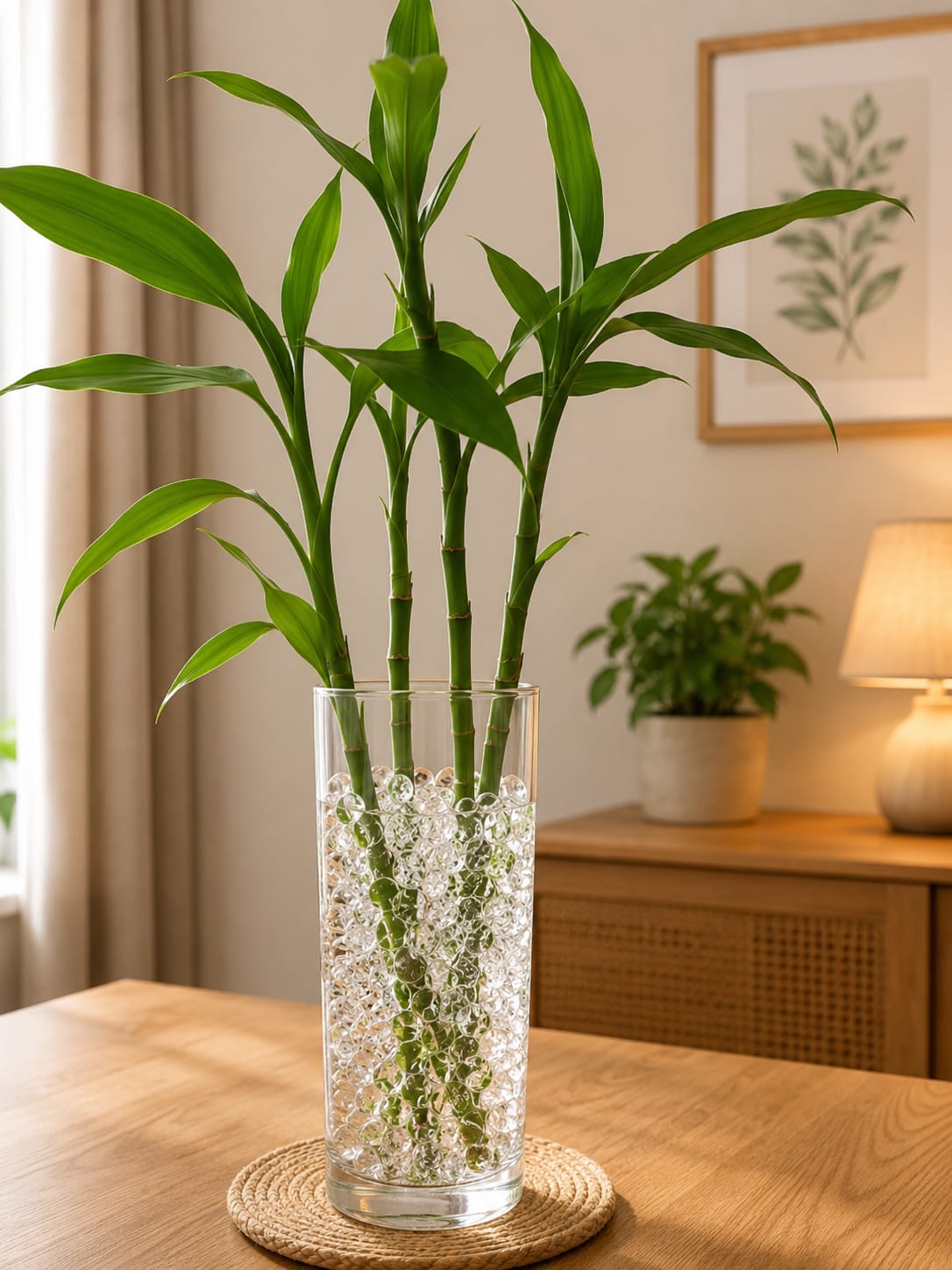
Lucky bamboo is one of those indoor plants that can make a room feel instantly cleaner, calmer, and more styled. Its upright green stems, soft leaves, and simple shape work beautifully in modern homes, minimalist apartments, offices, bedrooms, and bright living spaces. It does not need a large pot of soil to look impressive. In fact, lucky bamboo often looks even more elegant when it is grown in a clear glass vase with water.
That is why many homeowners like placing lucky bamboo in tall transparent containers. The glass makes the arrangement feel modern, the water keeps the look fresh, and the stems create a clean vertical shape that works like natural decor. But when clear water beads are added around the stems, the display becomes even more polished. The beads fill the vase, support the stems upright, and create a crystal-like effect that makes the plant look more decorative and expensive.
This method is not about treating the leaves. It is not about spraying the plant or coating the stems. The clear beads are placed inside the vase around the lower stems and roots. Water is then added so the beads hydrate, expand, and help create a stable water-growing setup. The focus is the lower part of the plant: support, hydration, root environment, and display quality.
Lucky bamboo can grow well in water when the setup is clean and stable. But it still needs proper care. The water should not become dirty, the roots should not rot, and the stems should not be buried too deeply. Clear water beads can make the arrangement look beautiful, but they do not replace clean water, good light, and careful maintenance.
The safest way to understand this method is simple: clear water beads are mostly used as a decorative and supportive growing medium. They help hold the lucky bamboo in place, keep the vase looking neat, and create a clean indoor display. They may help maintain moisture around the root area, but they should be used correctly so they do not create stagnant water or hidden rot.
What Plant Is Being Displayed?
The plant appears to be lucky bamboo, commonly sold as Dracaena sanderiana. Even though it is called bamboo, it is not true bamboo. It is a tropical indoor plant that can grow in water or soil and is often used in decorative home and office displays.
Lucky bamboo is recognized by:
- Upright cane-like green stems
- Nodes along the stems
- Narrow green leaves near the top
- Simple vertical growth
- Ability to grow in water
- Strong decorative value in glass containers
This plant is popular because it looks clean, symbolic, and easy to style. Many homeowners use it in entryways, offices, shelves, bedroom dressers, and living room corners because it adds greenery without taking much space.
Why Lucky Bamboo Looks So Good in Water
Lucky bamboo has a naturally clean shape. When it is placed in water, the display feels lighter and more modern than a regular soil pot. The stems rise from the vase like a simple sculptural arrangement, and the clear container makes the setup feel fresh.
A water-grown lucky bamboo display works beautifully because it combines:
- Clear glass
- Visible water
- Upright green stems
- Decorative stones or beads
- Minimalist styling
- Low-clutter plant care
This makes it ideal for rooms that need a touch of green without a messy soil look. It can feel especially premium when the vase is tall, clean, and transparent.
What the Clear Beads Are Used For
The clear beads are water beads, sometimes called hydrogel beads, crystal beads, gel balls, or water-absorbing beads. They absorb water and swell into soft round beads. In plant displays, they are often used as a decorative alternative to stones or as a support material in water-based arrangements.
In a lucky bamboo vase, clear water beads may help:
- Hold the stems upright
- Keep the display neat
- Create a crystal-like decorative effect
- Support the lower stems and roots
- Reduce the look of empty water space
- Make the vase appear more modern and styled
The biggest benefit is visual and structural. The beads make the arrangement look cleaner and help prevent the stems from leaning or sliding around inside the vase.
Why the Beads Are Added Before the Stems
When creating a display like this, the beads are often added first or layered into the vase before the plant is positioned fully. This allows the grower to create a stable base. Once the beads are inside, the lucky bamboo stems can be inserted and arranged between them.
This helps:
- Anchor the stems
- Keep the plant centered
- Prevent wobbling
- Protect the arrangement from looking messy
- Create a balanced decorative shape
Without some kind of support, lucky bamboo stems can tilt inside a smooth glass vase. Water beads solve that problem while also improving the appearance.
Why Water Is Added After the Beads
Water is needed because the beads must stay hydrated. Dry beads are small and hard, but after absorbing water they become larger, softer, and more transparent. They create the rounded crystal effect that makes the vase look polished.
Water also keeps the lucky bamboo roots alive. The plant depends on clean water around the root area, especially when it is not growing in soil.
Water in this setup serves two roles:
- It hydrates the beads
- It supports the lucky bamboo roots
The water level should be high enough to cover the roots, but it should not drown too much of the stem. Keeping only the root zone in water helps reduce the risk of stem rot.
Why the Water Level Matters
One of the most important details in a lucky bamboo water display is the water level. Too little water can dry the roots. Too much water can keep the stems wet too high and encourage rot.
A good rule is to keep water around the roots and lower base, but avoid submerging large sections of stem unnecessarily.
Good water-level management helps prevent:
- Yellowing stems
- Soft stem rot
- Bad smell
- Cloudy water
- Weak root growth
- Algae buildup
The water should be refreshed regularly, even when the beads make the vase look clean.
Why Clean Water Is More Important Than the Beads
Clear water beads make the display look beautiful, but they are not a substitute for clean water. If the water becomes dirty or stagnant, the plant can still suffer. In fact, because beads can hide some debris, homeowners need to pay attention to water quality.
Clean water helps lucky bamboo:
- Maintain healthy roots
- Avoid bad smells
- Prevent slimy buildup
- Stay green and firm
- Grow more steadily indoors
If the water becomes cloudy or smells unpleasant, the vase should be cleaned and the beads rinsed. A beautiful display still needs maintenance.
Why Filtered Water Is Often Better
Lucky bamboo can be sensitive to chemicals and minerals in some tap water. Fluoride, chlorine, or heavy mineral content may contribute to yellowing leaves, browning tips, or stressed growth.
Many homeowners prefer using:
- Filtered water
- Distilled water
- Rainwater
- Tap water left out overnight
The best option depends on the local water quality. If lucky bamboo leaves keep turning yellow or brown at the tips, changing the water source may help.
Why Lucky Bamboo Leaves Turn Yellow
Yellowing leaves are one of the most common lucky bamboo problems. It can happen for several reasons, and it does not always mean the plant is dying.
Common causes include:
- Too much direct sunlight
- Poor water quality
- Stagnant water
- Overfertilizing
- Stem rot
- Old leaves naturally aging
- Low nutrients over time
- Temperature stress
If only one old leaf turns yellow, it may simply be aging. If many leaves yellow at once, the water, light, and root condition should be checked.
Why Lucky Bamboo Stems Turn Yellow
A yellow stem is more serious than a yellow leaf. Once a lucky bamboo stem turns fully yellow and soft, it may not recover. This is often a sign of rot, poor water quality, too much fertilizer, or stress.
Warning signs include:
- Soft stem texture
- Yellowing from the base upward
- Bad smell from the water
- Mushy lower stem
- Dark slimy roots
- Cloudy water around the base
If one stem becomes unhealthy, it should be removed quickly to protect the rest of the arrangement. In a shared vase, rot can spread through dirty water.
Why Clear Beads Can Hide Root Problems
Water beads look clean, but they can sometimes hide what is happening around the roots. Roots may become tangled among the beads, and debris can collect between them.
This is why homeowners should occasionally inspect:
- Root color
- Water smell
- Stem firmness
- Bead cleanliness
- Any slimy buildup
- Cloudiness near the bottom
Clear glass helps, but the beads should still be rinsed when needed.
How to Set Up Lucky Bamboo With Water Beads
A careful setup keeps the arrangement attractive and healthy. The goal is to create support without burying the stems too deeply or trapping dirty water.
A safe setup method includes:
- Choose a clean tall glass vase
- Rinse the water beads before use
- Hydrate the beads with clean water
- Add a layer of beads to the vase
- Place the lucky bamboo stems upright
- Add more beads around the stems for support
- Pour in clean water to cover the roots
- Keep the water level below excessive stem height
- Place the vase in bright indirect light
The arrangement should feel stable but not overly packed. The roots need access to clean water and oxygen.
Why the Vase Shape Matters
A tall cylindrical glass vase works well because it supports the vertical shape of lucky bamboo. The straight sides help the stems stay upright, while the clear glass shows the water beads beautifully.
A good vase should be:
- Clean
- Stable
- Tall enough to support the stems
- Wide enough for roots and beads
- Transparent if the display effect matters
- Easy to rinse and refill
Very narrow vases can crowd the stems and make cleaning difficult. Very wide vases may allow the stems to fall outward unless enough beads are used.
Why Glass Makes the Display Look More Premium
Glass is one of the main reasons this setup looks elegant. A clear vase turns the lower part of the plant into part of the design. The water, beads, stems, and roots all become visible layers.
The visual effect includes:
- Green stems rising upward
- Crystal-like beads below
- Clear water filling the vase
- Light reflection through the glass
- A clean modern decor look
This type of display works especially well in minimalist interiors because it looks intentional and uncluttered.
Why Lucky Bamboo Works Well With Water Beads
Lucky bamboo is often grown in water, so it adapts well to decorative water-based setups. Water beads give the plant physical support while allowing the roots to remain in a moist environment.
This works because lucky bamboo can:
- Grow without soil for long periods
- Develop roots in water
- Stay upright with support
- Fit into decorative vases
- Tolerate indoor conditions
However, the plant still needs care. Water-grown does not mean maintenance-free.
Continue to Page 2
Continue to page 2 for more details about this article and the key points many readers miss on the first page.