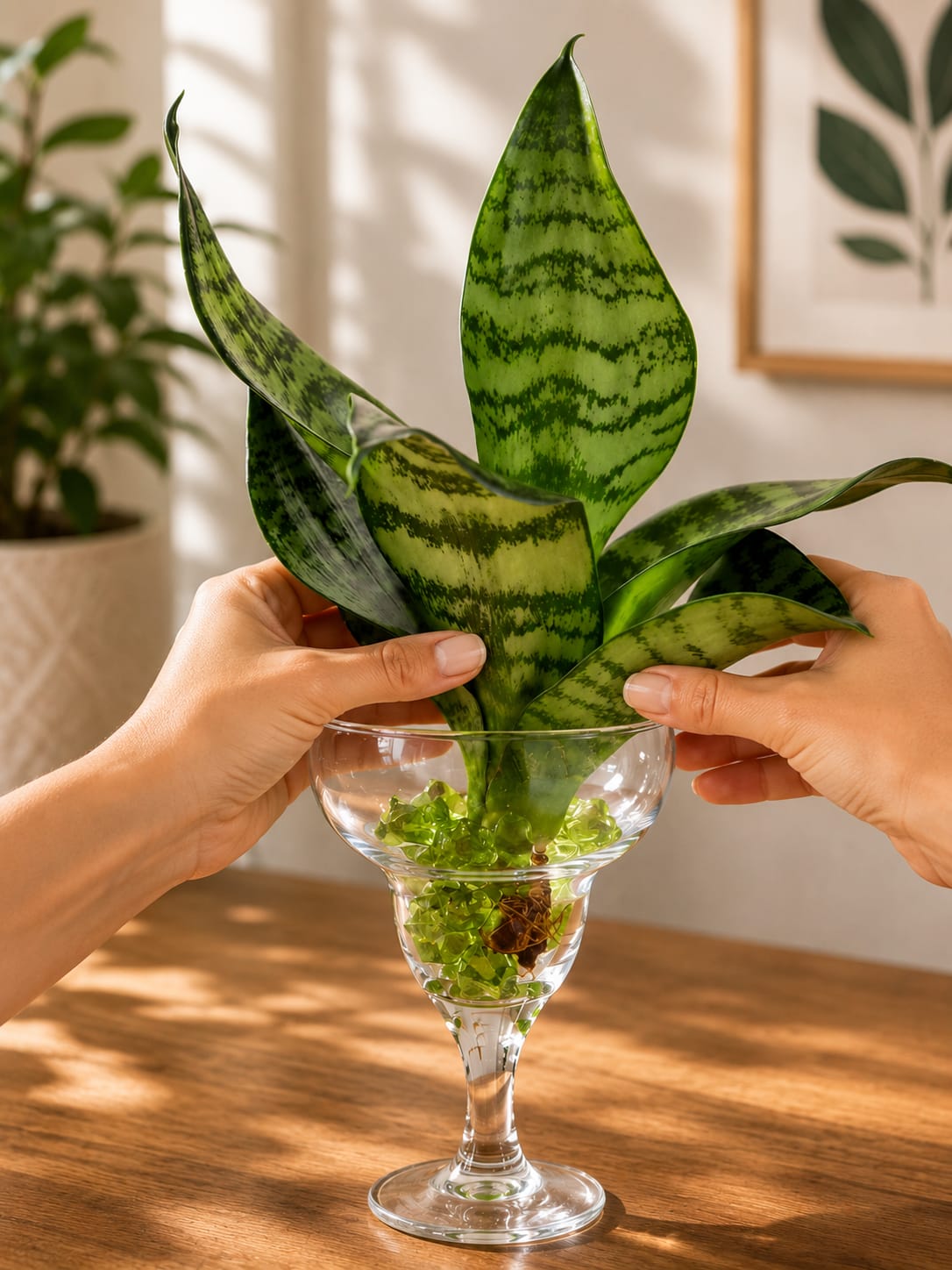
A snake plant already has one of the strongest shapes in indoor plant styling. Its thick upright leaves, patterned green surface, and sculptural form can make a simple room feel cleaner, calmer, and more polished. But when a snake plant is placed inside a clear glass cup with decorative green water crystals, the plant takes on a completely different look. It becomes less like a basic houseplant and more like a styled botanical arrangement.
This kind of setup catches attention because it combines several things homeowners love: easy indoor plant care, water propagation, glass decor, visible plant structure, and a fresh modern display. The snake plant leaves rise from the top like a small green sculpture, while the clear glass cup shows the water, lower stem, and bright green crystal pieces around the base. The whole arrangement feels clean, minimal, and decorative.
The method appears to focus on creating a water-based snake plant display using a small glass vessel, decorative green gel crystals or water beads, and a liquid added around the base. The liquid may be clean water, a diluted plant support solution, or a mild water-culture additive. The key point is that the care is happening at the lower part of the plant, around the root and stem base, not on the leaf surface.
This matters because snake plants are not plants that enjoy constant wetness around their crown. They are hardy, drought-tolerant plants that can survive neglect better than excess water. So when a snake plant is styled in a water-glass arrangement, the water level, cleanliness, and base position become extremely important. The display can look beautiful, but it must be handled carefully so the lower stem does not rot.
The green crystals in the glass appear to serve both a decorative and supportive role. They help hold the plant upright, fill the glass with a jewel-like texture, and create a fresher ornamental look. They can also hold moisture, depending on what material they are. But they should not be treated as magic plant food. They are mainly a styling and support medium. The real health of the snake plant still depends on clean water, healthy tissue, enough light, and careful moisture control.
What Plant This Appears to Be
The plant appears to be a snake plant, also known as Sansevieria or Dracaena trifasciata. It has the recognizable upright leaves, green banded pattern, thick texture, and structured growth that make snake plants one of the most popular indoor plants.
Snake plants are recognized by:
- Thick sword-shaped leaves
- Green marbled or banded patterns
- Firm upright growth
- Slow, steady development
- Strong tolerance of indoor conditions
- A sculptural look that works well in modern decor
In this arrangement, the snake plant appears to be used as a decorative water display rather than a normal soil-potted plant. The leaves are placed in a glass cup, and the base is supported by green crystal-like material.
What the Green Crystals Appear to Be
The green pieces in the glass look like decorative water crystals, gel beads, floral water gel, or translucent hydrogel-style pieces. These materials are often used in indoor plant arrangements, floral displays, and decorative vases because they absorb water and create a colorful glass-like effect.
They may be used to:
- Support the plant base
- Hold the cutting upright
- Add moisture around the lower stem
- Create a decorative color effect
- Make the glass container look fuller
- Replace the visual heaviness of soil
The green color makes the arrangement feel fresher and more botanical. Instead of plain water or dark soil, the display has a bright jewel-like base that matches the foliage.
Why the Glass Cup Makes the Setup Look More Elegant
The glass cup is a major part of the look. A clear vessel turns the lower part of the plant into part of the design. Instead of hiding the base in soil, the arrangement shows the stem, water, and crystals. This creates a clean decorative style that feels modern and intentional.
A clear glass cup works well because it:
- Makes the display feel lighter
- Shows the water-culture effect
- Highlights the green crystals
- Turns the plant base into decor
- Creates a fresh tabletop centerpiece
- Fits modern, minimalist, and clean interior styles
The shape of the glass also matters. A wide top gives the leaves room to spread, while the narrower lower section holds the base more tightly. This makes the plant look like a small floral arrangement rather than a normal potted cutting.
Why Snake Plants Look So Good in Glass Displays
Snake plants have strong leaves that naturally look sculptural. They do not need many stems or flowers to make an impact. Even a small cluster of leaves can look polished when placed in the right container.
In a glass display, snake plants look especially attractive because they offer:
- Bold vertical shape
- Strong green patterning
- Clean leaf lines
- Low-clutter styling
- A modern architectural effect
- Good contrast with clear glass and water
This makes them useful for homeowners who want a simple arrangement that still feels decorative and premium.
What the Liquid Appears to Do
The liquid added to the arrangement appears to be directed into the crystal-filled glass around the lower plant base. That suggests the goal is to hydrate or support the root-zone environment rather than treat the leaves.
The liquid may be:
- Clean water
- Filtered water
- A diluted houseplant nutrient
- A mild water-culture support solution
- A gentle rooting-support liquid
The exact identity cannot be confirmed from appearance alone. Many plant liquids can look similar when poured into a glass arrangement. The safest explanation is that it is being used as a water or root-zone support step for the lower part of the snake plant display.
Why the Liquid Should Be Used Carefully
Snake plants are sensitive to excess moisture around the base. They can tolerate drought much better than rot. For that reason, any liquid added to a glass display should be used with control.
Too much liquid may lead to:
- Soft lower stems
- Rot at the base
- Cloudy water
- Bad smell
- Algae growth
- Leaf yellowing
- Weak root development
A small amount of clean water is usually safer than a heavy pour of strong liquid. If a nutrient or support liquid is used, it should be highly diluted.
Why the Water Level Matters So Much
The water level is one of the most important details in this kind of snake plant arrangement. The base should have enough moisture to support rooting or hydration, but the crown should not be sitting deeply in water.
A safe water level should:
- Reach the lower root zone or base area
- Keep the support crystals hydrated
- Avoid drowning the crown
- Keep leaves above the wet area
- Reduce the risk of rot
If water rises too high around the thick leaf bases, the plant may begin to soften and decay. A beautiful display should never sacrifice the health of the plant.
Why Clean Water Is More Important Than Any Additive
A glass cup arrangement looks clean only when the water stays clean. If the water becomes cloudy, stale, or smelly, the plant is no longer in a healthy environment. Even if a plant support liquid is used, it cannot replace basic water hygiene.
Clean water helps:
- Protect the base from rot
- Keep the crystals clear
- Prevent bad odor
- Reduce bacteria buildup
- Maintain the decorative look
- Support healthier root development
If the glass starts to look cloudy, the arrangement should be rinsed and refreshed.
Why the Crystals Should Be Rinsed First
Decorative water crystals can sometimes carry dust, residue, or loose color from packaging. Before using them with plants, it is safer to rinse them well.
Rinsing helps remove:
- Dust
- Loose particles
- Cloudy residue
- Storage debris
- Excess dye or surface coating
This helps keep the water clearer and reduces stress around the plant base.
How to Prepare a Similar Snake Plant Glass Display
A careful setup makes the arrangement more attractive and safer for the plant.
- Choose a healthy snake plant cutting or small division with firm leaves.
- Select a clean glass cup or bowl with enough support at the base.
- Rinse the green water crystals before use.
- Add a small layer of hydrated crystals to the bottom of the glass.
- Position the snake plant base upright in the center.
- Add more crystals around the base to support the leaves.
- Add clean water slowly so the crystals stay hydrated.
- Keep the crown and leaf bases from sitting too deeply in water.
- Place the glass in bright indirect light.
- Check the water and plant base regularly for signs of rot.
The goal is a balanced display: enough moisture for the lower system, but not so much that the plant becomes waterlogged.
Why the Snake Plant Base Must Stay Firm
The base of the plant tells you a lot about its health. A healthy snake plant base should feel firm, not mushy. If the base becomes soft, dark, or slippery, the plant may be rotting.
Good signs include:
- Firm lower tissue
- No sour smell
- No black mushy areas
- Leaves staying upright
- Clean water around the base
- No slimy coating on the plant
If the base begins to soften, the plant should be removed, cleaned, and allowed to dry before deciding whether it can be saved.
Can Snake Plants Root in Water?
Yes, snake plants can root in water, especially from healthy cuttings. However, they root slowly compared with plants like pothos. Patience is important. A snake plant cutting may take weeks or even months to develop strong roots.
Water rooting works best when:
- The cutting is healthy
- The cut end has dried or calloused before placement
- The water is clean
- The base is not buried too deeply
- The container is kept in bright indirect light
- The water is refreshed regularly
If a cutting is placed directly into wet material before the cut end has sealed, rot becomes more likely.
Why Callousing Matters for Snake Plant Cuttings
When a snake plant leaf or division is cut, the wound needs time to dry and seal. This is often called callousing. It helps reduce the chance of rot when the cutting is placed in water or a moist medium.
Callousing helps:
- Seal the cut surface
- Reduce moisture damage
- Lower the risk of rot
- Improve rooting success
- Protect the cutting during early propagation
If the plant is a rooted division rather than a fresh cutting, callousing may not be needed in the same way. But any damaged tissue should still be allowed to dry before being placed in a wet display.
Why Bright Indirect Light Is Best
Snake plants tolerate low light, but they root and maintain better color in bright indirect light. A decorative glass arrangement should be kept where it receives enough brightness without harsh direct sun.
Bright indirect light helps:
- Keep leaves firm
- Support slow root development
- Maintain green patterns
- Reduce weak growth
- Keep the display looking fresh
Direct strong sun can heat the glass and water, which may stress the plant and encourage algae. A bright room with filtered light is usually better.
Why the Display Should Not Be Left in Hot Sun
Clear glass can warm quickly in direct sunlight. If the water and crystals heat up, the root area may become stressed. Warm stagnant moisture can also encourage bacteria and algae.
Too much direct sun can cause:
- Warm water around the base
- Faster algae growth
- Leaf scorch
- Yellowing
- Condensation inside the glass
- Rot risk in the lower stem
The arrangement should look bright and fresh, but it should not bake in hot sun.
How Often to Refresh the Glass
A water-crystal snake plant display should be checked often. Because the plant base is sitting in a moist environment, cleanliness matters.
A simple maintenance routine includes:
- Check the water level every few days
- Refresh water if it looks cloudy
- Rinse crystals when they look dirty
- Clean the glass if algae appears
- Remove any soft plant tissue immediately
- Keep leaves dry above the waterline
If the arrangement is mainly decorative, it may be better as a short-term or monitored display rather than something ignored for months.
Continue to Page 2
Continue to page 2 for more details about this article and the key points many readers miss on the first page.