Snake plants are famous for being tough, beautiful, and easy to grow, but many people still struggle when they try to propagate them from leaf cuttings. A snake plant cutting can sit in soil for weeks without showing any visible progress. Sometimes it dries out, sometimes it rots, and sometimes the owner keeps checking every day, wondering if anything is happening under the soil. Because of this, many plant lovers look for simple tricks that may help cuttings root faster and produce new baby shoots.
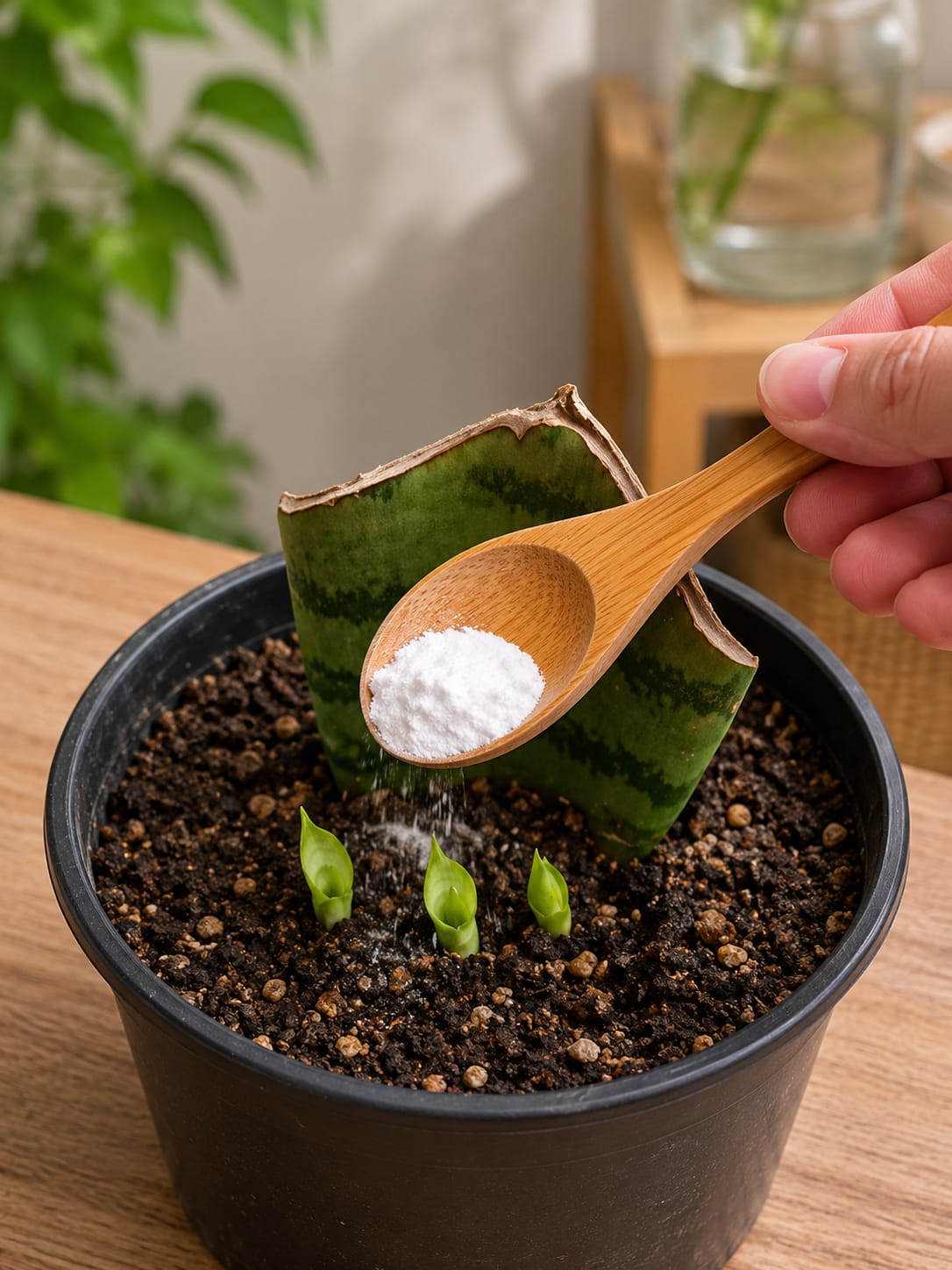
The image shows a snake plant leaf cutting planted in soil, with small new green shoots already emerging near the base. A hand is holding a wooden spoon filled with white powder and sprinkling it onto the soil around the young shoots. This kind of method is often presented as a way to wake up snake plant cuttings, encourage new growth, or protect the base of the plant. It looks simple, but it is important to understand what the white powder might be and how to use any powder safely around snake plants.
The most important thing to know is this: not every white powder is safe for plants. A snake plant is strong, but its roots and cuttings can still be damaged by too much moisture, strong chemicals, or excessive salts. If the powder is used incorrectly, it can slow growth instead of helping it. The safest approach is to treat this method as a gentle soil-care technique, not as a miracle solution.
What Is Happening in the Image?
The plant appears to be a snake plant leaf cutting. A piece of mature leaf has been cut and planted upright in soil. Near the base of the cutting, several small new shoots are coming out of the soil. This means the cutting has likely developed roots or rhizome activity below the surface. In snake plants, new growth usually appears as small spear-shaped shoots that slowly rise from the soil. These shoots eventually become new leaves.
The white powder is being placed around the young shoots, not directly inside the leaf cutting. This suggests the powder is being used as a soil amendment or surface treatment. The intention may be to help the baby shoots grow stronger, prevent fungus, reduce pests, or feed the plant. However, because the powder is not labeled in the image, it is impossible to say exactly what it is.
Possible white powders used in plant care include:
- Rooting hormone powder
- Dolomite lime
- Bone meal
- Gypsum
- Diatomaceous earth
- Baking soda
- Cinnamon powder, if very pale
- Powdered fertilizer
- Epsom salt
- Perlite dust
- Calcium powder
Some of these can be useful in small amounts. Others can be harmful if overused. That is why the method should be done carefully.
The Most Likely Purpose of the White Powder
When a white powder is added around a plant cutting, the goal is often one of three things: rooting support, fungus prevention, or nutrient support. Snake plant cuttings are vulnerable while they are developing roots. The cut end of the leaf can rot if the soil stays too wet. A powder that dries the surface or discourages fungus may help in some situations. A mild mineral amendment may also support growth if the soil is poor.
But the new shoots in the image already show that the cutting is alive and growing. At this stage, the most important thing is not to disturb the plant too much. New snake plant shoots are tender. They need stable soil, gentle moisture, and bright indirect light. Too much powder, too much water, or too much fertilizer can damage them.
Snake Plant Propagation from Leaf Cuttings
Snake plants can be propagated from leaf cuttings, but the process is slow. A healthy leaf is cut into sections, allowed to dry, and then placed into soil. Over time, roots develop from the cut end. After roots form, small new shoots may appear from the base. This can take several weeks or even several months.
The basic propagation process is:
- Choose a healthy mature snake plant leaf.
- Cut the leaf into sections with a clean blade.
- Remember which side is the bottom, because the cutting must be planted in the correct direction.
- Let the cut end dry and callus for one to three days.
- Plant the bottom end into dry or lightly moist soil.
- Place the pot in bright indirect light.
- Water lightly only when the soil is dry.
- Wait patiently for roots and new shoots.
The small green shoots in the image are a good sign. They show that the cutting has moved beyond the early stage and is beginning to produce new growth. At this point, care should focus on keeping the plant stable and avoiding rot.
Why Snake Plant Cuttings Rot
The biggest problem with snake plant cuttings is rot. Snake plants are succulents, meaning they store water in their leaves and tissues. A leaf cutting already contains enough moisture to survive for a long time. If the soil is too wet, the cut base can become soft and infected. Once rot enters the cutting, the leaf may collapse.
Common causes of rot include:
- Planting the cutting before the cut end has dried
- Using heavy soil that holds too much water
- Watering too often
- Keeping the pot in low light
- Using a pot without drainage holes
- Burying the cutting too deeply
- Adding strong organic mixtures around the base
If the white powder is meant to prevent rot, it should be used lightly. A thick layer of powder can trap moisture or change the soil surface too much. The best protection against rot is not powder. It is proper soil, correct watering, and good airflow.
If the White Powder Is Rooting Hormone
Rooting hormone is commonly used on cuttings to encourage root formation. It usually comes as a white or off-white powder. If the powder in the image is rooting hormone, it would normally be applied to the cut end before planting, not sprinkled heavily on top of the soil after shoots have appeared.
Rooting hormone can help some cuttings, but snake plants often root without it. If the cutting already has new shoots, the rooting stage has likely started successfully. Adding more rooting hormone at this point is usually unnecessary.
Safe use of rooting hormone:
- Use only a small amount
- Apply it to the cut end before planting
- Tap off excess powder
- Do not pour large amounts into the soil
- Follow the product label
Too much rooting hormone can stress the cutting. More powder does not automatically mean more roots.
If the White Powder Is Diatomaceous Earth
Diatomaceous earth is a fine white powder sometimes used on soil surfaces to discourage crawling pests. It works best when dry. Some plant owners sprinkle it around young plants to reduce fungus gnats or small insects. If the powder in the image is diatomaceous earth, it may be intended as pest protection.
This can be useful if the plant has fungus gnats, but it should not be mixed heavily into wet soil. Once diatomaceous earth becomes wet, it loses much of its pest-control effect until it dries again. It can also create a dusty surface if too much is used.
Safe use:
- Apply a thin layer only
- Keep it away from your face while applying
- Do not inhale the dust
- Use food-grade diatomaceous earth if used around houseplants
- Reapply only when needed
If the White Powder Is Baking Soda
Baking soda is sometimes used in homemade gardening mixtures, but it is not a standard treatment for snake plant cuttings. It can change the pH around the soil surface and may harm roots if used too much. Snake plants do not need baking soda to grow. If the powder is baking soda, it should be used very cautiously, if at all.
Sprinkling baking soda around tender new shoots can be risky because young roots and shoots are sensitive. Baking soda can also build up in the soil and create an unfavorable environment. It is better to avoid using baking soda as a routine plant booster.
If the White Powder Is Fertilizer
Some fertilizers come in powder form and dissolve when watered. If the white powder is fertilizer, the amount matters greatly. Snake plants are light feeders. Baby shoots from cuttings do not need strong fertilizer. A heavy dose can burn young roots and damage new growth.
If you want to fertilize snake plant cuttings, wait until the new shoots are established and growing steadily. Then use a diluted balanced fertilizer during the growing season. Half strength or quarter strength is enough.
Safe fertilizing tips:
- Do not fertilize fresh cuttings immediately
- Wait until new growth is visible and stable
- Use weak fertilizer
- Fertilize only in spring or summer
- Do not fertilize dry roots heavily
- Do not fertilize a stressed or rotting cutting
If the White Powder Is Cinnamon
Cinnamon is sometimes used by plant owners as a natural drying powder around cuts. It is more brown than white, but some types may look pale in certain lighting. Cinnamon is usually used on cut surfaces, not as a heavy soil topping. It may help keep the cut area dry, but it is not a complete fungicide and should not replace proper care.
If used, it should be applied lightly. A small dusting on a cut end is enough. Thick layers around the soil are unnecessary.
If the White Powder Is Bone Meal or Mineral Powder
Bone meal and mineral powders are sometimes used to add nutrients such as phosphorus or calcium. However, snake plants do not need heavy feeding, and small cuttings can be harmed by too much amendment. Bone meal also breaks down slowly and may attract pests in some conditions.
If using any mineral amendment, mix it into the soil before planting and use a small amount. Do not pile it directly around tender shoots.
The Safest Way to Help New Snake Plant Shoots
Once new shoots appear, the best care is simple. Do not overcomplicate it. The young shoots need light, warmth, and stable moisture. They do not need constant treatments.
To support new shoots:
- Keep the pot in bright indirect light.
- Let the soil dry between waterings.
- Do not move the cutting every day.
- Do not pull the cutting to check roots.
- Avoid heavy fertilizer.
- Keep the soil airy and well-draining.
- Protect the pot from cold drafts.
- Remove any mushy or rotten parts quickly.
New snake plant shoots grow slowly at first. Once they gain strength, they will become thicker and taller. Patience is part of the process.
Best Soil for Snake Plant Cuttings
Snake plant cuttings need soil that drains fast. Heavy garden soil or dense indoor potting soil can stay wet too long. A good mix should feel loose and gritty. It should hold a little moisture but also allow air to reach the roots.
A good mix can include:
- Cactus or succulent potting mix
- Perlite
- Pumice
- Coarse sand
- Small bark chips
A simple mix is two parts cactus soil and one part perlite. This gives enough drainage for snake plant cuttings. If your home is humid or low-light, add more perlite or pumice to make the mix even faster draining.
How Deep to Plant Snake Plant Cuttings
The cutting should be deep enough to stand upright but not buried too deeply. Usually, placing one to two inches of the cut end into soil is enough, depending on the size of the leaf. If the cutting is very tall and unstable, use a support stick rather than burying it too deep.
Planting too deeply can cause the lower part of the leaf to stay wet and rot. The base needs contact with soil, but it also needs air.
Watering After Adding Powder
If powder is sprinkled on the soil, watering immediately may dissolve it and carry it deeper into the root zone. This can be good or bad depending on what the powder is. If it is fertilizer, immediate watering can make the dose stronger around the roots. If it is diatomaceous earth, watering makes it less effective for pests. If it is baking soda, watering can spread it through the soil and increase risk.
Because the powder is unknown, the safest approach is to use very little and avoid heavy watering afterward. For snake plant cuttings, the soil should be only lightly moist when needed, never soggy.
Good watering method:
- Check soil dryness first
- Water lightly around the edge of the pot
- Avoid soaking the cutting base repeatedly
- Let extra water drain out
- Do not leave water in the saucer
Signs the Method Is Helping
If the cutting is healthy, you may see slow but steady improvement over time. The new shoots should remain firm and green. They may grow taller and begin opening into leaves. The main cutting may remain stable, even if it does not grow much itself.
Good signs include:
- Firm new shoots
- No bad smell from soil
- No mushy base
- New leaves slowly getting taller
- Soil drying normally
- No mold forming on the surface
Signs the Powder Is Causing Problems
If too much powder is used or the wrong powder is applied, the plant may react badly. Young roots can burn, soil can become unbalanced, or fungal growth can appear.
Warning signs include:
- White crust building up on the soil
- New shoots turning yellow
- Soft or collapsing shoots
- Mold on the soil surface
- Bad smell
- Cutting becoming mushy
- Soil staying wet too long
If these signs appear, stop using the powder. Remove the top layer of affected soil if needed. Let the pot dry. If rot is present, remove the cutting and inspect the base.
How to Save a Rotting Snake Plant Cutting
If the cutting starts to rot, act quickly. Remove it from the pot and check the base. Rotten tissue is soft, dark, wet, or smelly. Cut away damaged parts with a clean blade. Let the healthy part dry for a few days before replanting in fresh dry soil.
Recovery steps:
- Remove the cutting from wet soil.
- Cut off mushy tissue.
- Let the cutting callus in a dry place.
- Use fresh dry succulent soil.
- Plant shallowly.
- Wait several days before watering.
- Keep in bright indirect light.
Do not add strong powder or fertilizer to a rotting cutting. The plant needs dryness and stability first.
Continue to Page 2
Continue to page 2 for more details about this article and the key points many readers miss on the first page.