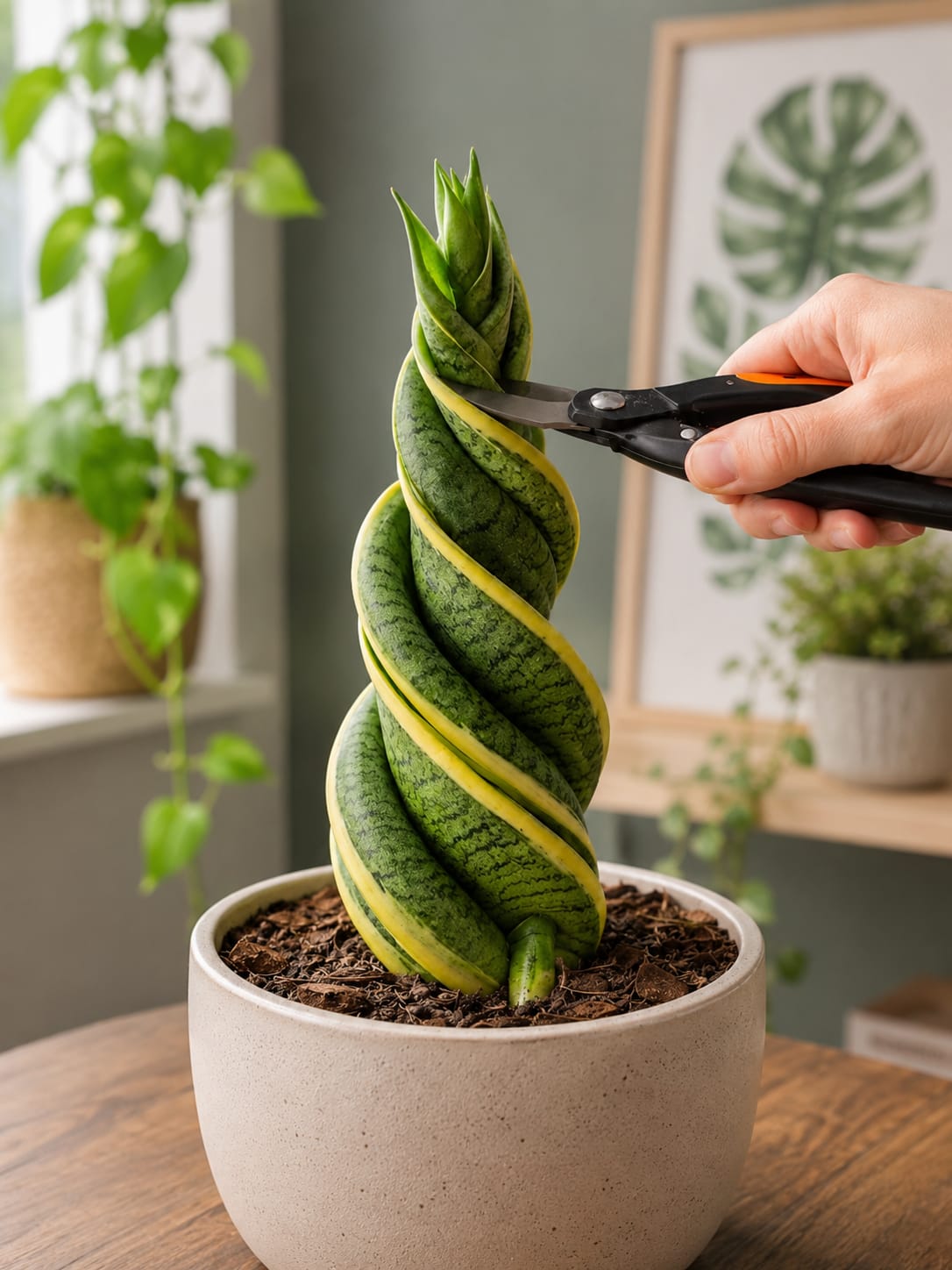
Snake plants are among the most popular indoor plants because they are strong, elegant, and easy to care for. Their tall sword-like leaves give any room a fresh and modern look, and they can survive in many different indoor conditions. But with a little creativity, a simple snake plant can become much more than a normal houseplant. One beautiful idea is to train the leaves into a spiral shape and then display the plant in a clear glass vase with water and decorative stones. This creates a clean, artistic, and eye-catching arrangement that looks like a living sculpture.
The method is simple in appearance, but it requires patience and gentle handling. Snake plant leaves are thick and firm, so they should never be forced too quickly. The best results come from using a young plant with flexible leaves and guiding the leaves slowly into the desired spiral form. Once the shape is created, the plant can be placed in a glass container with water and pebbles. The clear glass makes the roots and stones visible, giving the whole display a modern decorative style.
This article explains the process step by step, from choosing the right plant to shaping it, placing it in water, and caring for it afterward. It also explains the mistakes to avoid, because snake plants can rot if they are kept too wet or placed incorrectly in water. The goal is to create a beautiful display while still keeping the plant healthy.
Understanding the Idea
The spiral snake plant method is mainly a decorative plant training technique. It is not a magic trick that makes the plant grow faster overnight. Instead, it is a way to arrange and guide the natural growth of the leaves so the plant looks more artistic. The leaves are carefully twisted around each other while they are still flexible. Over time, the plant may continue to hold part of that shape, especially if the leaves are supported properly.
After the plant is shaped, it can be placed in a glass vase or clear container filled with clean water and stones. The stones help keep the plant upright. They also add weight to the container so the plant does not fall over. The water supports the roots, while the glass container makes the arrangement look fresh and stylish.
Many people like this method because it combines plant care and home decoration. It can be used on a desk, table, shelf, bedroom dresser, office corner, or bright living room space. A spiral snake plant in glass looks very different from a normal potted plant. It gives a minimalist, modern, and natural feeling at the same time.
What You Need
Before starting, prepare everything you need. Having the materials ready will make the process smoother and safer for the plant.
- A young snake plant with healthy flexible leaves
- A clean glass vase, jar, or cylinder
- Clean water at room temperature
- Decorative stones, pebbles, clay balls, or glass beads
- Clean scissors or pruning shears
- Soft plant ties, raffia, cotton string, or flexible garden tape
- A clean cloth or towel
- A bright indoor spot with indirect light
The most important material is the plant itself. A young snake plant is much easier to work with than an old one. Older snake plant leaves are stiff and can snap if bent. Young leaves are usually softer and easier to guide. The glass container should be tall enough to support the plant but not so narrow that the leaves are squeezed. It should also be stable, because snake plants can become top-heavy.
Step 1: Choose a Healthy Young Snake Plant
Start by selecting a healthy snake plant. The plant should have firm green leaves with no mushy spots, no black marks near the base, and no strong signs of rot. Healthy leaves should feel solid when touched. They should not be soft, transparent, or wrinkled. A plant with several leaves growing close together from the base is ideal because the leaves can be arranged into a spiral more easily.
Look closely at the base of the plant. The base should be firm, pale green, or slightly cream-colored depending on the variety. If the base smells bad or feels soft, the plant may already have rot. Do not use a sick plant for this method. It is better to let a weak plant recover first in proper soil or water conditions before trying any decorative training.
The best snake plants for this method are small to medium-sized plants. A very large snake plant can be difficult to twist and may not fit well in a glass vase. A smaller plant is easier to control, easier to clean, and easier to display.
Step 2: Remove the Plant from Soil Carefully
If your snake plant is growing in soil and you want to transfer it to water, remove it gently from its pot. Hold the plant near the base and loosen the soil around the roots. Do not pull hard from the leaves because this can damage the root system or separate the leaves from the base.
Once the plant is out of the pot, shake away loose soil. Then rinse the roots under clean water. Use your fingers gently to remove soil trapped between the roots. This step is important because leftover soil can make the water dirty and increase the risk of bacteria or rot inside the glass container.
If the roots are tangled, do not force them apart too much. Snake plant roots can break, and while some breakage is normal, too much damage can stress the plant. The goal is simply to clean the roots enough so they can sit in water without carrying a lot of soil.
Step 3: Inspect and Trim the Roots
After rinsing the roots, inspect them carefully. Healthy roots are usually firm and may be white, cream, orange, or light brown depending on age and growing conditions. Rotten roots are soft, dark, mushy, or smelly. If you find rotten roots, remove them with clean scissors.
Always use disinfected scissors when cutting plant roots. Dirty tools can introduce bacteria or fungus. You can wipe the blades with rubbing alcohol or wash them well before use. Cut only the damaged parts. Do not remove healthy roots unnecessarily.
This is also a good time to check the bottom of the plant. If there are old dry leaf bases, remove them gently. If any leaf base is already soft or rotting, it should be trimmed or the plant should not be used for this display. Water culture works best when the plant starts clean and healthy.
Step 4: Begin Shaping the Leaves
Now comes the decorative part: shaping the plant into a spiral. Hold the base of the snake plant with one hand. With the other hand, gently guide the leaves around each other. The movement should be slow and careful. Do not bend the leaves sharply. Instead, encourage them to curve naturally.
If the plant has three or more leaves, you can create a braided spiral effect. Take one leaf and guide it slightly around the center. Then guide another leaf in the opposite direction, allowing the leaves to overlap softly. Continue arranging the leaves so they look like they are twisting upward together.
The most important rule is this: never force the plant. If a leaf feels stiff or starts to crack, stop immediately. A cracked snake plant leaf will not heal perfectly. It may dry at the damaged area or become ugly over time. The spiral shape should look natural, not forced.
Step 5: Use Soft Ties to Hold the Shape
Once the leaves are arranged, use a soft plant tie to hold the shape. You can use raffia, cotton string, soft garden tape, or another gentle material. Avoid wire, thin plastic string, or anything sharp that can cut into the leaves.
Tie the leaves loosely. The tie should support the spiral, not squeeze it. Snake plant leaves are thick, but pressure marks can still appear if the tie is too tight. A tight tie can also restrict growth and damage the leaf surface.
Place the tie around the middle or upper section of the spiral, depending on where the leaves need support. You may need more than one tie if the plant is tall. Make sure the tie is hidden as much as possible if you want a clean decorative appearance.
Step 6: Prepare the Glass Container
Choose a glass container that fits the plant well. A tall cylinder vase works beautifully because it supports the plant and keeps the roots visible. A jar can also work, but it should be wide enough for the plant base and stones.
Wash the container before using it. Even if it looks clean, rinse it well to remove dust or residue. A clean container reduces the chance of dirty water, bad smell, and algae buildup.
Add a layer of stones, pebbles, clay balls, or glass beads to the bottom. These materials serve two purposes. First, they help hold the plant in place. Second, they make the arrangement more attractive. Clear glass with stones and roots can look very beautiful when arranged neatly.
Step 7: Place the Plant in the Container
Put the snake plant into the glass container carefully. Spread the roots gently among the stones. Add more stones around the roots if needed to keep the plant upright. The plant should stand straight and stable.
Be careful not to bury the leaf crown too deeply. The crown is the area where the leaves meet the base. This part should not stay underwater all the time. If the crown is constantly wet, it may rot. The roots can sit in water, but the thick green base should stay mostly above the water line.
If the plant leans, adjust the stones until it stands properly. Do not push the plant too hard into the container. The roots and base should be supported, not crushed.
Step 8: Add Clean Water
Pour clean room-temperature water into the glass container. Add enough water to cover the roots, but do not fill the container too high. The water level should remain below the main leaf crown. This is one of the most important steps in the whole process.
Many people make the mistake of submerging too much of the plant. Snake plants are drought-tolerant plants. They do not like their thick leaf bases to stay wet for a long time. When grown in water, only the roots should be wet. The base should remain dry or only lightly above the water line.
After adding water, check from the side of the glass. If the water touches the thick green base, pour a little out. It is safer to keep the water slightly lower and top it up later than to keep the plant too wet.
Step 9: Place the Arrangement in Bright Indirect Light
Put the glass container in a bright place with indirect sunlight. A window area is good, but avoid harsh direct sun for many hours. Strong direct sun can heat the glass and water. This can stress the roots and encourage algae growth.
Bright indirect light helps the snake plant maintain strong leaves and good color. If the plant receives too little light, growth will slow down. The leaves may also become weaker or lose some of their attractive pattern.
A good location might be near a bright window with a curtain, on a table a few feet from a window, or in a well-lit room. Avoid dark corners if you want the plant to stay healthy long-term.
Step 10: Change the Water Regularly
Water care is very important when growing a snake plant in a glass container. Change the water every one to two weeks. If the water becomes cloudy, smells bad, or develops algae, change it sooner.
When changing the water, remove the plant gently if possible. Rinse the glass and stones. Rinse the roots lightly with clean water. Do not scrub the roots aggressively. Then refill the container with fresh room-temperature water.
Clean water helps prevent rot and keeps the arrangement attractive. Since the glass is clear, dirty water will be visible. Regular cleaning keeps the display looking fresh and elegant.
Step 11: Watch for Root Rot
Root rot is the biggest danger in this method. Even though snake plants can tolerate water propagation, they can still rot if the water is dirty, the base is submerged, or the environment is too dark.
Check the roots often. Healthy roots should be firm. Rotten roots become mushy, dark, and sometimes slimy. If you smell a bad odor from the container, remove the plant and inspect it immediately.
If you find rot, cut away the rotten roots with clean scissors. Wash the container and stones thoroughly. Refill with fresh water and keep the water level lower than before. If the base itself is rotting, the plant may be difficult to save.
Step 12: Adjust the Spiral as the Plant Grows
The spiral shape may need adjustment over time. New leaves may grow straight, or the existing leaves may shift. Check the plant every few weeks. If the ties are too tight, loosen them. If the spiral is opening, gently guide the leaves again.
Training is not a one-time action. It is a slow process. The plant needs time to adapt. Some leaves may hold the shape better than others. The final look depends on the plant’s natural growth habit, the flexibility of the leaves, and how carefully the shape is supported.
Never leave a tight tie on the plant for months without checking it. As the leaves grow, the tie can cut into them. Regular inspection keeps the plant safe and attractive.
Can a Snake Plant Live Permanently in Water?
A snake plant can survive in water for a long time if the roots are clean and the water is maintained properly. However, not every plant adapts perfectly. Some snake plants do very well in water, while others grow more slowly than they would in soil.
Water culture is mostly used for propagation and decorative displays. If you want the strongest long-term growth, soil may still be better. But if you prefer a clean modern display, water can work with proper care.
The key is to avoid rot. Keep the water clean, keep the crown above water, and give the plant enough light. Do not add random powders or strong fertilizers unless you understand what they are and how much to use. Too much fertilizer in water can burn roots or create dirty water.
Common Mistakes to Avoid
The first common mistake is forcing the leaves into a spiral. Snake plant leaves may look strong, but they can crack. Once cracked, the damage remains visible. Train slowly and gently.
The second mistake is submerging the base. The roots need water, but the crown should not sit underwater. A submerged crown can rot quickly.
The third mistake is using dirty water or never changing the water. Clear glass containers need regular cleaning. Stagnant water can smell bad and harm the roots.
The fourth mistake is placing the plant in strong direct sun. Direct sun can heat the water and burn the leaves. Bright indirect light is better.
The fifth mistake is using a container that is too small or unstable. A tall plant in a light container can fall over. Use enough stones to add stability.
Extra Decorative Ideas
You can make the arrangement more beautiful by choosing stones that match your home style. White pebbles create a clean and minimalist look. Natural river stones give a calm organic style. Clear glass beads create a bright modern look. Clay balls give a hydroponic appearance and are lightweight.
The glass container shape also changes the style. A tall cylinder looks elegant and simple. A round glass bowl looks softer and more decorative. A square glass vase gives a modern geometric look.
You can place the spiral snake plant on a wooden table for a natural look, on a white shelf for a clean modern look, or near other plants for a lush indoor garden corner.
Should You Add Fertilizer?
If the plant stays in water for a long time, it may eventually need nutrients. But fertilizer should be used very carefully. Use a very diluted liquid houseplant fertilizer, much weaker than the normal dose. Too much fertilizer can damage roots and make the water dirty.
Fertilize rarely, perhaps once every one or two months during the growing season, and avoid fertilizing in cold months when the plant is not actively growing. After adding fertilizer, watch the water. If it becomes cloudy or smells bad, change it.
Why This Display Works So Well
The beauty of this method comes from contrast. The snake plant has strong vertical leaves, while the spiral shape adds movement. The clear glass container gives a clean modern feeling, while the roots and stones add a natural detail. The result is simple but dramatic.
This type of plant display is especially good for people who like indoor plants but want something different from the usual pot-and-soil arrangement. It looks artistic without needing flowers or bright colors. The structure of the plant itself becomes the decoration.
Final Care Routine
To keep the spiral snake plant healthy, follow a simple routine. Keep it in bright indirect light. Check the water level every few days. Change the water every one to two weeks. Rinse the glass and stones when needed. Watch the roots for signs of rot. Loosen the plant ties as the leaves grow. Avoid overhandling the plant once it is arranged.
If the plant begins to look weak, yellow, or soft, remove it from the water and inspect the roots and base. Sometimes moving the plant back to soil may help if it does not adapt well to water.
Conclusion
Training a snake plant into a spiral shape and growing it in a glass container is a creative way to turn a simple houseplant into a beautiful decorative piece. The process begins with choosing a healthy young plant, cleaning the roots, gently shaping the leaves, securing the spiral, and placing the plant in water with stones. The final result can look elegant, modern, and unique.
The most important part is gentle care. Do not force the leaves. Do not drown the base. Do not let the water become dirty. With patience and proper maintenance, the spiral snake plant can remain a striking indoor display for a long time.
This method is perfect for plant lovers who enjoy creative styling and clean indoor decoration. It combines the natural strength of the snake plant with the beauty of simple design. With the right care, a spiral snake plant in water can become one of the most attractive pieces in your indoor plant collection.