A snake plant is already one of the most reliable indoor plants for homeowners who want beauty without complicated care. Its upright sword-shaped leaves, bold green pattern, and yellow-edged variegation make it look elegant in almost any room. It can sit near a window, on a table, beside a sofa, in an office corner, or on a shelf and still create a strong decorative effect. This is why short plant-care videos showing simple “secret” treatments for snake plants attract so much attention.
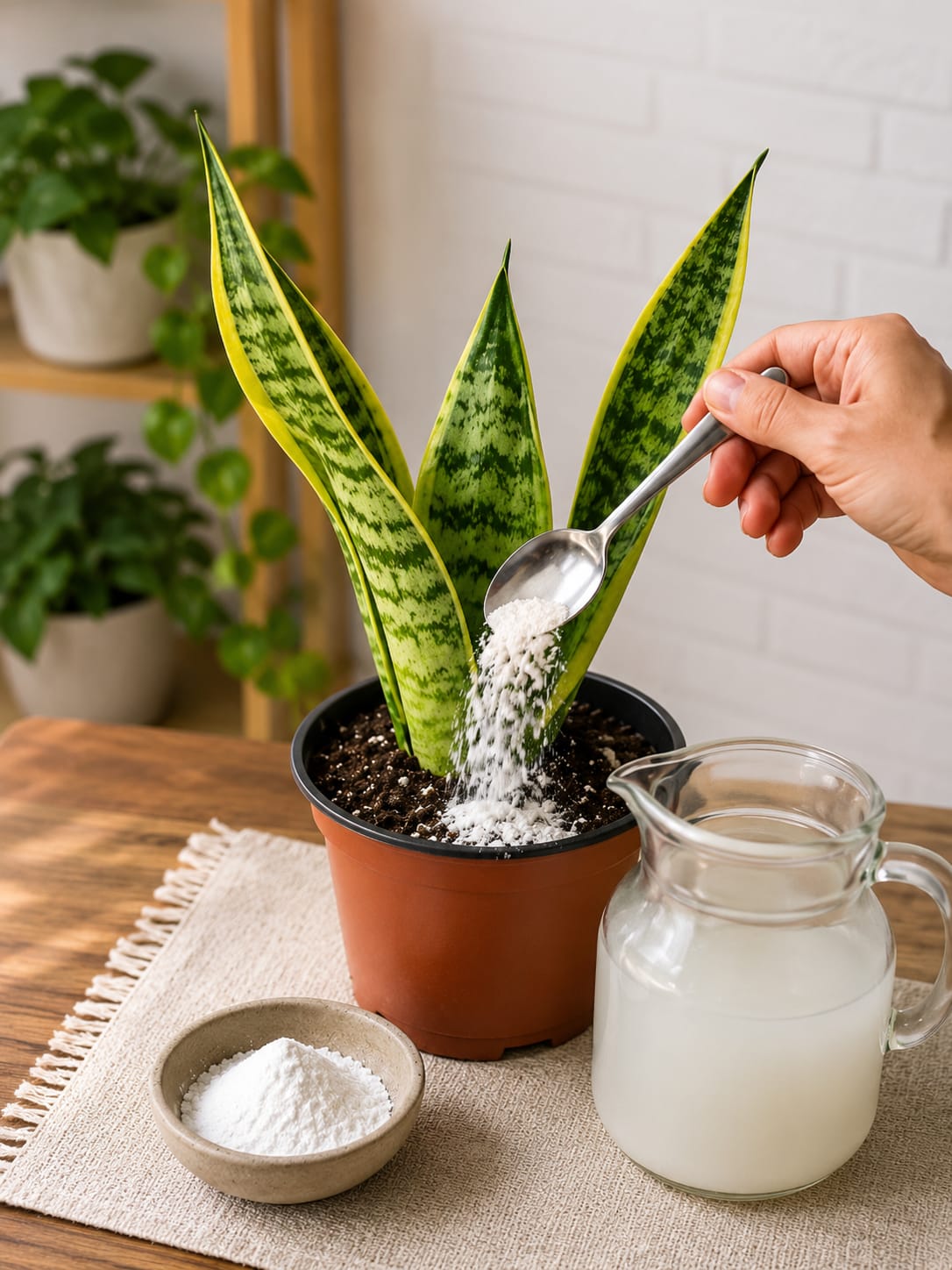
In the images, a variegated snake plant is shown in a simple nursery pot. A hand sprinkles a small amount of fine white powder onto the soil surface near the base of the plant. After that, a cloudy white liquid is poured into the pot. The video then shows the snake plant looking full, upright, and healthy near a bright window. The message is designed to feel simple: just a little powder, then a special liquid, and the plant becomes stronger and fuller.
However, it is important to explain this method carefully. The exact white powder and the exact milky liquid cannot be confirmed from the images alone. The powder may be a plant-safe amendment, a mineral powder, a fertilizer-style product, a rooting support product, or another white substance. The liquid may be diluted fertilizer, rice water, milk-water mixture, calcium-style solution, or another homemade plant-care mixture. Because the identity is not clear, the safest article should not claim a guaranteed miracle. Instead, it should explain what this method appears to target: the soil surface, the root zone, and the hidden system that supports snake plant growth.
Snake plants may look tough above the soil, but their long-term health depends mostly on what happens below the soil. Strong roots, loose soil, careful watering, and good drainage matter more than any viral trick. A white powder and a milky liquid may look impressive on video, but if the pot is too wet, the soil is compacted, or the roots are rotting, no quick treatment will save the plant without correcting the basic care routine.
What Plant Is Shown in the Images?
The plant appears to be a variegated snake plant, often sold as Sansevieria or Dracaena trifasciata. Many people still call it Sansevieria, even though it has been reclassified botanically into the Dracaena group. It is loved for its tall, firm, upright leaves. The leaves usually have dark green and light green markings, and many popular varieties also have yellow edges.
This plant is popular because it looks modern, architectural, and clean. It does not need daily attention. It can tolerate missed watering better than many tropical houseplants. It can survive in medium light and even lower light, although it grows better in bright indirect light. Because of this, snake plants are often recommended for beginners, apartment owners, busy homeowners, offices, bedrooms, and minimalist indoor spaces.
A healthy snake plant usually has firm leaves, upright growth, a stable base, and dry or lightly moist soil between waterings. The leaves should not feel mushy. The base should not smell bad. The soil should not stay wet for many days. If these conditions are correct, the plant can grow slowly but steadily for years.
What the White Powder Appears to Do
The white powder in the image is sprinkled around the soil surface, close to the base of the snake plant. This placement suggests that it is not being used as a leaf treatment. It is not meant to polish the leaves or clean the foliage. Instead, it appears to be used as a root-zone or soil-surface support step.
White powders used around houseplants can have different purposes. Some are used to add minerals. Some are used to support roots. Some are used to manage pests on the soil surface. Some are used to adjust soil conditions. Some are homemade powders used in viral gardening videos. Without a visible label, nobody can confirm exactly what the powder is.
In a safe plant-care explanation, the powder should be treated as a possible soil amendment, not as a guaranteed cure. If the powder is plant-safe and used in a very small amount, it may be part of a gentle soil-care routine. But if the powder is unknown, too concentrated, salty, alkaline, or not meant for plants, it can irritate roots, change the soil balance, and cause more harm than good.
What the Milky White Liquid Appears to Do
The second step shows a cloudy white liquid being poured into the pot. The liquid spreads across the soil and carries the powder downward into the growing medium. This kind of liquid is often presented online as a “secret plant drink” or “growth booster.” But again, the exact ingredient cannot be identified from the image alone.
Some common white or cloudy liquids used in plant videos include diluted rice water, diluted milk, powdered fertilizer mixed with water, calcium mixtures, starch-based water, or other homemade solutions. Each one behaves differently. Some may be harmless in small amounts. Some may attract fungus gnats, create odor, encourage mold, or disturb the soil if used too often.
For snake plants, the biggest concern is moisture. They do not like soil that stays wet. Any liquid treatment, even a gentle one, should be used carefully. The soil should be allowed to dry properly afterward. The plant should never sit in standing water. If a snake plant is already overwatered, pouring more liquid into the pot can make the problem worse.
Why the Treatment Is Added to the Soil, Not the Leaves
The images clearly show the treatment going into the pot, not onto the leaves. This is important. Snake plant leaves are thick, waxy, and water-storing. They do not need to be coated with powder or soaked with homemade liquid. Coating the leaves can leave residue, block the clean decorative look, and sometimes encourage spotting or surface problems.
The soil and root zone are more logical targets because roots absorb water and nutrients. The base of the plant is where new growth emerges. If the root zone is healthy, the plant can produce new shoots and maintain strong upright leaves. If the root zone is unhealthy, the leaves may eventually yellow, soften, lean, or collapse.
So the real message behind the method is not “put powder on a snake plant.” The real message is “support the root environment carefully.” That is a much more accurate and useful way to understand the video.
Why Snake Plant Root Health Matters So Much
Snake plants are often described as nearly indestructible, but that is not completely true. They are tough, but they are not immune to root problems. In fact, most snake plant failures happen below the soil before the leaves show obvious damage.
The roots anchor the plant, absorb moisture, and support new growth. Healthy roots help the leaves stay firm and upright. Healthy roots also help the plant recover after repotting, division, or stress. When roots are weak or rotten, the plant may still look fine for a while because the leaves store water. But eventually, the damage becomes visible.
Signs of root trouble include yellow leaves, soft leaf bases, leaves falling over, slow growth, bad soil smell, wet soil that never dries, and black or mushy roots. If these signs appear, a powder and liquid method is not enough. The plant may need to be removed from the pot, inspected, trimmed, dried, and repotted into better soil.
Why Snake Plants Usually Do Not Need Heavy Feeding
Snake plants are slow-growing houseplants. They do not need constant fertilizer or strong homemade treatments. Too much feeding can damage roots, especially when the plant is in low light or during cooler months. The more slowly a plant grows, the less fertilizer it can use.
This is why “just a little” matters. The text in the image says “just a little,” and that is actually a useful warning. If someone uses any safe plant powder or liquid fertilizer, it should be light, diluted, and occasional. More is not better with snake plants.
Too much fertilizer or too many additives can create salt buildup in the soil. Salt buildup can burn roots, dry leaf tips, and stress the plant. It can also leave white crust on the soil surface or pot rim. If the plant is in a pot without drainage, buildup becomes even more risky because excess minerals cannot flush out easily.
Why Drainage Is More Important Than Any Secret Trick
Snake plants need drainage. A beautiful treatment cannot replace a good pot and a good soil mix. If the pot has no drainage holes, water can collect at the bottom. The upper soil may look dry while the lower soil stays wet. This hidden moisture can rot the roots.
The best pot for a snake plant has drainage holes. A nursery pot inside a decorative cover pot can work well, as long as the inner pot is removed for watering or the excess water is emptied after watering. A decorative container without drainage can be used only with great care, and it is usually riskier for beginners.
Good drainage allows oxygen to reach the roots. Roots need oxygen as much as they need water. When soil stays soggy, roots suffocate. Once roots begin to rot, the plant can decline quickly. That is why the best snake plant care routine starts with the right container, not a secret powder.
Best Soil for Snake Plants
A snake plant should grow in a fast-draining mix. Heavy indoor potting soil can hold too much water, especially in a deep pot or low-light room. A better choice is cactus mix, succulent mix, or a houseplant mix amended with perlite, pumice, coarse sand, orchid bark, or small lava rock.
A simple snake plant soil blend can include cactus mix with extra perlite. Another option is regular potting mix blended with pumice and bark to increase airflow. The goal is to create a soil structure that does not stay wet for too long.
Fast-draining soil helps prevent root rot, supports oxygen around the roots, and makes watering easier. When the soil is correct, the plant is less dependent on extra tricks. It can grow slowly and steadily with simple care.
How to Water a Snake Plant Correctly
Watering is the most important part of snake plant care. Most snake plants suffer from too much water, not too little. Their thick leaves store moisture, so they can handle dryness better than soggy soil.
A good rule is to let the soil dry out before watering again. Do not water just because the top surface looks dry. Check deeper if possible. In a small pot, the soil may dry faster. In a larger pot, the lower soil may stay moist much longer.
When watering, water thoroughly, then let the excess drain away. Do not allow the pot to sit in water. In winter, or in low light, water much less often. In bright indirect light and warm temperatures, the plant may need water a little more frequently.
If a milky liquid or plant solution is used, it should count as watering. That means the next watering should wait until the soil dries again.
Could the White Liquid Be Rice Water?
Many plant videos use rice water as a cloudy white liquid. Rice water can contain small amounts of starch and trace nutrients, depending on how it is prepared. Some people use it as a mild homemade plant feed. However, it should be used carefully indoors because starches can encourage microbial growth, sour smells, or fungus gnats if the soil stays wet.
If rice water is used, it should be diluted and used occasionally, not every week. It should not be poured into already wet soil. It should not replace a balanced care routine. For snake plants, plain water is usually safer and more predictable than frequent homemade liquids.
Could the Liquid Be Diluted Milk?
Some videos show milk or milk-water mixtures for plants. Milk contains calcium and proteins, but it can also spoil, smell bad, attract pests, and encourage mold when used incorrectly. For indoor snake plants, milk is not usually necessary. If used at all, it should be extremely diluted and very occasional, but many growers prefer to avoid it completely.
A snake plant does not need milk to grow. It needs dry periods, good light, and a healthy root system. If someone wants to feed a snake plant, a diluted balanced houseplant fertilizer during the growing season is usually more controlled than a random household liquid.
Could the Powder Be Baking Soda?
Some viral videos show white powder and viewers assume it is baking soda. Baking soda is not a general fertilizer. It is alkaline and can change soil conditions. Using too much baking soda around roots can stress plants. It should not be casually added to snake plant soil as a growth booster.
If the powder is baking soda, caution is important. Snake plants do not need baking soda for normal growth. A small accidental amount may not cause immediate damage, but repeated use can disturb the soil. It is better not to use household powders unless you know exactly why they are being used and whether they are safe for the plant.
Could the Powder Be Epsom Salt?
Epsom salt is another white crystalline material sometimes used in gardening. It contains magnesium sulfate. Some plants may benefit from magnesium if they are truly deficient, but most indoor plants do not need random Epsom salt applications. Too much can create mineral imbalance in the soil.
For snake plants, Epsom salt should not be used as a miracle growth trick. If used, it must be very diluted and occasional. The plant’s problem should be correctly diagnosed first. Yellowing, soft leaves, or slow growth are more often caused by watering, light, or roots than by a magnesium shortage.
Could the Powder Be a Rooting Product?
Some white powders are rooting hormones or root-support products. These are usually used when propagating cuttings, not normally sprinkled onto the surface of an established plant. If the product is a rooting powder, it may not be useful for a mature snake plant unless used according to label directions.
Snake plants can be propagated from leaf cuttings or division. Rooting hormone may help some cuttings, but it is not required. Established snake plants should mainly be supported by proper soil and watering.
Could the Powder Be a Pest-Control Dust?
Some white powders are used to control insects on the soil surface. Diatomaceous earth, for example, is a powder used by some indoor gardeners for crawling pests when dry. However, it works only under certain conditions and becomes less effective when wet. Since the images show liquid poured afterward, the exact purpose is uncertain.
If a plant has pests, it is better to identify the pest first. Fungus gnats, mealybugs, spider mites, scale, and soil insects all require different approaches. Random powder and liquid applications may not solve the problem and can stress the plant.
Why the “After” Image Looks So Attractive
The final image shows a full, upright snake plant in bright window light. It looks healthy, fresh, and decorative. This kind of “after” result is visually powerful because the plant has strong color, clean leaves, and balanced shape. But it is important to remember that snake plants do not transform instantly. A plant cannot grow several new mature leaves in a few minutes because of powder and liquid.
In many short videos, the final plant may be a different plant, a later stage, or a styled display. That does not mean the care idea is useless, but it means viewers should not expect instant growth. Real snake plant improvement takes weeks or months.
How to Safely Try a Similar Method
If someone wants to use a similar method, the safest approach is to use only plant-safe products and very small amounts. Do not copy a video blindly. Do not use random kitchen powders. Do not pour unknown liquids into the pot. Snake plants are forgiving, but their roots can still be damaged.
- Start with a healthy snake plant that has firm leaves.
- Make sure the soil is dry or almost dry before adding liquid.
- Use only a product that is safe for indoor plants.
- Apply a tiny amount around the soil surface, away from the leaf crown.
- Pour only a small amount of diluted liquid if needed.
- Let the pot drain completely.
- Wait until the soil dries before watering again.
- Watch the plant for yellowing, softening, odor, or mold.
The safest version of this method is gentle, rare, and controlled. It should not become a weekly habit unless the product label specifically recommends it.
What to Avoid
- Do not pour thick milk into snake plant soil.
- Do not use unknown white powder from a video.
- Do not apply powder inside the leaf crown.
- Do not water again if the soil is already wet.
- Do not use this method on a rotting plant.
- Do not use a pot with no drainage unless you are very careful.
- Do not expect instant new leaves.
- Do not repeat the treatment too often.
- Do not use strong fertilizer on a stressed plant.
- Do not ignore bad smells or mushy bases.
Best Routine for a Strong Snake Plant
| Care Factor | Best Practice | Why It Helps |
|---|---|---|
| Light | Bright indirect light | Encourages stronger growth and better color |
| Water | Only after soil dries | Prevents root rot and soft leaves |
| Soil | Fast-draining cactus or succulent mix | Keeps roots oxygenated |
| Pot | Drainage holes preferred | Allows excess water to escape |
| Fertilizer | Light feeding in growing season | Supports growth without burning roots |
| Powder or liquid | Small amount only if plant-safe | Reduces risk of buildup and stress |
Continue to Page 2
Continue to page 2 for more details about this article and the key points many readers miss on the first page.