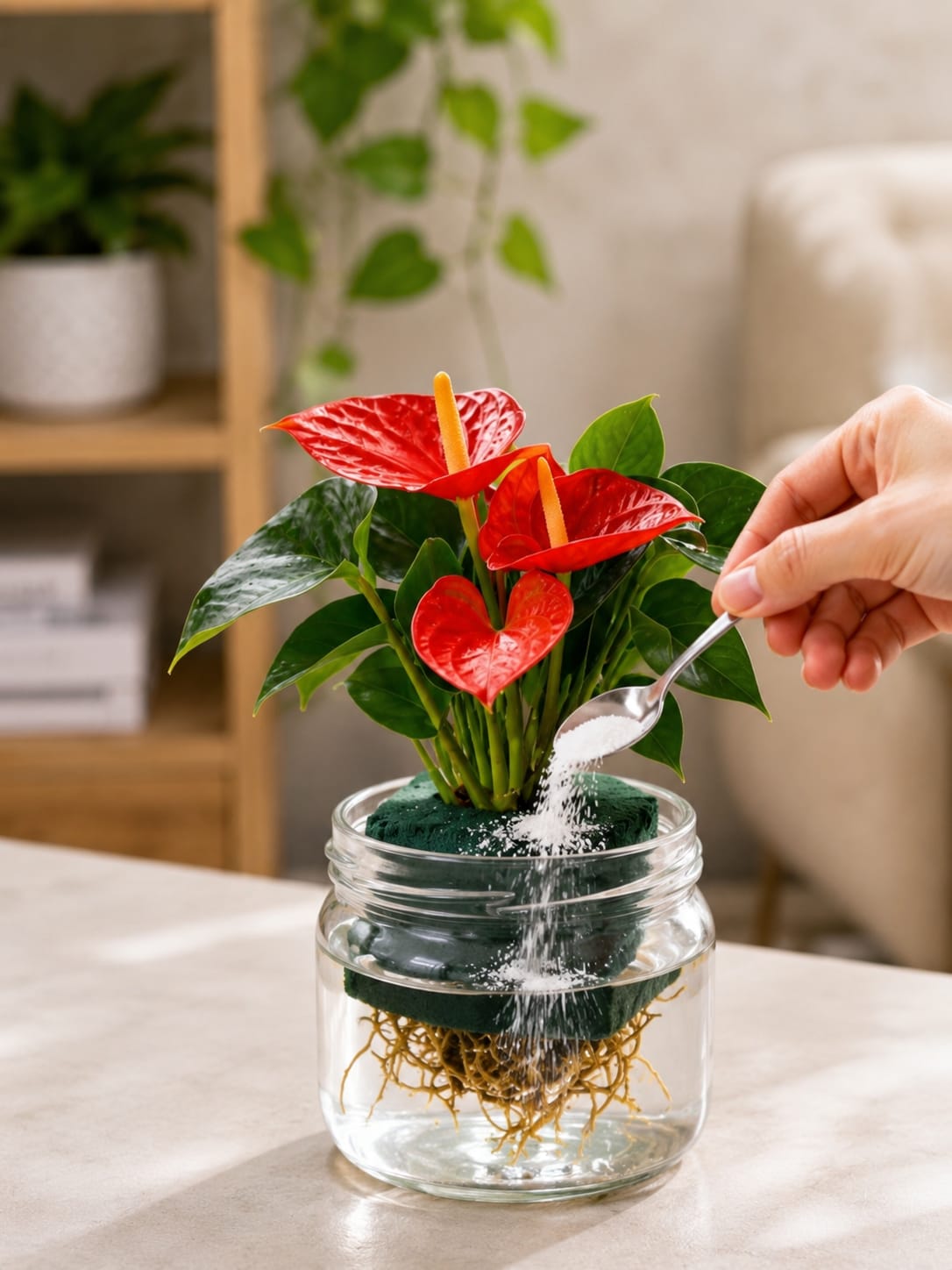
Anthurium plants are among the most eye-catching indoor plants because they combine glossy green leaves with bold, heart-shaped red flowers. Their shiny leaves and colorful blooms make them look elegant beside a window, on a kitchen counter, in a living room, or on a bright shelf. In the images, the plant is displayed in a clear glass jar with visible roots growing in water, creating a clean hydroponic-style arrangement that looks both modern and decorative.
The video shows a hand adding a small amount of fine white powder near the top of the plant arrangement. The powder appears to be applied around the base area rather than directly onto the leaves or flowers. The plant is sitting above water, with its roots visible inside the jar. This means the method is focused on the root zone, water cleanliness, and plant support rather than simply making the flowers look better from the outside.
The exact identity of the white powder cannot be confirmed from the images alone. It may be a plant-safe mineral powder, a hydroponic nutrient powder, a rooting-support product, a water-treatment additive, or another material used in short plant-care videos. Because the product is not labeled, it should not be treated as a guaranteed miracle ingredient. The safest explanation is that this method appears to be a root-zone support step for an anthurium growing in water.
What Plant Is Shown?
The plant appears to be an anthurium, often called flamingo flower or laceleaf. Anthuriums are popular indoor plants because of their glossy foliage and bright spathes, which many people call flowers. The colorful red part is technically a spathe, while the upright yellow or cream spike is the spadix. Together, they create the classic anthurium look.
Anthuriums are tropical plants. They enjoy warmth, humidity, bright indirect light, and a stable growing environment. They do not like harsh direct sun, cold drafts, or soggy, dirty conditions around the roots. When grown in soil, they need a loose, airy potting mix. When grown in water, they need clean water, healthy roots, and careful maintenance.
Why the Clear Jar Looks So Attractive
The clear glass jar is one of the strongest parts of this display. It allows the viewer to see the roots, the water level, and the plant structure. This makes the arrangement feel clean, modern, and intentional. Instead of looking like a normal potted plant, the anthurium becomes a decorative indoor centerpiece.
A clear jar works especially well for anthuriums because the roots can create a beautiful natural pattern inside the water. The visible root system adds texture and interest. It also makes the plant feel fresh and elegant near a sunny window.
What the White Powder Appears to Be Doing
The white powder appears to be added near the plant base and water-growing area. In this kind of setup, the powder may be presented as a way to support cleaner water, stronger roots, or healthier growth. However, without knowing the exact ingredient, it is not safe to say that it will definitely improve the plant.
In hydroponic-style houseplant care, products added to water or around roots may have different purposes. Some are nutrients. Some are mineral supplements. Some are used to reduce odor. Some are meant to support root development. Some are simply viral plant-care tricks that look impressive on video but may not be necessary.
The most important point is this: anthuriums in water need balance. Too much powder, too much fertilizer, or an unknown additive can damage roots or make the water cloudy. A very small amount may look harmless, but repeated use without knowing the product can create problems.
Why Root Health Matters for Anthuriums
Anthuriums can look beautiful above the jar, but their long-term success depends heavily on the roots below. Healthy roots help the plant absorb water and nutrients. They also support new leaves and future blooms. If roots begin to rot, the plant may quickly decline.
Healthy anthurium roots should look firm, pale, tan, or light brown depending on the growing setup. They should not smell rotten. They should not feel slimy or collapse when touched. If roots are black, mushy, or foul-smelling, the plant may be suffering from root rot.
Can Anthuriums Grow in Water?
Yes, anthuriums can often adapt to growing in water, but they need careful care. Water-growing is different from soil-growing. In soil, roots receive oxygen through air spaces in the potting mix. In water, the roots depend on clean water, regular water changes, and enough oxygen around the root system.
Some anthuriums adapt well to water culture, especially when old soil is cleaned off carefully and damaged roots are removed. However, not every plant adjusts perfectly. Some roots may rot during the transition, and new water-adapted roots may need time to develop.
How to Care for an Anthurium in Water
If you want to keep an anthurium in a glass jar, the basic care routine matters more than any secret powder. The water should stay clean, the roots should not be packed too tightly, and the plant should receive bright indirect light.
- Use clean water at room temperature.
- Change the water regularly before it smells bad.
- Keep only the roots in water, not the entire crown.
- Remove any slimy or rotting roots quickly.
- Place the plant in bright indirect light.
- Avoid harsh afternoon sun through glass.
- Use diluted hydroponic nutrients only when needed.
Why the Crown Should Stay Above Water
The crown is the point where leaves and roots meet. In the image, the plant appears to be positioned above the water with roots hanging below. This is important. If the crown stays submerged for too long, it can rot. Anthuriums need moisture around the roots, but the central base should not be constantly buried under water.
A support piece, sponge-like holder, mesh insert, or decorative ring may be used to keep the plant stable at the top of the jar. This helps hold the leaves upright while allowing roots to reach the water below.
What to Avoid With White Powder in Water Plants
White powder can look like an easy plant secret, but unknown powders can be risky. Some powders dissolve and change the water chemistry. Others may settle around the roots. Some may encourage cloudy water or bacterial growth. Others may be too strong for delicate roots.
- Do not use unknown household powder.
- Do not add powder every day or every week.
- Do not let powder collect heavily around the crown.
- Do not use strong fertilizer in an enclosed jar.
- Do not ignore cloudy or smelly water.
- Do not keep rotten roots in the jar.
Why Bright Indirect Light Is Important
The plant is shown near a window, which is a good placement if the light is filtered. Anthuriums need bright indirect light to grow well and produce flowers. Too little light can reduce blooming and cause weak growth. Too much direct sun can burn the leaves and damage the red spathes.
A good location is near an east-facing window, a bright room with filtered sunlight, or a spot close to a window with a sheer curtain. If the plant is in strong afternoon sun, the leaves may develop brown or scorched patches.
How to Keep Anthurium Flowers Bright
Anthurium blooms last longer when the plant is not stressed. Stable warmth, bright indirect light, clean water, and gentle feeding all help. If the plant is in water, nutrients may eventually be needed because plain water does not provide enough food forever.
Use a very diluted liquid fertilizer or hydroponic nutrient designed for houseplants. Strong fertilizer can burn roots, especially in a water jar. A weak feeding solution used occasionally is safer than a heavy dose.
Continue to Page 2
Continue to page 2 for more details about this article and the key points many readers miss on the first page.