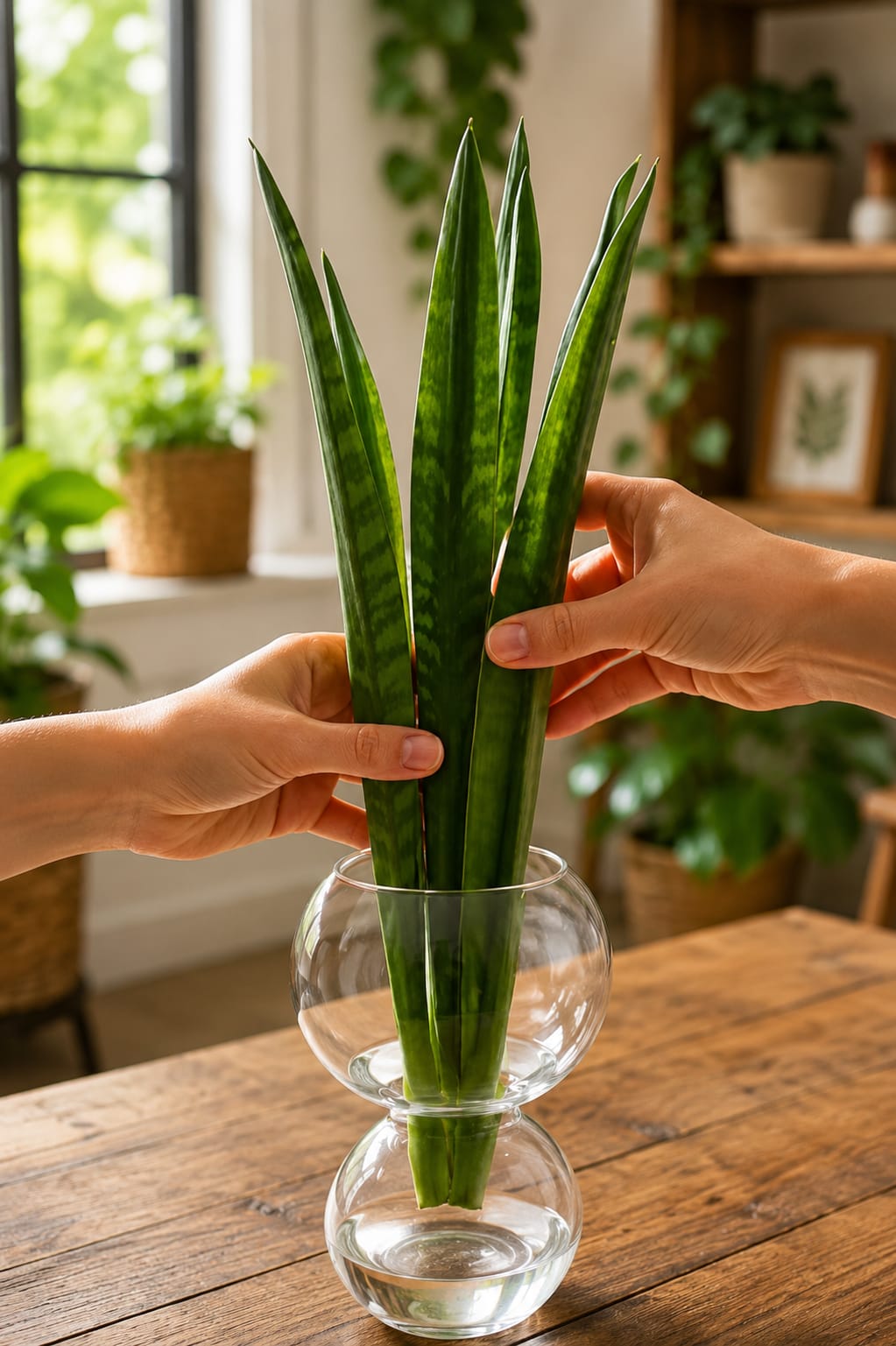
A snake plant can look beautiful in soil, but it can also become a striking indoor decor piece when arranged in water inside a clear glass vase. This simple plant-care trick turns strong upright snake plant leaves into a clean hydro-style display that looks modern, elegant, and easy to maintain. The idea is not complicated: place healthy snake plant cuttings or divisions in a clear glass container, add clean water, support the base with decorative pebbles or water beads, and keep the arrangement in bright indirect light.
This method is especially attractive for people who love indoor plants but want a cleaner look than traditional soil pots. A clear vase shows the water line, the base of the leaves, and eventually the roots. When white pebbles or clear water beads are added, the arrangement becomes more decorative and less messy. It can fit beautifully on a coffee table, bathroom shelf, office desk, kitchen counter, bedroom dresser, or sunny windowsill.
The trick is not about forcing instant growth. Snake plants are slow-growing plants, even in perfect conditions. The real purpose is to create a stable water-rooting setup that keeps the leaves upright, supports root development, and gives the plant a polished indoor display. With the right care, the snake plant can stay fresh in water for a long time and become a living centerpiece.
Why Snake Plants Look So Good in Water Displays
Snake plants have a naturally architectural shape. Their tall, narrow leaves grow upward like green sculptures. This makes them perfect for clear glass arrangements because they do not need many branches, flowers, or trailing vines to look impressive. Even a few leaves can create height and structure.
In a water display, the clean vertical shape becomes even more noticeable. The transparent container makes the arrangement feel lighter, while the upright leaves add strong lines. This combination works especially well in modern interiors, minimalist homes, neutral rooms, and small apartments where every decor piece needs to feel intentional.
A snake plant water arrangement can add:
- Vertical height to a shelf or table
- A clean botanical look without loose soil
- A modern glass-and-green decor style
- Low-maintenance greenery for small rooms
- A fresh focal point for bright indoor corners
- A natural accent for bathrooms and bedrooms
What Makes This Trick Different From Normal Potting
Traditional snake plant care usually involves a pot, drainage holes, and fast-draining soil. That method is still excellent, especially for long-term growth. But the water-display method is different because it focuses on visual presentation and clean root development.
Instead of hiding everything below the soil, the clear container makes the lower part of the plant part of the design. The water, pebbles, and roots all become visible. This gives the plant a more decorative, almost spa-like look.
The main differences are:
- No loose soil is used in the visible display
- The roots can be monitored more easily
- The container becomes part of the decor
- The plant needs cleaner water management
- The arrangement works best with stable leaf bases
- Decorative stones or beads help hold the plant upright
Choosing the Best Snake Plant Pieces for Water
The best pieces for this method are healthy snake plant divisions or strong leaf bases that are firm, clean, and not rotting. If the plant already has roots, it can adapt more easily. If it is a cutting, it may take time to produce new roots.
Choose pieces that have:
- Firm green leaves
- No mushy base
- No black rot spots
- No bad smell
- A clean lower end
- Enough height to stand upright
Avoid using weak, yellow, soft, or damaged leaves. Water propagation works best when the plant material is already healthy. A sick cutting will not become strong simply because it is placed in a pretty vase.
Why the Base Must Stay Clean
The base of the snake plant is the most important part in this setup. If the base rots, the whole arrangement can fail. That is why the lower end should be clean before going into water.
If the leaf or division was freshly cut, it is usually better to let the cut end dry and callus for a short time before placing it in water. This helps reduce the risk of rot. A freshly wounded plant tissue placed directly into water can sometimes become soft.
A clean base should look:
- Firm
- Dry or callused if cut
- Light green or pale at the bottom
- Free from slime
- Free from black spots
- Not soft when gently touched
Choosing the Right Glass Container
The container is part of the beauty of this trick. A clear glass vase, rounded bowl, cylinder vase, or wide jar can all work. The best choice depends on the size of the snake plant pieces and the decor style you want.
A good container should be:
- Clear enough to show the water and stones
- Stable enough to hold upright leaves
- Wide enough for airflow around the base
- Heavy enough not to tip over
- Easy to rinse and clean
- Deep enough to cover the lower roots, not the whole leaf
A rounded glass bowl gives a soft decorative look. A tall cylinder vase creates a modern vertical effect. A wide glass jar gives a casual, clean, homemade style. For a luxury look, choose thick glass with smooth white pebbles.
How Much Water to Add
The water level matters. You do not need to cover the entire base of the plant. In fact, too much water around the leaves can encourage rot. The goal is to keep only the lower rooting area in water while keeping most of the leaf structure above the water line.
A good rule is to keep the water low enough that the base can root but high enough that existing roots stay hydrated. If roots are already present, keep the roots submerged while keeping the crown and leaf centers above water.
Avoid letting water sit inside the tight leaf centers. Snake plants do not like water trapped in their crowns. That can lead to softness and decay.
Why Decorative Pebbles or Water Beads Are Added
White pebbles, clear stones, and decorative water beads can make the arrangement look more elegant. They also help hold the leaves upright. Without support, snake plant leaves can lean to one side, especially in a wide container.
Decorative fillers help by:
- Stabilizing the plant base
- Keeping the leaves upright
- Hiding uneven lower stems
- Creating a clean finished look
- Adding contrast against dark green leaves
- Making the display look intentional
White stones create a bright minimalist look. Clear beads create a soft modern water-garden look. Smooth beige pebbles create a natural spa-like style. Black stones can create dramatic contrast in a modern room.
How to Arrange the Snake Plant in the Vase
Start by placing the snake plant pieces in the empty glass container. Hold them upright and adjust the spacing. The tallest leaves should usually go in the center or back, while shorter leaves can sit toward the front. This creates depth and makes the arrangement look fuller.
Once the leaves are positioned, add the decorative stones or beads slowly around the base. Do not force them down aggressively. The goal is support, not pressure. The plant base should feel stable but not crushed.
After the stones are added, pour clean water gently into the container. Add enough water to reach the rooting area. If the stones float or shift, adjust them carefully.
Adding a Second Plant for a Mixed Display
A snake plant can also be combined with another water-friendly plant cutting for a fuller arrangement. A small upright green cutting can soften the sharp look of the snake plant and create more movement in the design.
Good companion choices may include:
- Pothos cuttings
- Lucky bamboo
- Heartleaf philodendron cuttings
- Small water-rooted tropical stems
- Fresh green foliage cuttings that root easily
The key is not to overcrowd the container. Snake plant leaves already have strong shape. A second plant should complement the arrangement, not hide it.
Should You Add Drops of Plant Food?
Some people add a few drops of liquid plant food or hydroponic nutrient solution to water displays. This can support growth, but it must be done carefully. Too much fertilizer in water can burn roots, encourage algae, or make the water cloudy.
If using a liquid supplement, keep it very diluted. A few drops in a full container is usually safer than a strong mix. Snake plants do not need heavy feeding, especially when they are rooting or adjusting to water.
A safe approach is:
- Use only a product made for plants
- Dilute it more than the normal soil-feeding amount
- Add very little at a time
- Change the water regularly
- Stop using it if the water smells bad or roots darken
How Often to Change the Water
Clean water is the secret to keeping this display healthy. If the water sits too long, it can become cloudy, smell unpleasant, or grow algae. Regular water changes keep the roots fresh and reduce the chance of rot.
Change the water every one to two weeks, or sooner if it becomes cloudy. When changing the water, rinse the container and gently rinse the stones if needed. Avoid scrubbing young roots too harshly.
You should change the water when:
- It becomes cloudy
- It smells bad
- Algae appears
- The base feels slimy
- Mosquito larvae appear
- The water level has dropped too low
Best Light for a Snake Plant Water Arrangement
Snake plants tolerate low light, but they look better and root more strongly in bright indirect light. A water display should not be kept in harsh direct sun because the glass can heat up, algae may grow faster, and the leaves can become stressed.
The best light is:
- Bright but indirect
- Soft morning light
- Filtered window light
- A bright room away from harsh afternoon sun
- Near a window with sheer curtains
If the room is too dark, the plant may survive but grow very slowly. If the light is too strong, the water can warm up and the leaves may fade or scorch.
How to Prevent Rot in Water
Rot is the biggest risk with snake plants in water. The plant is tough, but the base must stay clean and firm. If the lower part becomes soft, brown, black, or smelly, action is needed quickly.
To prevent rot:
- Use clean water
- Keep the crown above the waterline
- Do not overcrowd the glass
- Change water regularly
- Remove any soft or rotting tissue
- Keep the container in bright indirect light
- Avoid too much fertilizer
- Do not let dead leaves sit in the water
If the base starts to rot, remove the plant, cut away the damaged part with clean scissors, let the cut end dry, and restart in clean water.
Can Snake Plants Live in Water Long-Term?
Snake plants can survive in water for a long time if the water is kept clean and the roots are healthy. However, growth may be slower than in soil. Some people keep snake plants in water mainly for decoration, while others use water as a temporary rooting stage before moving the plant to soil.
Long-term water growing works best when:
- The water is changed regularly
- The plant receives enough light
- The base stays firm
- The roots are healthy and pale
- The container is not placed in hot direct sun
- Fertilizer is used very lightly
If you want faster long-term growth, soil may be better. If you want a clean modern display, water can be a beautiful option.
When to Move the Snake Plant From Water to Soil
If the snake plant grows strong roots in water, you can move it to soil later. This is useful if you want the plant to grow larger and become more permanent. The transition should be gentle because water roots and soil roots behave differently.
Move it to soil when:
- The roots are several centimeters long
- The base is firm
- The plant stands upright
- There is no smell or slime
- You want stronger long-term growth
Use a fast-draining mix and water lightly at first. Do not move it into heavy wet soil. The roots need oxygen as they adjust.
How to Keep the Display Looking Elegant
A water display looks best when it is clean. The glass should stay clear, the water should look fresh, and the decorative stones should not be covered in algae. A little maintenance makes the arrangement look expensive instead of neglected.
To keep it elegant:
- Wipe the outside of the glass weekly
- Replace cloudy water quickly
- Rinse stones when needed
- Remove damaged leaves
- Keep the water line neat
- Use matching decor around the vase
Place the arrangement on a wooden tray, marble coaster, woven mat, or ceramic saucer to make it feel more intentional.
Indoor Decor Ideas for This Snake Plant Display
This arrangement can fit many home styles. Because it uses glass, water, and green leaves, it feels fresh and calm. The decorative pebbles make it look styled rather than temporary.
Modern Minimalist Style
Use a clear cylinder vase, white stones, and one or two tall snake plant leaves. Place it on a black shelf, white desk, or neutral console table. Keep the surrounding area uncluttered.
Spa Bathroom Style
Use a rounded glass bowl with smooth white pebbles. Place it near a bright bathroom window. Pair it with rolled towels, natural soap, and a wooden tray for a spa-like feeling.
Warm Natural Style
Use beige pebbles or river stones in a glass vase. Place the arrangement on a wooden table near soft light. Add a candle or small ceramic bowl nearby.
Office Desk Style
Use a small glass jar with a compact snake plant division. Keep it beside a laptop, notebook, or lamp. It adds greenery without taking too much space.
Living Room Centerpiece
Use a wider glass vase with several upright leaves and a few decorative stones. Place it on a coffee table with books or a neutral tray.
Continue to Page 2
Continue to page 2 for more details about this article and the key points many readers miss on the first page.