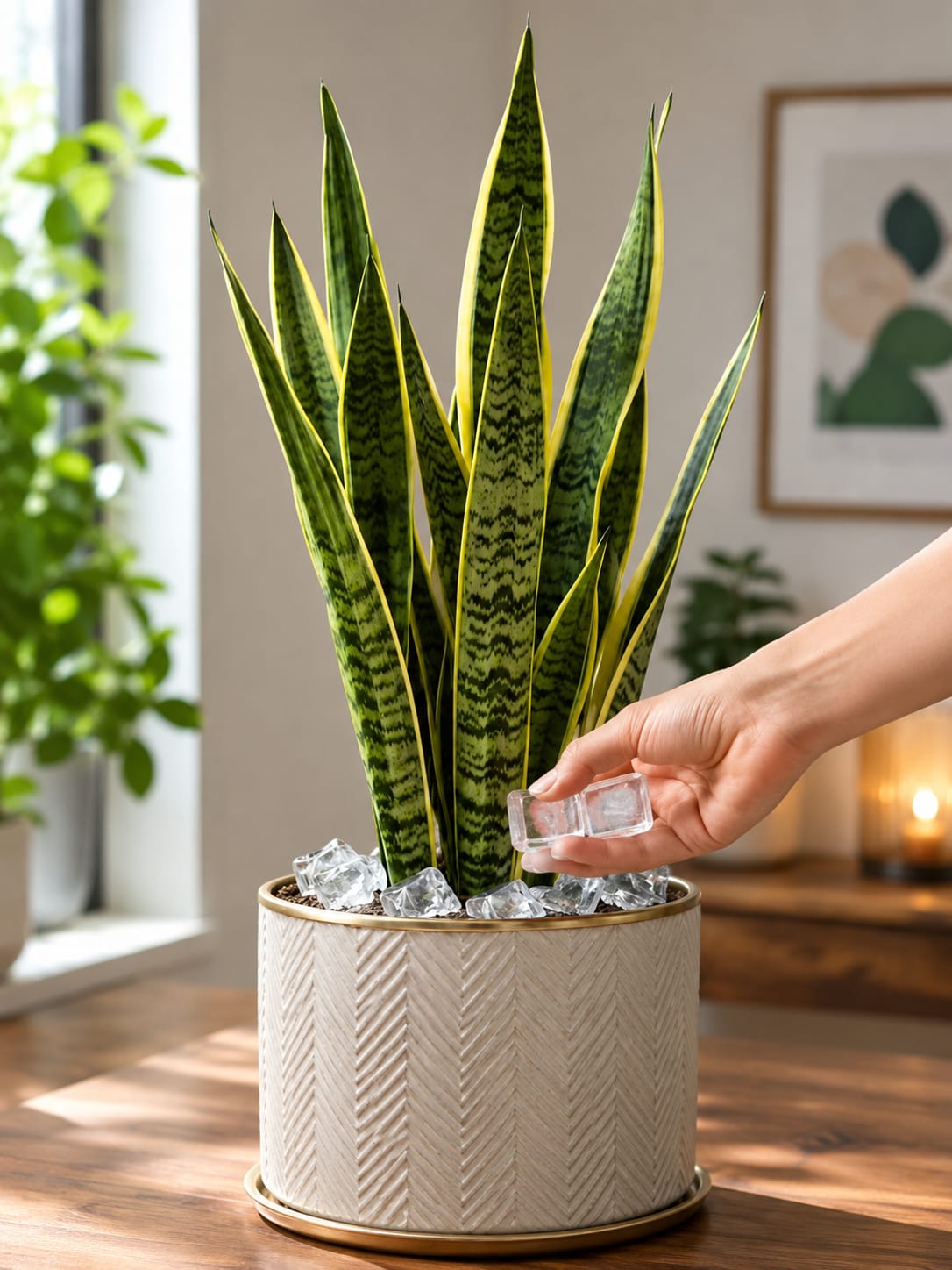
Snake plants are already one of the most stylish indoor plants a homeowner can choose. Their tall sword-like leaves, deep green patterning, and yellow-edged structure make them look architectural, clean, and expensive without needing a complicated care routine. They fit beautifully in modern apartments, bright living rooms, bedrooms, offices, hallways, and minimalist plant corners.
One simple plant-care trick that has become popular is placing ice cubes gently around the soil surface of a snake plant. The idea is not to freeze the plant, shock the roots, or replace proper watering forever. Instead, the method is used as a slow-release watering trick. As the ice melts, it releases a small amount of water gradually into the soil instead of flooding the pot all at once.
This can look especially neat in a decorative planter because the ice cubes also create a clean, bright top-dressing effect for a short time. Around a bold snake plant, the clear cubes contrast beautifully with the upright green leaves and make the arrangement look fresh, modern, and carefully maintained.
However, this trick needs caution. Snake plants are drought-tolerant plants with thick leaves and roots that dislike staying wet for too long. Ice cubes should be used only occasionally, only in small amounts, and only around the soil surface—not pressed against the leaf bases or used on a cold-stressed plant. The safest version of this trick is gentle, controlled, and decorative.
Why This Ice Cube Trick Gets Attention
The appeal of the ice cube method is simple: it feels clean, easy, and controlled. Many people accidentally overwater snake plants because they pour too much water into the pot. A few ice cubes melt slowly, giving the soil a smaller amount of moisture over time.
For busy plant owners, this can feel like a tidy way to avoid messy watering cans, splashing soil, and water running over the edge of a decorative planter. It also makes the plant display look intentional, especially when the snake plant is sitting in a textured ceramic pot, a neutral planter, or a modern container on a shelf or table.
The trick may help with:
- Slower water release
- Cleaner soil surface care
- Less chance of pouring too much water at once
- A neater indoor plant display
- Temporary decorative contrast around the plant
- Simple care for people who forget watering amounts
But the method should never be treated as magic. The health of a snake plant still depends on light, drainage, soil quality, and careful watering habits.
What Plant This Trick Works Best With
This method is usually shown with a snake plant, also known as Sansevieria or Dracaena trifasciata. Snake plants are famous for being low-maintenance and drought tolerant. Their upright leaves store moisture, which means they do not need frequent watering.
A snake plant can usually be recognized by:
- Tall sword-shaped leaves
- Green marbled patterns
- Yellow or pale edges on variegated types
- Firm upright growth
- Thick leaves that store water
- A sculptural look that suits modern decor
Because snake plants do not like wet roots, an ice cube watering method must be used carefully. The goal is to give the plant a light, slow drink—not to keep the pot cold or constantly damp.
How Ice Cubes Affect the Soil
When ice cubes sit on the soil surface, they slowly melt. This means the water enters the pot gradually instead of all at once. For some plant owners, this makes watering feel more controlled.
The slow melting process may help reduce:
- Sudden flooding
- Soil splash
- Water running down the sides too quickly
- Mess around decorative pots
- Accidental heavy watering
Still, the cold temperature is the part that requires caution. Snake plants come from warm environments and do not need cold water on their roots. A few cubes placed on the outer soil surface may be tolerated occasionally, but large amounts of ice can chill the root zone and stress the plant.
Why Placement Matters
The safest way to use this trick is to place the ice cubes gently around the outer soil surface, away from the main crown of the plant. Do not push ice cubes directly against the base of the leaves. The crown area should stay as dry and stable as possible because trapped moisture there can increase the risk of rot.
Good placement means:
- Place cubes on the soil, not inside leaf openings
- Keep ice away from the central crown
- Use only a few cubes
- Do not bury ice into the soil
- Do not let melted water collect in a saucer
- Use the trick only when the soil is dry
The ice should melt naturally into the potting mix. If water collects at the bottom of the planter, the plant can still suffer from overwatering even if the water came from ice.
How Many Ice Cubes Should You Use?
For a small snake plant, one or two small ice cubes are enough. For a larger pot, three to four may be enough depending on the pot size, soil type, and indoor temperature. The goal is not to cover the whole soil surface with ice.
A simple guide:
| Pot Size | Suggested Ice Amount | Important Note |
|---|---|---|
| Small pot | 1 small cube | Use only when soil is fully dry |
| Medium pot | 2 small cubes | Place away from the crown |
| Large pot | 3 to 4 small cubes | Check drainage carefully |
| Decorative pot without drainage | Avoid this method | Water can collect at the bottom |
It is better to use too little than too much. Snake plants recover from dryness more easily than from soggy soil.
When This Trick Makes Sense
The ice cube trick makes the most sense when the snake plant is already healthy and the soil is dry. It can be useful for people who tend to pour too much water at once. It can also be a neat styling trick when you want the plant area to look tidy and fresh.
This method may make sense when:
- The snake plant is firm and healthy
- The soil is dry
- The room is warm
- The pot has drainage holes
- The plant is not already stressed
- You only use a small amount
- You want a slow-release watering effect
It is less suitable when:
- The room is cold
- The plant is already yellowing
- The soil is wet
- The pot has no drainage
- The plant has mushy leaf bases
- The roots are weak or rotting
- You are using many ice cubes at once
Why Drainage Is Still More Important Than Ice
A decorative planter can make a snake plant look expensive, but drainage is still the most important detail. If the pot has no drainage hole, melted ice water can sit at the bottom. This creates the same problem as overwatering.
Good drainage allows extra water to escape. Without it, the root zone stays wet for too long, and snake plants can begin to rot from below.
A good snake plant pot should have:
- Drainage holes
- A saucer that can be emptied
- A breathable soil mix
- Enough weight to support tall leaves
- Space for roots without being oversized
If you love decorative pots, keep the snake plant in a nursery pot with drainage and place that inside the decorative cover pot. After watering, remove the inner pot, let it drain, and then return it to the cover pot.
Best Soil for Snake Plants
The best soil for snake plants is loose, airy, and fast draining. Heavy indoor potting soil can hold too much water around the roots. This is especially risky when using any slow watering method.
A good snake plant mix can include:
- Cactus or succulent soil
- Perlite
- Pumice
- Coarse sand
- Orchid bark
- A small amount of regular potting mix
The goal is simple: the soil should hold enough moisture for the roots to drink, but it should not stay soggy for many days.
How Often to Use Ice Cubes on a Snake Plant
This trick should not be used every day. Snake plants are slow-growing, drought-tolerant plants. They prefer dry periods between waterings.
A safer routine would be:
- Use ice cubes only when the soil is fully dry
- Wait at least several weeks between watering sessions
- Use fewer cubes in winter
- Avoid the method during cold weather
- Stop if leaves yellow, soften, or collapse
In many homes, a snake plant may only need watering every two to four weeks, sometimes even less in winter. The exact timing depends on light, temperature, pot size, and soil mix.
Signs the Plant Is Getting Too Much Water
Even if water is delivered slowly through ice, too much moisture can still harm the plant. Watch for signs of overwatering.
Common warning signs include:
- Yellowing leaves
- Soft leaf bases
- Mushy areas near the soil
- Leaves falling over
- Bad smell from the soil
- Soil staying wet for too long
- Black or slimy roots
If any of these signs appear, stop using ice cubes and check the root zone. A powder, tonic, ice cube, or decorative trick cannot fix rot if the roots are already damaged.
Can Ice Cubes Damage Snake Plants?
They can if used incorrectly. Too much ice can chill the soil, stress the roots, and create wet conditions. The risk is higher in cold rooms, winter months, shaded corners, and pots without drainage.
To reduce risk:
- Use only small cubes
- Keep them away from the crown
- Use them rarely
- Make sure the room is warm
- Use fast-draining soil
- Do not leave the plant sitting in water
For many snake plants, normal room-temperature watering is still the safest method. The ice cube trick is best viewed as an occasional controlled-watering idea, not the main care routine.
Continue to Page 2
Continue to page 2 for more details about this article and the key points many readers miss on the first page.