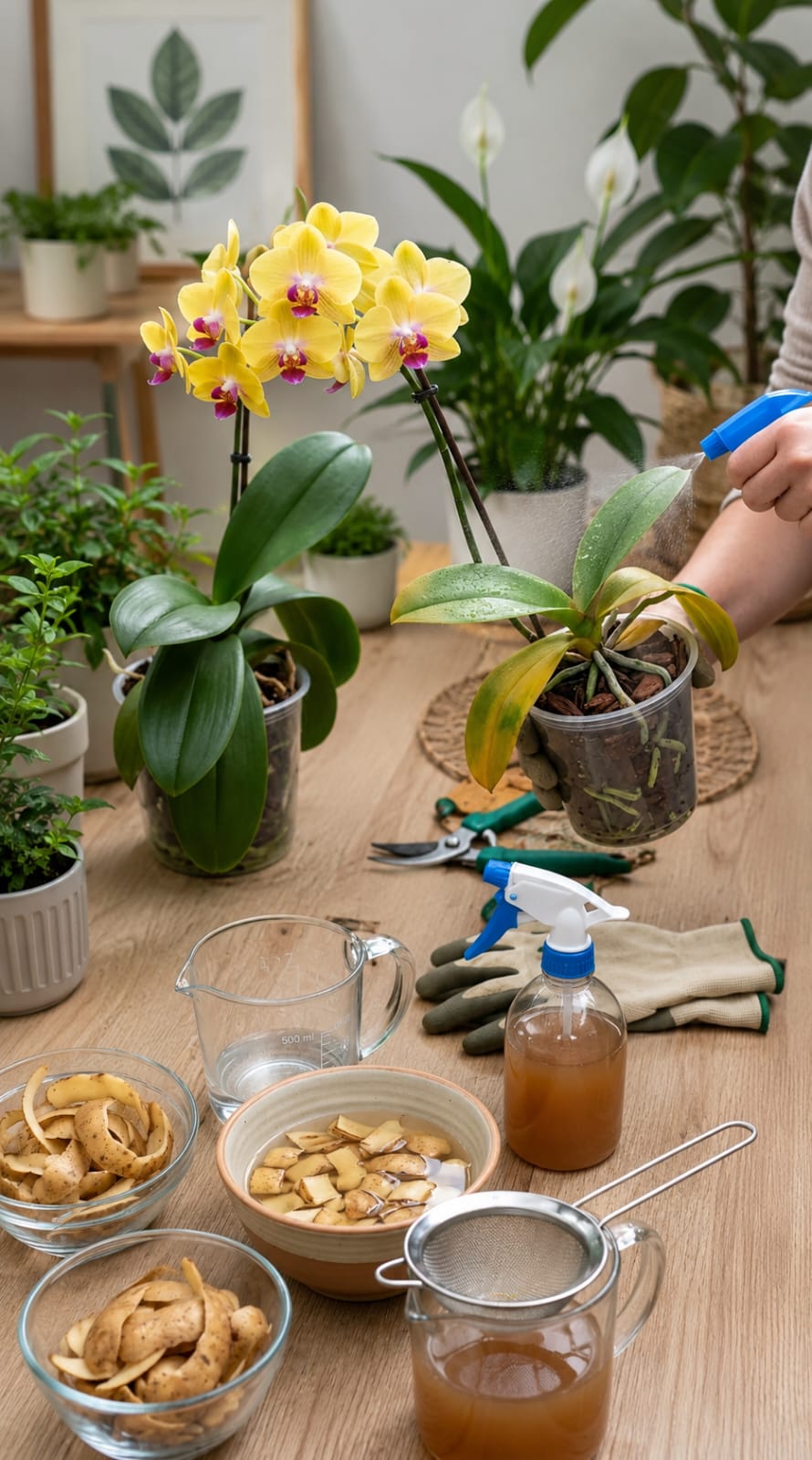
Orchids have a special way of making any indoor garden feel more elegant. Their glossy leaves, sculptural roots, and delicate blooms can turn a simple windowsill or plant table into a refined display. But when an orchid begins to look tired, with yellowing leaves, dull roots, weak flower spikes, or slow growth, many plant lovers start looking for gentle natural ways to support recovery without overwhelming the plant.
One popular home-garden idea is using potato peel water as a light natural tonic for orchids. Potato peels contain small amounts of minerals and organic compounds that can be infused into water, creating a mild homemade plant rinse. When used carefully, this type of water can be part of a simple orchid-care routine focused on root freshness, leaf support, and cleaner growth. It is not a miracle cure, and it should not replace proper orchid fertilizer, correct watering, good light, and healthy airflow. But as a gentle occasional boost, it can fit beautifully into a natural plant-care routine.
The key is moderation. Orchids are sensitive plants, especially Phalaenopsis orchids, which are commonly grown indoors. Their roots need air, drainage, and a light touch. Too much homemade liquid, too much organic residue, or constant spraying can lead to rot, mold, or sticky buildup. The safest version of this trick uses a very diluted, strained potato peel infusion, applied only occasionally and never poured heavily into the crown of the plant.
Why Potato Peel Water Is Used for Orchids
Potato peels are often used in homemade gardening because they contain traces of potassium and other nutrients. Potassium is important for many plant functions, including general vigor, water movement inside the plant, and bloom support. However, the amount released into water from potato peels is mild and unpredictable, so it should be treated as a light natural tonic rather than a strong fertilizer.
For orchids, gentle care is usually better than aggressive feeding. Orchids do not like heavy soil, heavy fertilizer, or constant wetness. Their roots are designed to breathe. A weak potato peel infusion can be used as a soft rinse or light spray around the root zone, but it should always be filtered well. Any pieces of potato left in the pot can decay and attract fungus gnats or mold.
This trick is best used for orchids that are already growing in a proper orchid mix, such as bark chips, charcoal, perlite, or sphagnum moss in controlled amounts. If the orchid is sitting in compact soil, no tonic will solve the real problem. The first priority is always healthy roots and proper drainage.
What This Trick Can and Cannot Do
Potato peel water may help create a gentle care ritual that supports the plant during active growth. It can lightly refresh the root area and provide small traces of nutrients. It may also encourage plant owners to inspect their orchids more carefully, which is often the real reason plants improve. When you check roots, adjust watering, improve light, and clean the leaves, the orchid naturally responds better.
However, potato peel water cannot instantly revive a dying orchid. It cannot repair rotten roots overnight. It cannot force flowers all year round. It cannot replace an orchid’s natural rest period. It should never be presented as a guaranteed bloom trick. Orchids bloom when several conditions come together: healthy roots, enough light, correct watering, mild feeding, proper temperature changes, and patience.
The best way to use this method is as one small part of a balanced routine. Think of it as a gentle homemade supplement, not the main solution.
Best Orchids for This Method
This method is most commonly used with Phalaenopsis orchids, also called moth orchids. These orchids are popular indoors because they grow well in moderate household temperatures and can bloom for weeks or months when cared for correctly. Their thick leaves and visible aerial roots make it easy to monitor plant health.
Other orchids may have different needs. Some prefer drier conditions, some need cooler temperatures, and some are more sensitive to residue. If you are growing rare orchids, miniature orchids, or orchids mounted on bark, be extra cautious. Always test homemade plant treatments on one plant first before using them on your whole collection.
Ingredients You Need
To make a gentle potato peel orchid tonic, you only need a few simple items:
- Clean potato peels from 1 medium potato
- 2 cups of clean water
- A bowl or jar
- A fine strainer or clean cloth
- A spray bottle or small watering cup
Use fresh peels from potatoes that are not moldy, green, or rotten. Avoid peels from potatoes that have been heavily treated with salt, oil, seasoning, or cooking ingredients. Only plain raw peels should be used.
If possible, rinse the potato before peeling. This removes surface dirt and reduces the chance of unwanted residue entering the mixture.
How to Make Potato Peel Water for Orchids
Start by placing clean potato peels in a bowl or jar. Add about 2 cups of water. Let the peels sit for several hours, or overnight if you want a slightly stronger infusion. For a cleaner method, you can also pour warm water over the peels and let the mixture cool completely before using it.
After soaking, strain the liquid very well. This step is extremely important. The final liquid should contain no peel fragments, pulp, or cloudy pieces. If needed, strain it twice through a fine mesh strainer or clean cloth. The cleaner the liquid, the safer it is for orchid use.
Once strained, dilute the liquid again with fresh water. A safe beginner ratio is one part potato peel water to two or three parts clean water. Orchids prefer weak solutions. Strong homemade mixtures are more likely to cause problems than benefits.
How to Apply It Safely
There are two gentle ways to use potato peel water on orchids: as a root-zone rinse or as a light spray around the outer roots. For potted orchids, the safest method is to apply a small amount around the bark mix, avoiding the crown and leaf joints. The crown is the center area where the leaves meet. Water trapped there can cause crown rot, especially indoors.
Pour a small amount around the potting mix, then allow it to drain completely. Never let the orchid sit in a saucer full of liquid. If using a spray bottle, lightly mist the outer roots and top layer of bark. Do not soak the flowers. Do not heavily spray the leaves in a cool or poorly ventilated room.
Use this trick only once every three to four weeks during active growth. That is enough. More frequent use can create buildup or encourage fungal problems.
When Not to Use Potato Peel Water
Do not use potato peel water on orchids with mushy roots, bad smells, blackened crowns, or severe rot. These plants need root inspection, trimming of dead roots, fresh orchid mix, and careful drying. Adding any homemade liquid to a rotting plant can make the problem worse.
Also avoid using this method right after repotting. Newly repotted orchids need time to adjust. Plain water is best during the first few weeks. Once the plant shows stable growth, you can consider a mild natural tonic if desired.
Do not use potato peel water if the mixture smells sour, fermented, or unpleasant. Fresh homemade plant water should smell mild. If it smells bad, discard it immediately.
How to Store the Mixture
It is best to use potato peel water fresh. Homemade mixtures can spoil quickly, especially in warm rooms. If you make more than you need, store it in the refrigerator for no more than one or two days. After that, discard it.
Never keep potato peel water in a spray bottle for weeks. Organic liquids can grow bacteria and create bad odors. Clean the spray bottle after use so residue does not build up inside.
Why Straining Matters So Much
Orchid roots need clean airflow. Pieces of potato peel left in the bark can break down and create a damp, decaying environment. This can attract fungus gnats and encourage mold. It can also clog the airy spaces between bark chips, reducing oxygen around the roots.
That is why the liquid must be filtered carefully. A clear, diluted infusion is much safer than a thick, starchy mixture. If the liquid looks heavy, cloudy, or slimy, dilute it more or do not use it.
Pairing This Trick With Proper Orchid Care
A homemade tonic works best when the basic care is already correct. Orchids need bright indirect light. A window with soft morning light is often ideal. If the leaves are very dark green, the orchid may not be receiving enough light to bloom. If the leaves become yellow, scorched, or patchy, the light may be too strong.
Watering is also essential. Most orchids should be watered when the potting mix is nearly dry but before the roots become extremely shriveled. In a clear pot, healthy Phalaenopsis roots often look green after watering and silvery when dry. This makes it easier to know when to water.
Airflow matters too. Orchids dislike stagnant damp air. After using any spray or rinse, keep the plant in a place with gentle airflow so moisture can evaporate from the leaves and crown.
Signs Your Orchid Is Responding Well
A healthy orchid does not always respond with flowers immediately. Look first for root and leaf improvements. Positive signs include firm green or silvery roots, fresh root tips, glossy leaves, steady new leaf growth, and a stable crown. If the plant is in its blooming season, you may eventually see a new flower spike.
Do not judge success after one application. Orchids grow slowly. A good care routine may take weeks or months to show visible results. The goal is steady improvement, not instant transformation.
Signs You Should Stop Using It
Stop using potato peel water if you notice mold on the bark, sour smells, sticky residue, fungus gnats, soft roots, or yellowing that worsens after application. These signs may mean the mixture is too strong, too frequent, or not suitable for the plant’s current condition.
If this happens, flush the pot with plain water, allow it to drain well, and let the orchid dry properly. Check the roots if the problem continues.
Can You Spray the Leaves?
It is better to avoid spraying potato peel water directly on orchid leaves. Leaves can hold residue, and moisture can collect in leaf joints. If you want to clean orchid leaves, use plain water on a soft cloth. Wipe gently and dry the leaf joints afterward.
If you do spray near the plant, focus on the exposed roots and top bark layer, not the flowers or crown. Flowers are delicate and can spot easily when sprayed.
Can It Help Yellow Leaves?
Yellow leaves can happen for many reasons. One older bottom leaf turning yellow may be natural aging. Several yellow leaves can signal overwatering, root rot, low light, sunburn, nutrient imbalance, or stress. Potato peel water will not fix yellow leaves unless the real issue is mild nutrient stress and all other care is correct.
Before using any tonic, inspect the roots. If the roots are brown, mushy, or hollow, the plant needs root care first. If the roots are healthy but the leaves are pale, check light and feeding. A gentle tonic may support the plant, but it should not be the only step.
Can It Make Orchids Bloom?
Blooming depends on plant maturity, light, root health, temperature, and season. Potato peel water may provide a mild potassium-containing rinse, but it will not force blooms by itself. For Phalaenopsis orchids, a slight nighttime temperature drop during the right season can help trigger flower spikes. Bright indirect light is also essential.
If your orchid has not bloomed for a long time, move it to brighter indirect light, keep roots healthy, fertilize lightly with proper orchid fertilizer during active growth, and be patient. Homemade tonics can be occasional support, not the main bloom trigger.
Using Potato Peel Water With Orchid Fertilizer
Do not use potato peel water and regular fertilizer at the same time. Too many inputs can stress roots. If you fertilize your orchid once or twice a month, use the potato peel rinse on a separate watering cycle, and keep it very weak.
A simple schedule could look like this: plain water most of the time, orchid fertilizer at half strength during active growth, and potato peel water once a month if the plant is healthy. Always flush with plain water occasionally to prevent buildup in the potting mix.
Best Pot and Medium for Strong Orchid Roots
A clear plastic orchid pot is useful because it lets you see root health. Drainage holes and side ventilation holes are helpful. Orchids do not need a deep decorative pot unless the inner pot drains well.
For most Phalaenopsis orchids, bark mix is a good choice. Bark allows air around the roots and dries better than soil. Some growers add perlite, charcoal, or a little sphagnum moss. The exact mix depends on your home. If your home is dry, a small amount of moss may help. If your home is humid, bark and charcoal may be safer.
Never plant most common orchids in dense garden soil. Their roots can suffocate and rot.
Continue to Page 2
Continue to page 2 for more details about this article and the key points many readers miss on the first page.