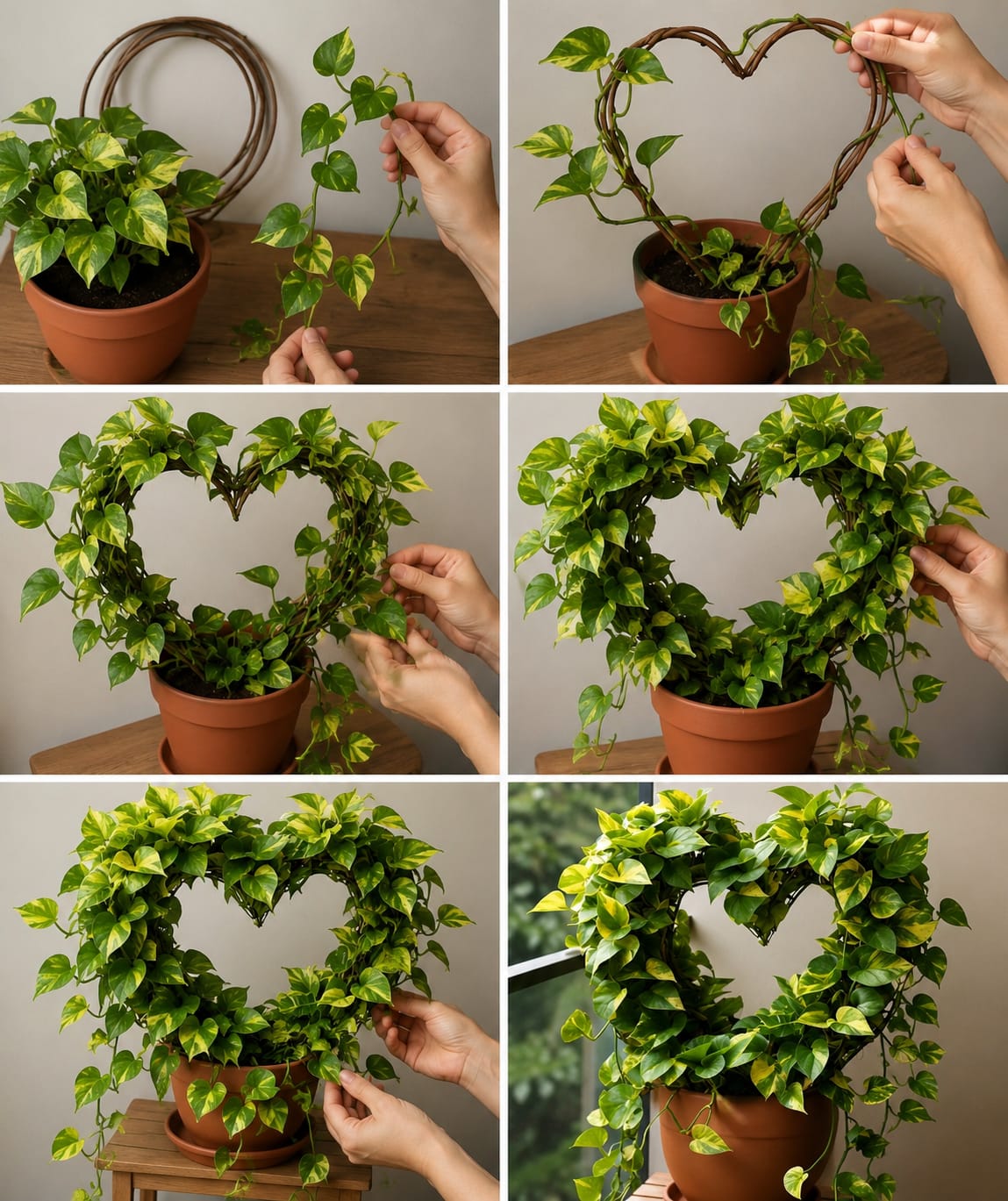
Pothos is one of the easiest and most beautiful plants to shape into creative indoor decor. Its flexible vines, heart-shaped leaves, fast growth, and forgiving nature make it perfect for plant styling projects. One of the most charming ideas is training pothos vines around a heart-shaped frame to create a living green heart. This project turns a simple potted plant into a romantic, lush, handmade piece of living decor that can brighten a table, shelf, balcony, windowsill, bedroom corner, or plant stand.
A heart-shaped pothos topiary looks soft, fresh, and full of personality. It combines the beauty of a classic trailing houseplant with the structure of a decorative frame. The plant grows around the heart support, covering it with variegated green and yellow leaves. Over time, the vines thicken and the shape becomes fuller until the whole heart looks like it was made from living foliage.
This project is perfect for plant lovers who enjoy easy DIY home decor. It does not require advanced gardening skills. Pothos is beginner-friendly, grows well indoors, and handles pruning better than many houseplants. With a simple heart frame, soft ties, a stable pot, and the right care routine, you can create a living plant sculpture that keeps growing and changing.
This guide explains how to make a heart-shaped pothos topiary from start to finish. You will learn what materials to use, how to choose the best pothos variety, how to make or buy a heart frame, how to train vines gently, how to keep the plant full, how to water and prune it, and how to style it beautifully indoors. The goal is to create a plant that looks decorative but still stays healthy.
Why Pothos Is Perfect for a Heart-Shaped Topiary
Pothos is one of the best plants for vine training because it grows long, flexible stems that are easy to guide around supports. Unlike stiff upright plants, pothos naturally wants to trail, climb, and wrap. This makes it ideal for shaping around hoops, trellises, poles, mirrors, wall clips, or decorative frames.
The leaves also match the theme beautifully because many pothos leaves are naturally heart-shaped. When you train those leaves around a heart frame, the design feels extra charming. The plant becomes both the shape and the decoration.
Pothos is also forgiving. If one vine grows in the wrong direction, you can redirect it. If a stem becomes too long, you can prune it. If the plant becomes thin at the base, you can root cuttings and add them back into the pot. This makes it a good project for beginners and experienced plant lovers.
Best Pothos Varieties for a Heart Topiary
Many pothos varieties can work for this project, but some are better because of their color, growth speed, and leaf size.
- Golden pothos: Fast-growing, strong, and beautifully variegated with green and yellow leaves.
- Marble queen pothos: Elegant white and green variegation, slower growth, brighter light needed.
- Neon pothos: Bright lime-green leaves that create a bold fresh look.
- Jade pothos: Solid green leaves, good for lower light and classic greenery.
- Manjula pothos: Cream, green, and silver tones with a soft decorative look.
- N’Joy pothos: Compact leaves with strong white variegation, good for smaller frames.
Golden pothos is usually the easiest choice because it grows quickly and fills the frame faster. If you want a dramatic bright heart, neon pothos is beautiful. If you want a soft romantic look, marble queen or manjula can be stunning, but they need more light to keep their variegation strong.
What You Need
- A healthy pothos plant with long vines
- A heart-shaped frame or flexible vine wreath
- Terracotta, ceramic, or nursery pot with drainage
- Light indoor potting mix
- Soft plant ties
- Floral wire, optional
- Small clips, optional
- Scissors or pruning shears
- Watering can
- Plant stand or table for display
- Rooted pothos cuttings, optional for fullness
The most important material is the frame. It should be strong enough to hold the vines but gentle enough not to cut them. A natural grapevine heart frame works beautifully because the pothos can weave through it. A metal heart frame also works, especially if wrapped with moss, jute, or coconut fiber.
Choosing the Right Pot
The pot should be stable because the heart frame adds height and weight. A lightweight plastic pot may tip over if the topiary becomes full. Terracotta is a good choice because it is heavier and breathable. Ceramic pots also work well, especially for indoor decor.
The pot must have drainage holes. Pothos does not like sitting in water. If you use a decorative cover pot without drainage, keep the plant in a nursery pot inside it. After watering, let the nursery pot drain fully before placing it back into the cover pot.
A medium pot is usually best. If the pot is too small, the frame may be unstable. If the pot is too large, the soil may stay wet too long. Choose a pot that fits the root ball and supports the frame comfortably.
Choosing the Heart Frame
You can use a ready-made heart-shaped wreath, a wire heart frame, a grapevine heart frame, or a handmade frame from bendable branches. The frame should be tall enough to rise above the pot and wide enough to create a clear heart shape.
A grapevine frame gives a rustic natural look. It already has texture, so pothos vines can be tucked into it easily. A wire frame looks cleaner and modern, but you may need to wrap it with jute or moss so the plant ties have something soft to hold.
The bottom of the frame should be inserted deeply into the pot or attached to stakes. If it wobbles, the vines may shift and the plant may look uneven.
How to Make a Simple Heart Frame
If you do not want to buy a frame, you can make one. Use thick floral wire, bendable grapevine, willow branches, or coated garden wire. Bend the material into a heart shape. Twist or secure the bottom ends together, leaving enough length to push into the soil.
For extra strength, attach the heart to two thin bamboo stakes. Push the stakes into the pot behind the plant. This keeps the frame upright and prevents it from falling forward.
Wrap the frame with jute twine, coconut fiber, or sphagnum moss if you want a natural look. This also gives the vines something soft to rest against.
Step 1: Start With a Healthy Pothos
Choose a pothos plant with several long vines and healthy leaves. The plant should not be severely wilted, pest-infested, or root-rotted. A healthy plant will adjust to training more easily.
If your pothos is small, you can still begin the project, but it will take longer to fill the heart. You can also add rooted cuttings to the pot to make it fuller from the start.
Look for vines that are flexible and not too woody. Younger vines are easier to guide around curves.
Step 2: Place the Frame in the Pot
Insert the bottom of the heart frame into the soil behind or around the pothos. Push it deep enough to stand firmly. If needed, use bamboo stakes to anchor the frame. The frame should not move when you touch it lightly.
Make sure the heart is centered over the pot. A centered frame looks balanced and keeps the pot from tipping. If you want a more artistic look, you can place the heart slightly to one side, but the pot must still stay stable.
Do not damage the pothos roots too much when inserting the frame. Push slowly and avoid forcing thick stakes through the root ball.
Step 3: Choose the Vines to Train
Look at the plant and choose the longest, healthiest vines. These will become the main vines that cover the heart frame. Do not pull every vine upward. Some vines can trail downward for a soft natural look.
Start with two or three main vines. Guide one up the left side of the frame, one up the right side, and one around the top if it is long enough. As the plant grows, you can add more vines to fill empty spaces.
Training works best when done gradually. Do not force a short vine to cover the whole frame in one day.
Step 4: Wrap the Vines Gently
Guide each vine around the frame in a loose spiral. Keep the leaves facing outward so they receive light and look attractive. If leaves are trapped behind the frame, gently adjust them.
Use soft plant ties, loose twine, or small clips to hold the vine in place. Do not tie tightly. The vine needs room to grow thicker over time. Tight ties can cut into the stem and damage the plant.
It is better to use several loose ties than one tight tie. Support the vine at key points, especially around curves and the top dip of the heart.
Step 5: Fill the Shape Slowly
The first day may not look perfectly full. That is normal. A living topiary becomes better with time. As new growth appears, guide it into empty areas. Pinch or prune long bare stems to encourage branching.
If one side of the heart looks thinner, direct new vines toward that side. If the top looks empty, wait until vines grow longer and guide them across the top curve.
Be patient. The most beautiful heart topiaries are shaped over weeks and months, not forced in one afternoon.
Step 6: Add Rooted Cuttings for Fullness
If the base of the plant looks thin, propagate pothos cuttings and plant them back into the pot. This creates a fuller lower section and gives you more vines to train later.
Cut a vine below a node. Place the cutting in water with the node submerged and leaves above water. Once roots grow a few inches long, plant the cutting into the pot.
Adding cuttings back into the same pot is one of the best ways to create a dense, lush topiary.
Best Light for a Heart-Shaped Pothos
Pothos grows best in bright indirect light. It can tolerate lower light, but growth will be slower and variegation may fade. Since this project depends on vine growth, brighter filtered light is best.
Place the topiary near a window where it receives soft light. Morning light is usually safe. Harsh afternoon sun can burn leaves, especially on variegated varieties. If the plant is too far from a window, use a grow light.
Good light helps the leaves stay closer together along the vine. Low light often creates long bare sections with fewer leaves.
Watering a Pothos Topiary
Water when the top 1 to 2 inches of soil feel dry. Pothos likes moisture but does not like soggy roots. Water thoroughly until water drains from the bottom, then empty the saucer.
Because the frame and vines can make the plant look decorative, it is easy to forget basic watering checks. Always check the soil instead of watering on a strict calendar.
During warm bright months, the plant may need water more often. During winter or low light, it will need less.
Best Soil Mix for Pothos
Pothos grows well in a light, airy potting mix. Dense soil can stay too wet, especially in decorative pots.
- 2 parts indoor potting mix
- 1 part perlite
- 1 part coco coir
- 1/2 part orchid bark, optional
This mix gives the roots moisture and oxygen. Healthy roots support stronger vines and better leaf growth.
Feeding for Faster Growth
Feed pothos lightly during spring and summer. Use a balanced houseplant fertilizer diluted to half strength once every 4 to 6 weeks. Do not overfeed. Too much fertilizer can burn roots and cause weak growth.
If the plant is in low light, feed less. Plants use nutrients best when they have enough light.
Stop or reduce feeding during winter unless the plant is actively growing under strong light.
How to Prune the Heart Topiary
Pruning keeps the heart shape neat and encourages fuller growth. If a vine grows too long or hangs awkwardly, trim it just above a node. New growth can appear from that area.
Do not remove too much at once. Light pruning every few weeks is better than cutting the whole plant back heavily.
Save healthy cuttings and root them. You can use them to fill the pot or start new pothos plants.
How to Keep the Heart Shape Clear
As the pothos grows, it may start to cover the center of the heart. This can look lush, but if too many vines cross the center, the heart shape may disappear. Guide vines around the outside edges and prune or redirect stems that block the open center.
The open center is what makes the topiary look like a heart. Keep it visible by training vines along the frame rather than letting everything tangle across the middle.
A little looseness is beautiful, but too much growth in the center can make the design look messy.
How to Make the Heart Look Fuller
To make the heart look fuller, encourage branching and add more vines. Prune long bare stems. Root cuttings and plant them back into the pot. Rotate the pot so all sides receive light.
You can also weave new vines through empty spaces in the frame. Be gentle and avoid snapping stems. Younger vines are easier to weave than older ones.
Fullness comes from time, light, and regular gentle training.
Using a Moss-Wrapped Heart Frame
A moss-wrapped frame can help create a more natural topiary. It gives aerial roots something to grip and keeps the design soft. You can wrap the heart frame with sphagnum moss and secure it with fishing line or twine.
If you use moss, keep it lightly moist but not wet. Too much moisture near vines can cause rot or mold indoors. A dry jute-wrapped frame is lower maintenance.
Moss frames are beautiful, but they need more attention.
Using a Grapevine Heart Frame
A grapevine heart frame is one of the easiest options. It is strong, rustic, and already decorative before the plant covers it. The pothos vines can be tucked into the natural twists of the frame.
This style looks especially good with terracotta pots, wooden tables, woven baskets, and natural home decor. It gives a handmade cottage feeling.
Because grapevine frames are thicker than wire, they create a fuller heart shape from the beginning.
Decor Styling Ideas
A heart-shaped pothos topiary can fit many decor styles. It is romantic without being too fancy, natural without being messy, and creative without needing complicated tools.
Romantic Bedroom Style
Place the topiary on a bedside table or dresser with soft neutral decor, candles, and warm light.
Modern Living Room Style
Use a simple ceramic pot and a clean heart frame. Place it on a side table or console.
Boho Plant Corner
Use a terracotta pot, jute-wrapped frame, woven basket, and trailing vines.
Balcony Garden Style
Place it near a balcony door with bright indirect light and let a few vines trail naturally.
Gift Plant Style
A small heart pothos topiary makes a thoughtful plant gift for birthdays, housewarmings, Mother’s Day, Valentine’s Day, or anniversaries.
Best Places to Display It
- Wooden side table
- Plant stand near a window
- Bedroom dresser
- Living room console
- Covered balcony shelf
- Home office desk
- Entryway table
- Kitchen windowsill with indirect light
Choose a location where the plant receives enough light and where you can water it easily.
How to Rotate the Plant
Rotate the pot every one or two weeks so the plant grows evenly. If one side always faces the light, that side may become fuller while the other side looks thin.
When rotating, check the vine ties. Make sure none are pulling too tightly. Adjust as needed.
Rotation keeps the heart shape balanced.
How to Clean the Leaves
Pothos leaves collect dust indoors. Dust can block light and make leaves look dull. Wipe leaves gently with a damp cloth. Support each leaf while cleaning so the vine is not pulled.
Do not use heavy leaf shine sprays. Plain water is usually enough.
Clean leaves look brighter and help the plant grow better.
Common Problems
Yellow Leaves
Yellow leaves can come from overwatering, underwatering, low light, old leaves, or root problems. Check the soil first.
Leggy Vines
Leggy vines usually mean not enough light. Move the plant closer to bright indirect light or use a grow light.
Small Leaves
Small leaves can happen when the plant needs more light, support, or nutrients. Improve care gradually.
Wilting
Wilting can mean dry soil or root stress. Check soil moisture before watering.
Brown Tips
Brown tips can come from dry air, inconsistent watering, or fertilizer buildup.
Continue to Page 2
Continue to page 2 for more details about this article and the key points many readers miss on the first page.