Christmas cactus is one of the most loved holiday houseplants because it can produce bright pink, red, purple, white, orange, or coral flowers when most other indoor plants are resting. Its arching green stems, soft segmented leaves, and colorful winter blooms make it a beautiful plant for windowsills, shelves, living rooms, kitchens, and cozy indoor plant corners.
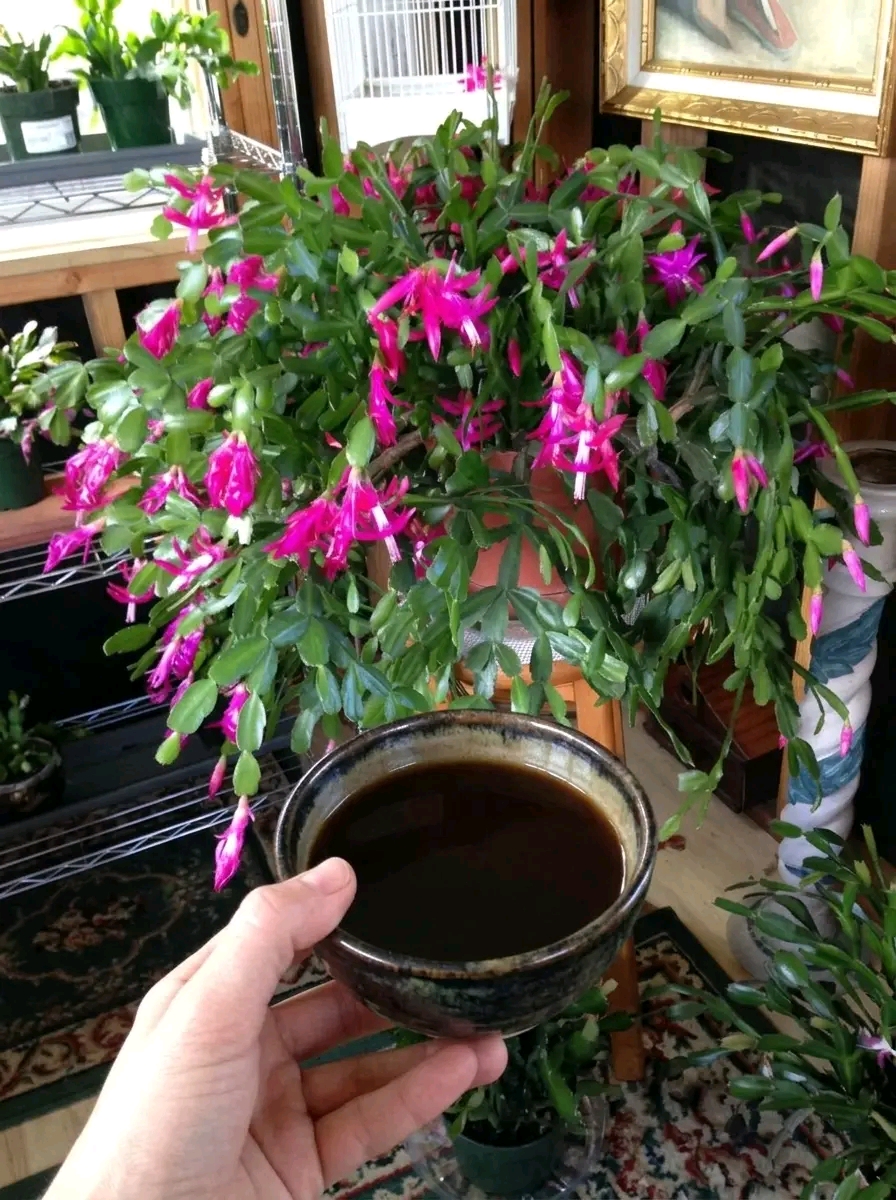
The image shows a large Christmas cactus covered with bright pink blooms while a hand holds a bowl of dark liquid. Many home gardeners see this kind of plant trick and wonder if one simple liquid can make a Christmas cactus bloom heavily. The answer is yes and no. A gentle homemade liquid can support healthy growth, but blooms do not come from liquid alone. Christmas cactus blooms are triggered mainly by shorter days, cooler nights, healthy roots, proper watering, and steady care.
The dark liquid in the image can be understood as a mild natural plant tea, such as diluted compost tea, weak black tea, banana peel water, or diluted coffee water. For Christmas cactus, the safest “one liquid” is a gentle potassium-rich banana peel tea or a very weak compost tea. These liquids may help support flower production when used correctly. But they must be fresh, diluted, and used only when the plant is already ready for watering.
This complete guide explains how to make a safe bloom-support liquid for Christmas cactus, how to use it without damaging roots, how to trigger more buds naturally, how to water correctly, how to control light and temperature, and how to keep your Christmas cactus blooming beautifully year after year.
What Is the One Liquid for Christmas Cactus Blooms?
The best simple homemade liquid for Christmas cactus is a mild banana peel tea. Banana peels are often used by gardeners because they contain potassium and small amounts of other minerals. Potassium is linked with general plant strength and flowering support. It does not force flowers by itself, but it can help support a healthy blooming plant when the rest of the care routine is correct.
Another safe option is very diluted compost tea or worm casting tea. These can provide gentle nutrients, but they must be weak and fresh. Christmas cactus roots are sensitive. Strong homemade liquids can create mold, sour soil, fungus gnats, or root stress.
Important Truth About Christmas Cactus Blooms
A Christmas cactus does not bloom because of one liquid alone. It blooms when the plant receives the right seasonal signals. The most important signals are long nights, slightly cooler temperatures, and a period of reduced watering before buds form.
If your plant is kept in bright artificial light at night, watered too heavily, or placed in a warm room all the time, it may refuse to bloom even if you feed it. The liquid is only a support step. The bloom trigger comes from light and temperature.
The Real Bloom Formula
- Bright indirect light during the day
- 12 to 14 hours of darkness at night for several weeks
- Cooler nights around 55 to 65°F, or 13 to 18°C
- Slightly reduced watering before buds form
- Healthy roots in well-draining soil
- Gentle feeding before the blooming season
- No sudden moving once buds appear
Safe Banana Peel Bloom Tea Recipe
This is a gentle liquid that can support your Christmas cactus before the blooming season. Use it carefully and do not overdo it.
Ingredients
- 1 clean banana peel
- 1 liter clean water
- Clean jar or bowl
- Strainer
Instructions
- Wash the banana peel well to remove dirt or residue.
- Cut the peel into small pieces.
- Place the pieces in a clean jar.
- Add 1 liter of clean water.
- Let it soak for 12 to 24 hours only.
- Strain the liquid completely.
- Dilute the liquid with the same amount of fresh water.
- Use it the same day.
Do not leave banana peel water sitting for many days. Long soaking can cause fermentation, bad odor, mold, and pest problems. Fresh and mild is always safer.
How to Use the Liquid
- Check the soil first.
- Use the liquid only when the top layer feels slightly dry.
- Pour slowly around the soil, not over the leaves or flowers.
- Use only enough to moisten the root zone.
- Let extra liquid drain from the pot.
- Empty the saucer after watering.
- Use plain water for the next several waterings.
Never pour homemade liquid into wet soil. Christmas cactus roots can rot if the pot stays too damp.
How Often Should You Use This Liquid?
Use banana peel tea once every 4 to 6 weeks during the active growing season, mainly spring and summer. You can use it once in early fall before the bud-triggering period begins. After buds form, stop using homemade liquids and focus on stable watering, light, and temperature.
Do not use it every week. Too much organic liquid can make indoor soil smell bad and attract fungus gnats.
When Not to Use It
- When the soil is already wet
- When the plant has root rot
- When the pot smells sour
- When fungus gnats are present
- When buds are dropping
- During cold low-light winter conditions
- Right after repotting
- If the liquid smells fermented or rotten
Can Coffee Water Make Christmas Cactus Bloom?
Some gardeners use weak coffee water on holiday cactus because coffee is slightly acidic. Christmas cactus likes a mildly acidic potting mix, but coffee must be used carefully. Strong coffee can damage roots, create buildup, and attract pests if used too often.
If you use coffee water, it must be very weak. Mix 1 part plain black coffee with 4 parts water, and use it rarely. Do not use coffee with sugar, milk, cream, flavoring, or sweeteners. For most home gardeners, banana peel tea or diluted houseplant fertilizer is safer than coffee.
Can Black Tea Help?
Weak black tea is sometimes used as a mild acidic drink for certain houseplants. Like coffee, it should be plain, cooled, unsweetened, and very diluted. It is not a true bloom booster. It may slightly support soil acidity, but the real bloom trigger still comes from darkness and cooler nights.
Best Time to Start Bloom Preparation
Start preparing your Christmas cactus about 6 to 8 weeks before you want flowers. For holiday blooms, many gardeners begin in early fall. This is when the plant needs shorter days and cooler nights to form buds.
During this period, reduce watering slightly. Do not let the plant shrivel badly, but allow the top layer of soil to dry more than usual. Keep the plant in a spot where it receives bright indirect light during the day and darkness at night.
How to Trigger Buds Naturally
- Place the plant in bright indirect light during the day.
- Give it 12 to 14 hours of darkness every night.
- Keep nights slightly cool.
- Water less often, but do not let it completely dry out.
- Avoid fertilizer during the dark treatment period.
- Do not move the plant constantly.
- Watch for tiny buds at the stem tips.
Once buds appear, keep care stable. Sudden changes can cause buds to drop.
Why Darkness Matters
Christmas cactus is sensitive to night length. Long uninterrupted darkness tells the plant that blooming season is coming. Even indoor lights can interrupt this signal. A lamp, TV light, hallway light, or bright kitchen light at night may delay blooming.
If your plant does not bloom, check the night environment. It may be getting too much light after sunset.
How to Give Proper Darkness
- Place the plant in a room that stays dark at night.
- Avoid turning on lights near it during the dark period.
- Use a closet only if there is airflow and the plant is not forgotten.
- Cover with a breathable box if needed.
- Keep this routine for 4 to 6 weeks.
Temperature for More Blooms
Cooler nights help Christmas cactus form buds. A room that is slightly cooler at night is ideal. Avoid placing the plant near heaters, fireplaces, hot vents, or cold drafts.
The plant likes comfort, not extremes. It should not freeze, and it should not sit in hot dry air.
Best Light During the Day
Christmas cactus grows best in bright indirect light. Direct harsh sun can burn the stems. Low light can reduce blooming. A bright east-facing window is often excellent. A north window can work if it is bright. A south or west window may need a sheer curtain.
Signs Your Christmas Cactus Needs More Light
- Few or no flowers
- Weak thin growth
- Pale green stems
- Slow growth
- Plant leaning toward the window
Signs of Too Much Sun
- Red or purple stressed stems
- Dry patches
- Wrinkled segments
- Scorched edges
- Stems looking faded or yellow
Best Soil for Christmas Cactus
Christmas cactus is not a desert cactus. It is a tropical forest cactus. It likes moisture more than desert cacti, but it still needs excellent drainage. Heavy soil can cause root rot.
Simple Christmas Cactus Soil Mix
- 2 parts indoor potting mix
- 1 part perlite
- 1 part orchid bark
- A small amount of coco coir, optional
This mix holds light moisture while allowing air around the roots.
Best Pot for Christmas Cactus
Use a pot with drainage holes. Christmas cactus can bloom well when slightly root-bound, so do not rush to move it into a huge pot. A pot that is too large can hold too much wet soil.
Terracotta pots dry faster. Plastic pots hold moisture longer. Ceramic pots work well if they have drainage.
How to Water Christmas Cactus
Water when the top inch of soil feels dry. During active growth and blooming, the plant likes steady light moisture. During bud preparation, reduce watering slightly.
Always let extra water drain out. Do not let the pot sit in water.
Signs Your Christmas Cactus Needs Water
- Top inch of soil feels dry
- Segments look slightly wrinkled
- Pot feels light
- Stems feel less firm
Signs of Overwatering
- Soft mushy stems
- Yellowing segments
- Sour soil smell
- Black roots
- Drooping while soil is wet
- Fungus gnats
Why Buds Fall Off
Bud drop is common with Christmas cactus. It usually happens because the plant experiences sudden changes. Moving the plant, changing light, overwatering, underwatering, hot air, cold drafts, or low humidity can all cause buds to fall.
How to Prevent Bud Drop
- Keep the plant in one stable location.
- Water consistently but lightly.
- Avoid hot vents and cold drafts.
- Do not rotate the plant too much once buds form.
- Keep humidity moderate.
- Do not fertilize heavily during bud stage.
Fertilizer for Christmas Cactus
A balanced houseplant fertilizer can help during spring and summer. Use it at half strength once every 4 to 6 weeks. Stop feeding during the bud-triggering period and while the plant is blooming heavily.
Too much fertilizer can lead to leafy growth but fewer blooms. It can also create salt buildup in the soil.
Natural Liquid vs Regular Fertilizer
Banana peel tea can be a gentle natural support, but it is not a complete fertilizer. A balanced fertilizer gives more predictable nutrients. You can use both, but not at the same time and not too often.
The safest routine is simple: use regular diluted fertilizer during active growth, use banana peel tea occasionally, and stop feeding when preparing the plant to bloom.
How to Make a Simple Compost Tea
If you prefer compost tea, make it very weak for indoor use.
Ingredients
- 1 tablespoon finished compost or worm castings
- 1 liter water
Instructions
- Mix compost or worm castings into water.
- Let sit for a few hours.
- Strain very well.
- Dilute with more water if dark.
- Use the same day.
Do not use smelly compost tea indoors. If it smells rotten, throw it away.
How to Keep Leaves Shiny and Healthy
Christmas cactus does not have regular leaves. Its green segments act like leaves. Dust can collect on them and reduce light absorption. Wipe the segments gently with a damp cloth or rinse the plant lightly in a sink.
Let the plant dry with good airflow. Do not keep water sitting between dense stems for too long.
Pruning Christmas Cactus
Pruning helps keep the plant full and encourages branching. The best time to prune is after flowering. Twist or cut off a few segments from long stems. New growth often branches from the cut area.
You can root the removed segments and grow new plants.
How to Propagate Christmas Cactus
- Take a cutting with 2 to 4 segments.
- Let it dry for 1 to 2 days.
- Place it in slightly moist cactus mix.
- Keep in bright indirect light.
- Water lightly.
- Roots usually form in a few weeks.
Repotting Christmas Cactus
Repot only when needed. Christmas cactus often blooms better when slightly snug in its pot. Repot every 2 to 3 years or when soil becomes old and compacted.
Repotting Steps
- Choose a pot only slightly larger.
- Use well-draining soil.
- Remove the plant gently.
- Check roots for rot.
- Place at the same depth.
- Water lightly after repotting.
- Keep in bright indirect light.
Common Mistakes to Avoid
- Using strong homemade liquid
- Watering with banana peel tea too often
- Keeping the plant in bright light at night during bloom prep
- Moving the plant after buds appear
- Using a pot without drainage holes
- Planting in heavy soil
- Overwatering in winter
- Keeping near heaters
- Expecting blooms without cool nights
- Fertilizing heavily during bud formation
Seasonal Christmas Cactus Care
Spring
After blooming, prune lightly and begin normal watering. Feed gently as new growth starts.
Summer
Keep in bright indirect light. Water when the top inch dries. Feed lightly once every 4 to 6 weeks.
Fall
Start bloom preparation. Give long nights, cooler temperatures, and slightly reduced watering.
Winter
Enjoy blooms. Keep care stable. Avoid moving, overwatering, or feeding heavily.
Weekly Care Routine
- Check soil moisture.
- Look for wrinkled or soft segments.
- Keep the plant in bright indirect light.
- Empty saucer water.
- Check for pests.
- During fall, protect the dark period.
Continue to Page 2
Continue to page 2 for more details about this article and the key points many readers miss on the first page.