Snake plants are some of the easiest, strongest, and most stylish houseplants you can grow indoors. Their tall sword-shaped leaves, bold green patterns, yellow edges, and modern upright shape make them perfect for living rooms, bedrooms, offices, shelves, windowsills, and plant corners. They are famous for being low-maintenance, drought-tolerant, and beginner-friendly.
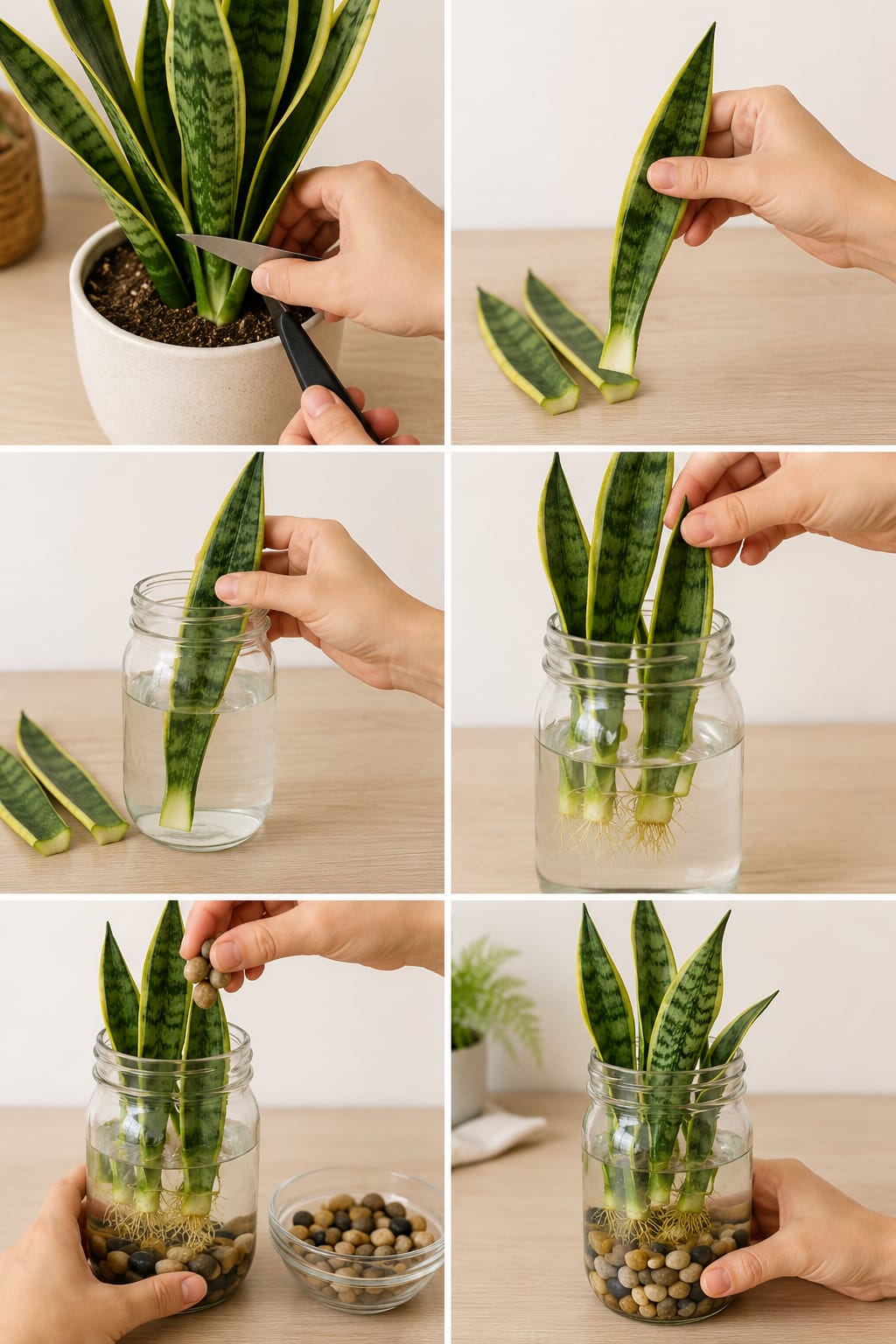
The image shows a simple and beautiful way to propagate snake plant leaves in water. A healthy leaf is cut from the mother plant, the cuttings are placed in a clear glass jar, roots begin to grow from the bottom, decorative pebbles are added, and the finished jar becomes a clean indoor water display. This method is popular because it is simple, attractive, and easy to watch. You can see the roots grow day by day, and you do not need soil at the beginning.
Growing snake plant cuttings in water is a great project for beginners, plant lovers, and anyone who wants to multiply their snake plant without buying another one. It is also a nice way to decorate a desk, kitchen counter, windowsill, or small table. The clear jar, clean water, white roots, and green leaves create a fresh natural look.
But water propagation needs patience. Snake plants are slow growers. Roots may take several weeks or even months to appear. The cuttings need clean water, bright indirect light, the correct leaf direction, and a little care to avoid rot. This guide explains everything step by step.
What Is Snake Plant Water Propagation?
Snake plant water propagation is the process of growing new roots from a snake plant leaf cutting in water. Instead of planting the cutting directly into soil, you place the bottom end of the leaf in a jar of water. Over time, roots grow from the cut end. Later, small new shoots may appear.
This method is useful because you can easily see what is happening. If the cutting is healthy, you will notice small white or cream roots forming at the base. Once roots become strong, you can keep the cutting in water for decoration or move it into soil for long-term growth.
Why Grow Snake Plant Cuttings in Water?
Many people love this method because it is simple and clean. It does not require a complicated setup. You only need a healthy snake plant leaf, clean scissors, a jar, water, and patience.
Benefits of Water Propagation
- Easy for beginners
- Clean and soil-free at the start
- Lets you watch roots grow
- Looks decorative in clear glass jars
- Great for multiplying one plant into many
- Useful for saving broken leaves
- Works well for small indoor spaces
- Can become a stylish plant display
If a snake plant leaf breaks accidentally, you do not need to throw it away. You can cut it into sections and root it in water.
Important Note About Variegated Snake Plants
The image shows snake plant leaves with yellow edges. These are variegated snake plants, often called Sansevieria trifasciata Laurentii. When you propagate this type from leaf cuttings, the new baby plants may lose the yellow edge and grow as plain green snake plants.
This is normal. If you want new plants that keep the exact yellow variegation, division is better than leaf cutting. Division means separating a baby plant or rhizome from the mother plant. Water propagation from leaves is still beautiful, but the new growth may not look exactly like the parent plant.
Best Time to Propagate Snake Plant Cuttings
The best time to propagate snake plants is during spring and summer. This is when the plant is actively growing and roots form faster. You can still propagate in fall or winter, but it may take much longer because the plant grows slowly in cooler, darker months.
Warmth, bright indirect light, and clean water help the cutting root better.
What You Need
- Healthy snake plant leaf
- Clean sharp scissors or knife
- Clear glass jar
- Clean water
- Small decorative pebbles, optional
- Paper towel or clean cloth
- Bright indirect light
- Patience
Step 1: Choose a Healthy Leaf
Start with a strong, mature snake plant leaf. The leaf should be firm, upright, and free from mushy spots. Avoid leaves that are yellowing, rotting, wrinkled, or damaged by pests. A healthy leaf has more stored energy and is more likely to root successfully.
You can use one full leaf or cut one leaf into several sections. If you want a taller display like the image, use longer cuttings. If you want to make many small plants, cut the leaf into shorter pieces.
Step 2: Cut the Leaf Cleanly
Use clean sharp scissors or a clean knife. Cut the leaf near the base of the plant. Make a smooth cut. A clean cut reduces damage and helps prevent rot.
After cutting the leaf from the plant, you can divide it into several sections. Each section should be about 3 to 6 inches long. Longer pieces can look better in a jar, but shorter pieces can still root well.
Step 3: Keep the Correct Direction
This step is very important. Snake plant leaf cuttings must be placed in water with the original bottom end down. If you place the cutting upside down, it may not root.
When you cut a leaf into several pieces, remember which end was closest to the soil. That is the end that goes into the water. A simple trick is to cut the bottom end into a small V shape. This helps you remember the direction.
Step 4: Let the Cuttings Dry
After cutting, let the leaf sections dry for 1 to 2 days before placing them in water. This allows the cut end to callus. A callus is a dry protective layer that helps reduce the risk of rot.
Place the cuttings on a clean paper towel in a dry shaded place. Do not put them in strong sun while they callus.
Step 5: Place Cuttings in a Jar
Fill a clean glass jar with enough water to cover only the bottom part of the cuttings. Do not submerge too much of the leaf. About 1 inch of water is usually enough.
Place the cuttings upright in the jar. If they fall over, use a jar with a narrower opening or add clean pebbles to help support them.
Step 6: Add Clean Pebbles
The image shows pebbles added to the bottom of the jar. Pebbles are optional, but they can make the display look more beautiful and help hold the cuttings in place.
Use clean smooth pebbles. Wash them well before adding them to the jar. Dirty stones can cloud the water or introduce bacteria.
Step 7: Place in Bright Indirect Light
Snake plant cuttings need light, but not harsh direct sun. Place the jar near a bright window where the cuttings receive indirect light. Morning light is usually fine, but strong afternoon sun can heat the water and damage the cuttings.
A bright windowsill with filtered light is ideal. If your home is dark, use a grow light nearby.
Step 8: Change the Water Regularly
Change the water every 5 to 7 days. Fresh water keeps oxygen available and reduces bacteria. If the water becomes cloudy, slimy, or smelly, change it immediately.
When changing the water, rinse the jar and check the cut ends. If any cutting becomes soft or mushy, trim the rotten part away and let it dry again before returning it to water.
How Long Does It Take to Root?
Snake plants are slow. Roots may appear in 3 to 8 weeks, but sometimes they take 2 to 3 months or longer. Do not give up too soon. If the cutting is still firm and green, it is still alive.
After roots appear, small new shoots may take even longer. Root growth usually comes first. Baby plant growth comes later.
Signs of Healthy Root Growth
- White or cream roots at the base
- Cutting stays firm
- Water stays mostly clear
- No bad smell
- No mushy base
- New small shoots may appear later
Signs of Rot
- Base becomes soft
- Cutting smells bad
- Water turns cloudy quickly
- Brown slime appears
- Leaf feels mushy
- Black spots spread from the bottom
If rot appears, remove the cutting, cut away the soft area, let it dry, clean the jar, and restart with fresh water.
Can Snake Plant Live in Water Forever?
Snake plant cuttings can stay in water for a long time if the water is kept clean. Some people grow snake plants in water as a permanent display. However, growth is usually slower in water than in soil. Soil provides more support and nutrients.
If you want a decorative jar display, water growing can work. If you want a strong full plant with many pups, moving the rooted cutting into soil is usually better.
When to Move Cuttings Into Soil
Move the cuttings into soil when the roots are at least 1 to 2 inches long. If small pups have started to grow, that is even better. Do not wait until roots become extremely long and tangled, because water roots can be delicate when moved.
How to Plant Rooted Snake Plant Cuttings in Soil
- Choose a small pot with drainage holes.
- Use a fast-draining cactus or succulent mix.
- Add perlite or pumice for extra drainage.
- Make a small hole in the soil.
- Place the rooted cutting into the hole.
- Cover the roots gently.
- Keep the leaf upright.
- Water lightly after planting.
- Place in bright indirect light.
Do not use heavy wet soil. Snake plants hate soggy roots.
Best Soil Mix for Snake Plants
Snake plants need fast-draining soil. A regular indoor potting mix can hold too much water if used alone. Mix it with drainage materials.
Simple Snake Plant Soil Mix
- 2 parts cactus or succulent mix
- 1 part perlite
- 1 part pumice or coarse sand
- A small amount of orchid bark, optional
The soil should dry out between waterings. This prevents root rot and keeps the plant healthy.
Best Pot for Snake Plants
Use a pot with drainage holes. Terracotta pots are excellent because they dry faster. Ceramic and plastic pots can also work, but you must water carefully.
Do not place a snake plant in a pot without drainage unless it is only a decorative outer pot. The inner pot must drain.
How to Water Snake Plants in Soil
Water only when the soil is completely dry or almost dry. Snake plants store water in their thick leaves and roots, so they do not need frequent watering.
When you water, water deeply and let extra water drain out. Empty the saucer. Then wait until the soil dries before watering again.
Signs Your Snake Plant Needs Water
- Soil is fully dry
- Leaves look slightly wrinkled
- Pot feels light
- Leaf edges curl slightly
Signs of Overwatering
- Yellow leaves
- Mushy leaf base
- Soft roots
- Bad smell from soil
- Leaves falling over
- Black spots near the base
Best Light for Snake Plants
Snake plants are famous for tolerating low light, but they grow better in bright indirect light. Low light keeps them alive, but growth is slower. Bright indirect light encourages stronger roots, better color, and more new shoots.
For water propagation, bright indirect light is especially helpful because cuttings need energy to grow roots.
Can Snake Plants Grow in Direct Sun?
Snake plants can handle some gentle morning sun, but harsh afternoon sun can scorch the leaves. If you place a water jar in direct sun, the water can heat up and damage roots. Keep water cuttings in bright filtered light.
Why Are My Cuttings Not Rooting?
Snake plant cuttings are slow, but there are several reasons they may not root.
- The cutting is upside down
- The leaf was unhealthy
- The water is dirty
- The room is too cold
- There is not enough light
- The cutting rotted before rooting
- The cutting was not allowed to callus
- The leaf section is too small or weak
If the cutting is still firm, wait longer. If it is mushy, restart with a fresh cutting.
How to Prevent Rot in Water
- Let cuttings dry before placing in water.
- Use clean jars.
- Use clean water.
- Keep only the bottom inch underwater.
- Change water weekly.
- Keep out of harsh sun.
- Remove rotten cuttings immediately.
- Do not add fertilizer early.
Should You Add Fertilizer to Water?
Do not add fertilizer while the cuttings have no roots. Fertilizer can encourage bacteria and damage the cutting. Once roots are established, you can add a very weak liquid fertilizer occasionally if you plan to keep the plant in water long term.
Use only a tiny amount. Too much fertilizer can burn roots and make the water cloudy.
Can You Add Activated Charcoal?
Some people add a small piece of activated charcoal to water displays. It may help keep the water fresher. This is optional. It does not replace regular water changes.
Can You Propagate Snake Plant From Small Pieces?
Yes. A snake plant leaf can be cut into several pieces, and each piece may root if placed the correct way. The bottom end must go into water or soil. Each piece should be large enough to store energy.
Very tiny pieces may dry out or rot more easily.
Water Propagation vs Soil Propagation
Water propagation lets you see roots grow. It is beautiful and beginner-friendly. Soil propagation is less decorative, but the roots adapt directly to soil and may transition more easily.
Water Propagation
- Easy to observe
- Decorative
- Good for beginners
- Needs water changes
- Roots may be delicate when moved
Soil Propagation
- More natural for long-term growth
- Less risk of water transfer shock
- No jar cleaning needed
- Requires careful moisture control
- Harder to see root progress
Continue to Page 2
Continue to page 2 for more details about this article and the key points many readers miss on the first page.