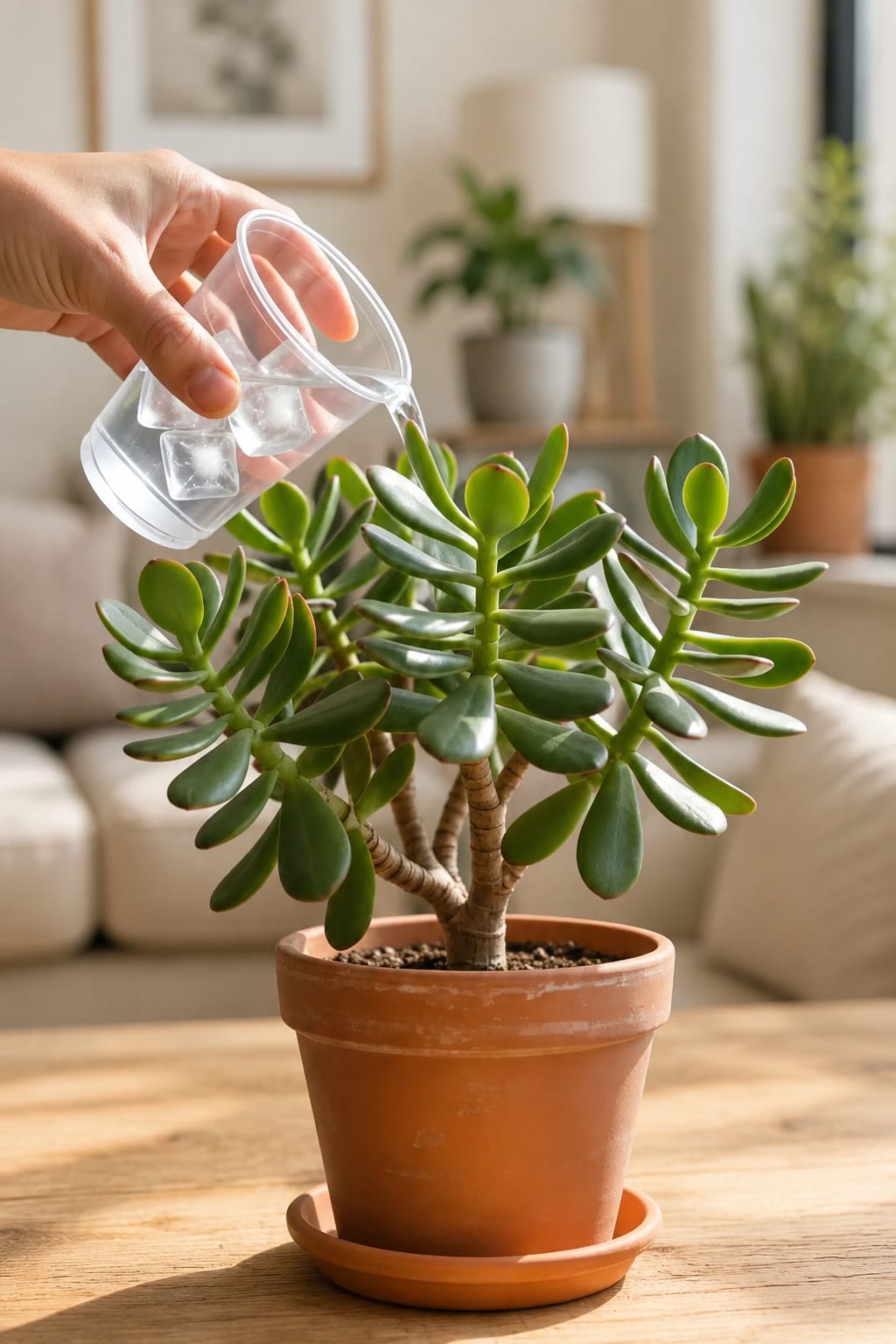
Jade plant is one of the most popular indoor succulents for people who want thick glossy leaves, woody stems, slow elegant growth, and a clean decorative look that fits beautifully on windowsills, side tables, desks, shelves, plant stands, and bright apartment corners. Its rounded green leaves, compact tree-like form, thick water-storing stems, and classic terracotta pot style make it a favorite for indoor succulent care, living room decor, bedroom plant styling, home office greenery, modern apartment interiors, premium houseplant displays, and polished property presentation. When a jade plant is healthy, it can look like a miniature indoor tree with a strong sculptural shape and very little daily maintenance.
Many homeowners try simple watering tricks for jade plants because succulents are often described as easy-care plants. One common idea is placing ice cubes or very cold water on the soil surface to water slowly. This method may look neat and controlled because the water melts gradually, but it should be explained carefully. Jade plants are warm-climate succulents. Their roots are adapted to dry periods and careful watering, not repeated cold shock. Ice can chill the root zone, wet one area unevenly, and create stress if used often.
A jade plant should not be watered the same way as a tropical foliage plant. It stores water in its leaves and stems, so it needs a dry-down period between watering. The safest routine is to water deeply with room-temperature water only when the soil is dry enough, then allow the pot to drain completely. A terracotta pot with drainage holes and a gritty succulent mix is usually much better than small cold water doses. The plant may survive occasional cool water, but regular ice watering is not the best long-term care method.
This guide explains how to water a jade plant safely, why ice cubes can be risky, how to protect the roots from cold shock and rot, how to choose the right pot and soil, what signs show the plant needs water, what mistakes can damage the plant, and how to keep jade plant healthy, clean, and suitable for windowsill styling, modern apartment decor, commercial interior landscaping, luxury home staging, and premium indoor succulent presentation.
Quick Answer
Jade plants should usually be watered with room-temperature water, not ice cubes. Ice cubes can chill the roots, water the soil unevenly, and encourage stress if used repeatedly. A jade plant grows best when the pot has drainage holes, the soil is fast-draining, and watering happens only after the mix dries well. When watering is needed, pour room-temperature water through the soil until excess drains out, then empty the saucer. The leaves should stay firm and plump, the stems should remain strong, and the soil should not stay wet for many days. Ice cube watering may seem controlled, but it is not the safest method for long-term jade plant care.
What Plant This Is
The plant is a jade plant, known botanically as Crassula ovata. It is a succulent houseplant with thick oval leaves, woody branching stems, and a compact tree-like growth habit. The leaves store water, which allows the plant to tolerate dry indoor conditions better than many tropical plants. This storage ability is also the reason jade plants are sensitive to overwatering.
Jade plant is often grown in terracotta pots because terracotta breathes and helps the soil dry more evenly. This is useful for succulents because wet roots can quickly become a problem. A healthy jade plant usually has firm leaves, sturdy stems, and a balanced shape. If it receives enough light, it can grow slowly into a miniature tree-like display.
Because jade plants are succulents, they prefer a dry-friendly routine. They need bright light, fast-draining soil, and careful watering. They do not need constant moisture. Any watering method that keeps the roots cold or wet for too long can create problems over time.
Why Ice Cube Watering Is Popular
Ice cube watering became popular because it looks simple and controlled. The idea is that ice melts slowly, giving the plant a small amount of water without spilling. Some people use this method for convenience, especially when they worry about overwatering. It may seem neat for small pots on windowsills or desks.
However, slow melting does not automatically mean safe watering. The water from ice is very cold, and it may soak only one part of the soil. Succulent roots prefer a more natural watering rhythm: dry soil followed by a complete watering and then another dry period. Small cold doses can confuse that rhythm and may leave parts of the root ball dry while one section becomes damp and cold.
For jade plants, control should come from checking soil dryness and using a draining pot, not from freezing the water. Room-temperature water is gentler and more predictable. A careful watering routine is safer than relying on ice cubes as a shortcut.
Why Ice Can Be Risky for Jade Plants
Ice can be risky because jade plant roots are not adapted to cold shock. When ice melts on the soil surface, cold water moves through the pot and may chill the roots. Occasional temperature changes may not kill a strong plant immediately, but repeated cold watering can stress the root system and slow growth.
Ice can also water unevenly. If the cubes melt in one spot, that area becomes wet while the rest of the soil may remain dry. This can create an inconsistent root environment. Some roots may not receive enough moisture, while others sit in cold damp soil. Jade plants grow best when the root zone is watered evenly and then allowed to dry.
Another risk is that ice encourages tiny frequent watering habits. Many succulent problems begin when the plant receives small amounts of water too often. The surface may seem dry, but deeper soil can remain damp. Over time, roots may weaken or rot. A jade plant needs less frequent but more complete watering.
What This Method Should Not Be Misunderstood As
Ice cube watering should not be misunderstood as a special jade plant growth trick. It will not make the leaves thicker, force new branches, or improve root health. Jade plants grow stronger from bright light, a proper succulent mix, correct watering, and stable temperatures. Ice is not a fertilizer and not a root tonic.
It should not be misunderstood as a cure for overwatering. If the plant is already in heavy wet soil or a pot without drainage, ice will not fix the problem. The plant needs better soil, drainage holes, and a corrected watering rhythm. Adding less water in a cold form is still risky if the root zone cannot dry properly.
It should also not be used as a routine for weak, stressed, newly repotted, or cold-window plants. A jade plant sitting near a chilly window in winter is already exposed to cooler conditions. Adding ice to the soil can increase stress. Warm, stable care is safer for indoor succulents.
Best Watering Method for Jade Plant
The best watering method is to use room-temperature water and water the soil evenly when it has dried well. The pot should have drainage holes. Water should be poured slowly over the soil surface until excess drains from the bottom. This ensures that the root ball receives moisture evenly instead of only one small cold area.
After watering, the saucer should be emptied. Jade plants should never sit in standing water. The soil should then be allowed to dry before the next watering. This dry-down period is important because jade roots need oxygen. Constant moisture can lead to root rot.
The exact timing depends on light, season, pot size, temperature, soil mix, and humidity. A jade plant in bright light may need water more often than one in a dim corner. A terracotta pot dries faster than a glazed pot. The plant should be watered based on soil condition, not a fixed calendar.
How to Know When a Jade Plant Needs Water
A jade plant usually needs water when the soil has dried deeply and the leaves begin to feel slightly less firm. Healthy leaves should be plump and smooth. If the leaves become slightly wrinkled or softer while the soil is dry, the plant may be ready for water. If leaves are soft while the soil is wet, that is more concerning and may suggest root stress.
The soil can be checked with a finger, wooden stick, or moisture meter. The top layer drying is not always enough. Deeper soil should also be dry before watering again, especially in larger pots. Terracotta pots make this easier because they dry more quickly and show moisture changes through color and weight.
Pot weight is also useful. A dry pot feels much lighter than a freshly watered one. Learning the weight difference can help prevent overwatering. Jade plants reward patience. Waiting until the soil is truly dry is usually safer than watering too soon.
Best Soil Mix for Jade Plant
Jade plants need a fast-draining succulent mix. A cactus and succulent potting mix is a good base, but it can be improved with perlite, pumice, coarse sand, fine gravel, or small lava rock. The goal is a mix that holds enough moisture briefly but drains quickly and allows air around the roots.
Heavy indoor potting soil alone can stay wet too long. This is especially risky in low light or cool rooms. If the soil feels dense, muddy, or slow to dry, repotting into a grittier mix may be necessary. Good soil prevents many watering problems before they begin.
Garden soil should not be used in indoor jade pots. It can compact, drain poorly, and bring pests indoors. A clean succulent mix supports stronger roots, firmer leaves, and a better-looking plant display. Soil quality matters more than any watering trick.
Choosing the Right Pot
A terracotta pot is one of the best choices for jade plants because it allows moisture to evaporate through the sides. This helps protect roots from staying wet too long. The pot should always have drainage holes. A saucer can protect furniture, but extra water should be emptied after watering.
The pot should not be too large. A small jade plant in a large pot may sit in excess wet soil. This can cause root problems because the plant cannot use all that moisture quickly. A pot that fits the root system with a little room to grow is safer than an oversized container.
Decorative ceramic pots can work if they drain well, but glazed pots hold moisture longer than terracotta. If a decorative outer pot has no drainage, the jade plant should stay inside a draining inner pot. Good pot design protects the roots and keeps the display clean.
Light for Strong Jade Plant Growth
Bright light is essential for a healthy jade plant. A bright windowsill, sunroom, or very bright indoor location helps the plant maintain firm leaves and compact growth. Jade plants can become stretched, weak, and pale if they do not receive enough light. More light also helps the soil dry at a safer pace.
Direct sun should be introduced gradually. A jade plant that has been indoors in lower light can scorch if suddenly moved into harsh direct sun. Morning sun or filtered bright light is often safer at first. Once acclimated, jade plants can handle stronger light than many houseplants.
Light and watering are connected. A jade plant in bright light uses water more efficiently. A jade plant in low light needs much less water. Ice cube watering can be especially risky in low light because the soil may stay cool and damp longer.
Temperature and Cold Protection
Jade plants prefer stable indoor temperatures and should be protected from cold drafts. A windowsill can provide excellent light, but it may also become cold in winter. If the plant sits directly against cold glass, roots and leaves may be stressed. Adding ice in that situation increases the problem.
Cold soil slows root activity. When roots are cold, they absorb water less efficiently. Wet cold soil is one of the most dangerous combinations for succulents. This is why room-temperature water is better than ice. The plant needs a gentle watering routine, not cold shock.
During winter, watering should usually be reduced because the plant grows more slowly and the soil dries more slowly. The plant still needs light, but it does not need frequent watering. Seasonal adjustment is more important than any trick.
Feeding Jade Plant Correctly
Jade plants need only light feeding during active growth. A diluted cactus and succulent fertilizer can be used in spring and summer when the plant is healthy and receiving enough light. It should be applied at reduced strength. Too much fertilizer can stress roots and cause weak growth.
Fertilizer should not be applied to a stressed plant, a plant in wet soil, or a plant with root rot. Feeding damaged roots can make problems worse. The plant should first be stabilized with correct watering, light, and soil. Healthy roots can use nutrients more safely.
Homemade liquids should be used cautiously. Jade plants do not need milk, sugar water, raw egg, juice, or thick organic tonics. These can spoil, attract pests, and create odor in the pot. Clean water and mild succulent fertilizer are more predictable.
Possible Damage If Ice Is Used Incorrectly
Repeated ice watering can cause root stress, uneven moisture, slow growth, leaf drop, and possible rot if the soil stays damp. The damage may not appear immediately. A jade plant can look fine for a while because it stores water in its leaves, but root decline can build slowly below the surface.
Cold water can also stress the lower stems and root crown, especially if ice is placed near the trunk. The trunk base should stay dry and healthy. If the soil around the trunk stays cold and wet, the plant may develop soft tissue or fungal problems. Water should be directed evenly to the soil and allowed to drain.
Ice can also encourage careless watering habits. People may add cubes regularly without checking the soil. This turns watering into a routine instead of a response to plant need. Succulents should be watered by observation, not by habit.
Warning Signs to Watch For
Warning signs include soft leaves, wrinkled leaves with wet soil, yellowing leaves, leaf drop, blackened stems, mushy trunk base, sour soil smell, fungus gnats, mold, or soil that stays wet for many days. These signs suggest that watering, soil, or drainage may need correction. More ice or more water will not solve root problems.
If the leaves wrinkle while the soil is dry, the plant may simply need water. If the leaves soften while the soil is wet, roots may be damaged. This difference is important. A thirsty plant and an overwatered plant can both look droopy, but the solutions are opposite.
If the trunk feels soft near the soil line, action is needed quickly. The plant may have rot. The soil should be checked, and the plant may need to be removed from the pot. Rotten roots or soft stem areas should be addressed before the damage spreads.
Common Mistakes
One common mistake is watering a jade plant with ice cubes because it seems tidy. The method may be convenient, but it is not ideal for a warm-climate succulent. Another mistake is giving small amounts of water too often. Jade plants prefer a proper soak and dry rhythm.
Another mistake is keeping the plant in a pot without drainage. Even careful watering becomes risky if water cannot leave the pot. A saucer is fine, but standing water should not remain there. Drainage holes are essential for long-term health.
Using heavy soil is also common. If the soil holds too much moisture, even room-temperature watering can become dangerous. A gritty succulent mix is the foundation. Watering tricks cannot overcome poor soil.
What to Do If Ice Was Used Often
If ice was used often and the plant still looks healthy, stop the ice routine and switch to room-temperature watering. Check the soil before watering again. Let the mix dry properly. The plant may not need any immediate rescue if leaves are firm and the soil smells clean.
If the plant shows soft leaves, wet soil, or a sour smell, the root system should be checked. The plant can be gently removed from the pot to inspect the roots. Healthy roots are firm. Rotten roots are dark, mushy, or hollow. Damaged roots should be trimmed with clean tools.
After trimming, the plant should be repotted into fresh dry-friendly succulent mix and a pot with drainage holes. Watering should be conservative while the plant recovers. Bright indirect light or gentle direct sun can help the plant rebuild strength.
Repotting a Jade Plant Safely
Repotting may be needed when the soil is dense, the roots are crowded, the pot has no drainage, or the plant has been overwatered. The jade plant should be handled by the pot and root ball rather than by pulling on branches. Older stems can be brittle, and leaves can drop if handled roughly.
Old wet soil should be removed gently. Rotten roots should be trimmed. If the stem base is firm, the plant has a better chance of recovery. The new pot should be only slightly larger than the root system and should have drainage holes. Fresh gritty mix should be added around the roots without burying the trunk too deeply.
After repotting, watering should be careful. If roots were trimmed or damaged, waiting a short time before watering may help reduce rot risk. Once watering begins, it should be done with room-temperature water and full drainage. Fertilizer should wait until the plant is stable.
Continue to Page 2
Continue to page 2 for more details about this article and the key points many readers miss on the first page.