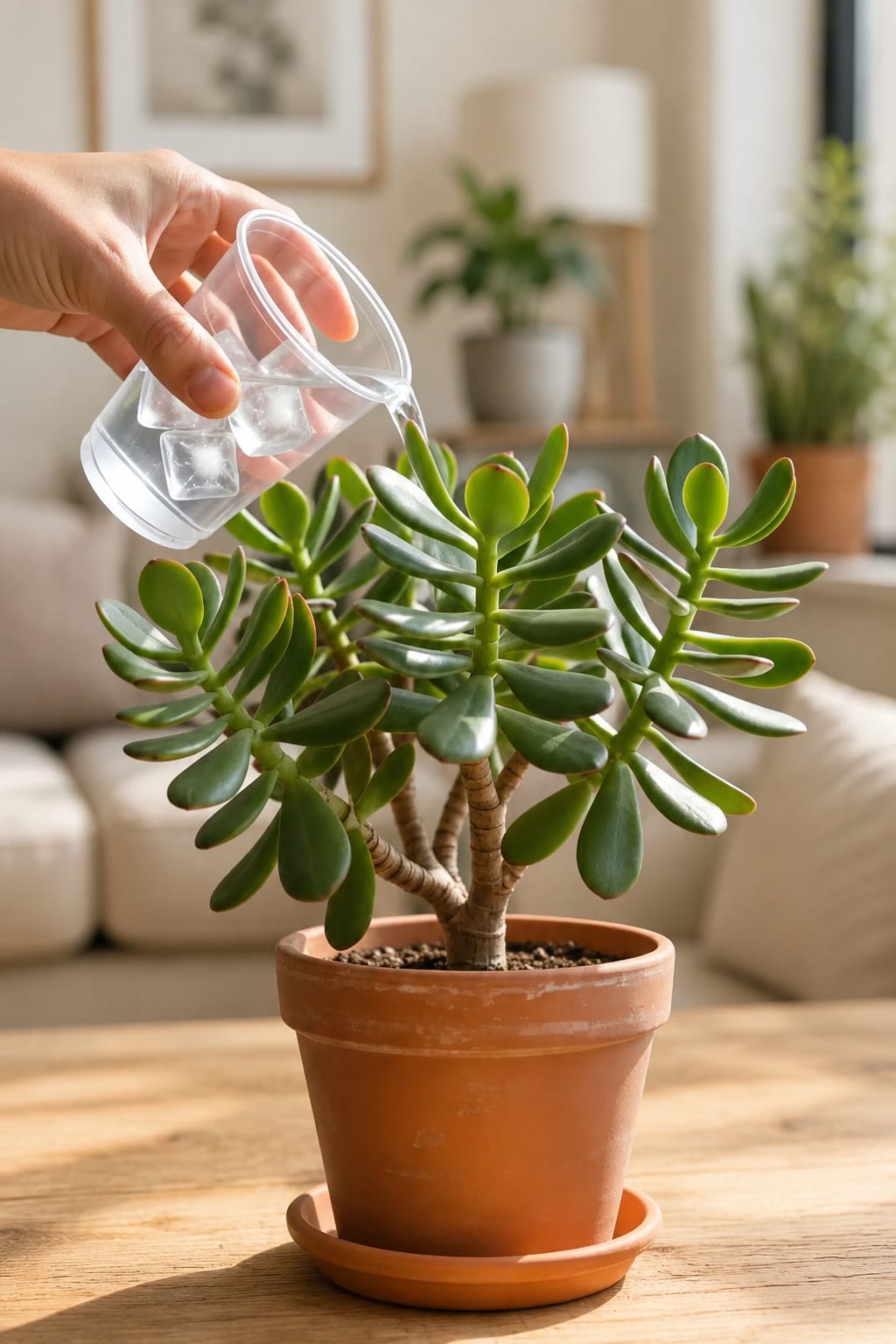
Pruning and Shaping Jade Plant
Jade plants can be pruned to maintain a compact tree-like shape. Pruning encourages branching when done correctly during active growth. Clean scissors or pruning shears should be used. Cuts should be made above leaf nodes or branch points. The plant should be healthy before pruning heavily.
Leaves and cuttings can sometimes be propagated. Stem cuttings should be allowed to callus before planting in dry-friendly soil. They should not be placed immediately into wet soil. Jade plant propagation works best with patience and careful moisture control.
Shaping is part of the decorative value. A jade plant with balanced branches and firm leaves looks like a small indoor bonsai-style succulent. Good light keeps growth compact, while low light causes stretching. Pruning helps, but light is the main tool for strong shape.
Cleaning the Leaves
Jade plant leaves should be kept clean because their glossy surface is part of the display. Dust can be wiped away with a soft dry or slightly damp cloth. The leaves should be supported gently while cleaning so they do not snap off. Clean leaves also help the plant receive light more effectively.
Water spots can be removed gently. The plant does not need frequent misting. Jade plants are succulents and do not rely on humid leaves. Misting can leave marks or encourage moisture in leaf joints. Root-zone watering is better than spraying the foliage.
Leaf shine products are not necessary. A naturally healthy jade plant has a soft sheen. Clean water and a cloth are enough. The plant looks most elegant when the leaves are firm, clean, and naturally glossy.
Indoor Decor Value
Jade plant has strong indoor decor value because it looks like a small living tree. The thick trunk, branching stems, and rounded leaves create a sculptural form that fits many styles. It works beautifully with terracotta pots, wooden windowsills, neutral interiors, modern shelves, bright offices, and sunny apartment corners.
A terracotta pot gives the plant a classic natural look. It pairs well with warm wood, stone, woven baskets, and minimalist decor. The saucer keeps the display tidy while protecting surfaces. The plant should still be removed from standing water after watering so the saucer does not create root problems.
A healthy jade plant can become a long-term decorative plant. It grows slowly, so it can stay in the same location for a long time when cared for properly. Its clean shape makes it suitable for premium indoor succulent displays and polished property presentation.
Room-by-Room Styling
In the living room, a jade plant can sit on a side table, plant stand, console, or sunny windowsill. Its tree-like form adds structure without needing a large floor plant. It should be placed where it receives enough light to stay compact and firm.
In the bedroom, jade plant can create a calm natural accent if the room has bright light. It should not be overwatered in lower-light bedrooms. A terracotta pot can add warmth and a simple handmade look. The plant should remain clean and dry at the soil surface.
In a home office, jade plant works well because it is compact, professional, and sculptural. It can sit near a bright window or under a grow light. The plant should be watered away from electronics and allowed to drain before returning to a desk or shelf.
On a kitchen windowsill, jade plant can thrive if it receives bright light and is protected from cold drafts. It should not be watered with leftover drinks or ice from a cup. Clean room-temperature water is safer and more professional.
Office and Commercial Styling
Jade plants can be useful in commercial interior styling when bright light is available. They work well in sunny reception areas, boutique counters, office shelves, wellness spaces, staged apartments, and hotel-style interiors. Their compact tree form looks polished and mature.
For commercial displays, ice cube watering should be avoided because it can create inconsistent care. A clear watering routine with room-temperature water is better. Staff should know to check soil dryness and empty saucers after watering. Consistency protects the plant and the display.
A premium commercial jade plant should have firm leaves, clean stems, tidy soil, and a pot that matches the interior. Soft leaves, wet soil, and leaf drop reduce the effect. Simple professional care is better than trendy watering shortcuts.
Product and Tool Guide
Helpful materials for jade plant care include a terracotta pot with drainage holes, a matching saucer, cactus and succulent mix, perlite, pumice, clean pruning shears, a narrow-spout watering can, room-temperature water, a soft cloth, and a diluted cactus and succulent fertilizer for active growth. A grow light can help if the room is bright but not sunny enough.
A wooden stick or moisture meter can help check soil dryness. Pot feet or a raised saucer can improve airflow under the container. A small brush can clean soil from the rim after watering or repotting. Clean tools make the plant easier to maintain.
These materials support a safe routine. Jade plants do not need complicated tricks. They need bright light, dry-friendly soil, proper drainage, and careful watering. The simplest care is usually the best care.
Care Timeline After Switching Away from Ice
During the first 24 hours, stop adding ice and check the soil moisture. If the soil is wet, wait before watering again. If leaves and stems are firm, no emergency action may be needed. Place the plant in bright light and let the soil dry naturally.
During the first week, watch for soft leaves, yellowing, leaf drop, or sour soil smell. Do not water again until the soil is dry enough. If the plant was receiving frequent ice, it may need time to adjust to a better watering rhythm. Stability matters.
After two to four weeks, the plant should remain firm if the roots are healthy. After one to two months, better light and proper watering may support stronger growth. Long-term success depends on consistency, not frequent small water tricks.
Professional Styling Note
In high-end indoor plant styling, jade plant is valued because it offers a compact tree-like form, glossy leaves, and a long-lived succulent presence. It works well in modern apartments, sunny offices, living rooms, windowsill displays, boutique interiors, and polished property presentation. Its shape feels calm, mature, and intentional.
However, the premium look depends on healthy roots and firm leaves. A jade plant with soft leaves, wet soil, or leaf drop will not look elegant. Ice cube watering may look tidy, but it is not the best professional routine. Room-temperature watering, proper drainage, and bright light create a stronger display.
A beautiful jade plant display depends on firm leaves, sturdy stems, clean soil, a breathable pot, and a watering routine that respects its succulent nature. Simple controlled care creates a more refined result than cold watering shortcuts or frequent small moisture doses.
Final Thoughts
Jade plants should be watered carefully with room-temperature water, not routinely with ice cubes. Ice may look convenient, but it can chill roots, water unevenly, and encourage poor habits if used often. A jade plant is a dry-loving succulent that needs a proper soak-and-dry rhythm rather than repeated cold moisture.
The safest foundation is a terracotta pot with drainage holes, fast-draining cactus and succulent mix, bright light, and watering only when the soil has dried well. When watering is needed, use room-temperature water, soak the soil evenly, let the pot drain completely, and empty the saucer. This routine supports firm leaves, stronger roots, and healthier long-term growth.
With clean care and the right presentation, jade plant can remain a beautiful accent for living rooms, bedrooms, home offices, kitchens, sunny windowsills, modern apartments, commercial interior landscaping, luxury home staging, terracotta planters, and polished property presentation. Healthy roots, plump leaves, bright light, and stable watering will always create a stronger display than ice cubes or cold watering shortcuts.