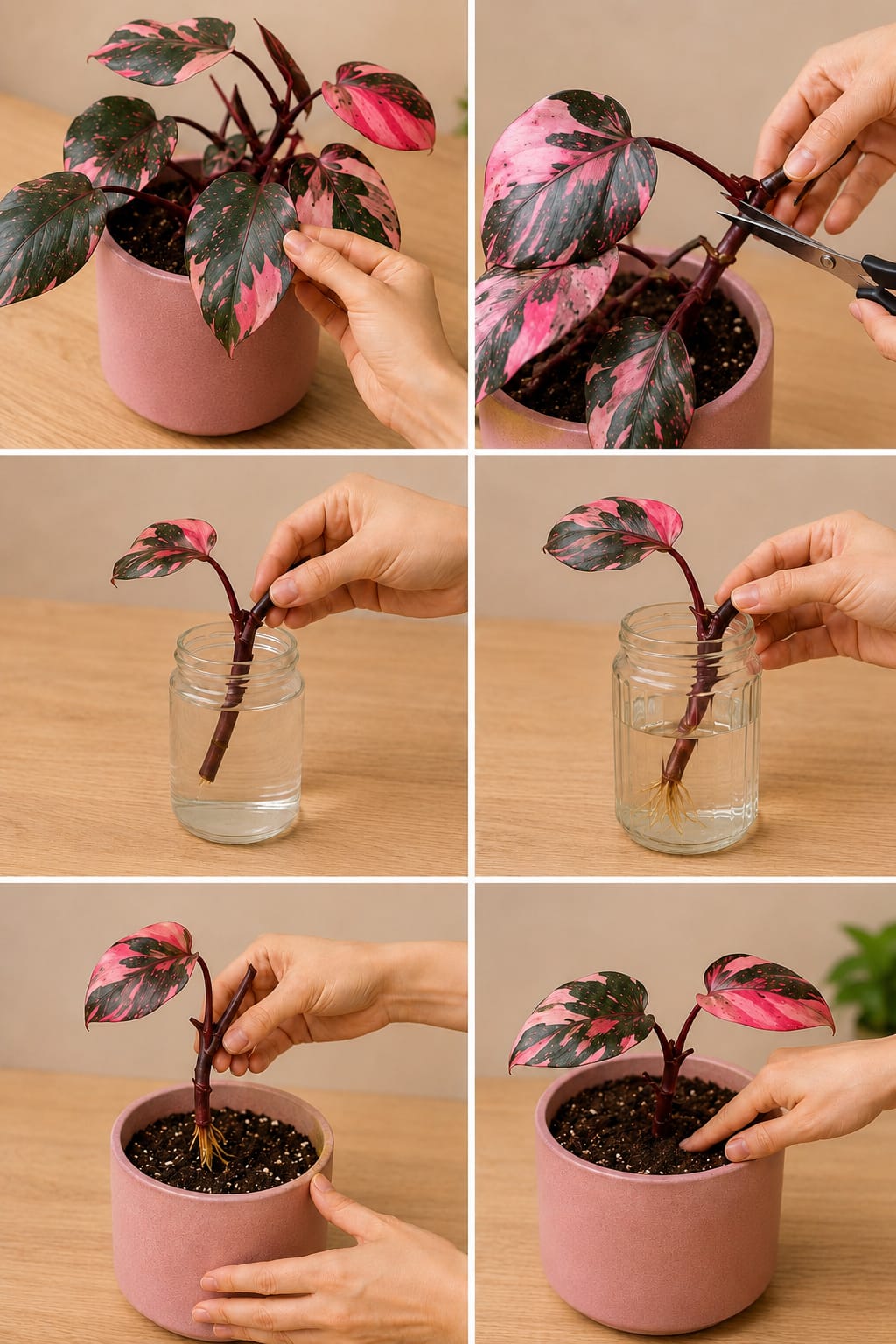
Pink Princess Philodendron is one of the most desired indoor plants for people who want dramatic foliage, deep burgundy stems, glossy dark leaves, and bright pink variegation that can turn a simple plant corner into a premium houseplant display. Its heart-shaped leaves, black-green surface, blush pink patches, speckled variegation, and elegant upright growth make it a favorite for indoor plant styling, rare houseplant collections, modern apartment decor, bedroom greenery, living room plant shelves, home office displays, luxury interior styling, and polished property presentation. When a Pink Princess Philodendron is healthy and well shaped, it can look expensive, artistic, and highly decorative even in a simple ceramic pot.
Many plant owners propagate Pink Princess Philodendron because a single plant can become fuller, better balanced, and easier to style when cuttings are rooted and replanted. Propagation is also useful when a stem becomes too long, when the plant has lost lower leaves, when a beautiful variegated section needs to be preserved, or when the plant needs pruning to encourage branching. A healthy cutting with the correct node can root in water and later be planted into soil, creating a new plant or helping the original pot become fuller.
However, Pink Princess Philodendron propagation should be done carefully. This is not a plant to cut randomly. A leaf without a node will not grow into a new plant. A cutting with too much pink and not enough green may struggle because pink tissue has less chlorophyll. A cutting placed too deeply in water can rot. A jar with dirty water can damage the stem. A new rooted cutting planted too early or into heavy wet soil can fail. The process is simple, but the details matter.
This guide explains how to propagate Pink Princess Philodendron cuttings safely in water, how to choose the right stem, where to cut, how to protect the node, how to keep the water clean, when roots are ready for soil, how to maintain variegation, what mistakes to avoid, and how to style the finished plant for living rooms, bedrooms, home offices, plant shelves, rare houseplant collections, luxury home staging, commercial interior landscaping, and premium indoor plant presentation.
Quick Answer
Pink Princess Philodendron cuttings should be taken from a healthy stem with at least one node and preferably one or two leaves. The cut should be made with clean scissors just below a node. The node should be placed in clean room-temperature water, while the leaf and upper stem remain above the water line. The jar should sit in bright indirect light, and the water should be changed regularly to prevent rot, odor, and bacterial buildup. Once roots are several centimeters long and look firm, the cutting can be planted into a light airy aroid mix with drainage. Cuttings with some green tissue are safer than nearly all-pink cuttings because they can photosynthesize better. The plant should not be placed in harsh direct sun, stagnant water, or dense soggy soil.
What Plant This Is
The plant is Pink Princess Philodendron, a variegated form of Philodendron erubescens. It is known for dark green to almost black leaves marked with pink splashes, marbling, speckles, or larger blush-colored sections. The stems are often burgundy or deep red, which gives the plant an even more dramatic appearance. It is one of the most popular rare-looking houseplants because its foliage can be very different from one leaf to another.
Pink Princess Philodendron grows as a climbing or upright philodendron. In nature and in ideal indoor conditions, it can climb with support. Indoors, it may grow upward from a central stem and produce aerial roots at the nodes. These nodes are the key to propagation. A node is the point on the stem where a leaf, aerial root, or new growth can emerge. Without a node, a cutting cannot become a new plant.
The plant is decorative but also sensitive to balance. It needs enough bright indirect light to keep variegation attractive, but it should not receive harsh direct sun that can burn the leaves. It needs moisture, but not soggy roots. It likes an airy potting mix, not dense compacted soil. Propagation works best when the mother plant is healthy before cutting.
Why Propagation Is Useful
Propagation is useful because Pink Princess Philodendron can become leggy over time. The stem may stretch, lower leaves may drop, or the plant may grow unevenly toward light. Taking a cutting can improve the original plant’s shape while creating a new rooted section. This is especially helpful for people who want a fuller pot rather than one tall bare stem.
Propagation can also preserve attractive variegation. If a stem produces leaves with a good balance of pink and green, that section may be worth rooting. A cutting from that area can continue the same genetic variegation pattern, although future leaves still depend on light, plant health, and natural variation. Propagation does not guarantee perfect pink leaves, but it can help continue a desirable stem line.
It is also a practical way to rescue a plant. If the lower part of a Pink Princess is damaged, but the upper stem is healthy, a cutting can be rooted as a backup. This can save the plant if the original roots are struggling. Clean water propagation allows the new root system to be watched closely.
What This Method Should Not Be Misunderstood As
Water propagation should not be misunderstood as a magic way to create instant pink leaves. Rooting a cutting does not force variegation. The plant’s future color depends on genetics, light, and overall health. A cutting with no green tissue may look beautiful, but it may be weaker because it has less ability to produce energy. A balanced cutting with both green and pink is usually stronger.
This method should not be misunderstood as simply placing any leaf in water. A single leaf with no node may stay fresh for a while, but it will not produce a new plant. The node is essential. The stem section must include a growth point. This is the most important detail in Pink Princess propagation.
Water propagation should also not be misunderstood as permanent care for every cutting. A cutting can root in water, but it usually grows better long term in an airy aroid potting mix. Water is useful for watching roots form, but soil or a soilless aroid mix gives the plant better long-term support, oxygen, and nutrients.
Choosing the Right Cutting
The best cutting should come from a healthy stem with firm leaves, a visible node, and no signs of rot or pests. The leaf should not be yellowing, mushy, or badly damaged. The stem should feel firm. If aerial roots are already starting at the node, the cutting may root faster because the plant has already prepared that area for root growth.
A cutting with one or two leaves is often easier to manage than a large heavy cutting. Too many leaves can make the cutting lose moisture faster before roots form. A very small cutting can work if it has a node, but it may take longer to establish. The best cutting is strong, balanced, and not oversized.
Variegation should also be considered. A cutting with a good mix of green and pink is usually safer than an almost fully pink cutting. The green tissue supports photosynthesis. Too much pink can make the plant visually exciting but biologically weaker. A strong cutting needs beauty and function together.
Where to Cut the Stem
The cut should be made below a node with clean scissors or pruning shears. The node should remain on the cutting because that is where roots and new growth can develop. Cutting too far above the node may leave the rooting point behind on the mother plant. Cutting too close without enough stem tissue can damage the node. A clean cut below the node is ideal.
The tool should be sanitized before cutting. This helps reduce the risk of bacteria or fungal problems entering the stem. A sharp blade creates a cleaner wound than dull scissors. A crushed stem is more likely to rot. Clean cutting is one of the simplest ways to improve success.
After cutting, the mother plant may eventually produce new growth from a lower node. This can make the original plant fuller over time. The cutting can be placed into water, moss, perlite, or a light propagation medium. Water is popular because the roots can be seen clearly as they develop.
How to Place the Cutting in Water
The node should be submerged in clean room-temperature water. The leaf should stay above the water line. If a leaf sits in water, it can rot and make the jar cloudy. The lower part of the stem can be in water, but the main leaf and petiole should remain dry. The cutting should be positioned so it does not slip too deep.
A clear glass jar is useful because it allows the roots and water quality to be monitored. The jar should be clean before use. Old residue, soap, algae, or dirt can affect the cutting. A small jar that supports the stem upright is often better than a wide jar where the cutting falls sideways.
The water should be changed regularly. Fresh water helps prevent bacterial buildup and keeps oxygen available. If the water becomes cloudy, slimy, or smelly, it should be changed immediately. The stem should be rinsed gently if residue forms. Clean water is essential for healthy roots.
Light During Propagation
Bright indirect light is best for Pink Princess Philodendron cuttings. The cutting needs light to produce energy, but harsh direct sun can burn the leaf or heat the water. A bright windowsill with filtered light, a shelf near a window, or a grow light can work well. The light should be strong but gentle.
Low light can slow rooting and reduce the plant’s strength. A cutting in a dark room may sit in water for weeks without much root growth. It may also lose color or become weak. Good light helps the cutting stay active while roots develop.
Too much direct sun can damage the pink parts of the leaf. Pink variegation is more sensitive than green tissue. If the leaf develops crispy patches or faded marks, the light may be too harsh. The goal is bright indirect light, not hot direct exposure.
Water Quality and Water Changes
Room-temperature water is safest. Very cold water can stress the cutting, and warm stagnant water can encourage bacterial growth. Tap water may work in many homes, but filtered water can help if tap water is very mineral-heavy. The jar should stay clean and odor-free.
Water should be changed whenever it looks cloudy or at regular intervals during propagation. Clear water supports clean roots and makes the display more attractive. A propagation jar should not smell sour or feel slimy. If it does, the cutting should be inspected for rot.
No fertilizer is needed in the first stage of rooting. A fresh cutting without roots cannot use much fertilizer, and nutrients in water can encourage algae. Once roots are established and the cutting is planted, gentle feeding can begin later during active growth. Early propagation should stay simple.
How Long Roots Take
Rooting time can vary. A healthy Pink Princess Philodendron cutting may begin showing root bumps in a few weeks, but some cuttings take longer. Warm indoor conditions, bright indirect light, and clean water can speed the process. Cooler rooms and low light can slow it down.
Roots often appear from the node or from an aerial root point. At first, they may look like small white or tan nubs. Later, they lengthen and branch. Healthy roots should look firm and fresh, not slimy or black. Slow rooting is not always a problem if the stem remains firm and the water stays clean.
The cutting should not be planted too early. Tiny roots can break easily and may not support the plant well. It is better to wait until roots are several centimeters long and beginning to branch. This gives the cutting a better chance when moved into soil.
When to Plant the Cutting
The cutting can be planted when it has a healthy root system. Roots should be long enough to anchor the cutting and absorb moisture. If roots are only tiny nubs, waiting longer is safer. If roots become extremely long and tangled, planting can be more difficult. A moderate root length is ideal.
The new pot should be small and have drainage holes. A large pot can hold too much wet soil around the young roots. A small pot with an airy mix gives the cutting a safer start. Several rooted cuttings can be planted together if the goal is a fuller pot.
After planting, the soil should be kept lightly moist while the water roots adjust to the new medium. It should not be allowed to stay soggy. Water-rooted cuttings need a gentle transition. Bright indirect light and stable humidity help the cutting settle.
Best Soil Mix After Water Rooting
Pink Princess Philodendron grows best in an airy aroid mix. A good mix can include indoor potting mix, orchid bark, perlite, coco chips, pumice, and a small amount of charcoal. The goal is to hold some moisture while still allowing oxygen around the roots. Dense wet soil is risky for new cuttings.
A standard potting mix alone may be too heavy, especially in a decorative ceramic pot. Adding bark and perlite improves structure. The roots should not be trapped in mud. Aroid roots like airflow. A chunky mix helps prevent rot and supports stronger growth.
The soil surface should remain clean and easy to check. If decorative moss or stones are used, they should not hide constant wetness. A new cutting needs monitoring. Once the plant is established, styling can be adjusted, but early root health is the priority.
Choosing the Right Pot
A small pot with drainage holes is best for a newly rooted cutting. The pot should not be oversized. Young roots need a manageable amount of soil that dries at a safe pace. Too much soil can stay wet and cause rot before the cutting establishes.
A pink ceramic pot can look beautiful with Pink Princess foliage because it highlights the blush variegation. However, the pot must still support plant health. If the decorative pot has no drainage, the cutting should stay in a draining inner pot placed inside it. Extra water should always be removed.
The pot should also be stable because Pink Princess stems can lean as they grow. A support stake or small moss pole can be added later if the plant begins climbing. A stable container and good support help the plant look cleaner and more intentional.
Maintaining Pink Variegation
Pink variegation is one of the main reasons people love this plant. To maintain attractive color, the plant needs bright indirect light. Too little light can encourage darker green growth and weaker variegation. Too much direct sun can burn pink sections. The balance is important.
Pruning can help manage variegation, but it must be done carefully. If a plant begins producing all-green leaves, cutting back to a node that previously produced variegated leaves may encourage better growth. If a plant produces nearly all-pink leaves, it may look beautiful but become weaker. Balanced variegation is healthier.
Propagation from a variegated stem can continue the pattern, but future leaves are not guaranteed to match the parent leaf exactly. Each new leaf can be different. This unpredictability is part of the appeal. The best care supports the plant so it can produce strong leaves with stable color.
Watering After Planting
After a water-rooted cutting is planted, watering should be careful. The mix should be lightly moist at first so the roots do not dry suddenly. However, the cutting should not sit in soggy soil. A small pot and airy mix make this balance easier.
Water should be applied evenly until the pot drains, then the saucer should be emptied. The next watering should happen when the top part of the mix begins to dry. New roots still need moisture, but they also need oxygen. Overwatering is one of the most common reasons rooted cuttings fail after planting.
As the plant becomes established and produces new growth, watering can become more normal. The plant should not be watered on a strict calendar. Light, pot size, soil mix, and temperature all affect drying time. Observing the plant is safer than guessing.
Humidity and Temperature
Pink Princess Philodendron appreciates moderate humidity, especially during propagation and early establishment. Dry air can make new leaves struggle to unfurl cleanly. A humidity tray, room humidifier, or grouping with other plants can help, but the plant should still have airflow. Stagnant humidity can encourage fungal issues.
Warm stable indoor temperatures support rooting. Cold drafts can slow root growth and stress the cutting. The jar or pot should be kept away from cold windows, air conditioners, and sudden temperature changes. A stable warm room is better than a chilly spot with inconsistent conditions.
Humidity should support the plant without keeping leaves wet all the time. Misting is not always necessary and can leave water sitting on leaves. A steady room environment is better than repeated spraying. Clean air, good light, and moderate humidity create the strongest growth.
Feeding a New Pink Princess Cutting
A fresh cutting in water does not need fertilizer. It should focus on root development first. Once the cutting is planted and begins producing new growth, a diluted balanced houseplant fertilizer can be used during active growth. The strength should be mild because young roots are sensitive.
Overfeeding can damage new roots and create salt buildup in the potting mix. More fertilizer will not create more pink variegation. Light controls variegation more than feeding does. A gentle routine is safer than strong feeding.
Fertilizer should be paused if the plant is stressed, recently transplanted, or sitting in wet soil. A healthy root system should come first. Feeding supports growth only when the plant is already stable.
Possible Damage If Propagation Is Done Incorrectly
Damage can happen if the cutting has no node. Without a node, roots and new growth will not develop into a full plant. A leaf cutting may stay attractive in water for a while, but it will not become a new Pink Princess Philodendron. The node is essential.
Rot can happen if the cutting sits in dirty water or if leaves are submerged. A submerged leaf breaks down and creates bacteria. A soft or blackened stem base is a warning sign. The water should be changed, and rotten tissue should be trimmed if possible.
Damage can also happen after planting if the soil is too heavy or the pot too large. Water-rooted cuttings are tender. They need an airy mix and controlled moisture. A cutting that rooted successfully in water can still fail if planted into dense wet soil.
Warning Signs to Watch For
Warning signs during water propagation include cloudy water, bad smell, slimy stem, blackened node, yellowing leaf, mushy base, or no root activity after a long time while the stem declines. These signs suggest that the cutting may be rotting or the conditions are not right. The jar should be cleaned and the cutting inspected.
After planting, warning signs include drooping that does not recover, yellowing leaves, soft stem, fungus gnats, mold on the soil, or soil that stays wet for many days. These signs suggest poor drainage or overwatering. A young cutting should be protected from constantly wet soil.
If the leaf fades or becomes crispy, light may be too harsh or humidity too low. If new growth is very green, light may be too weak or the stem’s variegation pattern may be shifting. Observation helps correct the routine before the plant declines.
Continue to Page 2
Continue to page 2 for more details about this article and the key points many readers miss on the first page.