Common Mistakes
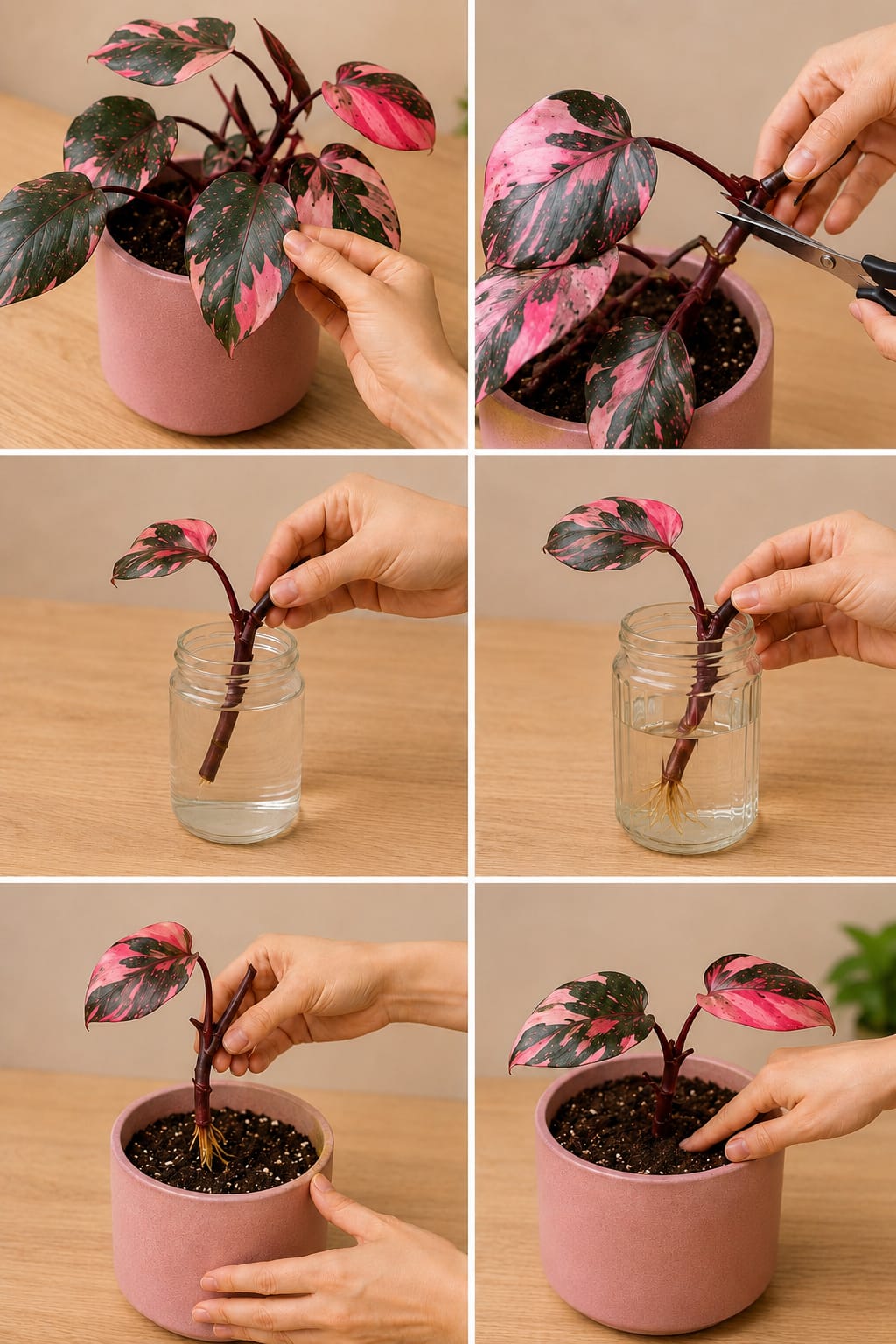
One common mistake is cutting a beautiful leaf without a node and expecting it to grow. Another mistake is placing the cutting too deep in water. The node should be submerged, but the leaf should stay dry. Water should support rooting, not drown the plant.
Another mistake is placing the cutting in direct sun. Pink parts can burn, and the water can heat up. Bright indirect light is safer. A warm bright location is good, but hot glass and harsh sun can stress the cutting.
Planting too early is also common. Tiny roots may not be strong enough for soil. Waiting until roots are longer and slightly branched gives the cutting a better chance. Patience improves success.
What to Do If the Cutting Starts Rotting
If the cutting starts rotting, it should be removed from water immediately. The soft or blackened section should be trimmed away with clean scissors if there is still a healthy node and stem remaining. The jar should be washed, and fresh water should be added. The cutting can then be placed back into clean water if enough healthy tissue remains.
If the node itself has rotted, the cutting may not recover. A node is required for new growth. If only the lower stem below the node is damaged, the cutting may still be saved. The key is to act early before rot spreads upward.
After trimming, the water should be changed more frequently, and the cutting should be kept in bright indirect light. Fertilizer should not be added. Clean water and stable conditions are the safest recovery steps.
How to Make the Mother Plant Fuller
After taking a cutting, the mother plant may produce new growth from a lower node. This can help it become bushier over time. The cut encourages the plant to activate growth points below the cut. Good light and proper care help this process.
The rooted cutting can later be planted back into the same pot if the goal is a fuller display. Several stems in one pot create a more lush appearance than one tall vine. The new cutting should have strong roots before being added back. It should be planted gently so roots are not broken.
A support pole can also help the plant look fuller and more structured. Pink Princess Philodendron is a climbing plant, and support can encourage larger leaves and a cleaner upright shape. A moss pole, coco pole, or stake can be added once the plant is established.
Cleaning the Leaves
Pink Princess Philodendron leaves should be kept clean because their dark surface and pink variegation show best when dust-free. A soft damp cloth can be used to wipe leaves gently. The leaf should be supported from underneath to prevent tearing. Clean leaves help the plant receive light and look more premium.
Water should not sit on the leaves for long periods. Pink and dark tissue can show marks if water dries unevenly. Leaf shine products are not necessary. A clean cloth and gentle care are enough. The natural color is already decorative.
Damaged or yellowing leaves can be removed once they are no longer useful. Removing old leaves keeps the plant tidy and helps the display look polished. However, do not remove too many leaves from a small cutting because it needs leaf tissue to produce energy.
Indoor Decor Value
Pink Princess Philodendron has strong indoor decor value because every leaf looks like a unique painted pattern. The mix of deep green, burgundy stems, and bright pink patches makes it stand out in rare plant collections and modern interiors. It can act as a focal point on a shelf, desk, side table, or plant stand.
A pink ceramic pot can highlight the variegation beautifully. Neutral pots create a more elegant gallery-style look, while black pots make the pink color appear more dramatic. Clear propagation jars also have decorative value when the water is clean and roots are healthy. The propagation stage can become part of the display.
The plant looks best when it is clean, balanced, and supported. A leggy stem with few leaves may look unfinished, but rooted cuttings can help create fullness. Good styling combines plant health with shape, pot choice, and light placement.
Room-by-Room Styling
In the living room, Pink Princess Philodendron can sit on a side table, shelf, plant stand, or bright corner where the variegation can be seen clearly. It pairs well with warm wood, neutral furniture, black accents, blush decor, and modern ceramics. The plant should receive bright indirect light to maintain strong color.
In the bedroom, it creates a soft but dramatic accent. A pink or cream pot can make the plant feel calm and decorative. The plant should not be placed in a dark corner if variegation matters. A bright window with filtered light is better.
In a home office, Pink Princess can improve a desk or video-call background. The leaves look artistic and polished. A small propagated cutting in a jar can also look attractive on a desk, but the water should be kept clean and the jar should be stable.
On a plant shelf, Pink Princess Philodendron stands out among green plants. It pairs well with pothos, philodendron, monstera, peperomia, and other aroids. A support stake can keep it upright so the leaves face outward and the variegation remains visible.
Office and Commercial Styling
Pink Princess Philodendron can be used in commercial interior styling when the space has bright indirect light and careful maintenance. It works well in boutique displays, salon interiors, creative offices, reception shelves, plant shop styling, luxury apartment staging, and modern workspace decor. Its color makes it feel premium and memorable.
For professional spaces, propagation jars should look intentional. Cloudy water, yellowing cuttings, or messy stems reduce the effect. If cuttings are displayed in water, the jars should be clean and the roots should look healthy. Once rooted, the cuttings can be moved into polished pots for a more finished display.
A mature Pink Princess display should be supported and shaped. Leggy stems should be managed with pruning, propagation, or a pole. Premium styling depends on fullness, clean leaves, and a pot that fits the interior design. The plant should look rare and cared for, not neglected.
Product and Tool Guide
Helpful materials for Pink Princess propagation include clean scissors, a clear glass jar, room-temperature water, a healthy stem with a node, optional rooting hormone, a small pot with drainage holes, airy aroid mix, orchid bark, perlite, a soft cloth, a support stake, and a grow light if natural light is weak. Each tool supports clean propagation and safer transition into soil.
A clear jar makes root monitoring easier. A small pot protects young roots from excess wet soil. A chunky aroid mix supports oxygen and moisture balance. A grow light can help maintain variegation in darker rooms. Clean tools reduce disease risk during cutting.
The process does not need complicated products. The most important materials are a healthy node, clean water, bright indirect light, and airy soil after rooting. These basics create better results than rushing the cutting or overusing fertilizer.
Care Timeline After Taking a Cutting
During the first 24 hours, the cutting should be placed in clean water with the node submerged and the leaf above the water line. The jar should sit in bright indirect light. The mother plant should be left in stable conditions so it can recover from pruning.
During the first week, the water should be watched for cloudiness, smell, or stem softness. The cutting may not root immediately, but it should remain firm. If water becomes dirty, it should be changed. If the stem rots, damaged tissue should be trimmed if possible.
After two to four weeks, root bumps or early roots may appear in good conditions. After one to two months, roots may be long enough for soil, depending on the cutting and environment. After planting, the cutting should be kept in bright indirect light and lightly moist airy mix while it adjusts. Long-term success depends on stable care and proper light.
Professional Styling Note
In high-end indoor plant styling, Pink Princess Philodendron is valued because it brings rare color, dark foliage contrast, and a collector-plant feeling to a room. It works well in modern apartment decor, boutique interiors, home offices, luxury plant shelves, bedroom styling, and polished property presentation. The pink variegation makes the plant feel decorative even without flowers.
However, the premium look depends on healthy propagation and clean maintenance. A cutting in cloudy water, a leaf without a node, or a plant with weak leggy growth will not create the desired effect. The plant should be shaped carefully, rooted properly, and placed in a pot that highlights its color.
A beautiful Pink Princess display depends on strong nodes, healthy roots, balanced variegation, bright indirect light, clean leaves, and an airy potting mix. Simple controlled propagation creates a stronger result than random cutting or trying to root decorative leaves without growth points.
Final Thoughts
Pink Princess Philodendron can be propagated successfully in water when the cutting includes a healthy node, a firm stem, and at least some green leaf tissue. The cut should be made cleanly below the node, and the node should be placed in clean room-temperature water while the leaf stays above the water line. Bright indirect light and regular water changes are essential for healthy rooting.
The cutting should not be planted too early or kept in dirty water. Once roots are several centimeters long and beginning to branch, the cutting can be moved into a small draining pot with an airy aroid mix. Balanced light helps maintain attractive variegation, while proper moisture protects young roots from rot. A cutting with both green and pink is usually stronger than one with almost no green tissue.
With clean propagation and the right presentation, Pink Princess Philodendron can become a beautiful accent for living rooms, bedrooms, home offices, plant shelves, modern apartments, commercial interior landscaping, luxury home staging, rare houseplant collections, decorative ceramic planters, and polished property presentation. Healthy nodes, clean roots, bright variegation, and careful planting will always create a stronger display than random cuts, stagnant water, or rushing the transition into soil.