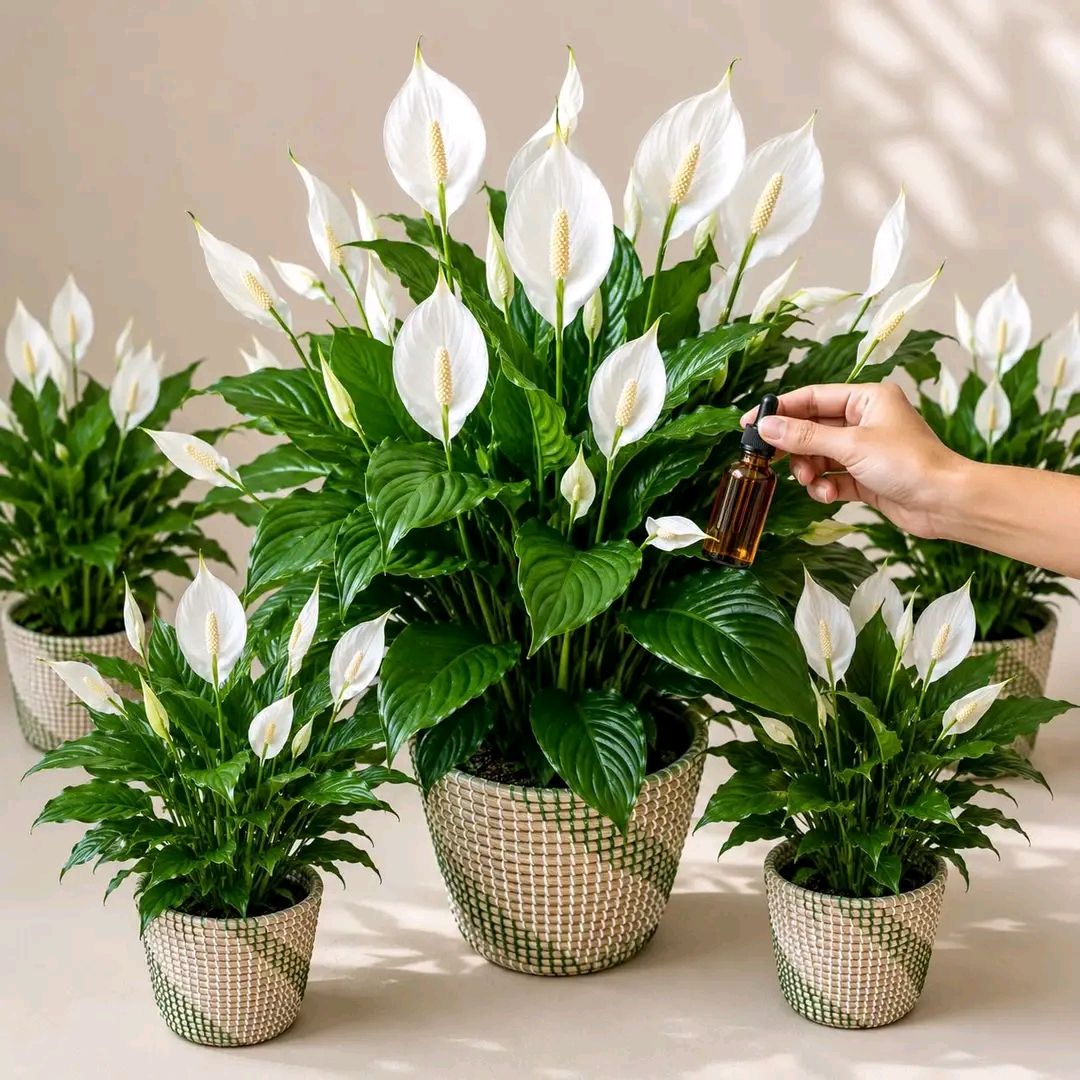
Peace lily is one of the most elegant indoor plants for people who want deep green leaves, graceful white blooms, low-maintenance beauty, and a clean decorative look that fits beautifully in living rooms, bedrooms, home offices, apartments, windowsills, plant shelves, reception areas, and premium indoor plant displays. Its glossy foliage, upright stems, white spathes, and soft tropical shape make it a favorite for indoor plant styling, modern apartment decor, luxury home staging, commercial interior landscaping, office plant design, wellness corners, and polished property presentation. When a peace lily is healthy and blooming, it can look refined, calm, and expensive without needing complicated care.
Many homeowners become interested in using a few drops of liquid fertilizer monthly because peace lilies often bloom beautifully when their roots are healthy and their feeding routine is gentle. A small amount of liquid plant food can support steady growth, stronger leaves, and better flowering when the plant already has proper light, good soil, drainage, and balanced moisture. However, this method needs to be explained carefully because more fertilizer does not always mean more blooms. Peace lilies can be sensitive to strong fertilizer, salt buildup, and wet soil. Too much feeding can burn the roots, brown the leaf tips, weaken the plant, or reduce the clean indoor display.
The safest approach is to use a diluted liquid houseplant fertilizer during active growth and apply it lightly, usually about once a month. The fertilizer should be added to moist soil, never poured heavily into a dry root ball, and never splashed into the crown or directly on the flowers. A few drops can be useful only when mixed into water properly. Straight concentrated fertilizer should not touch the roots. Peace lilies need gentle support, not aggressive feeding.
This guide explains how monthly liquid fertilizer may help peace lilies, why it should be diluted, when it should be used, when it should be avoided, what damage can happen if the plant is overfed, and how to keep the plant healthy, full, blooming, clean, and suitable for indoor plant styling, modern home decor, commercial plant displays, luxury home staging, and premium flowering houseplant presentation.
Quick Answer
A few drops of liquid fertilizer can support bigger peace lily blooms only when the fertilizer is diluted in water and used lightly. The safest routine is to feed about once a month during spring and summer, using a balanced liquid indoor plant fertilizer at reduced strength. Apply it to the soil only, after the plant has been watered or when the soil is lightly moist. Do not pour concentrated fertilizer directly onto the roots, leaves, crown, or flowers. Peace lilies still need bright indirect light, evenly moist but not soggy soil, drainage holes, moderate humidity, and clean water. If the plant has brown tips, yellow leaves, root rot, pests, or soggy soil, fix those problems first before fertilizing.
What Plant This Is
The plant is a peace lily, also known as Spathiphyllum. It is easy to recognize because of its glossy green leaves, upright leaf stems, and white flower-like spathes that rise above the foliage. The white part is often called a flower, although the true flowers are found on the central spadix inside the white spathe.
Peace lilies are popular indoor plants because they bring a soft tropical look into the home while staying fairly easy to manage. They do not need direct harsh sun, and they can adapt to normal indoor conditions. However, they bloom best when they receive bright indirect light and stable care.
A healthy peace lily usually has firm green leaves, clean leaf bases, fresh soil, and white blooms that stand above the plant. If the leaves droop often, tips turn brown, or blooms stop appearing, the issue is usually related to watering, light, soil, humidity, or feeding balance.
Why Liquid Fertilizer Is Used
Liquid fertilizer is used because it provides nutrients in a form the plant can absorb through the root zone. A balanced indoor plant fertilizer may contain nitrogen for leaf growth, phosphorus for root and bloom support, potassium for overall strength, and small amounts of micronutrients. When used correctly, it can help a peace lily maintain rich foliage and produce stronger bloom stems.
Peace lilies are not extremely heavy feeders, but they do benefit from light nutrition during active growth. Indoors, the nutrients in potting mix slowly become depleted over time. Watering also washes some nutrients away. A mild monthly feeding can replace small amounts of what the plant uses.
The key is moderation. Peace lilies usually respond better to weak fertilizer used occasionally than strong fertilizer used often. A few drops in water can be helpful, but a heavy pour of concentrated plant food can cause damage.
What This Method Should Not Be Misunderstood As
This method should not be misunderstood as a magic bloom booster. Liquid fertilizer will not force a peace lily to produce huge blooms overnight. Blooms depend on plant maturity, bright indirect light, healthy roots, correct watering, humidity, temperature, and gentle feeding. Fertilizer supports the plant, but it cannot replace the main care conditions.
It should not be misunderstood as a reason to feed every watering. Peace lilies can develop brown tips and root stress when fertilizer salts build up in the soil. Overfeeding can make the plant look worse, not better.
It should also not be misunderstood as safe when the plant is already struggling. A peace lily with root rot, soggy soil, yellowing leaves, or pest problems should not be pushed with fertilizer. Sick roots cannot use nutrients properly. The root zone must be corrected first.
Why Dilution Matters
Liquid fertilizer is concentrated. Even a small bottle can be strong enough to burn roots if used directly. Diluting the fertilizer spreads the nutrients through water and makes them safer for the roots. This is especially important for peace lilies because their roots prefer steady moisture and gentle conditions.
A few drops should be mixed into a watering container, not dropped directly into one spot on the soil. Concentrated fertilizer in one small area can create a hot zone that damages roots. A diluted solution reaches the pot more evenly.
Reduced strength is usually better for indoor peace lilies. Many houseplants do not need full-strength feeding, especially if they are in lower light. When light is limited, the plant grows more slowly and uses fewer nutrients. Strong fertilizer in low light often causes stress.
When to Fertilize a Peace Lily
The best time to fertilize a peace lily is during active growth, usually spring and summer. During this period, the plant may produce new leaves and more blooms, so a little extra nutrition can be useful. Monthly feeding at reduced strength is often enough.
In fall and winter, many peace lilies slow down because days are shorter and indoor light is weaker. During this slower period, fertilizer should usually be reduced or paused. Feeding a plant that is not actively growing can lead to salt buildup.
Fertilizer should also be paused after repotting, during root recovery, or when the plant is stressed. Fresh potting mix may already contain nutrients, and damaged roots need time to recover before feeding.
When Fertilizer Should Be Avoided
Fertilizer should be avoided if the peace lily has soggy soil, root rot, sour smell, fungus gnats, yellowing lower leaves, mushy stems, or severe drooping that does not recover after watering. These signs suggest root stress. Fertilizer can worsen stressed roots.
It should also be avoided if the plant is in a very dark room. Low light slows growth. A plant that is barely growing does not need frequent feeding. In this case, improving light is more helpful than adding fertilizer.
Fertilizer should also be avoided when the soil is bone dry. Feeding dry roots can increase the risk of burn. If the plant needs fertilizer, water lightly first or apply fertilizer solution when the soil is already slightly moist.
Best Fertilizer Type for Peace Lily
A balanced liquid houseplant fertilizer is usually a good choice. A mild fertilizer with equal or near-equal nutrient numbers can support both foliage and blooms. Some people use bloom-focused fertilizer, but peace lilies should not be pushed too hard with high phosphorus feeding.
Organic liquid fertilizers may also work, but they should be used cautiously indoors because some can smell or leave residue if overused. Synthetic liquid fertilizers are predictable when measured and diluted correctly. The safest option is one with clear label directions.
Slow-release fertilizer can also be used, but it is harder to control once added. For beginners, diluted liquid fertilizer is easier because feeding can be paused if the plant shows stress.
How to Apply Liquid Fertilizer Safely
Mix the fertilizer into water according to the label, then reduce the strength if the plant is indoors or sensitive. A weak solution is safer. Pour the mixture slowly onto the soil, not onto the leaves or blooms. Let excess liquid drain from the bottom of the pot.
Do not allow fertilized water to sit in the saucer. Peace lily roots should not sit in standing water, especially water that contains fertilizer salts. After watering, empty the saucer or outer pot.
If fertilizer accidentally splashes on leaves, wipe it away with clean water. Fertilizer residue can leave spots or damage delicate tissue. The leaves and white blooms should remain clean for the best decorative look.
Why Bright Indirect Light Matters More Than Fertilizer
Peace lilies need bright indirect light to bloom well. They can survive in lower light, but blooming is usually reduced. Fertilizer cannot replace light. Without enough light, the plant cannot produce the energy needed for strong flowers.
A bright window with filtered light is ideal. Avoid harsh direct sun, which can scorch the leaves. Gentle morning light may be tolerated, but strong afternoon sun can cause yellowing or brown patches.
If a peace lily has healthy leaves but no blooms, light is often the main issue. Moving the plant gradually to a brighter indirect location may help more than increasing fertilizer.
Watering Peace Lilies Correctly
Peace lilies prefer evenly moist soil, but they do not want to sit in soggy conditions. Water when the top part of the soil begins to dry. The plant may droop slightly when thirsty, but repeated severe wilting can weaken the leaves and roots.
Water thoroughly until excess drains from the bottom. This helps hydrate the root ball evenly. After watering, remove standing water from the saucer. Good drainage is essential for root health.
When using liquid fertilizer, treat it as part of the watering routine. Do not add fertilizer as an extra watering if the soil is already wet. Too much moisture can lead to root problems.
Best Soil for Peace Lily
Peace lilies grow best in a well-draining but moisture-retentive indoor potting mix. The soil should hold enough moisture to keep the plant comfortable but still allow air to reach the roots. A good mix may include indoor potting soil, perlite, coco coir, fine bark, or pumice.
Dense garden soil should not be used indoors. It can compact, stay wet, and reduce oxygen around the roots. If fertilizer is added to dense wet soil, root stress can become worse.
If the soil smells sour, stays wet for many days, or has fungus gnats, repotting may be more useful than fertilizing. Fresh airy soil helps roots absorb water and nutrients safely.
Choosing the Right Pot
The pot should have drainage holes. Peace lilies need moisture, but they also need excess water to escape. A decorative pot without drainage can trap water and fertilizer salts around the roots.
If using a decorative outer basket or cachepot, keep the peace lily in a draining inner pot. After watering, remove the inner pot and let it drain before placing it back. Hidden water in the bottom of a decorative container can cause root rot.
A pot that is too large can hold excess wet soil. A pot that is too small may dry too fast and crowd the roots. The best pot is only slightly larger than the root ball and drains freely.
How Fertilizer Supports Bigger Blooms
Fertilizer supports bigger blooms by helping the plant maintain healthy leaves and roots. The leaves produce energy, and the roots absorb water and nutrients. When the plant has enough energy and nutrients, it can support stronger bloom stems.
However, blooms are not produced by fertilizer alone. If the plant is in low light or unhealthy soil, fertilizer may do very little. The plant must have the right growing conditions before feeding can make a visible difference.
A light monthly routine is usually enough. The goal is steady support, not forcing the plant. Peace lily blooms look best when the whole plant is balanced and healthy.
Possible Damage From Too Much Fertilizer
Too much fertilizer can cause brown leaf tips, yellowing, weak growth, salt crust on the soil, and root burn. Peace lilies often show fertilizer stress through crispy tips and edges. These symptoms may look like underwatering, but the real issue can be chemical buildup in the soil.
Strong fertilizer can also reduce the clean appearance of the plant. Leaves may become spotted or damaged. White blooms may fade faster if the plant is stressed.
If overfertilizing is suspected, stop feeding and flush the soil with clean water. Let water run through the pot and drain fully. If the soil is old or crusted, repotting may be necessary.
Warning Signs to Watch For
After fertilizing, watch for brown tips, yellowing leaves, drooping that does not recover, white crust on the soil surface, sour smell, fungus gnats, or leaf edge burn. These signs suggest the plant may be receiving too much fertilizer or too much moisture.
If the plant shows stress, pause fertilizer immediately. Check soil moisture, drainage, light, and root health. Do not add more fertilizer to fix fertilizer burn.
If roots are damaged, remove the plant from the pot and inspect them. Healthy roots are firm and light-colored. Rotten roots may be brown, black, mushy, or smelly. Root health should be restored before feeding resumes.
Common Mistakes
One common mistake is adding concentrated fertilizer directly to the soil. Even a few drops can be too strong if they are not diluted. Fertilizer should be mixed into water first.
Another mistake is feeding a peace lily in low light and expecting blooms. Without enough light, the plant cannot use the nutrients well. Better light often helps more than more fertilizer.
A third mistake is fertilizing a sick plant. If the peace lily has root rot, yellow leaves, or soggy soil, fertilizer can make the problem worse. Fix the roots and soil first.
What to Do If Too Much Fertilizer Was Added
If too much liquid fertilizer was added, flush the pot with clean room-temperature water. Let water move through the soil and out of the drainage holes. This helps remove some excess salts. Empty the saucer after flushing.
If the pot has no drainage, flushing is not possible. The plant should be repotted into a draining container with fresh soil. No-drainage pots are risky for peace lilies, especially when fertilizer is used.
After flushing or repotting, pause feeding for several weeks. Keep the plant in bright indirect light and water only when needed. Let the roots stabilize before using fertilizer again.
How to Encourage More Peace Lily Blooms
More blooms usually come from better light, mature roots, balanced watering, and gentle feeding. Place the plant in bright indirect light and keep the soil evenly moist without making it soggy. Avoid sudden droughts and avoid standing water.
Feed lightly during the growing season. A weak monthly fertilizer solution can support bloom production, but it should not be overused. Peace lilies bloom best when the plant is comfortable, not stressed.
Remove old faded blooms by cutting the flower stem near the base with clean scissors. This keeps the plant tidy and helps it focus energy on new growth. Clean leaves also help the plant absorb light more efficiently.
Cleaning the Leaves
Peace lily leaves can collect dust, especially in indoor spaces. Dust reduces shine and can block light. Wipe leaves gently with a soft damp cloth. Avoid using oils or leaf shine products because they can clog the leaf surface or create residue.
Clean leaves make the plant look healthier and more premium. They also help the plant photosynthesize better. A peace lily with glossy clean leaves and white blooms can become a strong decorative focal point.
Do not spray fertilizer on the leaves unless the product specifically says it is safe for foliar use. Soil feeding is simpler and safer for most homeowners. The white blooms should stay clean and dry.
Continue to Page 2
Continue to page 2 for more details about this article and the key points many readers miss on the first page.