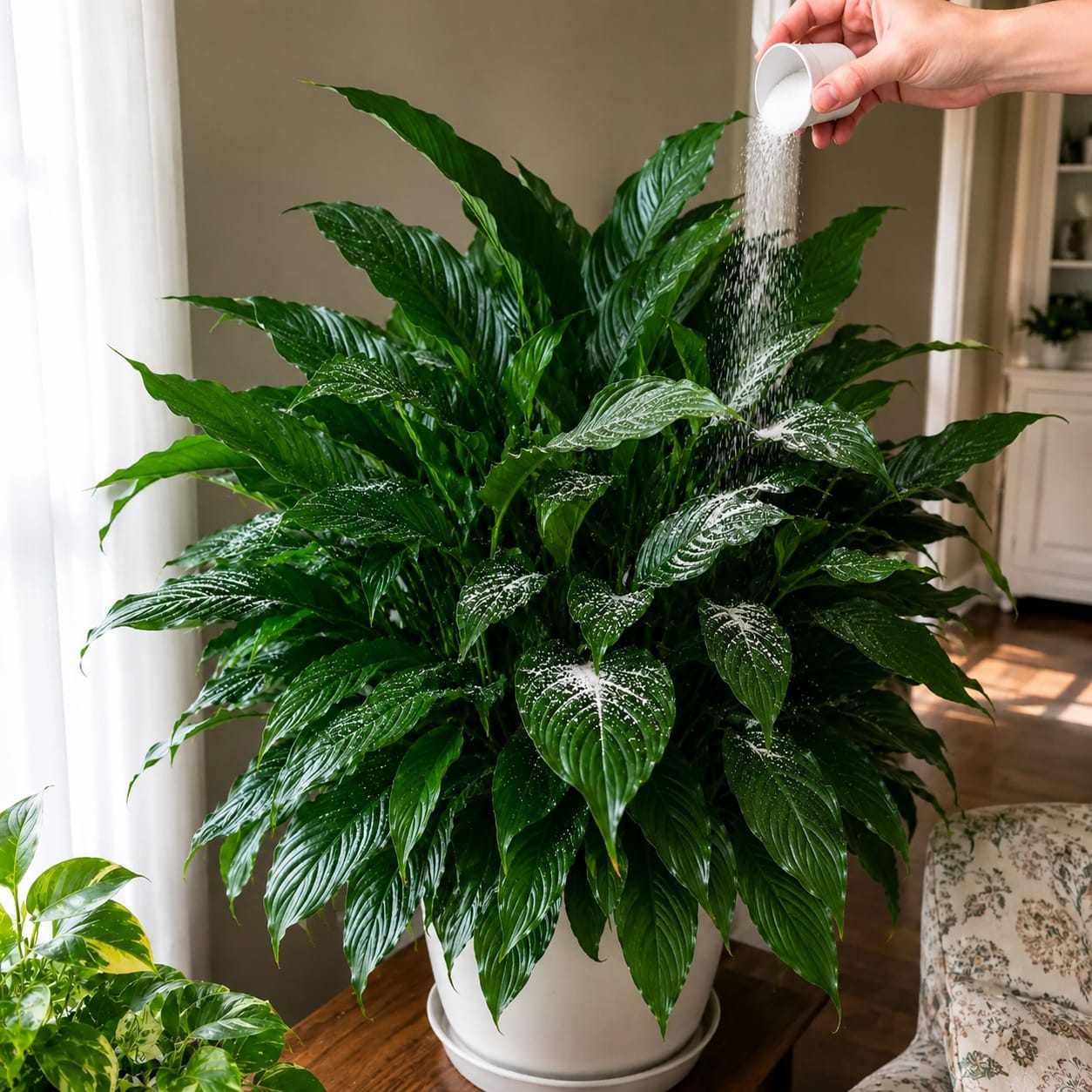
Peace lily is one of the most elegant indoor flowering plants for people who want glossy green leaves, graceful white blooms, soft tropical texture, and a clean decorative look that fits beautifully in living rooms, bedrooms, home offices, apartments, bright kitchens, plant shelves, entryways, commercial interiors, luxury home staging, and premium indoor plant displays. Its deep green foliage, calm upright form, and white sail-like spathes make it a favorite for modern apartment decor, indoor plant styling, office plant design, commercial interior landscaping, and polished property presentation.
Many homeowners become curious when they see a light white powder being sprinkled around or near a peace lily. The idea is often presented as a simple blooming trick, especially when the plant looks lush but refuses to flower. The powder may be a powdered houseplant fertilizer, bone-meal-style bloom booster, crushed eggshell powder, diatomaceous earth, garden lime, Epsom salt, or another dry soil amendment. The problem is that these materials do very different things, and some can harm peace lilies if used incorrectly.
A peace lily does not bloom simply because white powder touches the leaves or soil. Blooming depends mostly on bright indirect light, healthy roots, plant maturity, steady moisture, correct pot size, and gentle feeding during active growth. A white powder may support blooming only if it is a safe fertilizer or mineral amendment used lightly and correctly. If it is unknown, strong, salty, alkaline, or sprinkled heavily over the leaves, it can cause brown tips, leaf spotting, root burn, soil crust, or weak growth.
Quick Answer
A light white powder may help a peace lily bloom only if it is a properly labeled plant-safe fertilizer or amendment and used in a very small amount on the soil, not all over the leaves. Do not coat peace lily leaves with powder. Do not pour powder into the crown. Do not use baking soda, cleaning powder, mystery powder, strong garden lime, or concentrated fertilizer without measuring. For better blooming, give the plant bright indirect light, evenly moist but well-drained soil, a pot with drainage holes, clean leaves, and weak balanced fertilizer during spring and summer.
What Plant This Is
The plant is a peace lily, also known as Spathiphyllum. It is recognized by its shiny dark green leaves and elegant white spathes that rise above the foliage. The white part that looks like a flower is actually a modified leaf surrounding the central flower spike. This white-and-green contrast is what gives peace lilies their refined indoor look.
A healthy peace lily usually has upright leaves, firm stems, fresh green growth, clean soil, and occasional white blooms when conditions are right. A peace lily that is not blooming may still look healthy, but it may be missing enough light, gentle nutrients, or stable root conditions.
What the White Powder Might Be
The white powder may be powdered fertilizer. Some fertilizers are designed to dissolve slowly into the soil and feed the roots. If the powder is made for houseplants and measured correctly, it may support growth and blooming during active seasons.
It may also be crushed eggshell powder. Eggshell powder is often used as a slow calcium source, but it breaks down slowly and does not work like instant bloom fertilizer. It should be used lightly, and it should not be expected to force flowers quickly.
The powder may be diatomaceous earth, which is usually used for pest control on dry soil surfaces. This may help with fungus gnats when the soil surface stays dry, but it does not directly make a peace lily bloom.
The powder may also be garden lime, Epsom salt, baking soda, or another household material. These can be risky. Garden lime can change soil pH. Epsom salt can create salt buildup when overused. Baking soda can damage leaves and disturb the soil. A mystery white powder should never be used on a peace lily.
Why Peace Lilies Stop Blooming
The most common reason peace lilies stop blooming is not lack of powder. It is lack of bright indirect light. Peace lilies can survive in low light, but they often produce fewer blooms there. A plant may stay green for years in a dim room and still refuse to flower.
Another reason is weak roots. If the soil is too wet, compacted, sour, or old, the roots may struggle. A plant with stressed roots will not bloom well, even if fertilizer is added.
Peace lilies may also bloom less when they are too young, too recently repotted, too cold, overfertilized, underwatered repeatedly, or kept in a pot that is much too large. Blooming comes from balanced care, not one dramatic treatment.
How to Use White Powder Safely
If the powder is a labeled fertilizer, use only the amount recommended for the pot size. For peace lilies, it is often safer to use less than the maximum amount. Sprinkle it lightly on the soil surface and keep it away from the crown where the stems meet the soil.
Do not sprinkle powder over the leaves. Peace lily leaves should stay clean and glossy so they can absorb light. If powder lands on the foliage, wipe it away gently with a damp cloth.
Water normally after applying fertilizer powder only if the product instructions say to water it in and only if the soil is ready for watering. Do not keep the soil wet just to activate fertilizer. Peace lilies like moisture, but they still need oxygen around the roots.
When White Powder Should Be Avoided
White powder should be avoided if the peace lily is drooping from soggy soil, has yellow leaves, smells sour, has fungus gnats, or shows blackened roots. These signs usually point to root-zone problems. Fertilizer or powder will not fix root rot.
It should also be avoided if the plant already has brown tips from fertilizer salt buildup. Adding more nutrients can make the damage worse. In that case, clean water, better drainage, and a pause from feeding are safer.
Do not use white powder if you do not know exactly what it is. Peace lilies are sensitive plants, and unknown household powders can cause leaf burn, soil imbalance, and root stress.
Best Blooming Care for Peace Lily
The best way to encourage peace lily blooming is to move the plant into bright indirect light. A spot near a window with filtered light is usually better than a dark corner. Avoid harsh direct afternoon sun because it can burn the leaves.
Keep the soil evenly moist but not soggy. Water when the top layer begins to dry and the pot feels slightly lighter. After watering, let excess water drain fully and empty the saucer.
Use a light fertilizer routine during spring and summer. A diluted balanced houseplant fertilizer every four to six weeks is usually enough. Too much fertilizer can cause brown tips and reduce the clean decorative look.
Best Soil and Pot
Peace lilies grow best in a rich but airy potting mix. The soil should hold moisture while still allowing air around the roots. A good mix may include indoor potting soil, perlite, fine bark, coco coir, and a small amount of compost-based material.
The pot should have drainage holes. A decorative outer pot is fine, but water should never sit at the bottom. A peace lily in trapped water may droop, yellow, and stop blooming because the roots cannot breathe.
If the plant has been in the same soil for years, repotting into fresh airy mix may help more than adding powder. Old compacted soil can hold fertilizer salts and moisture unevenly.
Common Mistakes
One common mistake is coating the leaves with white powder. This makes the plant look dusty and can interfere with light absorption. Peace lily leaves should be wiped clean, not covered.
Another mistake is using too much fertilizer powder. Peace lilies are not heavy feeders. A small amount can support growth, but a heavy layer can burn roots and cause brown tips.
A third mistake is trying to force blooms while the plant is in low light. Fertilizer cannot replace light. If the plant does not receive enough bright indirect light, blooming will stay weak.
Warning Signs After Using Powder
Watch for brown tips, yellow leaves, drooping after watering, white crust on the soil, leaf spotting, fungus gnats, sour smell, or powder clumping into a hard layer. These signs suggest the powder may be too strong, too heavy, or not suitable.
If warning signs appear, stop using the powder. Wipe the leaves clean. Remove excess powder from the soil surface. If the pot drains well, flush the soil with clean water and let it drain fully. If the soil smells bad or looks damaged, repot into fresh mix.
Continue to Page 2
Continue to page 2 for more details about this article and the key points many readers miss on the first page.