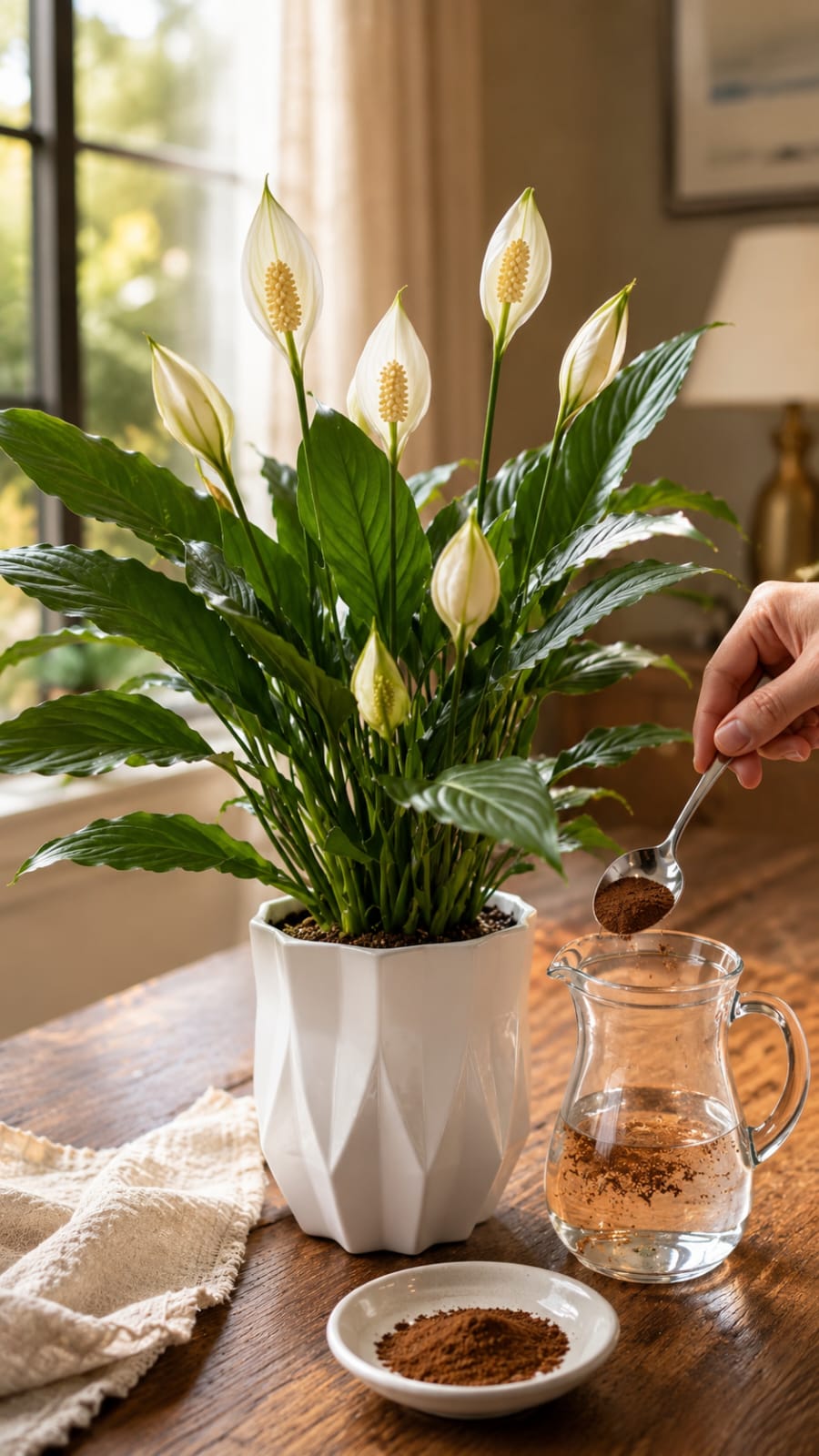
Peace lily is one of the most elegant indoor plants for homeowners who want glossy green leaves, graceful white blooms, soft tropical texture, and a calm decorative display that fits beautifully in living rooms, bedrooms, home offices, apartments, bright windowsills, entryways, modern plant corners, commercial interiors, luxury home staging, and premium indoor plant displays. Its deep green foliage and clean white spathes create a peaceful look that feels fresh, expensive, and timeless, especially when the plant is placed in a white ceramic pot, a textured planter, a natural basket, or a simple decorative container near filtered light.
Many plant lovers become curious when they see a light brown powder being mixed with water near a peace lily. The method is often described as a homemade root tonic for stronger growth, cleaner leaves, healthier roots, and more elegant blooms. The brown powder may be cinnamon, coffee grounds, compost powder, worm castings, cocoa-colored organic fertilizer, dried banana peel powder, or another plant-care ingredient. Because many brown powders look similar, the ingredient must be identified before use. Peace lilies are sensitive tropical houseplants, and the wrong powder can create mold, sour soil, fungus gnats, leaf spotting, root burn, or a messy indoor display.
The safest way to understand this method is to treat it as an optional support step, not a miracle bloom booster. A peace lily does not bloom beautifully because of one spoonful of brown powder. It grows well when the root zone is healthy, the soil stays lightly moist but not soggy, the pot drains properly, the light is bright but indirect, the leaves remain clean, and feeding is gentle during active growth. If those basics are missing, a brown powder mixed with water will not fix the plant. In some cases, it can make the root zone worse.
Understanding Peace Lily Needs First
Peace lily, also known as Spathiphyllum, grows from a central crown and produces broad, glossy leaves on upright stems. The white part most people call the flower is a spathe, while the central spike is the spadix. A healthy peace lily may bloom when it receives enough bright indirect light, steady moisture, warmth, and gentle nutrition. A stressed peace lily may droop, yellow, develop brown tips, stop blooming, or grow smaller leaves.
Before adding any brown powder to water, the plant’s condition should be checked carefully. If the leaves are firm, green, and glossy, the plant may only need normal care. If the leaves are yellowing, drooping, browning, or curling, the issue is usually connected to watering, light, roots, soil quality, humidity, or fertilizer buildup. A homemade tonic should not be used before the real cause is understood.
Peace lilies are not heavy feeders, and they do not like extreme treatments. Their roots enjoy consistent light moisture, but they still need oxygen. Soil that stays wet for too long can suffocate the roots and create rot. Brown powders that dissolve, ferment, or collect in the soil can increase the risk of sour conditions if they are overused.
What the Brown Powder Might Be
The brown powder may be cinnamon. Cinnamon is often used by gardeners as a dry surface powder because it is associated with antifungal support in some plant-care routines. However, cinnamon is not a complete fertilizer and it does not force blooms. If mixed heavily into water and poured into the soil, it may leave residue. It should be used carefully and only in small amounts, mainly as a surface support around cuts or minor fungal concerns, not as a regular root drink.
The powder may be coffee grounds or instant coffee-like material. Coffee products are risky for peace lilies when used directly. Coffee grounds can compact, hold moisture, grow mold, attract fungus gnats, and change the soil surface. Strong coffee water may also be too acidic or concentrated for roots. Peace lilies do not need coffee to thrive. If coffee grounds are used at all, they are better composted first rather than poured directly into indoor pots.
The brown powder may be worm castings or composted organic fertilizer. This can be useful when it is high quality, fully composted, mild, and used lightly. Worm castings can support soil life and gentle nutrition, but even they should not be overused in a small indoor pot. A small amount mixed into the top layer of soil during repotting is usually cleaner than making a thick brown liquid that may smell or stain.
The powder may be dried banana peel powder or another homemade organic powder. These materials can contain nutrients, but they must break down before the plant can use them. In a small indoor pot, unfinished organic material can attract gnats and mold. Homemade powders should be used sparingly and never applied as a thick paste around peace lily roots.
Why Brown Root Tonics Can Be Risky Indoors
Indoor pots are closed, controlled environments compared with outdoor garden beds. When organic powders are mixed with water and poured into a pot, the material does not disappear. It stays in the soil, breaks down slowly, and may change the moisture balance. If the pot drains poorly or the room is dim, the mixture can become sour.
Peace lilies already prefer soil that remains lightly moist. Adding organic liquids too often can make the pot stay wet for longer. This creates ideal conditions for fungus gnats, mold, and root stress. A plant-care method that looks natural can still create problems if it keeps the root zone damp and low in oxygen.
Another risk is staining. Brown liquid can splash on leaves, white pots, wooden tables, fabric, or decorative surfaces. If the mixture contains coffee, compost, or plant powders, it may leave marks or smell unpleasant. For premium indoor plant styling, clean application matters as much as plant health.
Best Light for Peace Lily Blooms
Bright indirect light is one of the most important factors for peace lily blooming. Many peace lilies survive in low light, but survival is not the same as strong blooming. A plant kept in a dim corner may stay green for months but produce few white spathes. If blooming is the goal, improving light usually helps more than adding brown powder.
A bright window with filtered light is ideal. A sheer curtain can soften direct sun and protect the leaves from scorching. Gentle morning brightness can support growth, while harsh afternoon sun may burn the foliage. If the leaves are pale or scorched, the light may be too strong. If the plant is dark green but not blooming, it may need more brightness.
A peace lily styled near soft window light can become a beautiful focal point. The white blooms rise above the dark leaves, and the glossy foliage catches the light. This elegant look depends on healthy care, not heavy residue from homemade mixtures.
Watering Peace Lilies Correctly
Peace lilies like soil that stays lightly moist, but they do not like soggy roots. Water when the top layer begins to dry and the pot feels slightly lighter. When watering, water thoroughly and let excess drain from the bottom. Empty the saucer afterward so the roots do not sit in standing water.
If a brown root tonic is used, it should count as a watering. Do not pour it into already wet soil. This is a common mistake. Adding extra liquid to damp soil can reduce oxygen around the roots and increase the chance of rot. The plant should receive any liquid only when the root zone is ready for moisture.
Water should be directed to the soil, not over the leaves or into the crown. Moisture trapped around the crown can create rot. A clean soil-level application is safer than splashing the entire plant.
Best Soil for Peace Lily
A good peace lily mix should hold moisture while still allowing air to reach the roots. A quality indoor potting mix can be improved with perlite, orchid bark, coco coir, or fine bark to create better airflow. Heavy garden soil is not ideal because it can compact and stay wet too long.
If the soil is old, dense, or sour-smelling, a brown tonic should not be added. Repotting into fresh airy mix is a better solution. Old soil can hold fertilizer salts, organic residue, and excess moisture. A healthy root zone supports stronger leaves and more reliable blooming.
The pot must have drainage holes. Decorative cover pots are fine, but the inner pot should drain freely. A peace lily in a beautiful pot without drainage may look elegant at first, but hidden root problems can develop quickly. Practical care must support the decorative display.
Using Cinnamon Water Carefully
If the brown powder is cinnamon, it should be used lightly. Cinnamon is not plant food. It does not provide the balanced nutrients a peace lily needs. Some growers use dry cinnamon on cut stems or minor surface issues, but repeated cinnamon water applications are not necessary for a healthy peace lily.
A strong cinnamon mixture can leave residue and may irritate sensitive roots if overused. If testing it, use only a very weak amount, apply rarely, and avoid pouring it into wet soil. Watch for leaf drooping, soil crust, odor, or any sign of stress.
For regular peace lily growth, a diluted balanced houseplant fertilizer is more predictable than cinnamon water. Cinnamon should remain a small occasional support, not a routine feeding method.
Using Coffee-Based Mixtures Carefully
If the brown powder is coffee, caution is especially important. Coffee grounds are often promoted as plant food, but they can be problematic in indoor pots. They may compact on the soil surface, hold moisture, mold, and attract fungus gnats. Strong coffee liquid may be too concentrated for peace lily roots.
Peace lilies do not need coffee to bloom. If coffee grounds are used, they are safer when composted fully before being added to potting mixes. Fresh or wet coffee grounds should not be poured around indoor peace lilies as a regular tonic.
If coffee has already been used and the soil smells sour or shows mold, remove the top layer of soil and replace it with fresh mix. If the pot remains wet and the plant droops, inspect the roots. Stop all homemade treatments until the plant stabilizes.
Using Worm Castings or Organic Powder
Worm castings are usually gentler than many homemade powders when they are fully finished and clean. They can support soil structure and mild nutrition. However, peace lilies still need moderation. A small amount worked lightly into the top layer during active growth can be useful, but a thick brown liquid made from too much organic material can create smell and moisture problems.
If using worm castings, choose a fine, odorless, high-quality product. It should smell earthy, not rotten. Apply lightly and avoid piling it against the crown. Water normally afterward only when the plant needs moisture.
Organic does not mean unlimited. Even gentle materials can cause trouble if they make the soil heavy or wet. In indoor plant care, clean and controlled application is important.
Feeding Peace Lily Safely
Peace lilies benefit from gentle feeding during active growth, usually in spring and summer. A diluted balanced houseplant fertilizer can support leaves and blooms. Strong feeding is not needed. Too much fertilizer can cause brown tips, leaf burn, and root stress.
If a brown powder is being used because the plant looks weak, do not feed immediately. Weakness may come from overwatering, poor light, root rot, or old soil. Feeding a stressed plant can make the problem worse. First check moisture, roots, drainage, and light.
A healthy peace lily in bright indirect light can respond well to weak fertilizer. A peace lily in low light needs less fertilizer because it grows more slowly. Feeding should match the plant’s growth and environment.
Cleaning Peace Lily Leaves
Peace lily leaves are naturally glossy and look best when clean. Dust can dull the foliage and reduce light absorption. Wipe leaves gently with a soft damp cloth, supporting each leaf while cleaning. Avoid oily leaf shine products because they can attract dust and leave residue.
If brown tonic splashes onto the leaves, wipe it away before it dries. Coffee, compost, cinnamon, or organic powder residue can leave marks and make the plant look dirty. The beauty of a peace lily comes from clean green leaves and graceful white blooms.
Faded blooms and yellow leaves should be removed with clean scissors. This keeps the plant fresh and elegant. A well-groomed peace lily looks more luxurious than one covered in homemade residue.
Humidity and Indoor Conditions
Peace lilies appreciate moderate humidity. Dry indoor air can contribute to brown tips, especially during winter or in rooms with heating. A humidifier, plant grouping, or pebble tray can help. However, humidity should be balanced with airflow. Damp stagnant air can encourage fungal problems.
The plant should be kept away from cold drafts, air-conditioning vents, and heating registers. Sudden temperature changes can stress the leaves and reduce blooming. Warm, stable conditions support healthier growth.
If any brown tonic is used, airflow matters even more. The soil surface should not stay wet and sour. A bright, warm, well-ventilated location helps the pot dry properly and keeps the plant healthier.
When Brown Root Tonics Should Be Avoided
A brown root tonic should be avoided if the peace lily has wet soil, a sour smell, fungus gnats, mold, yellowing leaves from overwatering, drooping while the soil is damp, black roots, or soft stems near the base. These are signs that the root zone may already be stressed. Adding organic liquid can make the issue worse.
It should also be avoided during cold or dark seasons when growth is slow. In low light, the plant uses water and nutrients more slowly. Extra organic material may sit in the pot and spoil. During winter, plain careful watering is usually safer.
Do not use unknown powders, spoiled mixtures, sugary liquids, salty ingredients, oily kitchen residues, or strong coffee. If the ingredient is not clearly plant-safe, do not add it to the pot.
How to Encourage More Peace Lily Blooms
To encourage more blooms, begin with light. Move the peace lily gradually into brighter indirect light. A plant in dim light may stay alive but bloom rarely. Bright filtered light gives the plant energy to produce white spathes.
Next, check the roots and soil. If the plant is in old compacted mix, repotting may help. Fresh airy soil supports root health and stronger growth. If roots are damaged, trim rotten sections and let the plant recover before feeding.
Then use gentle balanced fertilizer during active growth. Do not overfeed. Too much fertilizer can cause brown tips and stress. Peace lilies bloom best from steady care over time, not from strong sudden treatments.
Indoor Decor and Styling Ideas
Peace lilies are perfect for elegant indoor styling because their white blooms and glossy leaves fit many decor styles. A white geometric pot creates a clean modern look. A woven basket gives a warm natural style. A stone-textured planter feels calm and premium. The plant can be placed on a wooden table, plant stand, entry console, bedroom corner, or near a filtered window.
For a luxury display, keep the soil surface tidy and avoid visible residue. A brown powder mixture may stain the pot, table, or decorative fabric if spilled. Always apply carefully and wipe surfaces immediately. The plant should look naturally healthy, not overtreated.
In commercial interiors, staged homes, offices, salons, and wellness spaces, peace lilies create a calm professional atmosphere. In these settings, homemade treatments should not leave odor, mold, or messy marks. Clean care is part of the design.
Continue to Page 2
Continue to page 2 for more details about this article and the key points many readers miss on the first page.