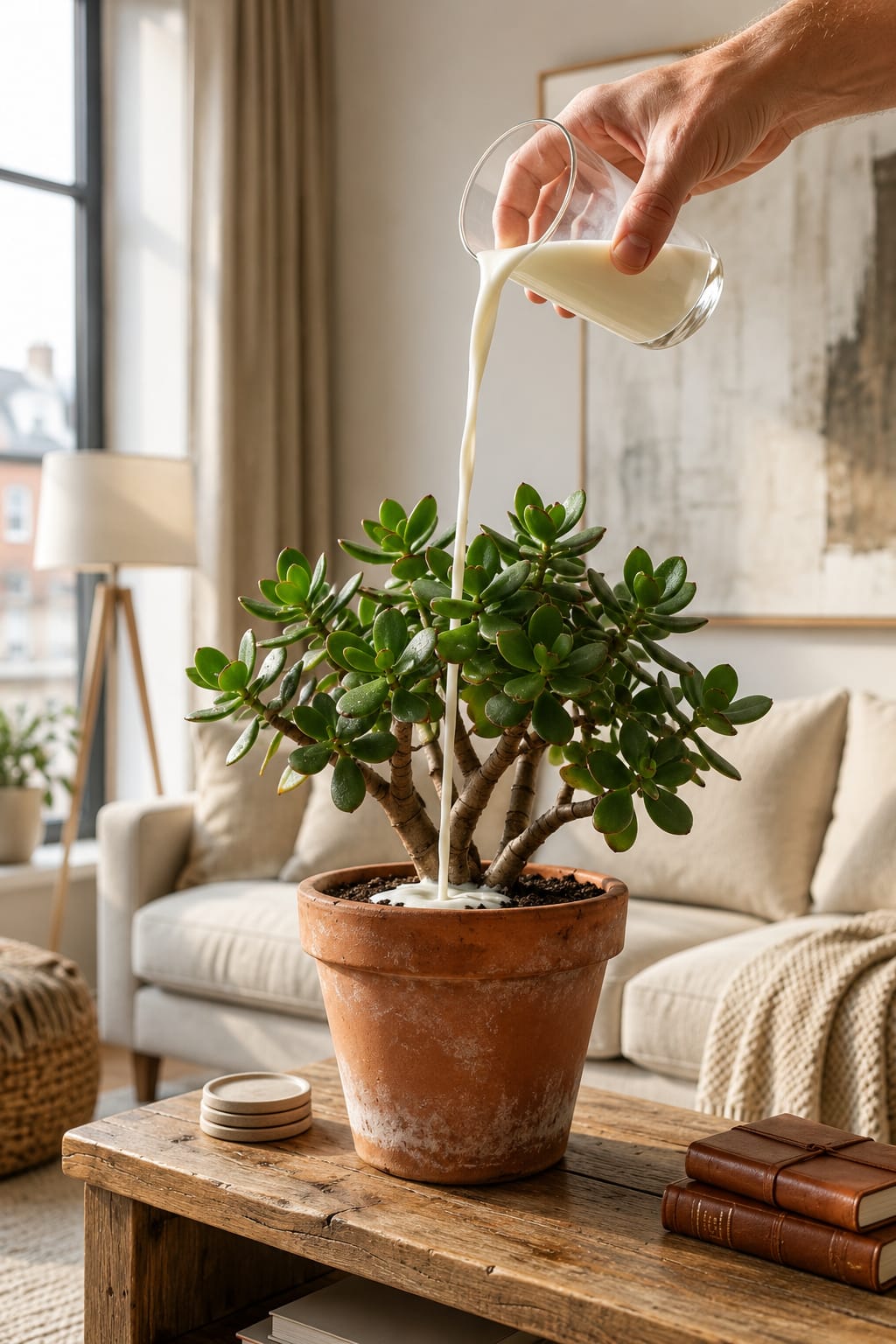
Jade plant is one of the most beloved indoor succulents for homeowners who want thick glossy leaves, woody stems, compact tree-like shape, simple care, and a clean decorative display that fits beautifully in living rooms, bedrooms, home offices, apartments, bright windowsills, sunny shelves, entry tables, modern interiors, commercial spaces, luxury home staging, and premium indoor plant styling. Its rounded green leaves store water, its trunk becomes stronger with age, and its natural bonsai-like shape can make even a simple terracotta pot look warm, elegant, and timeless.
Many plant lovers become curious when they see a white liquid being poured around a jade plant. This method is often described as a simple homemade tonic for stronger roots, fuller leaves, thicker stems, and healthier growth. The white liquid may be diluted milk water, rice water, weak fertilizer, calcium water, or another homemade mixture. It may look gentle and natural, but jade plants are succulents. They store water in their leaves and stems, and their roots are very sensitive to excess moisture, sour soil, and organic residue. For that reason, any white liquid must be used with caution.
The safest way to understand this method is to treat it as a risky experiment, not a regular jade plant care routine. A jade plant does not become fuller and stronger because of one dramatic pour. It grows best when it receives bright light, a fast-draining succulent mix, a pot with drainage holes, infrequent watering, warm stable conditions, clean leaves, and very gentle feeding during active growth. If the plant is weak, yellowing, dropping leaves, or becoming soft, the first solution is not milk, rice water, or any white tonic. The first step is checking the roots, soil moisture, light level, and drainage.
Understanding Jade Plant Roots Before Using White Liquid
Jade plants grow as drought-tolerant succulents. Their leaves and stems hold water, allowing them to survive dry periods. This is why they do not need frequent watering. Their roots prefer a dry-down period between waterings. When the soil stays wet too long, the roots can rot, and the thick stems can become soft near the base.
A healthy jade plant has firm leaves, sturdy stems, and a compact shape. The leaves should feel plump but not mushy. If the leaves are wrinkled, the plant may be dry or root-damaged. If the leaves are yellow, soft, and falling, the plant may be overwatered. These two problems can look confusing at first, which is why checking the soil is important before adding any liquid.
White liquids can be risky because they add both moisture and organic material. A jade plant already needs less water than many houseplants. If the soil is damp and a white mixture is poured in, the roots may stay wet for too long. This can lead to sour soil, fungus gnats, mold, or root rot.
What the White Liquid Might Be
The white liquid may be milk water. Milk contains organic material and small amounts of nutrients, but it can spoil in potting soil. Straight milk should never be poured into a jade plant pot. It can sour, smell unpleasant, attract pests, and leave white residue on the soil and pot. Even diluted milk water should be avoided by most jade plant owners because the risk is usually greater than the benefit.
The liquid may be rice water. Rice water can look cloudy because of starch. Fresh diluted rice water may contain tiny traces of minerals, but it is not a complete fertilizer. For succulents, repeated rice water can leave starch residue in the soil. That residue may encourage microbial growth or fungus gnats if the soil stays moist.
The liquid may also be a weak fertilizer solution. If it is a properly diluted succulent fertilizer, it may be useful during active growth. However, jade plants are light feeders, so fertilizer should be weak and occasional. A strong fertilizer dose can burn roots and cause leaf stress.
Why Milk Water Is Usually a Bad Idea for Jade Plants
Milk water is often promoted as a homemade calcium trick, but jade plants do not need milk to grow well. Milk can break down inside the potting mix and create odor. In a dry, airy garden bed, organic material has room to decompose. In a small indoor pot, it can become sour quickly.
Milk residue can also attract fungus gnats and mold. The soil surface may develop white patches that look unpleasant and can make the plant display feel dirty. A jade plant is often used as a clean decorative plant, and sour milk residue takes away from that look.
If the goal is stronger growth, use better light and proper soil instead. If the goal is nutrition, use a diluted succulent fertilizer. Milk is not a reliable or clean fertilizer for jade plants.
Why Rice Water Needs Caution
Rice water is gentler than milk in many cases, but it still needs caution. The starch in rice water can remain in the soil, especially if the mixture is cloudy or thick. Jade plant soil should dry quickly. Anything that makes the soil sticky, compacted, or microbe-heavy can become a problem.
If rice water is used at all, it should be fresh, strained, very diluted, and used rarely. It should never smell sour or fermented. Fermented rice water is too unpredictable for jade plants and should not be poured into succulent soil.
Plain water is usually safer. Jade plants do not need frequent special drinks. They prefer bright light, dry-down time, and a clean root zone.
Best Soil for Jade Plants
Jade plants need fast-draining soil. A cactus or succulent mix is a good base. It can be improved with perlite, pumice, coarse sand, lava rock, or gritty mineral material. The goal is a soil mix that drains quickly and does not remain wet around the roots for many days.
Dense regular potting soil can hold too much moisture. If a jade plant is in heavy soil and receives white liquid, the risk of rot increases. Repotting into a gritty mix is often more helpful than adding any homemade tonic.
A terracotta pot is useful for jade plants because it allows moisture to evaporate through the sides. Ceramic or plastic pots can work too, but drainage holes are essential. A pot without drainage is risky for any succulent.
Watering Jade Plants Correctly
Jade plants should be watered only when the soil has dried well. The exact timing depends on light, temperature, pot size, soil mix, and season. A jade plant in bright light may need water more often than one in a dim room. A plant in winter may need much less water than in spring or summer.
When watering, soak the soil thoroughly and allow excess water to drain out. Then let the soil dry again before watering. Do not give small daily sips. Do not keep the soil constantly moist. Jade plants are built for periods of dryness.
Any white liquid counts as watering. If the plant does not need water, do not pour a tonic just because it looks helpful. Extra liquid is one of the fastest ways to damage a jade plant.
Best Light for Strong Jade Plant Growth
Jade plants need bright light to stay compact and strong. A bright window with several hours of gentle sun is often ideal. If the plant receives too little light, stems may stretch, leaves may become spaced out, and the plant may lean toward the window.
Introduce stronger light gradually. A jade plant moved suddenly from shade into harsh direct sun can develop sunburn. Morning sun or bright filtered light is often safer than intense afternoon sun behind hot glass.
If a jade plant is weak or stretched, improve light before adding fertilizer or homemade liquid. Light is the real energy source. Without enough brightness, the plant cannot use water and nutrients properly.
Feeding Jade Plants Safely
Jade plants are light feeders. During spring and summer, a diluted cactus or succulent fertilizer can support growth. The dose should be weak. Too much fertilizer can cause salt buildup, brown edges, weak growth, or root stress.
Do not fertilize during winter if the plant is resting or growing slowly. Do not feed a stressed jade plant with wet soil, soft stems, or root problems. Fertilizer helps healthy roots, but it does not rescue rotten roots.
A white liquid should only be considered safe if it is a known, diluted fertilizer made for plants. Unknown kitchen mixtures should not replace proper feeding.
When White Liquid Should Be Avoided
White liquid should be avoided if the jade plant has damp soil, yellow leaves, soft stems, falling leaves, fungus gnats, mold, sour smell, a pot without drainage, or dense compacted soil. These are warning signs. Adding more liquid can make the problem worse.
It should also be avoided in winter or low-light rooms. Jade plants use water slowly when they are not actively growing. Extra moisture can remain around the roots and create rot.
Do not use straight milk, sweetened milk, flavored milk, fermented rice water, salty water, oily mixtures, sugary mixtures, or unknown liquids. These can harm the plant and create unpleasant indoor conditions.
What to Do If White Liquid Was Already Used
If a small amount was used once and the plant still looks healthy, stop using it and return to normal care. Let the soil dry properly before watering again. Watch for odor, fungus gnats, mold, leaf drop, or softness near the base.
If a large amount was poured into the pot and the pot drains well, water through once with plain water to help dilute and move residue out, then let the plant dry thoroughly. Do not keep flushing repeatedly because too much water can also damage jade roots.
If the soil smells sour or the stems become soft, repotting may be necessary. Remove the plant, inspect the roots, cut away mushy roots with clean tools, and repot into fresh dry succulent mix. After repotting, wait before watering so damaged roots can begin to callus and stabilize.
Cleaning Jade Plant Leaves
Jade leaves look best when they are clean and glossy. Dust can dull the plant’s appearance and reduce light absorption. Wipe leaves gently with a soft damp cloth. Avoid soaking the plant or letting water collect where leaves meet stems.
If white liquid splashes on the leaves, wipe it away before it dries. Milk or rice residue can leave marks and attract dust. Clean leaves make the plant look healthier and more elegant.
Do not use oily leaf shine products. Jade leaves already have a natural sheen. Plain water and a gentle cloth are enough.
Pruning for a Fuller Shape
Jade plants can be pruned to encourage a fuller, tree-like shape. Pruning should be done with clean sharp tools. Cut above a leaf node where new growth can branch. Do not remove too much at once, especially from a weak plant.
Pruned cuttings can often be propagated. Let the cut end dry and callus for several days before planting in a gritty mix. Do not place fresh cuttings into wet soil immediately because they can rot.
A fuller jade plant comes from light, pruning, and time. White liquid will not create a strong bonsai-like structure by itself.
Continue to Page 2
Continue to page 2 for more details about this article and the key points many readers miss on the first page.