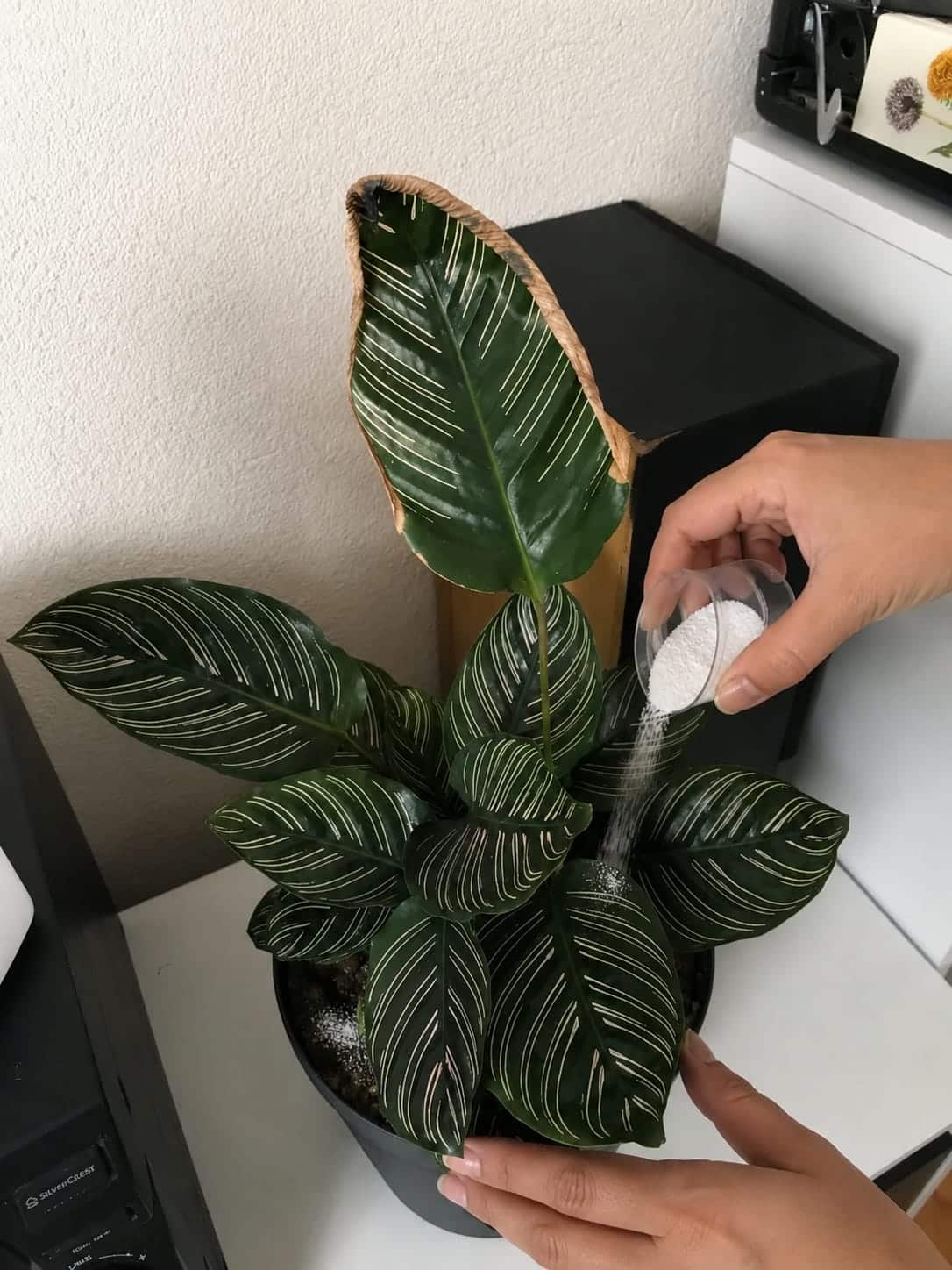
Pinstripe calathea is one of the most beautiful indoor plants for homeowners who want dark glossy foliage, elegant pale pink or white leaf lines, a soft tropical look, and a premium decorative display for living rooms, bedrooms, apartments, home offices, plant shelves, bright bathrooms, commercial interiors, luxury home staging, and stylish indoor plant corners. Its leaves look almost hand-painted, with fine stripes that create a refined pattern and make the plant feel more expensive than many common houseplants.
Many plant lovers become curious when they see a white powder being poured around a pinstripe calathea. This type of powder is often described online as a simple trick for stronger roots, cleaner soil, shinier leaves, fewer pests, and better growth. The white powder may be perlite, diatomaceous earth, baking soda, crushed eggshells, powdered fertilizer, limestone, Epsom salt, cornstarch, or another homemade amendment. Because many white powders look similar, the exact ingredient matters. Calatheas are beautiful but sensitive, and the wrong powder can dry the roots, burn the leaves, change the soil balance, clog the surface, or create stress.
The safest way to understand this method is to treat white powder as something that should be used only when you know exactly what it is and why it is being applied. A pinstripe calathea does not become lush because a random powder is sprinkled into the pot. It grows best with bright indirect light, evenly moist but not soggy soil, high humidity, warm stable conditions, soft water, drainage holes, airy potting mix, and gentle feeding during active growth. If the plant has browning edges, curling leaves, pale stripes, or dry tips, the first step is checking water quality, humidity, soil moisture, light, and roots before adding any powder.
Why Pinstripe Calathea Is More Sensitive Than Many Houseplants
Pinstripe calathea is not as forgiving as snake plant, ZZ plant, pothos, or spider plant. It comes from tropical conditions where humidity is higher, temperatures are stable, and the soil stays lightly moist without drying into a hard block. Indoors, the plant can react quickly when the air is dry, the water is too mineral-heavy, the sun is too direct, or the soil swings between soggy and bone dry.
The leaves are often the first place stress appears. Crispy brown edges, curling leaves, faded patterning, yellowing lower leaves, and limp stems can all happen when the plant is uncomfortable. These symptoms are not always a sign that the plant needs powder. In many cases, they are signs of dry air, inconsistent watering, hard tap water, strong fertilizer, or root stress.
Because calatheas are sensitive, random soil additions are risky. A white powder that might not bother a tough plant can harm a calathea if it changes moisture, pH, salt levels, or surface airflow. The best care for pinstripe calathea is calm, consistent, and gentle.
What the White Powder Might Be
The white powder may be perlite. Perlite is a lightweight volcanic material commonly used to improve drainage and airflow in potting mixes. It is one of the safer white materials for houseplants when mixed into soil. However, simply pouring a pile of perlite on top of the soil does not fix compacted roots below. Perlite works best when blended into the potting mix during repotting.
The powder may be diatomaceous earth. Some plant owners use it on soil surfaces to help with crawling pests or fungus gnat larvae, but it only works when dry. If it gets wet, it loses much of its usefulness. Calatheas need moist soil, so diatomaceous earth can become messy and less effective. It can also create dust that should not be inhaled.
The powder may be baking soda. Baking soda should not be used casually in calathea soil. It can change soil chemistry and may cause salt stress. Calatheas are already sensitive to mineral buildup, so baking soda is a poor choice for routine care.
The powder may be crushed eggshells. Eggshell powder is often promoted for calcium, but it breaks down slowly and does not provide quick nutrition. If used heavily, it can alter the soil surface and create residue. Calatheas do not need heavy eggshell treatments to grow well.
The powder may be fertilizer granules or Epsom salt. These can burn roots if used too strongly. Calatheas need gentle feeding, not heavy mineral additions. Unknown white powder should never be added to a sensitive plant.
Why Baking Soda Is Risky for Calatheas
Baking soda is often shown in home-care tricks, but it is not a good routine soil treatment for pinstripe calathea. It contains sodium, and sodium buildup can stress roots. Calatheas are already sensitive to salts and minerals in water and fertilizer. Adding baking soda can make brown edges and leaf stress worse.
Some people use baking soda in very diluted sprays for certain plant problems, but even sprays can damage delicate leaves when used incorrectly. Calathea leaves are thin and ornamental. They can spot, dry, or burn if harsh mixtures touch them. A white powder poured into the soil is even riskier because it can sit around the roots.
If the goal is cleaner leaves or healthier roots, baking soda is not the answer. Soft water, better humidity, careful watering, and fresh airy soil are much safer for pinstripe calathea.
Why Diatomaceous Earth Needs Caution
Diatomaceous earth is sometimes used by indoor gardeners to manage pests, especially when the soil surface stays dry. It is a fine powder, and the dry dust can irritate lungs if inhaled. It should be handled carefully and kept away from faces, pets, and children during application.
For calatheas, the challenge is moisture. Pinstripe calathea soil should stay lightly moist. Diatomaceous earth works best when dry, so a moist calathea pot is not the ideal setting for it. Once wet, it can clump and look messy. It may also form a pale crust on the surface.
If fungus gnats are the problem, moisture control, sticky traps, fresh soil management, and targeted gnat treatments are often more reliable. A powder layer alone will not solve the root cause if the soil is staying too wet.
Why Epsom Salt Should Not Be Used Randomly
Epsom salt is magnesium sulfate. Magnesium is a plant nutrient, but that does not mean every plant needs extra Epsom salt. Calatheas can be sensitive to salt buildup, and adding Epsom salt without a known deficiency can create more stress than benefit.
Leaf browning on calathea is often caused by low humidity, hard water, direct sun, or inconsistent watering, not magnesium deficiency. Adding salts to solve brown edges can make the edges worse. The plant may look like it needs more help, but the real issue may be too many minerals in the soil.
If feeding is needed, use a balanced houseplant fertilizer at a weak dose during active growth. Do not guess with mineral powders. Gentle, measured care is safer.
Can Eggshell Powder Help Pinstripe Calathea?
Eggshell powder is often used by plant owners who want a natural calcium source. However, eggshells break down slowly and do not provide quick results. They are more useful in compost systems than as a fast indoor plant treatment. Heavy eggshell powder on the soil can create a chalky layer and does not solve common calathea issues.
Calatheas do not usually struggle because they lack eggshell calcium. They struggle because of dry air, hard tap water, poor watering rhythm, cold drafts, direct sun, compacted soil, or root stress. These problems require care adjustments, not a layer of crushed shell.
If eggshell powder is used at all, it should be very finely ground and used sparingly. For pinstripe calathea, it is usually unnecessary.
When Perlite Is Actually Useful
Perlite is one of the few white materials that can genuinely help calathea care when used properly. It improves airflow and drainage inside the potting mix. This helps roots receive oxygen while the soil still holds some moisture. Calatheas need that balance. They do not want to dry out like succulents, but they also do not want muddy soil.
Perlite should be mixed into the soil rather than poured heavily on top. A good calathea mix may include quality potting soil, coco coir or peat-based material, perlite, and fine bark. The mix should feel light and springy, not dense and sticky.
If the plant is in compacted soil, repotting with perlite blended through the mix can help. A surface sprinkle alone will not change what is happening around the roots.
Best Soil for Pinstripe Calathea
Pinstripe calathea prefers an airy moisture-retentive mix. The soil should hold light moisture but drain well. A good indoor potting mix can be improved with perlite, fine orchid bark, coco coir, and a small amount of compost or worm castings. The goal is a mix that never becomes waterlogged but also does not dry into a hard brick.
If the soil smells sour, feels compacted, or stays wet for too long, adding white powder is not enough. Repotting into fresh airy mix is safer. During repotting, inspect the roots. Healthy roots should not smell rotten or feel mushy. Remove damaged roots with clean scissors.
Do not use cactus soil alone because it may dry too fast for calatheas. Do not use heavy garden soil because it can suffocate roots. A balanced indoor tropical mix is best.
Drainage Holes Are Essential
Pinstripe calathea needs a pot with drainage holes. Moisture should move through the pot rather than collect at the bottom. A decorative pot without drainage can trap water and create root rot. This is especially risky if powders or homemade mixtures are added because they can collect in the lower soil.
A stylish setup can still be safe. Use a draining nursery pot inside a decorative outer pot. Water the plant, allow excess to drain, and empty the outer pot before returning the plant. This keeps the display beautiful while protecting the roots.
No powder can replace drainage. A healthy root system depends on moisture and oxygen moving properly through the pot.
Water Quality Matters for Calatheas
Water quality is one of the biggest issues with pinstripe calathea. Many calatheas develop brown leaf edges when watered with mineral-heavy tap water. Chlorine, fluoride, salts, and hard water minerals can contribute to leaf stress over time. A white powder will not solve this if the water is the real problem.
Filtered water, rainwater, or distilled water can be gentler. If those are not available, letting tap water sit overnight may help with chlorine, but it does not remove all minerals. If brown edges keep appearing, water quality is worth considering.
Use room-temperature water. Cold water can shock roots. Calatheas prefer stable warmth and gentle moisture.
Watering Pinstripe Calathea Correctly
Pinstripe calathea likes evenly moist soil, but not soggy soil. Water when the top layer begins to dry, before the entire root ball becomes bone dry. If the plant dries too much, the leaves may curl or droop. If the plant stays too wet, the roots may rot.
Water thoroughly until excess drains from the bottom, then empty the saucer. Do not give tiny sips that only wet the surface. Do not keep the pot standing in water. The soil should feel lightly moist, not muddy.
If white powder has been added to the surface, be careful. Water can dissolve or move the powder into the root zone. If the powder is unknown, remove it before watering. Plain water and proper drainage are safer than guessing.
Humidity for Fuller Calathea Leaves
Pinstripe calathea appreciates higher humidity. Dry indoor air can cause curling leaves, crispy edges, and dull growth. A humidifier is often the most effective solution. Grouping plants together can also help slightly. A pebble tray may add a small humidity boost, but it should not let the pot sit in water.
Humidity should be balanced with airflow. Stagnant damp air can encourage fungal problems. The goal is moist air, not wet leaves and soggy soil. A gentle humidifier in a bright room can make a big difference.
If your calathea has crispy edges, humidity is often more important than powder. Leaf edges cannot be repaired, but better humidity can reduce future damage.
Best Light for Pinstripe Calathea
Pinstripe calathea grows best in bright indirect light. Too much direct sun can fade the leaf pattern, scorch the leaves, and create brown patches. Too little light can slow growth and make the plant look weak. A bright room with filtered light is ideal.
Place the plant near a window with a sheer curtain, or a few feet back from a bright window. Morning light may be tolerated, but harsh afternoon sun should be avoided. If the leaves are fading or curling near the window, move the plant slightly away from direct rays.
Good light helps the plant use water properly. A calathea in low light may stay wet too long. If powder is added to damp low-light soil, root problems can become more likely.
Feeding Pinstripe Calathea Safely
Pinstripe calathea should be fed gently during active growth, usually spring and summer. Use a balanced houseplant fertilizer diluted to a weak strength. Strong fertilizer can cause brown tips, salt buildup, and root stress. Calatheas are sensitive, so less is better.
Do not fertilize a stressed plant with curling leaves, wet soil, root rot, or severe browning. Fix water quality, humidity, drainage, and light first. Fertilizer helps a healthy plant grow, but it does not rescue damaged roots.
If the white powder is fertilizer, use extreme caution. Granular fertilizer should be measured according to the label. Never pour unknown white granules into a calathea pot. Overfeeding can damage the plant quickly.
What to Do With Brown Edges
Brown edges on pinstripe calathea will not turn green again. You can trim the brown parts with clean scissors if they bother you visually. Follow the natural leaf shape and avoid cutting too far into healthy tissue. A small trim can make the plant look cleaner.
Do not remove every leaf with minor browning. The plant still uses green leaf tissue for energy. Remove only leaves that are mostly dead, diseased, or badly damaged. Over-pruning can weaken the plant.
After trimming, focus on prevention. Improve humidity, use gentler water, avoid direct sun, keep watering consistent, and reduce fertilizer strength. These steps help new leaves emerge cleaner.
Cleaning Calathea Leaves
Pinstripe calathea leaves are decorative and should be kept clean. Dust can dull the glossy surface and reduce light absorption. Wipe leaves gently with a soft damp cloth. Support the leaf with one hand while cleaning with the other so the stem does not bend.
If white powder lands on the leaves, wipe it away immediately. Powder can settle into the leaf lines and make the plant look dusty. It can also irritate delicate leaf surfaces if moisture is added later.
Avoid oily leaf shine products. They can clog the leaf surface and attract dust. Plain water and a soft cloth are enough for a natural polished look.
When White Powder Should Be Avoided Completely
White powder should be avoided if you do not know exactly what it is. It should also be avoided if the soil is wet, the plant has root rot, the pot lacks drainage, the leaves are curling from stress, fungus gnats are present, or the plant has a sour soil smell. Adding powder to an already stressed plant can make diagnosis harder.
It should also be avoided during winter or low-light conditions when the plant is growing slowly. Calatheas use less water and fewer nutrients in cooler darker months. Extra amendments can build up instead of helping growth.
Do not use baking soda, table salt, sugar, flour, cornstarch, strong fertilizer granules, lime, unknown minerals, or kitchen powders in calathea soil. Sensitive plants need clean, gentle care.
Continue to Page 2
Continue to page 2 for more details about this article and the key points many readers miss on the first page.