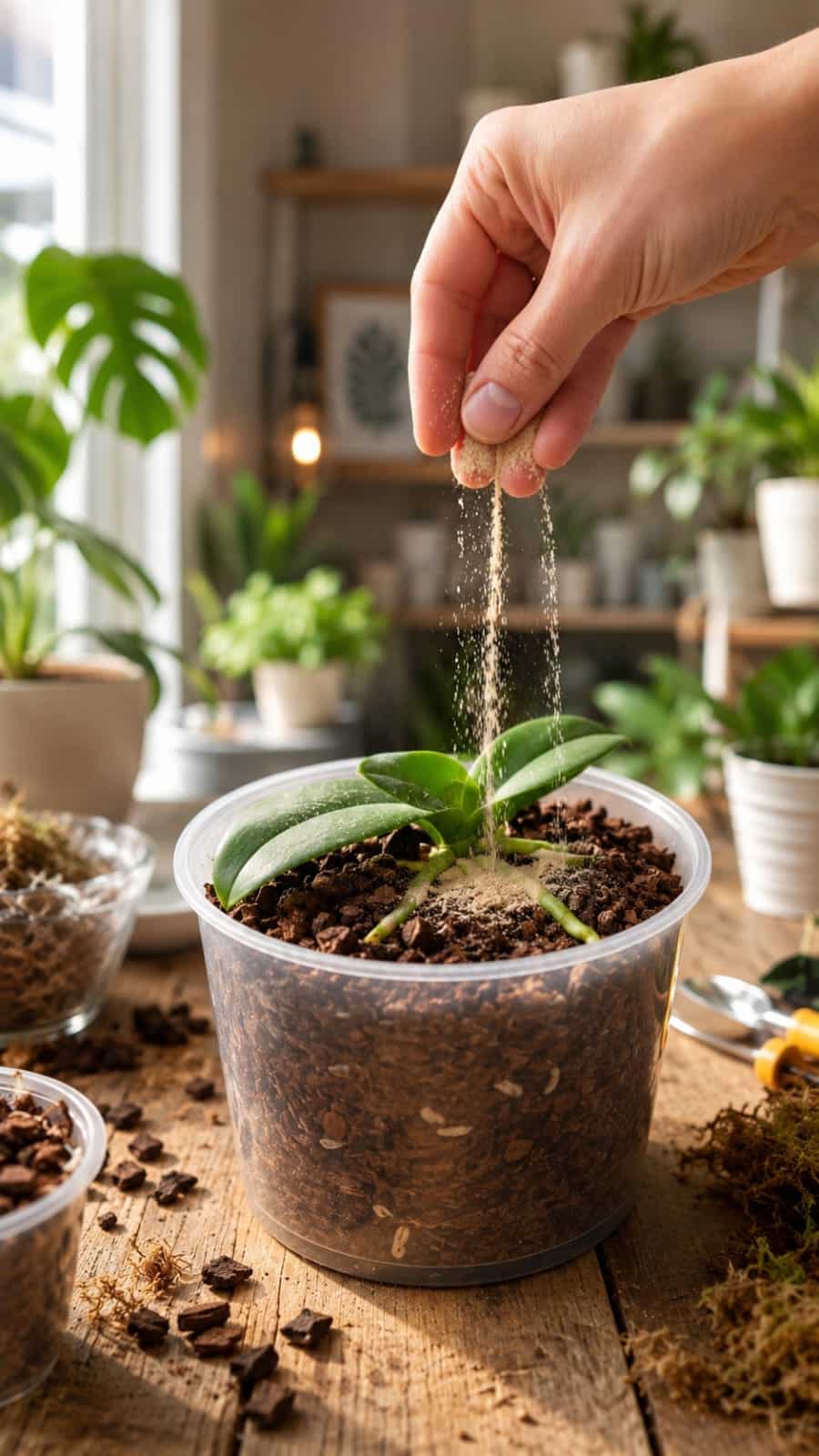
Orchids are among the most elegant indoor plants for homeowners who want graceful flowers, sculptural green leaves, exposed roots, and a refined decorative display for living rooms, bedrooms, home offices, bright kitchens, apartments, plant shelves, commercial interiors, luxury home staging, and premium indoor plant styling. A healthy orchid can look delicate and expensive, but its care is very different from ordinary houseplants. It does not grow best in heavy soil. It needs air around the roots, careful watering, bright indirect light, and a clean potting environment that protects the crown and root system from rot.
Many plant lovers become curious when they see a fine beige or pale powder being sprinkled around the base of an orchid. This type of powder is often described as a homemade root booster, bloom helper, natural antifungal support, or gentle fertilizer for stronger leaves and cleaner orchid roots. The powder may be cinnamon, crushed eggshells, rice powder, orchid fertilizer, rooting hormone, powdered bark amendment, banana peel powder, diatomaceous earth, or another homemade mixture. Because many powders look similar, the exact ingredient matters. Orchids can be sensitive, and the wrong powder can dry roots, block airflow, attract pests, create residue, or damage tender root tips.
The safest way to understand this method is to treat any powder as a targeted care tool, not a miracle orchid revival trick. Orchids do not bloom because a random powder is sprinkled over the pot. They bloom when they have healthy roots, bright indirect light, proper watering, good airflow, a suitable orchid bark mix, stable warmth, and a gentle feeding routine. If the orchid is weak, wrinkled, yellowing, or not blooming, the first step is checking the roots and the potting medium before adding powders or homemade boosters.
Why Orchid Roots Need Air More Than Powder
Most common indoor orchids, especially Phalaenopsis orchids, grow with thick roots that like moisture but also need oxygen. These roots are covered with a spongy outer layer called velamen, which absorbs water quickly and then dries between waterings. In nature, many orchids grow attached to trees rather than buried in dense soil. This is why they are usually grown in bark, chunky orchid mix, sphagnum moss, or a blend that allows air to move around the roots.
When powder is sprinkled heavily over the crown, roots, or bark, it can settle into spaces that should stay open. If the powder becomes damp, it may form clumps. These clumps can hold moisture against roots or block airflow. For orchids, airflow is not a small detail. It is one of the main reasons roots remain healthy.
A small amount of the right powder in the right place may not cause trouble, but heavy use can create problems. If the orchid is already in old compacted bark or soggy moss, powder will not fix the root zone. Repotting into fresh orchid mix is usually more helpful.
What the Powder Might Be
The powder may be cinnamon. Cinnamon is commonly used by orchid growers in tiny amounts on cut areas because it can help dry and protect wounds. However, cinnamon should not be poured over live roots. It can dry tender root tissue and may damage active growing tips. Cinnamon belongs on cuts, not as a heavy soil or root coating.
The powder may be crushed eggshells. Eggshell powder is often promoted as a calcium source, but it breaks down slowly and does not provide quick plant nutrition. In an orchid pot, eggshell powder can sit in the bark and create residue. Orchids do not need heavy eggshell treatments to bloom.
The powder may be rice powder or ground rice. Rice-based powders can hold moisture and may encourage mold if they remain damp. Orchids need clean airflow around roots, so starchy powders should be avoided in the potting mix.
The powder may be fertilizer. Powdered or granular orchid fertilizer can be useful only when measured correctly and dissolved or applied according to the product instructions. Too much fertilizer can burn roots, cause salt buildup, and lead to brown root tips or leaf stress.
The powder may also be diatomaceous earth, rooting hormone, or a homemade banana peel powder. Each has different risks. Unknown powder should never be sprinkled into an orchid pot because orchids are too sensitive to guesswork.
Why Cinnamon Needs Careful Use
Cinnamon is one of the most common powders used in orchid care, but it is often misunderstood. It can be useful after cutting away a rotten root, trimming a damaged stem, or removing infected tissue. In those situations, a tiny dusting on the cut area can help dry the wound. The key word is tiny.
Cinnamon should not be sprinkled over healthy live roots. Orchid roots need to absorb water, and cinnamon can dry them out. Tender green root tips are especially sensitive. If cinnamon coats those tips, growth may slow or stop. If too much cinnamon falls into the bark, it can create a dry dusty layer that does not improve the plant’s health.
For orchids, cinnamon is better used like a wound dusting, not like fertilizer. After trimming, apply only a small amount to the cut surface and avoid the healthy roots. The plant should then be kept in a clean, airy mix with careful watering.
Why Eggshell Powder Is Not a Quick Orchid Fertilizer
Eggshell powder is often described as a natural calcium booster. While eggshells contain calcium carbonate, they break down slowly. In an indoor orchid pot, especially one filled with bark, eggshell powder may not become available to the plant quickly. It can simply sit in the potting mix.
Orchids do need nutrients, but they need them in a gentle, balanced, and available form. A weak orchid fertilizer used correctly is more predictable than eggshell powder. Heavy eggshell powder may also alter the potting environment and create buildup over time.
If calcium is a concern, it is better to use a balanced orchid fertilizer or a calcium-magnesium supplement designed for orchids, and only at a weak dose. Guessing with kitchen powders can create more problems than benefits.
Why Starchy Powders Can Cause Trouble
Rice powder, flour, cornstarch, and similar starchy powders should not be added to orchid pots. These powders can hold moisture, clump when wet, and encourage mold or sour smells. Orchids need a clean and open root zone. Starchy residue works against that goal.
If a powder becomes sticky or paste-like after watering, it can coat bark and roots. This can reduce airflow and make the potting mix stay damp in uneven pockets. For a plant that is vulnerable to root rot, that is risky.
Orchid care should avoid food-based powders unless there is a clear, safe, and tested reason. Most kitchen powders are better kept out of orchid pots.
Best Potting Mix for Orchids
A healthy orchid usually needs a chunky, airy potting medium. Orchid bark is one of the most common choices. Some growers use sphagnum moss, but moss holds more water and requires careful watering. A mix of bark, perlite, charcoal, and a little sphagnum can work well when matched to the home environment.
If the orchid is in old bark that has broken down into small dark pieces, the roots may not be getting enough air. Old bark can hold too much moisture and become acidic or compacted. In that situation, sprinkling powder over the top will not solve the issue. Repotting into fresh orchid mix is the better step.
During repotting, remove old decayed medium gently. Trim dead, hollow, mushy, or rotten roots with clean scissors. Keep firm green, white, or silver roots. A clean root system in fresh airy bark is the best foundation for new growth and future blooms.
Choosing the Right Orchid Pot
Orchids often do well in clear plastic pots with drainage and side ventilation. Clear pots allow you to see root color and moisture level. Healthy roots may look green after watering and silvery when dry. This visual cue helps prevent overwatering.
A decorative outer pot can still be used, but the orchid should not sit in standing water. After watering, drain the inner pot completely before placing it back in the cover pot. Water trapped at the bottom can rot roots quickly.
A pot that is too large can hold too much moisture around the roots. Orchids often prefer a snug pot that fits the root system. A huge container filled with damp medium can slow drying and increase rot risk.
Watering Orchids Correctly
Orchids should be watered according to root and medium condition, not by a fixed daily habit. For many Phalaenopsis orchids, watering when the roots turn silvery and the bark feels mostly dry is safer than watering while everything is still damp. The exact timing depends on light, temperature, humidity, pot size, and medium type.
When watering, use room-temperature water and soak the potting medium thoroughly. Let excess water drain completely. Do not leave water sitting in the crown, where the leaves meet. Crown rot can happen if water remains trapped there, especially in cool or low-airflow rooms.
If powder has been sprinkled into the pot, be careful when watering. Water can move the powder deeper around roots. If the powder is unknown, remove as much as possible before watering. Plain water and good drainage are safer than dissolving random powder into the root zone.
Best Light for Orchid Blooms
Bright indirect light is one of the most important factors for orchid blooming. Many orchids fail to rebloom because they are kept too far from light. They may survive with green leaves, but they do not have enough energy to produce flower spikes.
A bright window with filtered light is ideal. East-facing light is often gentle and useful. South or west windows may need a sheer curtain to prevent leaf scorch. Leaves should look healthy green, not very dark from low light and not yellow or scorched from excessive direct sun.
No powder can replace light. If an orchid has healthy roots but never blooms, improving light is usually more effective than adding homemade amendments.
Feeding Orchids Safely
Orchids benefit from gentle feeding during active growth. A balanced orchid fertilizer used at a weak dose is usually safer than strong feeding. Many growers use the idea of feeding weakly and regularly during growth, then flushing with plain water occasionally to reduce salt buildup.
Do not pour dry fertilizer powder directly onto roots unless the product is specifically designed for that use. Orchid roots can burn from concentrated fertilizer. Always follow the label and use a diluted solution when appropriate.
If the orchid is stressed, rootless, rotten, or recently repotted after major trimming, do not fertilize heavily. Let the plant recover first. Fertilizer supports healthy growth, but it does not rescue dead roots.
When Powder Should Be Avoided Completely
Powder should be avoided if you do not know what it is. It should also be avoided if the orchid roots are wet, the potting mix is old and soggy, the plant has crown rot, the roots are mushy, fungus gnats are present, or the pot smells sour. Adding powder to an already stressed root zone can make diagnosis harder.
Powder should also be avoided on active green root tips. Those tips are growing tissue and can be damaged by drying or concentrated substances. If the goal is healthy roots, keep the root tips clean and exposed to air.
Do not use baking soda, table salt, sugar, flour, cornstarch, coffee powder, strong fertilizer powder, or unknown kitchen powders in an orchid pot. Orchids need a clean airy environment, not random pantry ingredients.
What to Do If Too Much Powder Was Added
If a small amount of harmless material such as perlite dust fell onto the surface, it may not be serious. If the powder is cinnamon, fertilizer, baking soda, salt, flour, or unknown material, remove as much as possible from the top of the potting mix. Do not water it deeper into the roots.
If the powder has already become wet and clumpy, repotting may be safer. Remove the orchid from the pot, gently clean the roots, trim damaged roots, and replace the old medium with fresh orchid bark. Keep the crown dry and allow good airflow after repotting.
If roots begin turning brown, mushy, or hollow after powder use, inspect immediately. Healthy orchid recovery depends on removing damaged tissue and restoring a clean root environment.
How to Support Weak Orchid Roots
If an orchid has few healthy roots, the best rescue method is not powder. It is stable humidity, clean medium, careful watering, and patience. Remove rotten roots, keep firm roots, and pot the orchid in a suitable airy mix. Do not bury the crown. Do not pack the medium tightly around the plant.
A humidity tray, clear recovery container with ventilation, or careful sphagnum moss method may help some weak orchids, but these methods must be managed carefully to prevent rot. The plant needs humidity around it, not wetness trapped against the crown.
Root recovery takes time. New roots may appear from the base when the plant feels stable. Powder cannot force instant roots, but correct conditions can encourage healthy new growth.
How to Keep Orchid Leaves Healthy
Orchid leaves should be firm, clean, and gently glossy. Dust can reduce light absorption and make the plant look dull. Wipe leaves with a soft damp cloth, but avoid leaving water in the crown. Support each leaf while cleaning so it does not crack.
If powder lands on the leaves, wipe it away. Powder can settle in leaf creases and look messy. If it becomes damp, it may leave residue. A clean orchid display should focus on healthy leaves and visible roots, not dusty coatings.
Avoid oily leaf shine products. They can clog the leaf surface and attract dust. Plain water on a soft cloth is usually enough.
How to Encourage Orchid Reblooming
Orchid reblooming depends on plant maturity, root health, light, and seasonal rhythm. A healthy Phalaenopsis orchid often needs bright indirect light and a slight temperature difference between day and night to initiate a flower spike. It also needs enough stored energy from healthy leaves and roots.
If the plant has weak roots, it may not bloom because it is focused on survival. In that case, root recovery comes first. If the roots are strong but there are no blooms, improve light and use gentle fertilizer during active growth.
Do not overload the orchid with powders to force flowers. Overfeeding or coating roots can delay blooming by stressing the plant. Gentle consistent care creates better bloom potential than dramatic shortcuts.
Continue to Page 2
Continue to page 2 for more details about this article and the key points many readers miss on the first page.