Common Orchid Care Mistakes
One common mistake is planting orchids in regular potting soil. This can suffocate roots and cause rot. Another mistake is watering too often because the top looks dry while the inner bark is still damp. A third mistake is letting water sit in the crown.
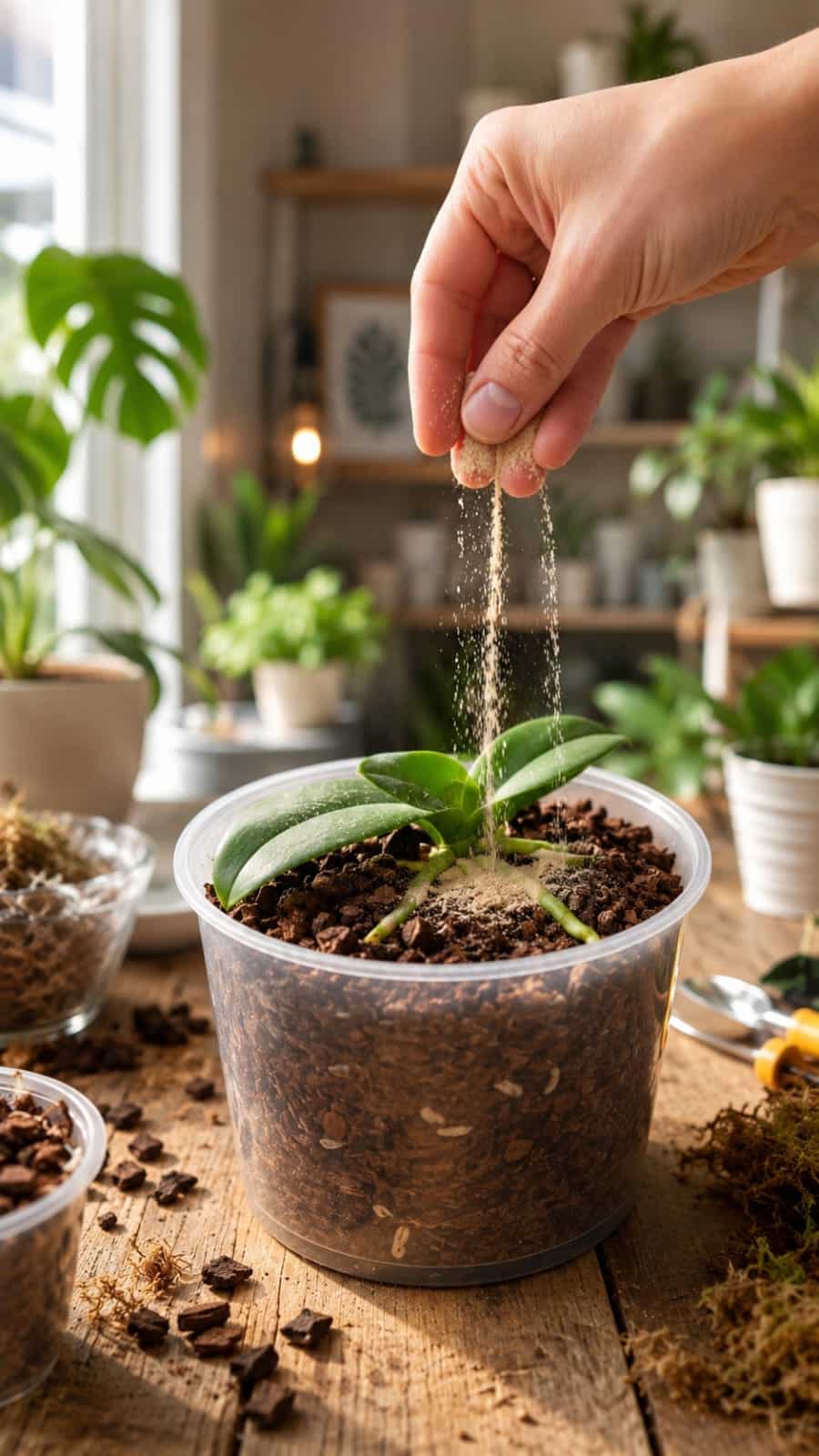
A fourth mistake is using random powders because they look natural. Natural does not always mean safe. A fifth mistake is placing the orchid in low light and expecting blooms. A sixth mistake is using strong fertilizer on weak roots.
Orchids are not difficult once their needs are understood, but they do not like heavy-handed care. They respond best to air, light, gentle moisture, and patience.
Indoor Styling for Orchids
Orchids look beautiful in clear pots placed inside ceramic, stone, glass, or woven decorative covers. A clear inner pot protects root visibility, while an outer pot creates a refined home display. White ceramic gives a clean spa-like look. Terracotta adds warmth. Glass looks modern but must not trap water.
Place orchids where the flowers and leaves can be seen without being crowded. A bright table, windowsill, plant stand, bathroom with natural light, office shelf, or living room console can work well. Avoid heat vents, cold drafts, and direct harsh sun.
For a premium display, keep the pot clean, remove dead roots from the surface, wipe leaves, and avoid visible powder residue. Orchids look most luxurious when their care appears clean and intentional.
Better Alternatives to Powder Tricks
If the goal is stronger roots, use fresh orchid bark, proper drainage, and careful watering. If the goal is more blooms, improve bright indirect light and feed gently during active growth. If the goal is cleaner leaves, wipe them with plain water. If the goal is root recovery, trim rotten roots and repot into an airy medium.
If the orchid is wrinkled, check whether the roots are healthy enough to absorb water. If the leaves are yellow, review light, watering, and crown condition. If the roots are mushy, remove rotten tissue. If the pot smells bad, repot.
These steps solve real problems more safely than unknown powder. Orchids reward correct conditions, not random additives.
Final Thoughts
A light powder around orchid roots may look like a simple natural trick for stronger roots and better blooms, but it should be used carefully. The powder could be cinnamon, eggshell powder, rice powder, orchid fertilizer, rooting hormone, perlite dust, diatomaceous earth, banana peel powder, or another unknown material. Some powders have limited uses, but many can damage roots or create residue if applied heavily.
The real foundation of orchid health is bright indirect light, airy orchid mix, drainage holes, clean roots, proper watering, crown dryness, gentle feeding, stable warmth, and good airflow. If the roots are wet, do not add powder. If the roots are rotten, trim and repot. If the orchid is not blooming, improve light and root health. If the plant is healthy, keep the routine simple.
With patient care and clean styling, orchids can remain beautiful indoor plants for living rooms, bedrooms, home offices, apartments, bright kitchens, bathrooms with windows, commercial interiors, luxury home staging, and premium plant displays. Strong roots, firm leaves, fresh bark, graceful blooms, and balanced maintenance will always create a safer and more elegant result than relying on risky powder shortcuts.