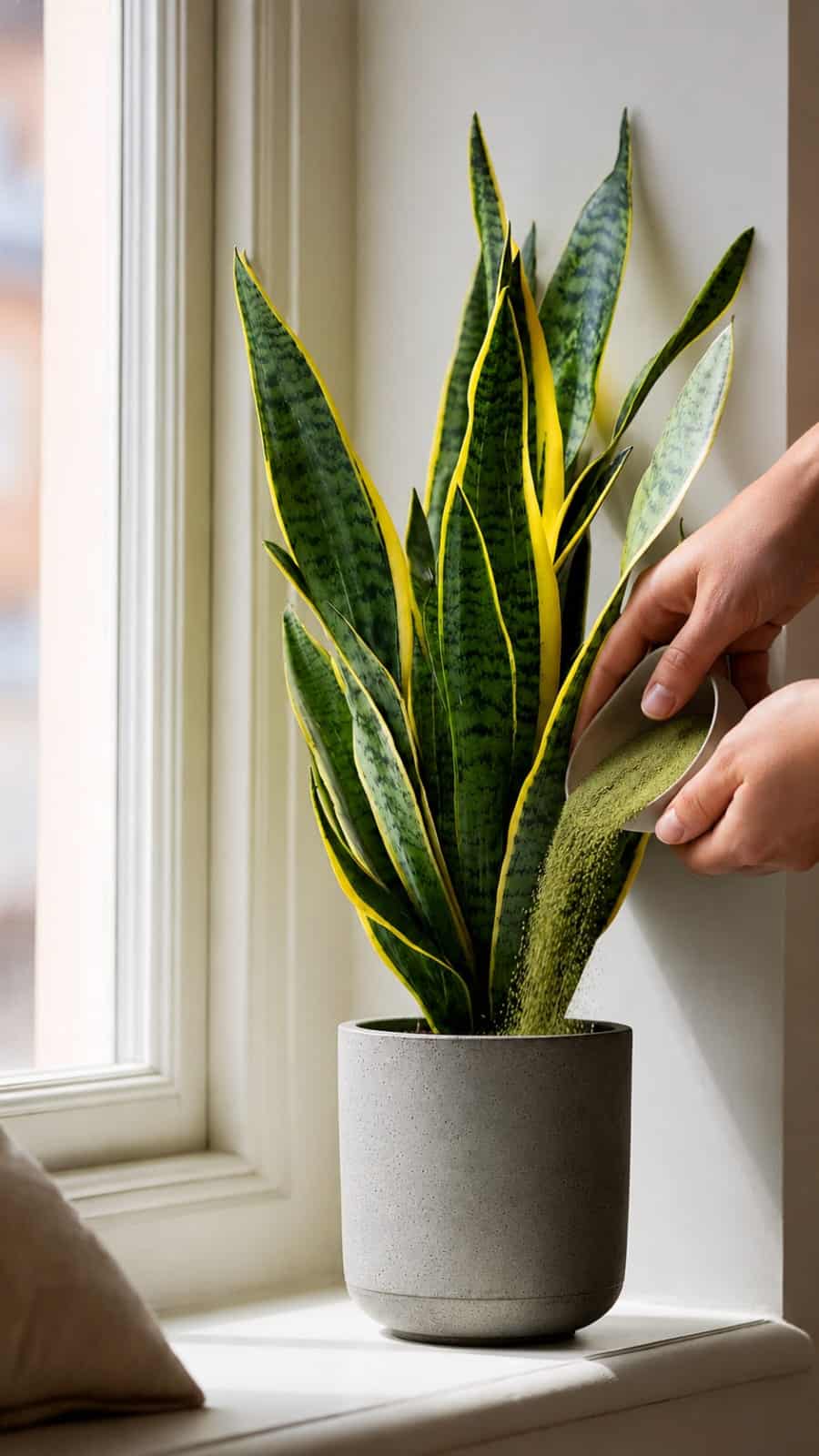
Snake plant is one of the most dependable indoor plants for homeowners who want strong upright leaves, bold green patterning, yellow-edged variegation, simple care, and a clean decorative display that fits beautifully in living rooms, bedrooms, apartments, home offices, entry corners, bright kitchens, sunny windowsills, plant shelves, commercial interiors, luxury home staging, and premium indoor plant styling. Its tall sword-shaped foliage creates structure without needing much attention, and its sculptural shape can make even a simple pot look modern, calm, and expensive.
Many plant lovers become curious when they see a green powder being poured around the base of a snake plant. This type of powder is often described online as a homemade booster for stronger roots, richer leaf color, faster growth, more pups, and a cleaner indoor plant display. The green powder may be seaweed powder, moringa powder, spirulina, powdered fertilizer, dried leaf powder, composted plant material, matcha, alfalfa meal, or another homemade mixture. Because many green powders look similar, the exact ingredient matters. Snake plants are tough, but their underground rhizomes can still be damaged by strong fertilizer, excess organic residue, salt buildup, mold, pests, or soil that stays wet too long.
The safest way to understand this method is to treat green powder as an optional soil amendment, not a miracle growth trick. A snake plant does not produce perfect leaves or endless offshoots because one scoop of powder is poured into the pot. It grows best when it receives bright indirect light, fast-draining soil, drainage holes, infrequent watering, warm stable conditions, firm rhizomes, clean leaves, and gentle feeding only during active growth. If the plant is already healthy, it may not need anything extra. If it is weak, yellowing, soft at the base, or slow to grow, the first step is checking the roots, soil moisture, light level, and drainage before adding any powder.
Why Snake Plants Need Simple Root Care
Snake plants grow from underground rhizomes. These rhizomes store water and energy, which is why the plant can tolerate dry indoor air and missed waterings better than many leafy tropical plants. This storage system makes the plant low-maintenance, but it also makes overwatering dangerous. When the soil remains damp for too long, the rhizomes can soften, rot, and lose the strength needed to support tall upright leaves.
A healthy snake plant usually has firm leaf bases and strong patterned leaves. New growth may appear slowly, often during warmer and brighter months. Slow growth is normal. Snake plants are not fast vines or heavy feeders. They grow in bursts when conditions are right, then rest quietly. Many homeowners mistake this slow rhythm for a problem and begin adding powders, liquids, and homemade mixtures. In many cases, patience and brighter indirect light are safer than extra amendments.
Before adding green powder, the soil should be checked carefully. If the soil is damp, compacted, sour-smelling, moldy, or full of fungus gnats, do not add powder. These signs suggest the root zone may already be stressed. Adding organic powder to unhealthy soil can create more odor, more gnats, and more moisture retention.
What the Green Powder Might Be
The green powder may be seaweed powder. Seaweed-based products can contain micronutrients and natural growth-supporting compounds, but they should be used carefully. A measured seaweed fertilizer designed for plants may be useful when diluted or applied according to the label. A random scoop of seaweed powder poured into the soil can be too strong or too salty.
The powder may be moringa powder or dried green leaf powder. These kitchen-style powders are often promoted as natural nutrition, but indoor plant pots are not compost piles. Leaf powders can mold, attract fungus gnats, and create residue if they stay damp. Snake plants do not need powdered food leaves to grow.
The powder may be spirulina or matcha. These are organic powders that can clump, smell, or break down in soil. They are not balanced houseplant fertilizers and can be expensive, messy, and unnecessary. A snake plant will not become healthier because human food powder is added to the pot.
The powder may be alfalfa meal or composted plant material. These amendments are more common in outdoor gardening, but they can be too rich or moisture-holding for a small indoor snake plant pot. Used heavily, they can encourage gnats and mold.
The powder may also be a green granular fertilizer. If it is fertilizer, the label matters. Too much fertilizer can burn roots and cause brown tips, yellowing, or salt buildup. Snake plants are light feeders, so heavy feeding is risky.
Why Green Color Does Not Mean Safe Plant Food
A green powder may look natural and powerful, but color does not prove that it is safe for a snake plant. Some green powders contain useful nutrients. Others contain salt, starch, protein, organic residue, or concentrated ingredients that can break down poorly in indoor soil. A plant does not use powder the same way a person uses a supplement.
Snake plant roots need oxygen, a clean soil structure, and dry-down time. If green powder clumps when watered, it can block air at the soil surface. If it breaks down slowly, it can attract pests. If it is strong fertilizer, it can burn the roots. If it is salty, it can stress the rhizomes.
The best fertilizer for snake plants is usually simple, weak, and measured. A balanced houseplant fertilizer or cactus fertilizer used at a low dose during active growth is safer than unknown green powder. Guessing with powders can create problems that take months to fix.
Why Organic Powders Can Cause Mold and Fungus Gnats
Organic powders can become food for microbes and insects when they sit on damp soil. Fungus gnats are especially common in indoor pots with moist organic surfaces. Their larvae feed in damp organic material. If green powder is sprinkled on top and then watered, it may create exactly the kind of surface they like.
Mold can also appear on powder layers. A thin white or fuzzy coating may form if the powder stays damp and airflow is low. While not every mold is deadly to the plant, it is a sign that the soil surface is too wet or too rich in organic residue. It also makes the plant display look dirty rather than premium.
To prevent gnats and mold, keep the soil surface clean, use fast-draining mix, water only when needed, and avoid food-like powders. A snake plant should not smell sour or look dusty with decomposing residue.
Best Soil for Snake Plants
Snake plants need fast-draining soil. A cactus or succulent mix is a good starting point. It can be improved with perlite, pumice, coarse sand, lava rock, or small bark pieces. The goal is a soil blend that drains quickly and allows air to reach the rhizomes. Dense soil that stays wet for many days is one of the biggest risks.
If the current soil is old, compacted, muddy, or slow to dry, adding green powder will not fix it. The powder may sit on top while the lower root zone remains unhealthy. Repotting into a fresh gritty mix is usually safer and more effective than adding amendments to bad soil.
When repotting, inspect the rhizomes. Healthy rhizomes should feel firm. Rotten sections may be soft, dark, mushy, or foul-smelling. Remove damaged parts with clean tools and allow cuts to dry before replanting. A clean root system in airy soil is the real foundation of snake plant growth.
Drainage Holes Matter More Than Any Powder
A snake plant pot should have drainage holes. This is one of the most important rules for preventing root rot. When water enters the pot, excess moisture must be able to escape. Without drainage, water collects at the bottom and can damage roots even when the top of the soil looks dry.
A stylish ceramic, concrete, or stone-style pot can look beautiful, but it should still be functional. If the decorative container has no drainage, use a draining inner pot inside it. Water the plant outside the cover pot, let it drain completely, then return it to the decorative container.
No green powder can protect a snake plant from trapped water. Drainage, soil structure, and watering habits are more important than any homemade booster.
How to Water Snake Plants Correctly
Snake plants should be watered only after the soil has dried well. They store water in their leaves and rhizomes, so they do not need constant moisture. Check deeper than the surface before watering. A wooden skewer can help show whether the lower soil is still damp.
When the plant truly needs water, use room-temperature water and water evenly around the soil until excess drains out. Then allow the pot to dry again before watering. This deep-and-dry rhythm is better than frequent small sips.
If green powder has been added, watering becomes more complicated. Water may dissolve the powder, move it deeper, or make it clump around roots. If the powder is unknown, remove it before watering. Plain water is safer than washing unknown material into the root zone.
Best Light for Strong Snake Plant Growth
Snake plants tolerate low light, but they grow stronger in bright indirect light. A plant near a bright window with filtered light will usually produce firmer leaves, better color, and more active rhizome growth than one kept in a dark corner. Low-light survival is not the same as active growth.
If the goal is faster growth or more pups, improve light before adding powder. Light is the plant’s main energy source. Without enough light, the plant cannot use extra nutrients well. Fertilizer or powder in low light can build up in the soil rather than supporting healthy growth.
Morning sun may be tolerated if the plant is acclimated. Harsh afternoon sun through hot glass can scorch leaves. Bright indirect light is usually the safest and most reliable condition for indoor snake plants.
Can Green Powder Help Snake Plant Pups?
Snake plant pups grow from healthy underground rhizomes. A mature plant with firm rhizomes, good light, fast-draining soil, and correct watering is more likely to produce offshoots. A green powder does not force pups if the plant is not ready.
If a snake plant is healthy but not producing pups, it may need more time. Some plants grow slowly for months before sending new shoots. A slightly snug pot can sometimes support pup formation because the rhizomes fill the space, but the plant should not be trapped in poor soil or a pot that causes stress.
For more pups, focus on light, warmth, drainage, and patience. Use weak fertilizer during active growth if needed. Avoid heavy powders around the base, especially if small new shoots are already emerging. Young pups can rot if organic material stays damp around them.
Using Seaweed Products Safely
If the green powder is seaweed-based fertilizer, it should be used according to the label. Seaweed products can be helpful when properly diluted, but they can also be too concentrated if applied heavily. Snake plants do not need strong feeding.
Use seaweed fertilizer only during active growth, usually in spring or summer. Apply a weak dose. Do not use it during winter or in low-light conditions. Do not use it on wet soil, rotten roots, or soft leaf bases.
If the product is not labeled for plants, do not use it. Human food seaweed powder is not the same as a measured plant fertilizer. Unknown strength and salt content can be risky.
Why Spirulina, Matcha, and Kitchen Powders Are Not Ideal
Spirulina, matcha, moringa, and other green kitchen powders may seem natural and nutrient-rich, but they are not designed for houseplant soil. They can clump, decay, smell, or attract pests. They may also create a dusty green layer that looks messy on a clean indoor plant display.
Snake plants do not need food-grade powders to grow. Their needs are simple and specific. They need a dry-leaning root zone, not organic paste. When these powders become wet, they may create residue that blocks airflow or feeds fungus gnats.
If the goal is plant nutrition, use plant fertilizer. If the goal is soil improvement, use proper potting amendments like perlite, pumice, bark, or cactus mix. Kitchen powders are not a reliable shortcut.
Feeding Snake Plants Safely
Snake plants are light feeders. During spring and summer, a weak balanced houseplant fertilizer or cactus fertilizer can support growth. Use less than you would for fast-growing tropical plants. Overfeeding can cause brown tips, yellowing, weak growth, and salt buildup.
Do not fertilize a plant that is already stressed. If the leaves are soft, yellowing at the base, or the soil smells sour, check the roots first. Fertilizer cannot rescue rotten roots. It can make stressed roots worse.
If green powder is fertilizer, measure it carefully. Do not pour a large scoop into the pot unless the label specifically says that amount is safe for that pot size. Most indoor snake plants need very little fertilizer.
When Green Powder Should Be Avoided Completely
Green powder should be avoided if you do not know exactly what it is. It should also be avoided if the soil is damp, the pot lacks drainage, fungus gnats are present, mold is growing, leaf bases are soft, the plant is yellowing, or the soil smells sour. These signs suggest the root zone may already be stressed.
It should also be avoided during winter, cold room conditions, or low-light periods when the plant grows slowly. Extra amendments can sit unused in the soil and create buildup. Snake plants need less water and less feeding when growth is slow.
Do not use spirulina, matcha, food coloring powder, baking soda, table salt, sugar, flour, cornstarch, curry powder, strong fertilizer powder, or unknown kitchen powders in snake plant soil. If the powder smells strong, sticky, salty, or spoiled, keep it away from the plant.
What to Do If Too Much Green Powder Was Added
If a small amount was added once and the plant looks healthy, stop adding more and monitor the soil. Let the pot dry properly before watering again. Watch for mold, odor, gnats, yellowing, or soft leaf bases.
If a heavy layer was poured onto the soil, remove as much as possible before watering. Use a spoon or your fingers to lift away the top layer gently without damaging roots. Replace the removed surface with fresh dry succulent mix if needed.
If the powder was watered in and the soil now smells sour, looks moldy, or attracts gnats, repotting may be safer. Remove old contaminated soil, inspect the rhizomes, trim damaged tissue, and repot into a clean fast-draining mix.
How to Protect Snake Plant Leaves
Snake plant leaves are strong, but they can still collect dust and powder. Dusty leaves look dull and may absorb less light. Wipe leaves gently with a soft damp cloth. Support each leaf while cleaning so it does not bend or crack.
If green powder lands on the leaves, wipe it away immediately. Fine powder can settle into the leaf pattern and make the plant look dirty. If it becomes wet, it can leave streaks or residue.
Avoid oily leaf shine products. They can attract dust and make the plant look artificial. Plain water and a soft cloth are enough to keep snake plant leaves clean and polished.
Indoor Styling for Snake Plants
Snake plants are excellent for modern interior styling because they bring vertical structure without needing much space. A gray concrete-style pot creates a clean architectural look. A white pot feels bright and minimal. A black pot creates strong contrast. Terracotta adds warmth. A woven basket softens the display.
Place the plant where it receives bright indirect light and where the leaves can stand freely without rubbing against walls or curtains. A windowsill, side table, bedroom corner, office shelf, entry console, or plant stand can work beautifully.
For a premium display, keep the pot clean, the soil surface tidy, and the leaves dust-free. Avoid visible piles of green powder on the soil. A healthy, simple snake plant looks more elegant than a plant covered in messy additives.
Continue to Page 2
Continue to page 2 for more details about this article and the key points many readers miss on the first page.