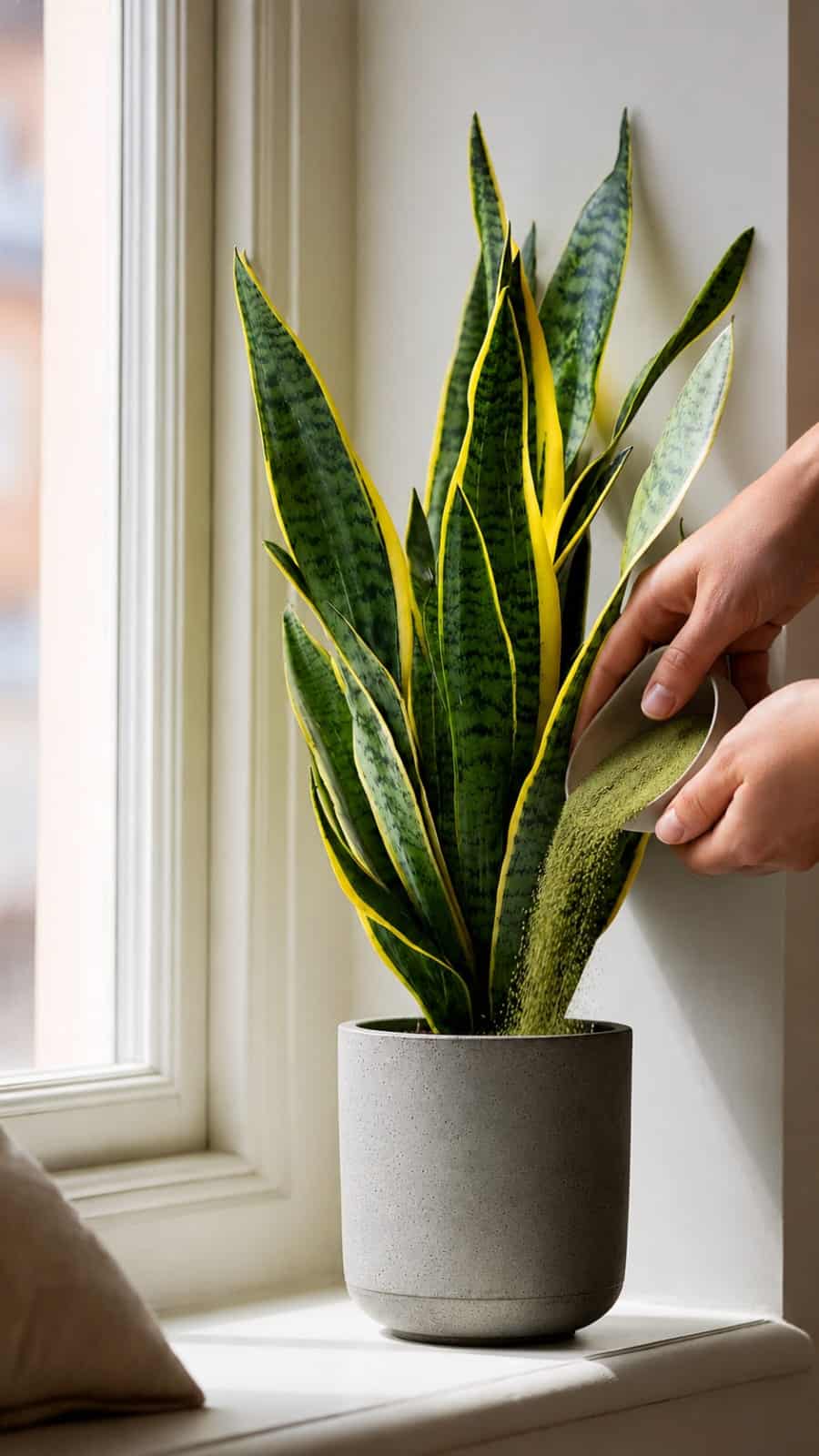
Common Mistakes With Green Powder Tricks
One common mistake is assuming green color means the powder is healthy for plants. Another mistake is applying too much at once. Indoor pots are small, and concentrated powders can overwhelm the soil. A third mistake is watering immediately after adding unknown powder, which can carry it into the root zone.
A fourth mistake is using powder to fix low light. No amendment can replace brightness. A fifth mistake is adding organic powder to wet soil. This encourages mold and gnats. A sixth mistake is feeding a plant that has root rot or soft bases.
Snake plants are easy because they prefer simple care. Too many homemade treatments can create more problems than neglect.
Better Alternatives for Stronger Growth
If the goal is stronger roots, use fast-draining succulent soil and avoid overwatering. If the goal is richer leaves, provide bright indirect light and clean the foliage. If the goal is more pups, let the plant mature in stable conditions. If the goal is nutrition, use a weak measured fertilizer during active growth.
If the plant is yellowing, check moisture and roots. If the soil smells bad, repot. If leaves are soft at the base, inspect the rhizomes. If growth is slow but the plant is firm and healthy, be patient. Snake plants often grow in seasonal bursts.
These steps solve real problems more safely than unknown green powder. Snake plants reward restraint, clean soil, and steady care.
Final Thoughts
A green powder around a snake plant may look like a simple natural booster, but it should be used carefully. The powder could be seaweed powder, moringa powder, spirulina, matcha, alfalfa meal, composted plant material, fertilizer, or another unknown mixture. Some plant-specific products can help when measured correctly, but kitchen powders and heavy organic layers can mold, attract pests, clump, or damage roots.
The real foundation of snake plant health is bright indirect light, fast-draining soil, drainage holes, infrequent room-temperature watering, firm rhizomes, clean leaves, warm stable conditions, and gentle feeding only during active growth. If the soil is wet, do not add powder. If the plant is soft, check the roots. If the plant is slow, improve light. If the plant is healthy, keep the routine simple.
With patient care and clean styling, snake plants can remain beautiful indoor plants for living rooms, bedrooms, home offices, apartments, entryways, bright windowsills, commercial interiors, luxury home staging, and premium plant displays. Strong upright leaves, healthy rhizomes, tidy soil, and balanced maintenance will always create a safer and more elegant result than relying on risky green powder shortcuts.