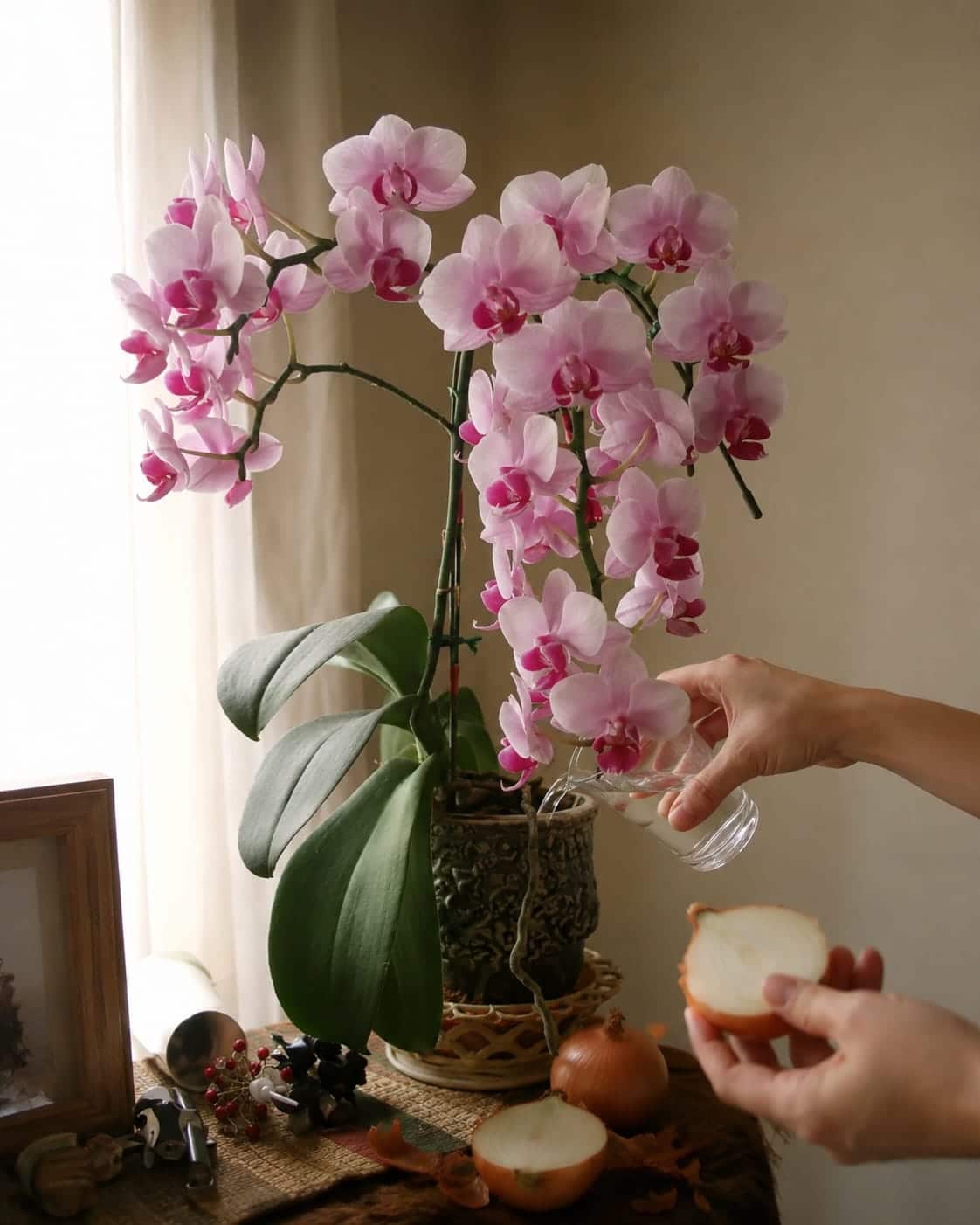
Orchids are among the most elegant indoor flowering plants for homeowners who want graceful stems, glossy green leaves, long-lasting blooms, and a refined decorative display that fits beautifully in living rooms, bedrooms, apartments, home offices, bright kitchens, windowsills, covered patios, commercial interiors, luxury home staging, and premium indoor plant styling. A healthy orchid can turn a simple corner into a soft, luxurious plant display because the flowers rise above the foliage like a natural arrangement. Pink orchids, white orchids, purple orchids, and yellow orchids all bring a polished look to indoor decor when the roots are healthy and the care routine is stable.
Many plant lovers become curious when they see onion water being poured near an orchid or used as a homemade plant treatment. The idea is often presented as a simple natural trick for stronger roots, more flowers, better recovery, and cleaner growth. Onion water may be made by soaking onion skins, chopped onion, or onion pieces in water, then using the liquid around plants. Because onion is strong, aromatic, and rich in natural compounds, many people assume it must be helpful for orchids. However, orchids are not ordinary soil plants. Their roots need air, drainage, and clean moisture. A homemade onion liquid can be risky if it is strong, fermented, full of pulp, smelly, or poured too often into the potting medium.
The safest way to understand onion water for orchids is to treat it as an optional, highly diluted experiment, not a guaranteed bloom booster. An orchid blooms well because it has bright indirect light, fresh airy bark, a pot with drainage and ventilation, correct watering, healthy roots, stable temperatures, moderate humidity, and gentle feeding during active growth. Onion water cannot replace those basics. If the orchid is already in bloom, the best care is calm and consistent. Heavy homemade treatments during flowering can shorten bloom life, stress roots, or create odor in the pot.
Why Orchid Roots Need a Different Care Routine
Many common orchids, especially Phalaenopsis orchids, are epiphytic plants. This means they naturally grow attached to trees or other surfaces rather than buried in dense garden soil. Their roots are designed to receive moisture, air, and quick drying. This is why orchids are often grown in chunky bark, orchid mix, sphagnum moss, charcoal, perlite, or clear nursery pots with drainage holes.
Healthy orchid roots often look green when wet and silvery-gray when dry. They should feel firm. If roots turn brown, black, hollow, mushy, or foul-smelling, the plant may be suffering from root rot. Root rot usually happens when the potting medium stays wet too long, when the pot has poor drainage, or when old bark breaks down and traps moisture. Adding homemade liquids to an already wet or old orchid mix can make the problem worse.
Because orchid roots need airflow, any liquid that leaves residue must be used carefully. Onion water can contain dissolved organic compounds and small particles. If the liquid is not strained well, it can settle inside bark and begin to decay. Orchids need clean moisture, not sour liquid trapped around their roots.
What Onion Water Is Supposed to Do
Onion water is often promoted as a natural plant tonic. People use it because onions contain sulfur compounds and other natural plant materials. Some gardeners believe onion water may help with pests, root stimulation, or general plant strength. In outdoor gardening, homemade plant extracts are sometimes used as mild sprays or soil drenches, but indoor orchids are much more sensitive because their pots are small and their roots are exposed to airflow.
The problem is that onion water is not a balanced orchid fertilizer. It does not provide controlled nutrition like a proper orchid fertilizer. It also does not fix low light, rotted roots, old bark, poor drainage, or inconsistent watering. If an orchid is not blooming because it lacks light, onion water will not solve the issue. If the roots are rotting, onion water will not rebuild them unless the root environment is corrected first.
Onion water may sound natural, but natural does not automatically mean safe. A strong onion mixture can smell unpleasant, attract pests, encourage microbial growth, or leave residue. The safest orchid care routine is clean, measured, and gentle.
Why Strong Onion Water Can Be Risky
Strong onion water can be risky because orchids grow in airy material, not dense soil that can buffer homemade mixtures. If onion particles remain in the liquid, they can get trapped in bark. Once trapped, they may decompose and create odor. In a warm indoor room, this can happen quickly. A sour or onion-like smell from the pot is not a sign of healthy orchid care.
Another risk is crown and stem moisture. If onion water is poured carelessly over the leaves or into the crown, moisture can sit where the leaves meet. Phalaenopsis orchids are especially vulnerable to crown rot when water remains in the center of the plant. Any homemade liquid should be kept away from the crown, leaves, flowers, and growing point.
Strong organic liquids can also change the surface of orchid roots. Thick or unstrained liquid may coat roots, reduce airflow, or encourage algae and mold. Orchid roots should be able to breathe. A sticky or smelly layer around them is not helpful.
How to Make Onion Water More Safely
If onion water is used at all, it should be extremely mild. A safer version would be made from clean onion skin rather than thick chopped onion pulp. The onion material should be soaked briefly in clean water, then strained very thoroughly. The final liquid should be pale, watery, and free from pieces. It should not be thick. It should not smell strong. It should not be fermented.
Freshness matters. Onion water should not be stored for several days and then poured into an orchid. Old onion water can ferment and smell. Fermented liquids are risky for indoor orchid pots because they can feed microbes and sour the bark. Only fresh, diluted, strained liquid should ever be considered.
Even then, onion water should be used rarely. It should never replace the normal watering routine. It should never be used every week. It should never be poured into wet bark. A mild treatment is only worth considering when the orchid is healthy, actively growing, and ready for watering.
How to Apply Onion Water Without Damaging the Orchid
If you decide to use a mild onion water, apply it like a light root rinse, not like a heavy soak. Keep the liquid away from the crown and flowers. Pour it only through the potting medium and allow it to drain completely. Do not let the orchid sit in the runoff. After draining, return the plant to its bright, airy location.
The orchid pot should have drainage holes. If it is inside a decorative pot, remove the inner pot before watering and let it drain fully before placing it back. Hidden water at the bottom of a decorative container is one of the easiest ways to rot orchid roots.
After using onion water once, return to plain water for the next several waterings. Watch the roots and bark. If you notice odor, mold, slimy roots, or flower drop, stop using homemade liquids immediately. Flush the pot with clean water and let it drain well.
When Onion Water Should Be Avoided Completely
Onion water should be avoided if the orchid is already blooming beautifully and stable. A plant in full bloom does not need sudden experiments. Keep the environment consistent so the flowers last longer. Changing care too aggressively during bloom can cause stress.
Onion water should also be avoided if the potting medium is wet, old, compacted, or sour-smelling. It should be avoided if roots are mushy, if the crown is weak, if fungus gnats are present, or if the room is cool and dark. These conditions already increase the risk of rot and poor drying.
Do not use onion water on orchids with active crown rot, severe root rot, or a pot with no drainage. Do not use thick onion juice, blended onion pulp, onion with salt, onion with oil, onion with vinegar, onion cooking water, or onion water mixed with spices. These are not safe orchid treatments.
Best Watering Routine for Orchids
The best orchid watering routine depends on the potting medium, pot size, light, temperature, humidity, and root condition. Orchids in bark usually dry faster than orchids in dense sphagnum moss. A clear pot can help you see root color and moisture. When the roots look silvery and the bark feels close to dry, it is usually time to water. When roots are still green and the pot feels wet, wait.
Water thoroughly with room-temperature water and allow it to drain completely. Do not leave the orchid sitting in water. If the orchid is in a decorative cachepot, always check the bottom after watering. Standing water hidden below the inner pot can rot roots even when the top looks fine.
Overwatering is one of the most common reasons orchids decline. Many people think orchids need more special liquids, but they actually need better timing and airflow. Clean water used correctly is safer than frequent homemade tonics.
Why Fresh Orchid Bark Matters
Orchid bark breaks down over time. When it is fresh, it is chunky and airy. When it becomes old, it turns darker, smaller, and more compact. Broken-down bark holds too much moisture and reduces airflow around roots. This creates the perfect environment for root rot.
If an orchid is struggling, repotting into fresh orchid mix often helps more than onion water. Fresh bark gives the roots oxygen and allows water to pass through. The plant can then recover naturally if enough healthy roots remain.
Repotting is usually best after flowering, unless the roots are badly rotting and emergency action is needed. When repotting, trim dead roots with clean scissors and place the orchid in a breathable mix. Do not pack the bark too tightly. Roots need air spaces.
Best Light for Orchid Blooms
Bright indirect light is one of the most important factors for orchid blooming. An orchid can have healthy leaves but still fail to rebloom if the light is too weak. A bright window with filtered light is usually ideal. Morning light can be helpful, while harsh afternoon sun can burn leaves.
Leaves can give clues. Very dark green leaves may suggest the plant needs more light. Yellowish leaves or scorched patches may suggest too much direct sun. Many Phalaenopsis orchids grow well with medium to bright indirect light and a stable indoor environment.
If the goal is more flowers, improve light before trying onion water. Flowers come from stored energy, and that energy comes mainly from light and healthy leaves.
Temperature and Bloom Support
Orchids prefer stable temperatures. Sudden cold drafts, hot vents, and extreme changes can stress the plant. Some orchids also respond to a slight difference between day and night temperatures when preparing to bloom. A cooler night period can help certain orchids initiate flower spikes, but cold stress should be avoided.
Keep orchids away from air conditioners, heaters, fireplaces, and open windows during cold weather. If the plant is near a curtain, make sure airflow is not stagnant and the leaves are not pressed against cold glass.
Stable temperature helps flowers last longer. A strong homemade liquid cannot compensate for temperature stress.
Humidity and Airflow
Orchids enjoy moderate humidity, but humidity must be balanced with airflow. A humid room with stagnant air can encourage fungal problems. A dry room with bright light may make flowers fade faster. The best environment is gently humid with fresh air movement.
A humidity tray can help if the orchid pot sits above the water, not in it. A small humidifier can also help in dry rooms. Avoid misting heavily into the crown. Water sitting in the crown can cause rot.
Onion water should not be used as a mist. It can leave odor and residue on leaves and flowers. If humidity is the issue, use clean water methods, not onion liquid.
Feeding Orchids Correctly
Orchids benefit from gentle feeding during active growth. A balanced orchid fertilizer diluted weakly is usually the safest option. Many orchid growers prefer weak feeding rather than strong occasional doses. Fertilizer should be applied when roots are healthy and the plant is actively growing.
Too much fertilizer can burn roots and create salt buildup. Homemade liquids can also contribute to buildup if used often. Flush the pot occasionally with plain water to remove excess minerals, especially if using fertilizer regularly.
If an orchid is weak from root rot, do not feed heavily. A plant with damaged roots cannot use fertilizer properly. First restore the root environment with fresh bark, drainage, and careful watering.
Can Onion Water Help With Orchid Pests?
Some people use onion-based liquids because they believe the smell or natural compounds may discourage pests. However, orchids can be affected by pests such as mealybugs, scale, aphids, and mites, and these problems require targeted care. Onion water is not a reliable treatment for serious infestations.
If pests are present, inspect the plant carefully. Remove visible pests with a cotton swab dipped in rubbing alcohol when appropriate, keeping alcohol away from delicate flowers. Isolate the orchid from other plants. Repeat treatment as needed and use plant-safe pest control methods suitable for orchids.
Pouring onion water into the pot will not remove pests hiding on leaves, flower spikes, or leaf joints. Pest management should be specific and clean.
Can Onion Water Help With Root Recovery?
Root recovery depends on removing rot and creating the right environment for new root growth. Onion water alone cannot revive roots that are mushy or dead. If roots are damaged, the orchid should be removed from the pot, dead roots should be trimmed, and the plant should be placed into fresh airy medium.
After repotting, the orchid should be watered carefully and kept in bright indirect light with moderate humidity. New roots may take time to appear. Patience is important. A stressed orchid should not be overloaded with homemade liquids.
If the plant has very few roots, maintaining humidity around the plant while keeping the crown dry can help. Clean care works better than strong remedies.
Signs of Healthy Orchid Roots
Healthy orchid roots are firm and plump. They may turn green when wet and silvery when dry. New root tips may look bright green or pale. Aerial roots are normal and should not be cut unless they are clearly dead.
Healthy roots often cling to bark or grow out of the pot. This is not a problem. Orchids naturally produce aerial roots. These roots help the plant absorb moisture and air. Cutting them only because they look messy can stress the plant.
If roots are firm, the orchid is better able to support leaves and flowers. Protecting roots is more important than adding extra liquids.
Signs of Root Trouble
Root trouble may show as mushy roots, hollow roots, black roots, sour smell, limp leaves, yellowing leaves, flower drop, or bark that stays wet too long. If these signs appear, stop homemade treatments. Inspect the roots and potting medium.
If most roots are unhealthy, repotting is necessary. Remove old bark, trim dead roots, and place the orchid in fresh medium. Keep water out of the crown and provide bright indirect light. Do not fertilize heavily right away.
If only a few roots are damaged, trim those and improve watering. The plant may recover with steady care.
What to Do If Too Much Onion Water Was Added
If too much onion water was poured into the pot, allow it to drain completely. Remove any water from the saucer or decorative pot. If the onion water was very mild and the bark dries normally, monitor the plant.
If the liquid was strong, smelly, or full of particles, flush the pot with clean room-temperature water and let it drain. If odor remains after a day or two, the onion residue may be trapped in the bark. In that case, repotting into fresh orchid mix may be the safest solution.
If the liquid entered the crown, gently blot it with tissue or a soft cloth. Keep the crown dry and place the plant where air can circulate. Crown rot can develop quickly if moisture sits in the center.
Cleaning Orchid Leaves
Orchid leaves should be kept clean because they help the plant absorb light. Dust can make leaves look dull and reduce efficiency. Wipe leaves gently with a soft damp cloth. Support each leaf while cleaning to avoid cracking it.
If onion water splashes on leaves, wipe it away immediately. Onion residue can smell and attract dust. Do not allow homemade liquids to dry on orchid leaves or flowers. Flowers are delicate and may spot if they are sprayed or splashed.
Leaf shine products are not necessary. Plain water and gentle wiping are enough for a clean, healthy appearance.
How to Keep Orchid Flowers Lasting Longer
Orchid flowers last longer when the plant is kept stable. Avoid sudden location changes, direct heat, cold drafts, strong sun, and inconsistent watering. Do not place blooming orchids near fruit bowls because ripening fruit can release ethylene gas, which may shorten flower life.
Do not pour strong homemade liquids during bloom. A blooming orchid is using energy to maintain flowers. Stress at the roots can lead to faster flower decline. Keep the routine simple until blooming finishes.
When flowers fade naturally, trim the flower spike according to the orchid type and the condition of the spike. If the spike remains green, some orchids may rebloom from it. If it turns brown and dry, it can be cut back.
Indoor Styling With Orchids
Orchids are perfect for elegant indoor styling. A pink orchid in a decorative ceramic pot can soften a bedroom. A white orchid can make a living room feel clean and luxurious. A group of orchids on a side table can create a boutique plant display. Orchids also work beautifully in home offices, entry areas, dining rooms, and bright apartments.
Choose a pot that supports both beauty and root health. A clear inner pot with drainage inside a decorative outer pot is often ideal. The roots can be checked easily, while the display still looks polished. Decorative saucers, woven trays, and neutral plant stands can elevate the look.
For a premium display, keep the pot clean, remove dead flowers, wipe leaves, and avoid visible homemade liquid spills. The orchid should look fresh, refined, and intentional.
Continue to Page 2
Continue to page 2 for more details about this article and the key points many readers miss on the first page.