Spider plants have become one of the most popular choices for bright kitchens, home offices, and minimalist shelf displays. Their arching striped leaves, trailing plantlets, and forgiving nature make them ideal for both beginners and experienced indoor gardeners.
However, even an easy plant can slow down when its soil is treated with the wrong things. Many growers unintentionally weaken their root systems by pouring homemade mixtures into the pot.
Instead of following viral kitchen tricks, more indoor gardeners are switching back to a simple, low-cost feeding routine that focuses on soil balance rather than dramatic intervention.
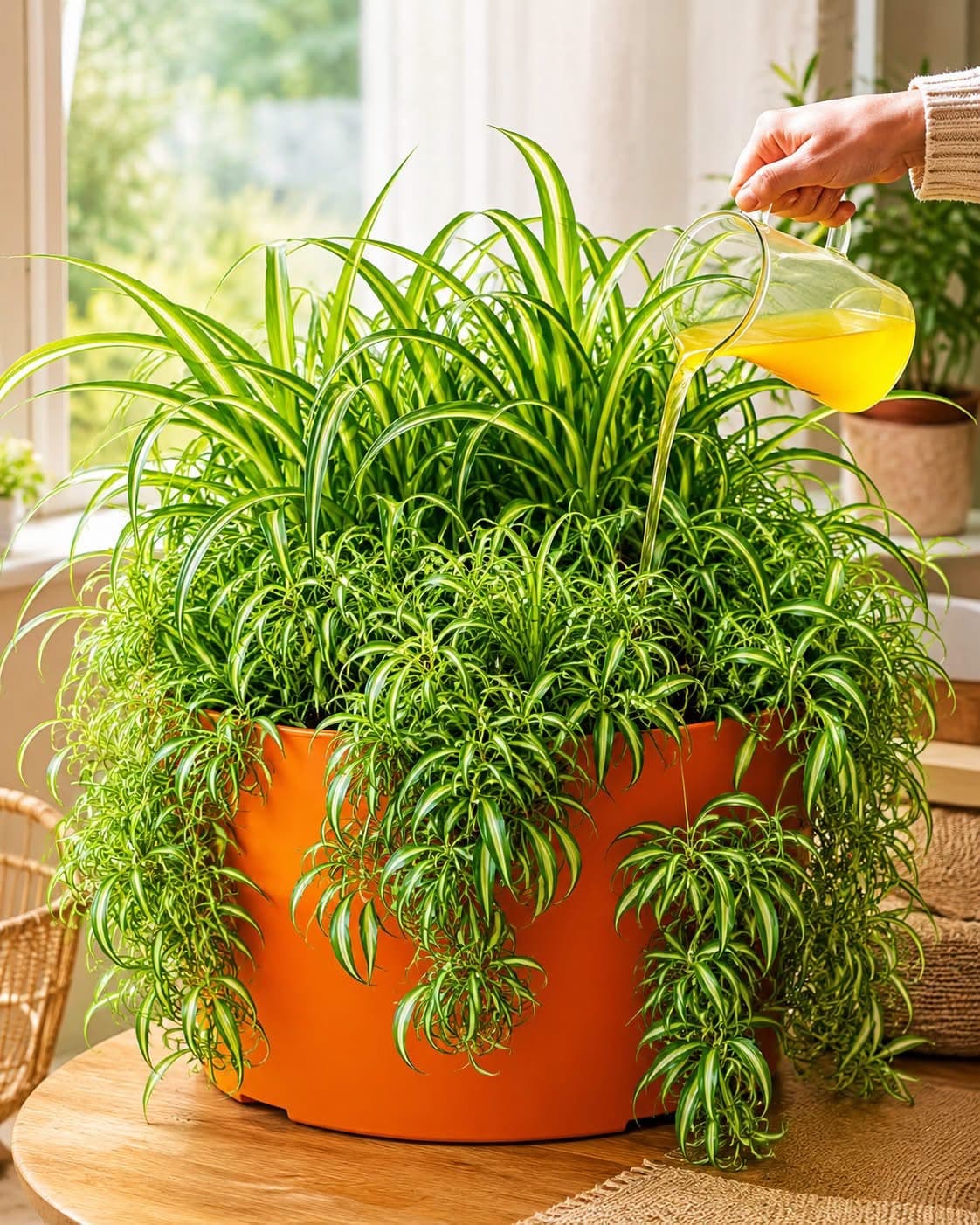
What Is the Yellow Liquid in the Image?
In the image, a golden-yellow liquid is being poured into the soil of a large spider plant display. In practice this is almost always one of three things: diluted orange juice, turmeric water, or a citrus peel infusion.
None of them is a fertilizer.
Fruit juice carries sugar and acid. In an open garden bed those disperse harmlessly. In a closed pot they do the opposite:
• Sugar feeds mold and bacteria in the root zone • Fungus gnats lay eggs in the damp organic residue • Acidity below pH 5.5 locks up phosphorus and calcium • Oxygen around the roots drops as microbes multiply • Actual nutrient content is negligible
Spider plants are moderate feeders and are far more often damaged by the wrong additions than by underfeeding.
Dilution and restraint are essential.
What to Use Instead
A balanced liquid houseplant fertilizer at an NPK of 10-10-10 or 20-20-20 covers everything a spider plant needs. A bottle costs a few dollars and lasts years at houseplant doses.
Old freshwater aquarium water is the one free alternative with a real mechanism behind it, since fish waste is converted by bacteria into nitrate that plants absorb directly.
How to Feed Safely
- Dilute the fertilizer to half the label strength
- Apply only after the soil has been lightly watered
- Pour evenly across the surface, not into the center rosette
- Let it drain fully and empty the saucer after 15 minutes
- Feed monthly in spring and summer only
This supports steady growth without overwhelming the roots.
Why Controlled Feeding Produces More Plantlets
Spider plants send out runners only when they have surplus energy. That surplus comes from light, not from what is poured into the pot.
Healthy, productive plants depend on:
• Bright indirect light for five hours or more • Well-draining soil with added perlite • Watering only when the top two inches are dry • Filtered or rainwater, since fluoride burns leaf tips • A pot the roots have grown into
When those conditions are met, plantlets follow. When they are not, no liquid will substitute.
Spider Plant Care Table
| Factor | Ideal Setup | Why It Helps |
| Light | Bright indirect | Fuels runner production |
| Soil | Well-draining mix | Prevents compaction |
| Watering | Top 2 inches dry | Avoids root rot |
| Water type | Filtered or rain | Prevents brown tips |
| Feeding | Half strength, monthly | Avoids salt buildup |
| Season | Spring and summer only | Matches active growth |
| Drainage | Pot with holes | Protects root health |
Spider Plant FAQ
Can orange juice replace fertilizer? No. It contains almost no usable nutrients and adds sugar to the soil.
I already poured juice in. What now? Flush the pot thoroughly with plain water and set sticky traps for gnats.
How often should I feed? Monthly, spring through summer.
Should I feed in winter? No. The plant is not growing.
Why are my leaf tips brown? Usually fluoride in tap water or fertilizer salt buildup.
Should I spray the leaves? No. Apply to soil only.
Why are there no babies? Not enough light, or the plant is too young.
Does turmeric water work? Curcumin does not dissolve in water. It settles on the surface.
Is drainage critical? Yes. It is essential.
Biggest mistake? Adding kitchen liquids to a closed pot.
Final Note
The yellow liquid in photos like this one makes for a striking image, but it is not what produces a spider plant covered in babies.
Bright indirect light, filtered water, a pot the roots have filled, and a diluted balanced fertilizer once a month in summer will do it. That is the entire method, and it costs less than the juice.