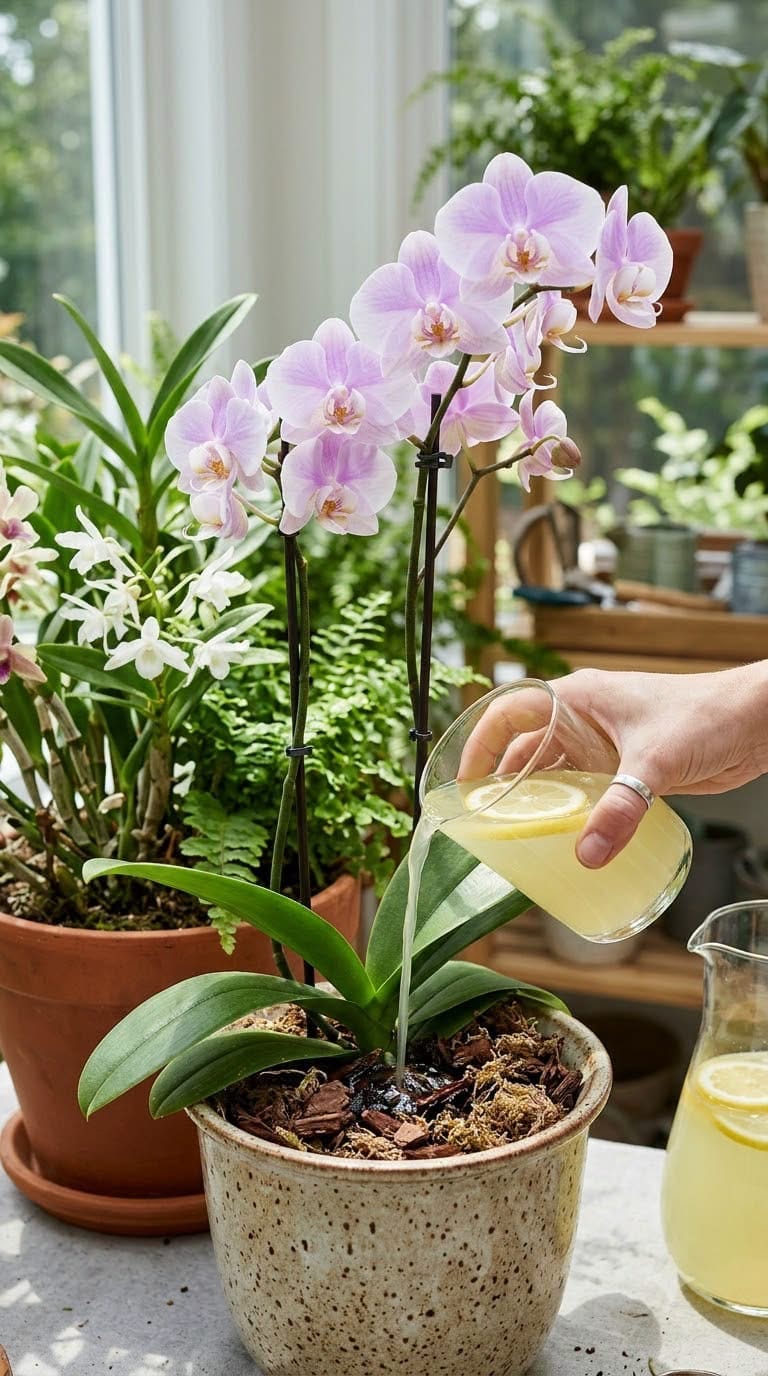
Orchids are elegant houseplants that can bring a refined, peaceful look to almost any room. Their long-lasting flowers, glossy leaves, and sculptural stems make them especially beautiful on bright tables, windowsills, kitchen counters, and living-room shelves.
A healthy orchid does not need lemon water, sugary drinks, or homemade kitchen mixtures to bloom. Although lemon water may look like a natural care trick, it can be too acidic for orchid roots and may disturb the balance of the growing medium. The safest method is simple: bright indirect light, careful watering, airflow, proper orchid bark, and a light dose of orchid fertilizer when the plant is actively growing.
This guide explains how to care for a Phalaenopsis orchid, often called a moth orchid, so it can keep healthy roots, strong leaves, and beautiful flowers year after year.
Why Orchid Care Can Feel Difficult
Orchids look delicate, so many people assume they are difficult plants. In reality, most problems come from treating them like regular houseplants.
A typical indoor orchid does not grow in normal garden soil. In nature, many orchids grow attached to trees, where their roots receive air, moisture, and filtered light. Their roots need a loose growing medium rather than dense, wet potting soil.
When an orchid is kept in heavy soil or watered too frequently, the roots cannot breathe. This often causes yellow leaves, soft roots, and dropped flowers. Once you understand that orchid roots need air as much as they need moisture, care becomes much easier.
Why Lemon Water Is Not Recommended for Orchids
Lemon juice is acidic. Even when diluted, it can lower the pH of the growing medium and irritate sensitive orchid roots. It can also leave residue in the pot and contribute to an unstable root environment.
Orchids need balanced nutrition, not sharp acidity. Lemon water does not provide the right nutrients for healthy leaf growth, roots, or flower production.
Avoid pouring these household liquids into your orchid pot:
- Lemon water
- Vinegar water
- Milk
- Coffee or tea
- Sugar water
- Soda
- Fruit juice
- Garlic water
- Kitchen scraps or food-based mixtures
These products may create mold, attract insects, or cause root stress. If you want to feed your orchid, use a labeled orchid fertilizer diluted as directed on the packaging.
The Best Light for Orchids
Most Phalaenopsis orchids grow best in bright, indirect light. An east-facing window is often an excellent location because it provides gentle morning light. A north-facing window can also work if the space is bright.
If your orchid sits near a south- or west-facing window, protect it from intense sun with a sheer curtain. Direct afternoon sunlight can burn the leaves and cause pale yellow or brown patches.
Signs your orchid has good light include firm green leaves and steady growth. Leaves that are extremely dark green may indicate the plant needs more light. Leaves with red edges, pale patches, or burn marks may mean the light is too strong.
How to Water an Orchid Correctly
The most important rule is to water the roots, not the leaves or crown. The crown is the center area where new leaves emerge. Water trapped there can lead to rot.
Check the growing medium before watering. If the bark feels almost dry and the roots look silvery gray, it is usually time to water. Healthy roots often turn green when wet.
The safest watering method is to take the orchid to a sink and run room-temperature water through the bark for about 15 to 20 seconds. Let the pot drain completely before returning it to its decorative container or saucer.
Another option is to soak the inner nursery pot in room-temperature water for about 10 minutes, then allow it to drain thoroughly.
Never leave an orchid sitting in water. The roots should receive moisture, then air.
How Often Should You Water?
There is no exact schedule that fits every orchid. Indoor temperature, light, humidity, pot size, and growing medium all affect how quickly the roots dry.
Many orchids need water about every 7 to 10 days, but your plant may need it sooner or later. In warm, bright rooms, bark dries faster. In cooler rooms or during winter, it dries more slowly.
Instead of watering every Sunday or every week, check the roots and bark first. This is more reliable and protects the plant from overwatering.
Choosing the Right Orchid Pot and Growing Medium
An orchid needs a pot with drainage holes. Clear plastic orchid pots are especially useful because they allow you to see the roots and judge when they are dry.
The pot should contain a loose orchid mix, usually made from bark, moss, perlite, charcoal, or coconut husk. This medium helps water drain quickly while keeping some humidity around the roots.
Never use dense garden soil for a typical indoor moth orchid. Soil holds too much water and can suffocate the roots.
Repot your orchid every one to two years, or when the bark begins to break down and stay wet too long. The best time to repot is after flowering, when the plant begins active root growth.
How to Fertilize an Orchid Safely
Orchids benefit from light feeding during active growth. Choose a balanced orchid fertilizer and dilute it according to the label instructions. Many growers prefer a “weakly, weekly” routine, using a very diluted fertilizer during the growing season.
Always fertilize after watering or apply fertilizer to already-moist roots. Feeding a dry orchid can damage the roots.
Stop or reduce fertilizer when the plant is resting, especially in winter. Resume when new leaves or roots begin to grow.
Once a month, water the plant thoroughly with plain water to help flush excess mineral salts from the bark. This simple habit can reduce brown root tips and buildup from fertilizer or tap water.
Temperature and Humidity
Phalaenopsis orchids are comfortable in average home temperatures between 65°F and 80°F. They prefer stable conditions and should be kept away from cold drafts, heaters, fireplaces, and air-conditioning vents.
A small temperature drop at night can help encourage future flower spikes. A difference of around 10°F between day and night temperatures during fall may support blooming.
Orchids appreciate moderate humidity, but they also need airflow. You can group plants together or use a pebble tray to increase humidity. Keep the orchid pot above the water line so its roots are never sitting in water.
Good air circulation helps the roots dry properly and reduces the risk of fungal problems.
What Healthy Orchid Roots Look Like
Healthy roots are one of the best signs that your orchid is doing well.
When dry, healthy roots often look silvery gray or pale green. When watered, they usually become bright green. They should feel firm and thick, not soft or hollow.
Unhealthy roots may look dark brown, black, mushy, or papery. If you find rotting roots during repotting, trim them with sterilized scissors and repot the orchid in fresh bark.
Do not panic if a few older roots dry up naturally. Focus on the overall condition of the plant and look for new green root tips.
How to Keep Orchid Flowers Longer
Orchid flowers can last for many weeks when the plant is kept in a stable environment. Avoid moving it frequently once buds and flowers appear.
Keep the orchid away from ripening fruit. Fruit releases ethylene gas, which can shorten the life of flowers and cause buds to drop.
Also avoid placing the orchid near:
- Heating vents
- Cold drafts
- Open windows in cold weather
- Strong direct sunlight
- Kitchen burners and heavy steam
- Smoke or scented sprays
Water carefully, keep the light gentle, and let the pot drain well. A stable routine is the best way to enjoy blooms for longer.
How to Encourage an Orchid to Bloom Again
After the flowers fall, do not assume the orchid is finished. With proper care, it can bloom again.
Continue providing bright indirect light, correct watering, and light fertilizer during active growth. Many Phalaenopsis orchids benefit from cooler nights in fall, around 60°F to 65°F, while daytime temperatures remain comfortable.
Once the flower spike is dry and brown, cut it near the base with clean scissors. If the spike remains green, you can leave it in place or trim just above a node to see whether it produces a side branch.
New blooming takes time. Focus first on strong leaves and roots. Healthy growth is the foundation for future flowers.
Common Orchid Problems and Their Solutions
Yellow Leaves
One yellow lower leaf may simply be natural aging. Several yellow leaves, however, can mean overwatering, poor drainage, too little light, or root damage.
Check the bark and roots. If the growing medium stays wet for many days, reduce watering and consider repotting.
Wrinkled Leaves
Wrinkled leaves usually mean the plant is not getting enough water through its roots. This can happen because the bark is too dry or because damaged roots cannot absorb moisture.
Check the root system. If the roots are firm, water more thoroughly. If many roots are mushy or dry, repot the orchid into fresh medium.
Bud Drop
Buds can fall before opening when an orchid experiences sudden stress. Common causes include cold drafts, a big change in light, overwatering, dryness, moving the pot, or heat from a vent.
Once buds appear, keep the plant in one stable location and maintain a consistent care routine.
Brown Leaf Spots
Brown spots can come from sunburn, standing water on leaves, or disease. Move the orchid away from intense direct sun and avoid spraying water into the crown.
If a spot grows quickly or becomes soft, isolate the plant and remove damaged tissue with clean tools.
Roots Growing Outside the Pot
Aerial roots are normal for orchids. Do not cut healthy aerial roots just because they grow outside the pot. They help the plant collect moisture and air, just as they would in nature.
Best Places to Display an Orchid
Orchids can make a room look brighter and more elegant. Place them where they receive gentle light and where you can enjoy the flowers every day.
A dining table near a bright window creates a simple, refined centerpiece. A living-room console or side table can make the room feel more luxurious. A bathroom with bright natural light may also work well because humidity is often higher.
A home office is another excellent place for an orchid. Its clean shape and calm colors can make a desk or shelf feel more polished without taking up much space.
Avoid placing an orchid directly on a hot sunny windowsill, beside a radiator, or in a dark corner far from natural light.
Seasonal Orchid Care
Spring
Spring is a good time for new roots and leaves. Increase watering slightly as the bark dries faster, begin light fertilizer applications, and repot if the growing medium has broken down.
Summer
Protect the orchid from strong sun and hot dry air. Check the bark often, because it may dry faster in warm weather. Maintain good airflow.
Fall
Cooler nights can encourage flower-spike development. Keep providing bright indirect light and reduce fertilizer if growth slows.
Winter
Water less frequently because the pot may dry more slowly. Keep the orchid away from cold glass and heating vents. If it is blooming, avoid moving it or changing conditions suddenly.
Frequently Asked Questions
Can I use lemon water for my orchid?
No. Lemon water is too acidic and does not provide balanced nutrition. Use room-temperature water and a proper orchid fertilizer instead.
Should I water an orchid with ice cubes?
It is better to avoid ice cubes. Orchids prefer room-temperature water, and ice can create cold stress around the roots.
How often should I fertilize?
During active growth, use a diluted orchid fertilizer according to the label directions. Reduce or stop feeding when growth slows in winter.
Do orchids need direct sun?
No. Bright indirect light is best. Strong direct afternoon sunlight can burn the leaves.
How do I know if my orchid roots are healthy?
Healthy roots are firm and usually appear silvery gray when dry and green when wet. Dark, soft, mushy roots are a sign of trouble.
Final Thoughts
Beautiful orchid blooms begin with healthy roots. Skip lemon water and other homemade mixtures, and keep the care routine simple: bright indirect light, bark that drains well, room-temperature water, airflow, and gentle fertilizer when the plant is actively growing.
With patience and consistent care, an orchid can bloom again and again, bringing a graceful, long-lasting display of color to your home.