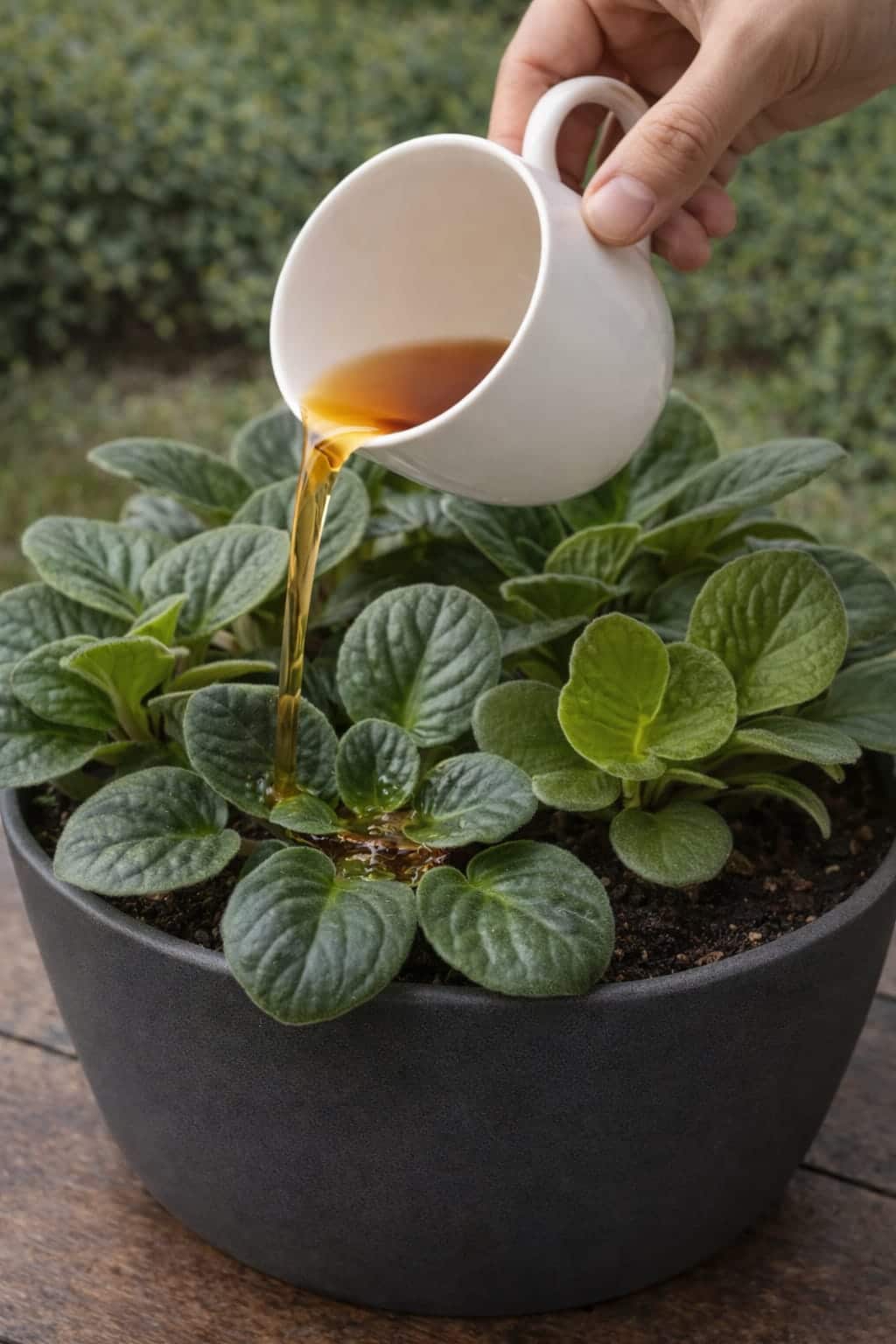
Watering Guidelines
Condition Action
Top inch of soil dry Water thoroughly
Soil still damp Wait – check again in 1–2 days
Leaves yellowing, mushy stems Overwatering – reduce frequency
Leaves wilting, dry soil Underwatering – water immediately
The Best Watering Method: Bottom‑Watering
Bottom‑watering has been my go‑to method. Here’s how:
- Fill a saucer with room‑temperature water.
- Place the pot in the saucer and let it sit for 20–30 minutes.
- The plant will absorb water through the drainage holes.
- Empty the saucer after 30 minutes to avoid over‑saturation.
Why Bottom‑Watering?
· Prevents water from splashing onto the leaves, which can cause spots or rot.
· Ensures even moisture distribution.
· Reduces the risk of crown rot.
Pro tip: Use room‑temperature, filtered water. Cold water shocks the roots.
- Fertilizer: Feeding for Flowers
I use a high‑phosphorus fertilizer to encourage blooming. Phosphorus (the middle number in N‑P‑K) supports flower production, while too much nitrogen promotes leafy growth at the expense of blooms.
Fertilizer Guidelines
Factor Recommendation
N‑P‑K ratio High‑phosphorus (e.g., 12-36-14 or 7-9-5)
Frequency Every 4–6 weeks during spring and summer
Dilution Half strength or less – less is more
When to stop Fall and winter (plant rests)
Pro Tips for Fertilizing
· Don’t overdo it – over‑fertilizing can lead to salt buildup in the soil, which can damage your plant.
· Flush the soil occasionally with plain water to prevent salt buildup.
· If you see brown leaf tips or a white crust on the soil, you’re over‑fertilizing.
- Potting Mix: Setting the Foundation
African violets require a light, well‑draining potting mix. Regular potting soil is too heavy for them. It compacts, holds too much moisture, and suffocates the roots.
Best Soil Mix
Component Purpose
Peat moss or coconut coir Retains moisture while staying airy
Vermiculite Helps retain moisture and nutrients
Perlite Increases drainage and aeration
DIY mix: 2 parts peat moss + 1 part vermiculite + 1 part perlite.
Commercial option: Store‑bought African violet mix is convenient and reliable.
Pro tip: Never use garden soil or heavy potting mix – it will lead to root rot.
- Repotting: Refreshing for Growth
Repotting African violets every 6–12 months keeps them healthy and blooming. Over time, soil compacts and loses nutrients, so refreshing it encourages better growth.
Repotting Guidelines
Factor Recommendation
Frequency Every 6–12 months
Best time Spring or early summer
Pot size About ⅓ the diameter of the plant’s leaf spread
Why small pots Too large a pot can lead to overwatering issues
How to Repot
- Gently remove the plant from its old pot.
- Gently loosen the root ball and remove old soil.
- Trim any dead or mushy roots.
- Place the plant in a fresh pot with new African violet mix.
- Water lightly and keep in shaded spot for a few days.
Managing the “Neck”
As older leaves die off, a bare stem (called the “neck”) may form. Bury the neck in fresh soil to stabilize the plant and encourage new root growth.
- Pruning: Encouraging New Growth
I remove any faded flowers, yellow leaves, or damaged foliage to redirect the plant’s energy toward producing new buds.
What to Prune
· Spent blooms – cut the flower stem at the base.
· Yellow or brown leaves – cut at the base.
· Damaged or diseased leaves – remove promptly.
· Suckers (small side shoots) – remove to keep energy focused on the main plant.
Benefits of Pruning
· Redirects energy to new growth and flowers.
· Improves air circulation, reducing the risk of diseases like powdery mildew.
· Keeps the plant looking tidy and healthy.
Pro tip: I’ve noticed that plants I prune regularly bloom more consistently.
- Patience: Trust the Process
Sometimes, the hardest part of growing African violets is waiting. Young plants take time to mature before they begin to bloom – often 6–12 months from a leaf propagation.
Signs of a Maturing Plant
· Thick, healthy leaves.
· Visible crown (center) with many leaf layers.
· The plant is producing offsets (small side rosettes).
Pro tip: If your violet isn’t blooming, don’t give up – it might just need more time. Provide consistent care, and the blooms will come.
My Personal Tips for Blooms All Year
- Rotate the Pot Weekly
One trick I’ve found incredibly effective is rotating the pot slightly each week. This ensures all sides of the plant get equal light, promoting symmetrical growth and even blooming.
- Clean the Leaves
I also make sure to clean the leaves with a soft brush or damp cloth to remove dust. Clean leaves photosynthesize more efficiently, which supports blooming.
- Create a Stress Period Before Blooming
Another tip is to create a mild stress period before blooming. Lowering the temperature slightly (to 60–65°F) and watering less for a couple of weeks mimics the plant’s natural dormancy. When you return to normal care, the plant may respond by producing flowers. This is optional – consistent good care is more important.
- Use a Grow Light in Winter
If your home lacks natural light in winter, a grow light can keep your African violets blooming through the darkest months.
Troubleshooting – Common Problems & Solutions
Problem Likely Cause Solution
No flowers, only leaves Too little light Move to brighter indirect light or add grow light.
Buds form but drop before opening Low humidity, inconsistent watering, or temperature swings Increase humidity; water consistently; avoid drafts.
Leaves are dark green but no buds Light is too low Increase light duration or intensity.
Leaves are yellow and limp Overwatering or root rot Let soil dry; check roots; repot if necessary.
Small, pale leaves Underfeeding or old soil Fertilize lightly; repot with fresh mix.
Leaf spots or fuzzy patches Water on leaves or fungal issues Switch to bottom watering; improve air circulation.
Frequently Asked Questions (FAQs)
Q: How often do African violets bloom?
With proper care, African violets can bloom for 6–9 months of the year, with each bloom cycle lasting 2–4 weeks.
Q: Can I use regular potting soil for African violets?
No – it’s too heavy. Use a light, well‑draining African violet mix or DIY with peat, vermiculite, and perlite
Q: Why are my African violet’s leaves turning yellow?
Most common causes: overwatering, old age (lower leaves naturally yellow), or nutrient deficiency. Check soil moisture first.
Q: Should I cut off the old flower stems?
Yes – once the flowers have faded, cut the stem back to the base. This encourages new flower stalks.
Q: Can African violets grow under artificial light?
Yes – they thrive under fluorescent or LED grow lights. Keep the light 8–12 inches above the plant for 12–16 hours per day.
Q: Why do my African violet’s buds fall off before opening?
Bud drop is usually caused by dry air, inconsistent watering, or sudden temperature changes. Increase humidity and keep conditions stable.
Q: Is it true that African violets don’t like water on their leaves?
Yes – water droplets can leave spots and promote rot. Always water from below or direct water to the soil, not the leaves.
Q: How do I know if my pot is too large?
If the pot is more than ⅓ the width of the leaf spread, it’s likely too large. The plant may produce many leaves but few flowers.
Printable African Violet Bloom Checklist
☐ Place in bright, indirect light (east/north‑east window or grow light)
☐ Rotate pot weekly
☐ Maintain daytime temp 70–80°F, nighttime 65°F
☐ Keep humidity 50–60% (pebble tray or humidifier)
☐ Water from the bottom when top inch of soil is dry
☐ Use room‑temperature, filtered water
☐ Fertilize every 4–6 weeks in spring/summer with high‑phosphorus fertilizer (half strength)
☐ Use light, well‑draining African violet mix (peat + vermiculite + perlite)
☐ Keep pot small (⅓ of leaf spread)
☐ Repot every 6–12 months with fresh mix
☐ Remove spent blooms and dead leaves regularly
☐ Clean leaves with soft brush monthly
☐ Be patient – young plants take time to bloom
Final Thoughts – Patience and Consistency
The secret to abundant African violet blooms is not a single magic trick. It is a steady routine: bright indirect light, consistent warmth, adequate humidity, careful bottom‑watering, high‑phosphorus fertilizer, light well‑draining soil, a snug pot, regular repotting, and gentle pruning.
Young plants take time – don’t be discouraged. With patience and the right care, your African violets will reward you with clusters of delicate, colorful blooms that brighten your home for months on end.
Now it’s your turn! Have you struggled with African violets? What finally worked for you – more light, different watering, or a smaller pot? Drop a comment below – I’d love to hear your story.
And if you found this guide helpful, share it with a friend who loves African violets. Pin it for later, and subscribe to our newsletter for more plant care wisdom.
Stay bright, stay consistent, and watch your violets bloom. 🌸✨