What If the Cutting Droops?
A little drooping can happen after planting because the cutting is adjusting. Check the soil first. If it is bone dry, water lightly. If it is wet, do not add more liquid.
Move the cutting to bright indirect light and avoid hot direct sun. You can also increase humidity slightly.
If the stem is still firm, the cutting may recover. If the stem is mushy, rot may have started.
What If the Stem Turns Black?
A black or mushy stem usually means rot. Remove the cutting from the soil and inspect it. If there is still a healthy green section above the rot, cut off the damaged part with clean scissors and try again.
Let the new cut rest briefly, then plant it in fresh airy soil. Do not reuse soggy old soil.
Use less water next time and improve airflow.
Can You Dip the Cutting Directly in Aloe?
Yes, some plant lovers dip the cut end into fresh aloe gel before planting. This can be used as a simple propagation trick. But keep it light. Do not coat the cutting in a thick layer of gel.
A thin aloe dip followed by planting in airy soil can work well. You can still water lightly with plain water afterward.
The liquid mix shown in the image is better when you want a pourable soil tonic.
Can You Sprinkle Cinnamon Directly on the Cut?
Yes, cinnamon is often used as a light dusting on cut areas. Use only a tiny amount. The cut should not be buried under a thick pile of powder.
For soft tropical cuttings, many growers prefer to keep the cutting simple and avoid too much powder. If using cinnamon, apply very lightly.
Too much powder can dry or coat the stem too heavily.
Can You Use This Mix for Water Propagation?
This mix is better for soil propagation. If you are rooting cuttings in water, plain clean water is usually best.
You can add a very tiny amount of aloe water to a propagation jar, but avoid adding cinnamon powder to water jars because it can cloud the water and settle at the bottom.
For water propagation, change the water regularly and keep the jar in bright indirect light.
Can You Use This Mix After Moving Water Roots to Soil?
Yes. This is a great time to use it lightly. Cuttings rooted in water can be shocked when moved to soil. A mild aloe cinnamon pour can be used as a gentle settling-in tonic after planting.
Make sure the soil is airy and lightly moist. Water-rooted cuttings often need careful adjustment because water roots are different from soil roots.
Keep the plant stable for a few weeks and avoid overwatering.
Why the Image Shows Aloe Pieces Nearby
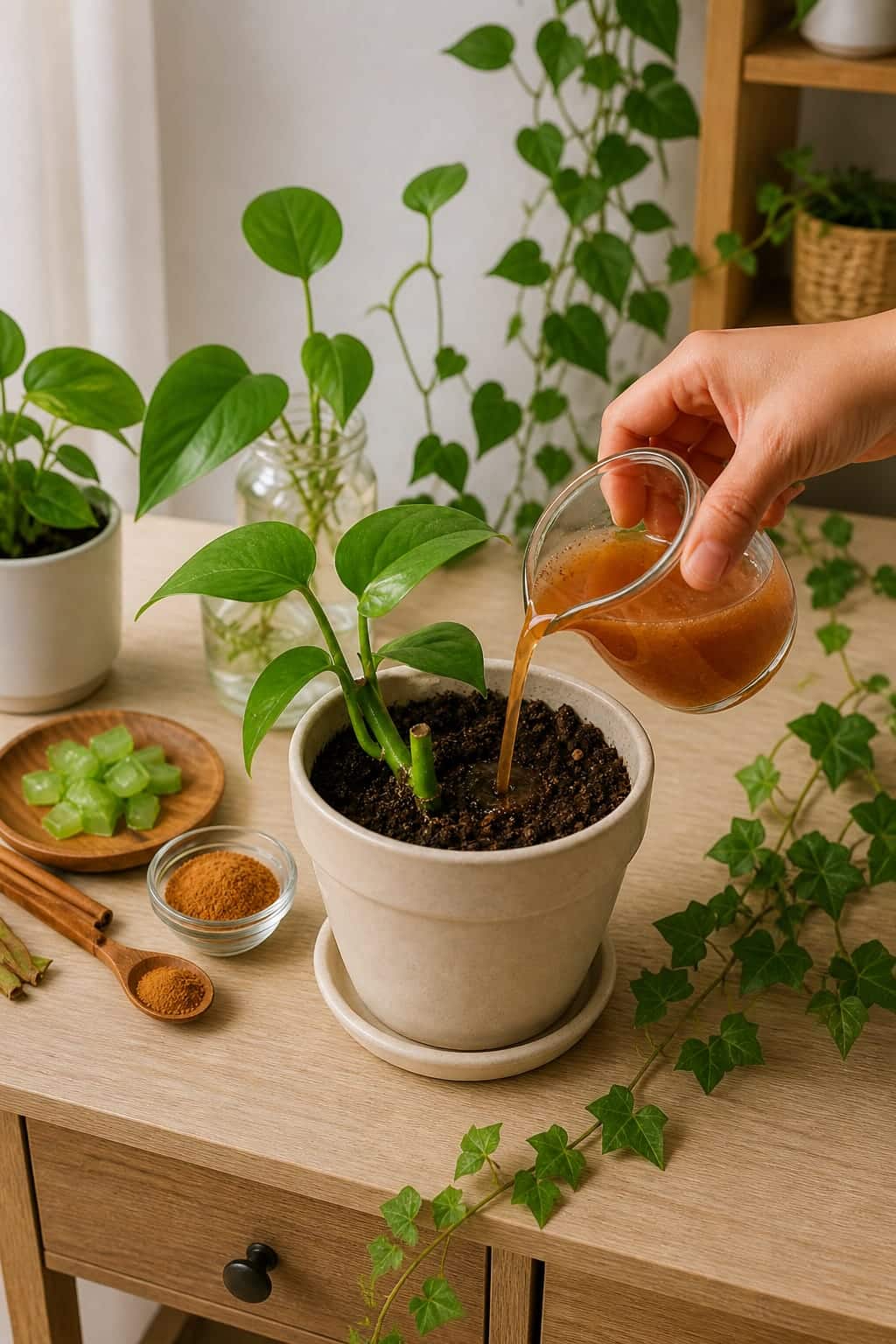
The aloe pieces in the image are a strong visual clue. They show that the liquid is not just plain water. It is part of a natural plant-care mixture.
Aloe also looks fresh and clean, which makes the trick feel safe and gentle. The green aloe pieces, brown cinnamon powder, and warm liquid create a beautiful “kitchen garden remedy” look.
This is why the image works so well for a plant trick article: the ingredients are visible, the action is clear, and the plant looks ready to grow.
Why the Cinnamon Sticks Matter
The cinnamon sticks add warmth and make the trick feel natural. They also help the viewer understand that the brown powder is cinnamon, not dirt or coffee.
For real plant care, ground cinnamon is easier to use than cinnamon sticks. The sticks are mostly for styling and visual storytelling.
Use a tiny pinch of powder in the mix, not a whole stick soaked for days.
Can You Store Aloe Cinnamon Water?
Fresh is best. Make only what you need and use it the same day. Homemade plant mixtures can change smell or grow unwanted bacteria if stored too long.
If you have extra, discard it rather than saving it for weeks.
Simple fresh mixes are safer for indoor plants.
Best Time to Use This Trick
The best time to use this trick is during spring or summer when plants are actively growing. Cuttings root faster when warmth and light are available.
You can still propagate indoors during cooler months, but rooting may take longer. In winter, be extra careful not to overwater.
Morning is the best time to plant and water cuttings because the plant has the day to adjust in light.
Best Pot for Cuttings
Use a small pot with drainage holes. A huge pot holds too much wet soil around a small cutting, which can increase the risk of rot.
The pot in the image is a medium ceramic pot, which can work if the soil is airy and the cutting has enough nodes. For very small cuttings, smaller pots are usually safer.
A clear plastic cup with drainage holes can also be useful because you can see root growth.
How to Keep Cuttings From Rotting
Rot prevention is all about balance. Keep moisture light, soil airy, and airflow steady.
- Use clean scissors
- Start with a healthy cutting
- Plant at least one node under the soil
- Do not bury leaves
- Use a small pot
- Choose airy soil
- Water lightly
- Keep in bright indirect light
- Avoid cold windowsills
- Do not use thick homemade mixtures
The aloe cinnamon trick supports this routine, but good basics matter most.
Can This Mix Save a Failing Cutting?
It can help if the cutting is still firm and alive. If the cutting is drooping from stress, dry soil, or weak adjustment, a gentle aloe cinnamon pour may refresh the soil and support recovery.
But if the stem is black, mushy, or rotten, the mix cannot reverse the damage. You need to cut away the bad section and restart with healthy tissue.
Always check the stem before adding more liquid.
How to Use This Trick for Pothos
Pothos is one of the easiest plants for this trick. Cut a piece with at least one node and one leaf. Plant the node under the soil. Pour a small amount of aloe cinnamon water around the node area.
Keep the soil lightly moist and place the pot in bright indirect light. Pothos can root quickly when conditions are right.
Once new leaves appear, treat it like a normal young plant.
How to Use This Trick for Philodendron
Philodendron cuttings root well from nodes, just like pothos. Choose a healthy stem with a visible node. Plant it in airy soil and water lightly with the aloe cinnamon mix.
Philodendrons enjoy warmth and humidity, so keep the cutting away from cold drafts.
Do not overwater. The soil should stay lightly moist, not soaked.
How to Use This Trick for Monstera
Monstera cuttings need at least one node. A leaf without a node will not grow into a full new plant. If the cutting has an aerial root, that is even better.
Plant the node or aerial root area in airy chunky mix. Use the aloe cinnamon mix lightly around the root zone.
Monsteras can take longer to settle, so patience is important.
How to Use This Trick for Herbs
Soft herbs like mint and basil can root easily. For herbs, use an even weaker aloe cinnamon mix because their stems are soft.
Plant the cutting in light soil and keep it moist but not soggy. Herbs need good light to root and grow well.
If the herb wilts badly, try water propagation first, then move it to soil later.
What Not to Mix With Aloe and Cinnamon
Do not add too many ingredients. A common mistake is mixing aloe, cinnamon, coffee, banana peel, rice water, eggshells, honey, and fertilizer all at once. More ingredients do not mean better results.
For delicate cuttings, simple is safer.
Aloe and cinnamon are enough. Keep the mix light and clean.
Can You Add Honey?
Some people use honey in plant tricks, but it can be sticky and may attract ants or pests indoors. For this rescue mix, skip the honey.
Aloe and cinnamon already create a strong natural theme without adding sugar.
Cuttings do not need sweet liquids in the soil.
Can You Add Coffee?
No, not for fresh cuttings. Coffee can be too strong and may affect the soil in ways that delicate new stems do not need.
Save coffee-related tricks for established plants, and even then, use them carefully.
Cuttings need gentle moisture and airflow more than rich additives.
Can You Add Fertilizer?
Do not add fertilizer to this mix for fresh cuttings. Wait until roots form and new growth appears. Then you can feed lightly with diluted fertilizer.
Fertilizing before roots develop can stress the cutting.
Root first, feed later.
Signs You Used Too Much Mix
If you overdo the aloe cinnamon mix, the pot may show warning signs:
- Soil stays wet too long
- Surface becomes sticky or crusty
- Small flies appear
- Stem turns soft
- Leaves yellow quickly
- Bad smell comes from the pot
If this happens, stop using the mix. Let the soil dry slightly, improve airflow, and consider repotting into fresh airy soil if needed.
How to Make the Trick Look Good in Content
The visual is very strong because the ingredients are arranged clearly. Aloe pieces are on one side. Cinnamon is visible in a small bowl and spoon. The brown liquid is being poured into the soil. The cutting is green and fresh.
To recreate this style for social media or blog images, use:
- A young pothos or philodendron cutting
- A neutral ceramic pot
- A clear glass pouring cup
- Aloe pieces on a small dish
- Cinnamon sticks and powder nearby
- Trailing plants in the background
- Natural window light
- A clean tabletop
The scene should feel warm, natural, and trustworthy.
Short Caption for the Trick
“Aloe + cinnamon makes a gentle two-ingredient rescue mix for fresh cuttings. Pour a small amount into airy soil, keep the node covered, and place the cutting in bright indirect light while roots begin to form.”
Quick Recipe
- Mash one small piece of fresh aloe gel into one cup of water.
- Add a tiny pinch of plain cinnamon powder.
- Stir well and strain if needed.
- Plant the cutting with one node under the soil.
- Pour a small amount of the mix around the stem.
- Let extra water drain fully.
- Place in bright indirect light.
- Wait for new growth before feeding.
Common Mistakes to Avoid
- Using too much cinnamon
- Making the aloe mix too thick
- Planting a cutting with no node
- Burying leaves under the soil
- Using heavy soggy soil
- Watering every day
- Keeping the cutting in harsh sun
- Using a pot with no drainage
- Adding fertilizer too early
- Expecting roots overnight
Frequently Asked Questions
Can aloe help plant cuttings root?
Aloe is often used by plant lovers as a gentle natural support for cuttings. It should be diluted with water and used lightly. The most important rooting factors are a healthy node, bright indirect light, airy soil, and careful moisture.
Can cinnamon help cuttings?
Cinnamon can be used as a light soil or cut-surface refresh. Use only a tiny amount. Too much powder is unnecessary and can make the soil messy.
Can I mix aloe and cinnamon together?
Yes. Mix a small amount of aloe gel into water and add a tiny pinch of cinnamon. Keep the mixture thin and mild.
How often should I use this mix on cuttings?
Use it once when planting the cutting. If needed, repeat very lightly after a few weeks. Do not use it daily.
Can I use this mix for pothos cuttings?
Yes. Pothos cuttings are a great choice as long as each cutting has at least one node.
Can I use this mix in water propagation?
It is better for soil propagation. For water propagation, plain clean water is usually best.
Should I fertilize cuttings?
Wait until roots form and new growth appears. Fresh cuttings do not need strong fertilizer.
Why did my cutting rot?
Rot usually comes from too much moisture, poor airflow, heavy soil, or a damaged stem. Use airy soil and water lightly.
Can I store the aloe cinnamon mix?
Fresh is best. Make only what you need and use it the same day.
Does this trick guarantee roots?
No trick can guarantee roots, but this routine can support healthy propagation when combined with good cutting care.
Final Thoughts
The aloe and cinnamon rescue mix is a simple, beautiful, two-ingredient trick for plant cuttings. It looks natural, feels gentle, and fits perfectly into a beginner-friendly propagation routine.
To use it well, keep the mixture light. Mix a small amount of aloe gel with water, add only a tiny pinch of cinnamon, and pour a small amount around the cutting after planting. Make sure the cutting has a node, use airy soil, choose a pot with drainage, and place it in bright indirect light.
This trick will not create roots overnight, but it can help you care for cuttings in a more thoughtful way. The real magic comes from patience, clean tools, the right soil, and steady moisture.
So before a cutting gives up, try this gentle aloe and cinnamon rescue mix. With the right conditions, that small green stem may turn into a strong new plant, one fresh root at a time.