Common Cactus Problems
A soft cactus is a serious warning sign. Softness usually means rot, especially if it begins near the base. Remove the plant from the pot and inspect the roots. If rot is limited, you may be able to cut back to healthy tissue and let it callus before replanting. If rot has spread through the plant, saving it may be difficult.
Wrinkling can mean the plant is thirsty, but it can also happen when roots are rotten and cannot absorb water. Check the soil first. If the soil is dry and the plant is wrinkled, water thoroughly and let it drain. If the soil is wet and the plant is wrinkled, root damage may be present.
Yellowing can come from overwatering, poor drainage, cold damage, sunburn, or root stress. Brown corky patches near the base can sometimes be natural aging, but soft brown patches are not normal. Always look at texture. Firm is usually safer. Mushy is dangerous.
Pests on Cactus Plants
Cacti can attract mealybugs, scale, spider mites, and fungus gnats. Mealybugs may appear as white cottony patches between ribs or near the base. Scale may look like small bumps attached to the skin. Spider mites can cause dullness and fine webbing. Fungus gnats are usually linked to wet soil.
Inspect cactus plants regularly because pests can hide around spines. If you find pests, isolate the plant and treat carefully. A cotton swab with alcohol can help remove small mealybug clusters, but avoid soaking the whole plant. Use plant-safe treatments when needed and follow instructions.
Keeping the soil dry between watering helps reduce fungus gnats. Good light and airflow also help keep the plant strong.
Final Thoughts
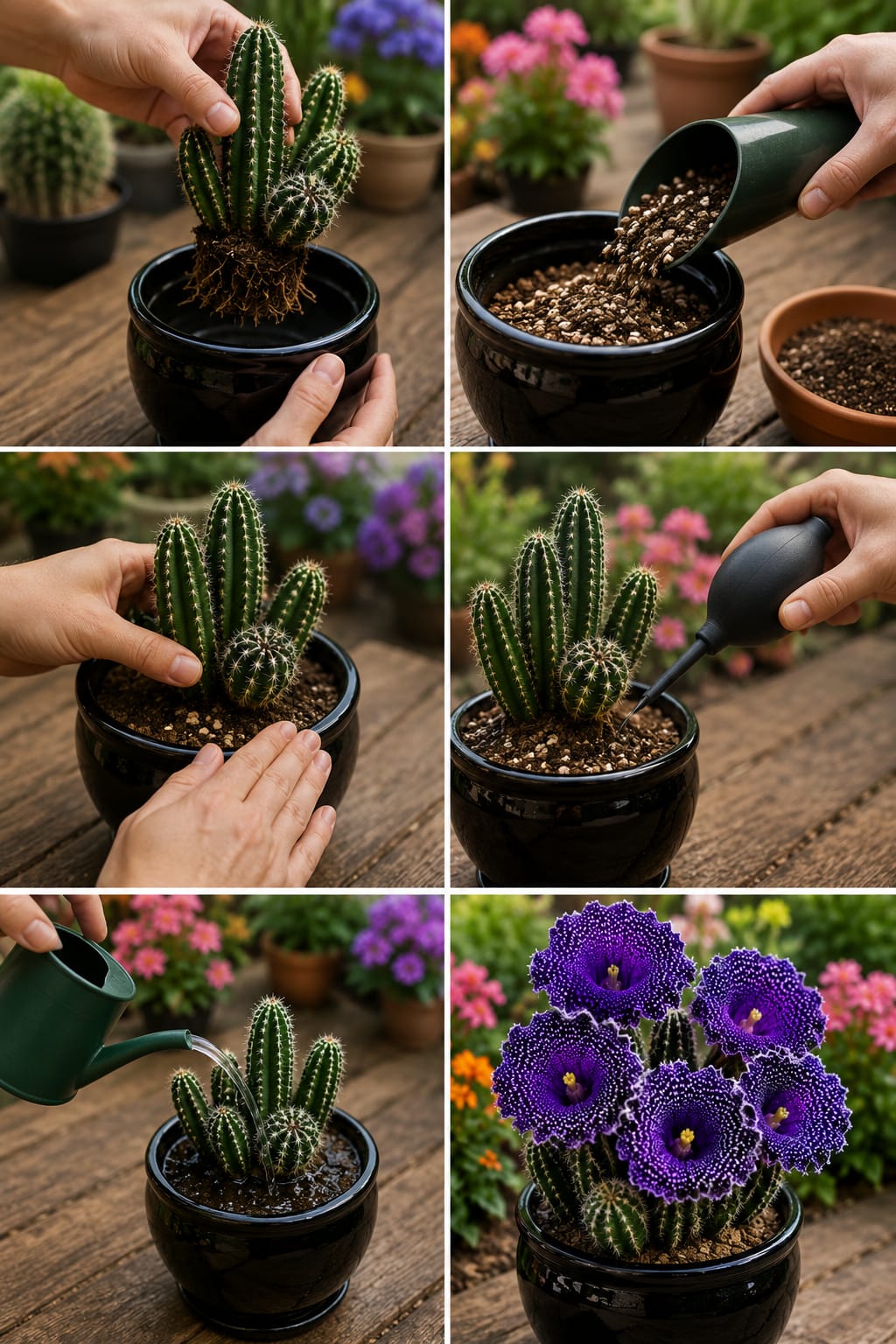
A flowering cactus is beautiful, but the bloom is the result of patient care, not a quick secret. The image shows the main foundation: choose a good pot, use gritty soil, place the cactus carefully, settle the mix, water correctly, and allow the plant to grow strong. The most important caution is to avoid soggy soil. Water should drain, not sit around the roots.
For the best results, give your cactus very bright light, a pot with drainage, a gritty fast-draining soil mix, and deep but infrequent watering. Let the soil dry completely before watering again. Reduce water during cooler months and allow a seasonal rest. Feed lightly only during active growth. Avoid oversized pots, heavy soil, and frequent watering.
When the roots are healthy and the plant receives enough light, a mature cactus may reward you with flowers that feel almost magical. Even when it is not blooming, a well-grown cactus is a striking plant with strong form and quiet beauty. Treat it with patience, dryness, light, and balance, and it can become a long-lasting centerpiece in your home or garden.