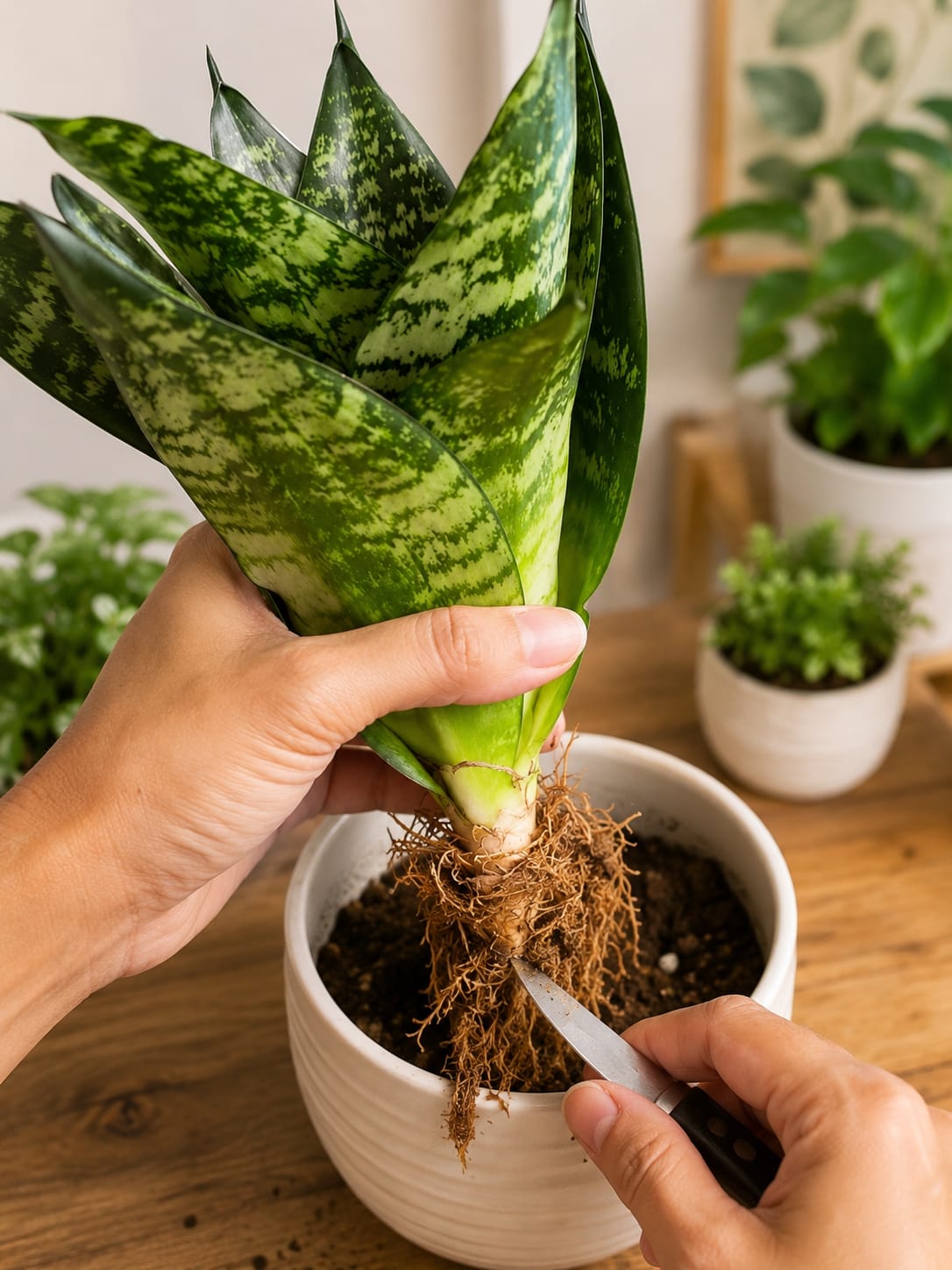
Best Soil for Snake Plants
The best way to help a snake plant grow is not usually a powder treatment. It is proper soil. Snake plants need a loose, fast-draining mix. Heavy soil is one of the main reasons they fail.
A good snake plant soil mix can include:
- Cactus or succulent soil
- Perlite
- Pumice
- Coarse sand
- Small bark chips
The mix should not stay wet for many days. When you water, water should move through the pot and drain out. The soil should dry before the next watering.
Best Pot for Snake Plants
A snake plant pot should have drainage holes. Decorative pots without holes are risky because water collects at the bottom. Terracotta pots are excellent because they breathe and help soil dry faster. Plastic pots can work too, but watering must be controlled carefully.
Choose a pot that is only slightly larger than the root system. A very large pot holds too much soil and stays wet too long. Snake plants often prefer being a little snug in their container.
A good snake plant pot should:
- Have drainage holes
- Not be too large
- Hold the plant upright
- Allow soil to dry
- Be stable enough for tall leaves
Watering Snake Plants Correctly
Watering is the most important part of snake plant care. Many snake plants die from too much water, not too little. Because the leaves store moisture, the plant can tolerate dryness better than soggy soil.
A simple watering rule is: water deeply, then let the soil dry completely before watering again.
In warm bright conditions, this may mean watering every two to four weeks. In cool or low-light conditions, it may be less often. Never water on a fixed schedule without checking the soil first.
Good watering signs:
- The soil is dry several centimeters down
- The pot feels lighter
- The leaves are firm
- There is no bad smell
Bad watering signs:
- Soil stays wet for a long time
- Leaves become soft
- The base turns mushy
- The pot smells rotten
- Fungus gnats appear
Light for Better Snake Plant Growth
Snake plants tolerate low light, but they grow better in bright indirect light. Low light keeps them alive, but it often slows growth. If you want your snake plant to produce new leaves, give it brighter conditions.
Best light options include:
- Bright indirect light near a window
- Morning sun
- Filtered sunlight
- A bright balcony with protection from harsh afternoon sun
- Grow lights for dark rooms
Very strong direct sun can burn leaves if the plant is not used to it. Move it gradually into brighter light.
Why Snake Plants Grow Slowly
Snake plants naturally grow slowly compared with many leafy houseplants. Their growth depends on light, temperature, pot size, root health, and season. In winter or low light, growth may almost stop. That does not mean the plant is dead.
Common reasons for slow growth include:
- Low light
- Cold temperatures
- Overwatering
- Poor drainage
- Old compacted soil
- Lack of growing season warmth
- Root stress after repotting
Instead of forcing growth with powders, improve the basics first.
How to Use a Root Soak Without Harm
If you still want to use a root soak, keep it short and clean. Use plain water or a very weak fertilizer solution. Do not leave the plant in cloudy water for days.
Safe root soak method:
- Use room-temperature clean water.
- Place only the roots in water.
- Keep the crown above the water line.
- Soak for 10 to 30 minutes.
- Remove the plant and let roots drain.
- Repot into dry, airy soil.
- Wait before watering again.
This method can refresh dry roots without creating a long-term rot risk.
What to Do After the Treatment
After any root treatment, the snake plant needs recovery time. Do not place it in harsh sun immediately. Do not fertilize again right away. Do not water repeatedly. The roots need air and stability.
After treatment:
- Repot in fast-draining soil
- Keep the plant upright
- Place in bright indirect light
- Avoid watering for several days if roots were wet
- Do not disturb the plant repeatedly
- Watch for soft leaves or base rot
Snake plants prefer consistency. Too many treatments can stress them more than neglect.
Better Ways to Make a Snake Plant Healthier
If your goal is a stronger snake plant, focus on long-term care instead of quick hacks. A healthy snake plant needs the right balance of light, dryness, and root space.
Better growth tips:
- Move the plant to brighter indirect light
- Use a terracotta pot with drainage
- Switch to succulent soil
- Water less often
- Clean dust from leaves
- Feed lightly in spring or summer
- Divide overcrowded plants
- Remove dead or damaged leaves
These steps are safer and more reliable than unknown powders.
Can This Method “Wake Up” a Snake Plant?
The phrase “wake up” is often used in plant care posts, but plants do not wake up instantly because of one ingredient. A snake plant begins active growth when conditions improve. Warmth, light, healthy roots, and proper watering are what trigger better growth.
A root soak may help if the plant was dry, compacted, or stressed by old soil. But if the plant is in low light, cold conditions, or wet soil, the powder will not solve the real problem.
Final Advice
The white dissolving powder method is interesting, but it should be approached carefully. Snake plants are strong, but they are not plants that enjoy constant moisture or random strong treatments. The safest interpretation is that the method is a short root refresh, not a permanent water-growing system and not a miracle cure.
Use clean water, avoid soaking the crown, do not use unknown powders, and repot the plant into fast-draining soil afterward. If you know the powder is a mild fertilizer, use it very weakly. If you do not know what it is, skip it. A snake plant can grow beautifully without risky additives when it has bright light, proper soil, a drainage pot, and careful watering.
In the end, the best snake plant trick is simple: give the roots air, give the leaves light, and give the plant time. That will do more for long-term growth than any mystery white powder.