Christmas cactus is one of the most beautiful indoor plants to grow when the weather gets cooler. Its arching green stems, soft segmented leaves, and bright flower buds make it a favorite for windowsills, tabletops, plant shelves, and cozy corners. When it blooms, it can cover itself with pink, red, peach, orange, white, or purple flowers that look almost magical indoors.
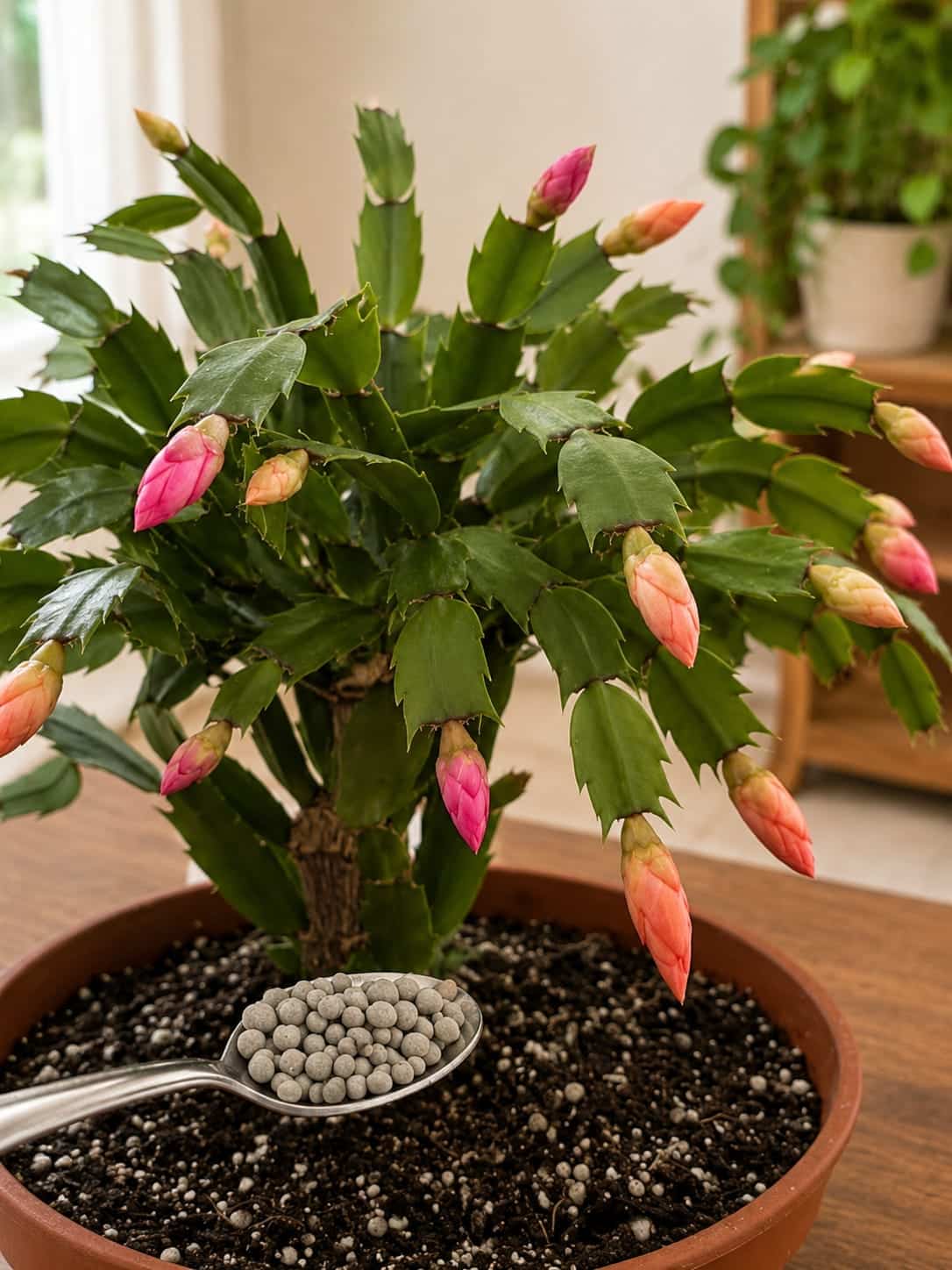
The image shows a healthy Christmas cactus full of flower buds, with a spoon holding small round fertilizer pellets near the soil. This suggests a simple feeding idea: giving the plant a slow, steady nutrient boost to support buds, roots, and blooming. It is a tempting trick because the plant already looks ready to burst into color.
But Christmas cactus is not a heavy feeder, and it does not like strong fertilizer at the wrong time. If you feed too much, feed too late, or use pellets incorrectly, you can burn roots, cause bud drop, or stress the plant. The secret is gentle feeding, correct timing, good light, proper watering, and a slightly cooler rest period before blooming.
Why Christmas Cactus Needs Gentle Feeding
Christmas cactus is different from desert cactus. It naturally grows in more humid, forest-like environments, often attached to trees where its roots receive moisture, air, and organic material. Indoors, it prefers a light, airy potting mix and careful watering.
Because it produces many buds and flowers, it can benefit from nutrients during active growth. However, it does not need heavy feeding. Too much fertilizer can create salt buildup in the soil, damage fine roots, and make the plant weaker instead of stronger.
The best feeding routine is light and seasonal. Feed when the plant is growing leaves and preparing strength. Reduce or stop feeding when buds are forming and flowers are opening.
What Are the Pellets in the Image?
The small round pellets may represent slow-release fertilizer. These pellets release nutrients gradually when watered. They can be useful for busy plant owners because they feed slowly over time.
However, slow-release fertilizer must be used carefully with Christmas cactus. The plant has sensitive roots, and a decorative indoor pot can hold nutrients longer than outdoor soil. Too many pellets in a small pot can create an overdose.
If you use slow-release pellets, use much less than the package suggests for heavy-feeding plants. A light dose is safer. Keep pellets spread across the soil surface instead of piled against the plant base.
When to Feed Christmas Cactus
The best time to feed Christmas cactus is during active growth, usually spring through late summer. This is when the plant is producing new stem segments and building energy for future blooms.
Stop or greatly reduce feeding in early fall when you want the plant to set buds. Bud formation is encouraged more by shorter days, cooler nights, and steady care than by strong fertilizer.
Once buds appear, avoid sudden changes. Do not overfeed, move the plant repeatedly, or let the soil swing from bone-dry to soaking wet. Buds can drop if the plant is stressed.
How to Use Fertilizer Pellets Safely
Use a very small amount. For a small to medium Christmas cactus, only a light sprinkle is enough. Do not cover the soil with pellets.
Place the pellets on the soil surface away from the main stem base. Gently press them into the top layer, but do not bury them deeply near the roots.
Water normally after application, only if the plant needs water. Do not keep the soil constantly wet just to activate fertilizer.
Never add pellets to a dry, stressed, wilting, or recently repotted plant. Let the plant stabilize first.
A Safer Alternative: Diluted Liquid Fertilizer
If you are unsure about pellets, a diluted liquid houseplant fertilizer can be easier to control. Use a balanced fertilizer at half strength or weaker during spring and summer.
Feed once every four to six weeks during active growth. Stop feeding when buds begin to form.
Liquid feeding lets you adjust more easily. If the plant looks stressed, you can stop immediately. Slow-release pellets continue releasing nutrients, which may be risky if too many were added.
What Really Triggers More Buds
Feeding helps the plant build strength, but it does not force blooms by itself. Christmas cactus needs the right seasonal signals.
To encourage buds, give the plant bright indirect light during the day and cooler nights in early fall. Avoid bright artificial light late at night if you want natural bud formation. The plant responds to longer dark periods and cooler temperatures.
Keep watering steady but not excessive. Let the top part of the soil dry slightly before watering again. Do not let the plant sit in water.
Once buds appear, keep conditions stable. Sudden moves, temperature changes, overwatering, underwatering, or strong fertilizer can cause buds to drop.
Best Light for Christmas Cactus
Christmas cactus grows best in bright indirect light. A bright window with filtered sun is ideal. Morning sun can be helpful, but harsh afternoon sun may scorch the stems.
If the stems turn pale, red, or yellowish, the light may be too strong. If the plant grows weak and thin or refuses to bloom, it may need more brightness.
During bud formation, stable light is important. Avoid moving the plant from one location to another after buds appear.
Best Watering Routine
Christmas cactus likes more moisture than desert cactus, but it still needs drainage. Water when the top inch of soil feels dry. Water thoroughly, then let excess drain away.
Do not let the pot sit in standing water. Wet roots can rot.
When the plant is blooming, keep the soil lightly and evenly moist. Do not let it dry so badly that buds shrivel, but do not keep it soggy.
Best Soil for Christmas Cactus
Use a light, airy potting mix. A good mix can include indoor potting soil, perlite, orchid bark, and a little coco coir or peat. The goal is moisture plus airflow.
Dense heavy soil can cause root problems. If water drains slowly or the soil stays wet for many days, repotting into a better mix may help.
A pot with drainage holes is essential.
Why Buds Drop Before Opening
Bud drop is common with Christmas cactus. It can happen from sudden movement, temperature changes, low humidity, overwatering, underwatering, too much fertilizer, or low light.
Once buds form, keep the plant in the same place. Water consistently. Avoid strong feeding. Protect it from cold drafts, heaters, and direct hot sun.
A plant full of buds does not need extra fertilizer at that moment. It needs stability.
Can Homemade Fertilizers Help?
Some people use banana water, rice water, coffee grounds, eggshells, or compost tea for blooming plants. These can be risky indoors if used too often or too strong.
Christmas cactus roots are sensitive. Thick homemade liquids can sour the soil, attract gnats, and cause root stress. If you prefer natural feeding, use worm casting tea very diluted and rarely during active growth, not while buds are opening.
For predictable results, a diluted balanced fertilizer is safer than random kitchen mixtures.
Continue to Page 2
Continue to page 2 for more details about this article and the key points many readers miss on the first page.