ZZ plants are some of the most elegant and low-maintenance indoor plants you can grow. Their thick upright stems, glossy oval leaves, and deep green color make them look polished in almost any room. They fit beautifully in living rooms, offices, bedrooms, hallways, and bright corners where other plants may struggle. A healthy ZZ plant has a sculptural shape that looks expensive, calm, and modern without needing constant attention.
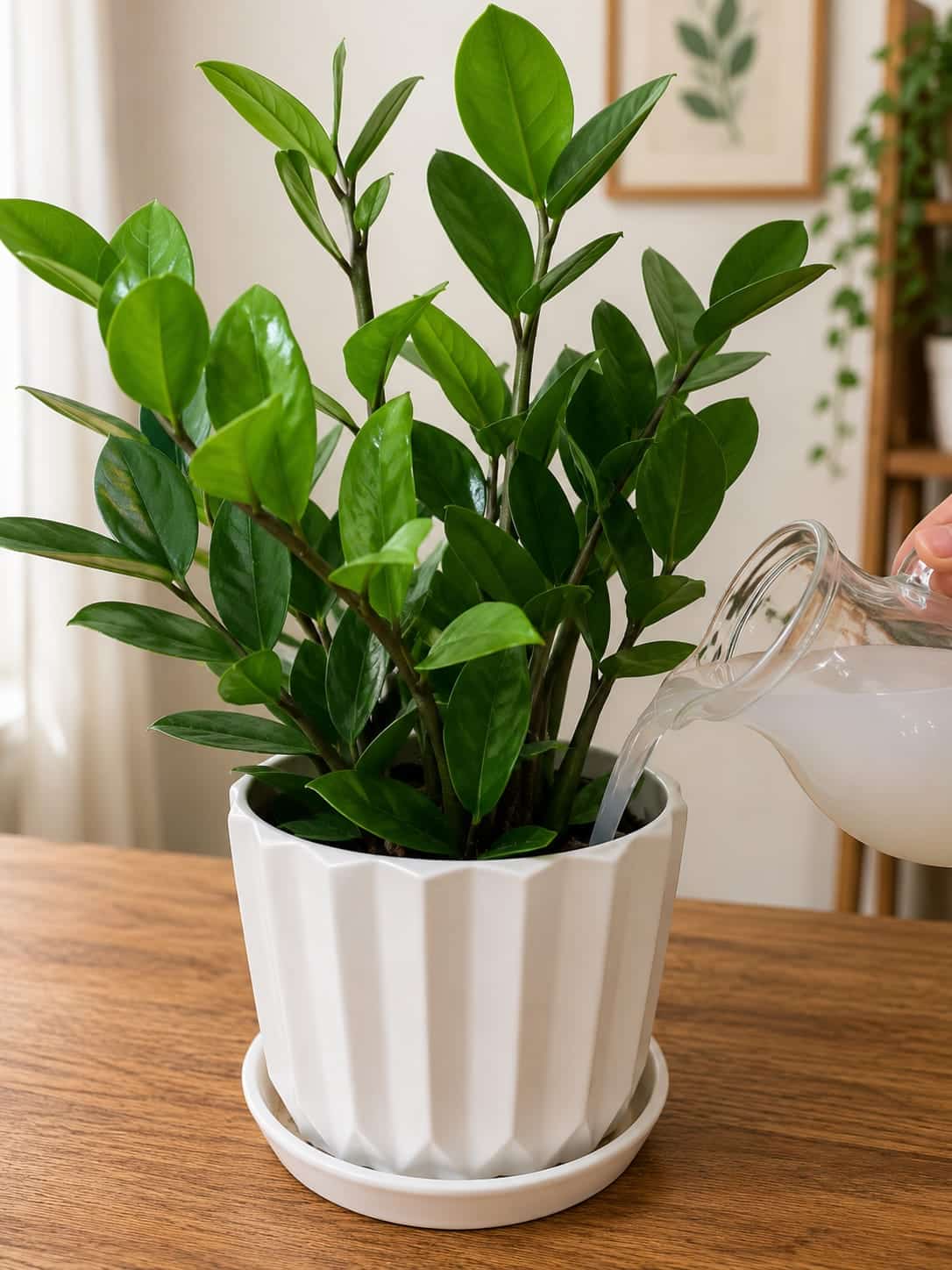
The image shows a beautiful ZZ plant in a white decorative pot being watered with a cloudy white liquid. The caption suggests a homemade compost idea made from rice water, which is often described as containing phosphorus, potassium, iron, zinc, and other nutrients that may benefit plants. This is a popular natural plant-care trick because it is simple, affordable, and easy to make at home.
Rice water can be used as a gentle homemade plant tonic, but for ZZ plants, it must be used very carefully. ZZ plants are drought-tolerant and store water in thick underground rhizomes. These rhizomes help the plant survive dry periods, but they can rot if the soil stays wet or if too much organic liquid is added too often.
Used correctly, diluted fresh rice water may give a mild boost to the soil and support steady growth. Used incorrectly, it can create sour soil, fungus gnats, mold, soft stems, yellow leaves, and root rot. The secret is not to pour thick rice water every week. The secret is to use a very weak, fresh, strained version only when the plant actually needs watering.
This guide explains how rice water may help ZZ plants, how to prepare it safely, how often to use it, what mistakes to avoid, and what truly keeps ZZ plants glossy, upright, and healthy indoors.
Why ZZ Plants Are So Easy to Love
The ZZ plant, also known as Zamioculcas zamiifolia, is famous for being one of the easiest houseplants. It has thick stems and waxy leaves that hold up well indoors. It can tolerate lower light, missed watering, dry air, and beginner mistakes better than many leafy tropical plants.
Its beauty comes from its simplicity. The leaves are naturally shiny. The stems grow upright in graceful clusters. The plant looks clean and architectural, especially in a white pot like the one in the image.
Because ZZ plants are so tough, many people assume they can handle anything. But the one thing they do not tolerate well is constant wet soil. Their underground rhizomes store water, so they do not need frequent watering. If the soil stays damp for too long, the rhizomes can soften and rot.
This is why any homemade liquid, including rice water, must be used with moderation. A ZZ plant is not a thirsty pothos or peace lily. It is slower, more reserved, and more sensitive to overwatering.
What Is Rice Water?
Rice water is the cloudy liquid left after rinsing, soaking, or boiling rice. For houseplants, the safest version is fresh rinse water from plain uncooked rice. It should be diluted before use, especially for plants like ZZ plants that prefer a drier root zone.
Rice water may contain small amounts of starch, minerals, and trace nutrients. Depending on the rice and preparation method, it may include tiny amounts of potassium, phosphorus, magnesium, iron, zinc, and other elements. These nutrients can support plant growth in mild ways.
However, rice water is not a complete fertilizer. It is not balanced, measured, or predictable. The nutrient content changes depending on the type of rice, how much water is used, and how long it is soaked. It should be treated as a gentle natural supplement, not as a replacement for proper plant food.
The cloudy look can make rice water seem powerful, but thick cloudy water is not always better. For indoor pots, especially ZZ plants, weaker is safer.
Why Rice Water Can Be Called Homemade Compost
Some people call rice water “homemade compost” because it is a natural kitchen leftover that can feed soil life. It is not compost in the true sense, because compost is decomposed organic material. Rice water is more like a mild organic tonic.
When used in small amounts, rice water may feed beneficial microorganisms in the soil. These microorganisms help break down organic matter and support a living soil environment. In outdoor gardens, this can be helpful because the soil ecosystem is large and active.
In indoor pots, the situation is different. A pot is a small closed environment. If too much starchy liquid is added, unwanted microbes can grow too quickly. The soil may smell sour, mold may appear, and fungus gnats may arrive.
So while rice water can act like a gentle homemade soil refresh, it should not be used like heavy compost tea. ZZ plants need a clean, airy, dry-friendly root zone.
Can Rice Water Help ZZ Plants Grow?
Rice water may support ZZ plant growth in a mild way, but it will not create instant new stems. ZZ plants are naturally slow growers. They often produce new shoots only during active growth periods, usually when temperatures are warm and the plant receives enough light.
A diluted rice water treatment may help support the soil environment and provide a small nutrient boost. But if the plant is in a dark corner, rice water will not force growth. If the soil is too wet, rice water can make things worse. If the plant has root rot, rice water will not save it.
For rice water to help, the ZZ plant must already be healthy. It should have firm stems, stable leaves, dry-friendly soil, drainage holes, and decent light. In that situation, occasional rice water may be a gentle addition to the care routine.
Think of rice water as a small support step. The real growth drivers are light, root health, proper watering, and time.
Can Rice Water Make ZZ Leaves Shinier?
Rice water should not be used as a leaf shine spray. The natural shine of ZZ plant leaves comes from healthy leaves and clean surfaces. If rice water is sprayed or wiped onto the leaves, it may leave a sticky or cloudy residue that attracts dust.
To keep ZZ leaves shiny, use plain water and a soft cloth. Wipe each leaf gently to remove dust. Clean leaves reflect light beautifully and help the plant absorb more light.
If the plant is healthy, its leaves will naturally look glossy. There is no need for oil, milk, mayonnaise, rice water, or commercial leaf shine products. Many of those can clog the leaf surface or attract more dust over time.
Use rice water only on the soil, not on the leaves.
The Safest Rice Water Recipe for ZZ Plants
The safest rice water for ZZ plants is fresh, weak, and diluted. Start with plain uncooked rice. Do not use salted, cooked, flavored, oily, or seasoned rice water.
Place one tablespoon of uncooked rice in a bowl. Add two cups of clean water. Swirl the rice for about one minute until the water becomes lightly cloudy. Strain out all rice grains completely. Then dilute the cloudy water with two more cups of plain water.
The final liquid should look lightly cloudy, not thick and milky. If it looks very white, dilute it more. For ZZ plants, a thin mixture is much safer than a strong one.
Use the rice water fresh the same day. Do not store it for days. Do not let it ferment. Old rice water can smell sour and may introduce problems into the pot.
Should You Use Fermented Rice Water?
Fermented rice water is popular in some gardening content, but it is not the best choice for indoor ZZ plants. Fermentation can make the liquid stronger, smellier, and more microbe-rich. While some outdoor gardeners use fermented plant tonics, indoor pots are much smaller and more sensitive.
A ZZ plant in a decorative pot does not need a strong fermented liquid. Its roots and rhizomes prefer a stable, airy environment. Fermented rice water can increase the risk of sour soil, fungus gnats, and unpleasant odor.
For ZZ plants, fresh diluted rice rinse water is safer. It gives a mild natural touch without overwhelming the root zone.
If a rice water mixture smells sour, sweet, alcoholic, or rotten, do not use it on indoor plants.
How to Apply Rice Water to a ZZ Plant
Apply rice water only when the ZZ plant is already due for watering. This is the most important rule. Do not pour rice water into damp soil.
Check the soil first. The top may be dry while the lower soil is still moist. ZZ plants should dry out well between waterings. If you are unsure, wait a few more days. It is usually safer to underwater a ZZ plant slightly than to overwater it.
When the soil is dry, pour the diluted rice water slowly around the soil surface. Avoid pouring directly against the stems. Water the outer root zone and let the liquid move through the soil.
Make sure excess liquid drains from the bottom of the pot. Empty the saucer afterward. Never let a ZZ plant sit in standing rice water.
Rice water counts as a watering. Do not follow it immediately with more plain water unless you accidentally used a mixture that was too strong and need to flush the soil.
How Often Should You Use Rice Water?
Use rice water rarely. For ZZ plants, once every six to eight weeks during active growth is enough. Some ZZ plants may only need it once every two or three months.
Do not use rice water every week. Do not use it every time you water. ZZ plants grow slowly and do not need frequent feeding.
During winter or low-light months, skip rice water completely unless the plant is actively growing and the soil dries well. In cooler months, ZZ plants use less water, and the potting mix stays damp longer.
Too much rice water can create more harm than benefit. Moderation is what makes this trick safe.
When Rice Water May Be Helpful
Rice water may be helpful when the ZZ plant is healthy but growing slowly during spring or summer. It may also be useful after the plant has been in the same soil for a while and you want to provide a mild natural refresh.
It can be used when the plant has firm stems, glossy leaves, no yellowing, no sour smell, no pests, and soil that drains well. It is best for stable plants, not emergency cases.
If your ZZ plant is pushing new shoots, a mild rice water watering may support the active growth period. But the new shoots still depend mostly on light, stored energy in the rhizomes, and root health.
Use rice water as a gentle helper when things are already going well.
When You Should Avoid Rice Water
Do not use rice water if the soil is damp. Do not use it if the plant has yellow leaves and wet soil. Do not use it if the stems feel soft. Do not use it if the pot smells sour. Do not use it if fungus gnats are flying around the soil.
Do not use rice water if the pot has no drainage holes. Do not use it if the plant is in a cold room. Do not use it immediately after repotting if roots were damaged.
Do not use thick rice water, cooked rice water, salted rice water, fermented rice water, or rice water with grains still floating in it.
If the plant is stressed, diagnose the cause before adding anything. Most ZZ plant problems come from water, light, or soil—not from lack of rice water.
Why Drainage Matters More Than Rice Water
A ZZ plant must have drainage. This is non-negotiable. A pot without drainage holes can trap water at the bottom, even if the top of the soil looks dry. The rhizomes may sit in wet soil and begin to rot.
The white decorative pot in the image looks beautiful, but the most important question is whether it has drainage. If it does not, use it only as an outer cover. Keep the ZZ plant in a plastic nursery pot with drainage holes inside it. When watering, remove the nursery pot, water thoroughly, let it drain, and then return it to the decorative pot.
Rice water in a pot without drainage is risky. Any organic liquid becomes more dangerous when it cannot drain away.
Good drainage protects the roots better than any homemade tonic.
Best Soil for ZZ Plants
ZZ plants need a loose, well-draining potting mix. Regular indoor potting soil can hold too much moisture if used alone. A better mix includes cactus soil, perlite, pumice, orchid bark, or coarse sand.
The soil should allow water to move through easily. It should not stay wet for many days. ZZ rhizomes need oxygen around them, and dense wet soil prevents that.
If your ZZ plant is in heavy compacted soil, rice water will not help. Repotting into a better mix may be the real solution.
A simple ZZ mix can be two parts cactus or indoor potting mix, one part perlite or pumice, and one part orchid bark. This creates a lighter structure that supports roots while reducing rot risk.
Continue to Page 2
Continue to page 2 for more details about this article and the key points many readers miss on the first page.