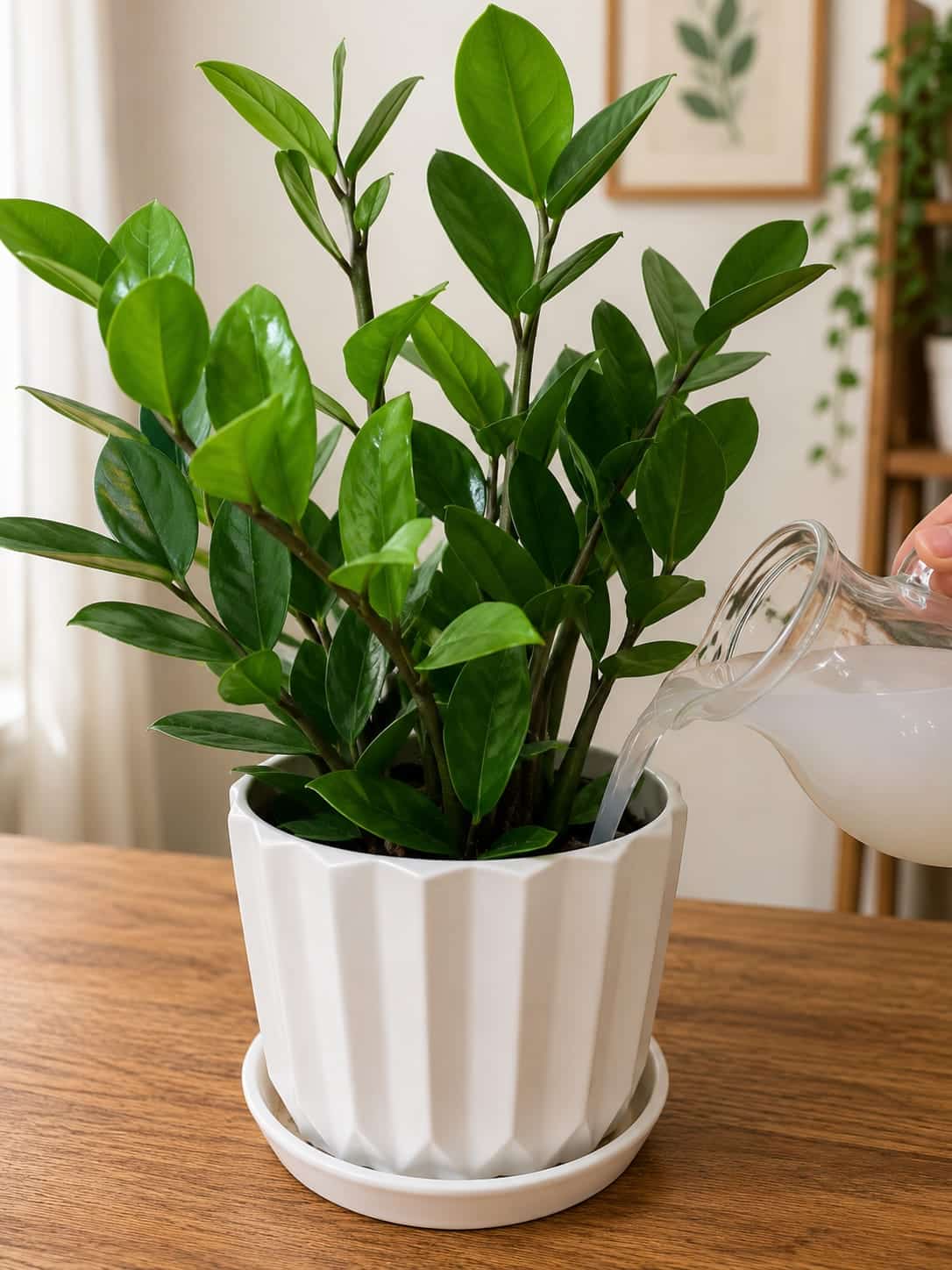
How to Water ZZ Plants Correctly
ZZ plants prefer to dry between waterings. Water thoroughly, then wait. Do not give small daily sips. Do not water just because the top looks dry. The lower soil may still contain moisture.
Depending on light, temperature, pot size, and soil mix, a ZZ plant may need water every two to four weeks, sometimes less often. There is no universal schedule.
Check the pot weight, soil dryness, and leaf condition. If the stems are firm and leaves look glossy, the plant is probably fine. If the soil is dry and the leaves begin to wrinkle slightly, it may be time to water.
When using rice water, replace one normal watering with diluted rice water. Do not add it between regular waterings.
Bright Indirect Light for Better Growth
ZZ plants tolerate low light, but they grow better in bright indirect light. If you want new stems and fuller growth, light matters. A ZZ plant in a dark corner may survive for years but grow very slowly.
Place it near a bright window with filtered light. Morning sun can be fine, but harsh direct afternoon sun may burn leaves. If your room is dim, a grow light can help.
Rice water will not make a ZZ plant grow quickly in poor light. Light gives the plant energy. The rhizomes store that energy and use it to produce new shoots.
For faster growth, improve light before adding homemade tonics.
How ZZ Plant Rhizomes Work
ZZ plants grow from thick underground rhizomes that look like small potatoes. These rhizomes store water and nutrients, allowing the plant to survive dry conditions.
Because of these rhizomes, ZZ plants do not need frequent watering. They can handle dry soil much better than wet soil. When overwatered, the rhizomes can become soft and rotten.
Healthy rhizomes are firm. Rotten rhizomes are mushy, dark, and often smell bad. If your plant has yellowing stems and wet soil, inspect the rhizomes.
Rice water should only be used when rhizomes are healthy. If the rhizomes are stressed, adding more liquid can make the problem worse.
Signs Your ZZ Plant Is Healthy
A healthy ZZ plant has firm upright stems, glossy leaves, and a stable root system. The leaves should be rich green and smooth. New shoots may appear as bright green spears that slowly open into leaflets.
The soil should smell fresh and earthy. It should dry between waterings. The plant should not have fungus gnats, mold, or soft stems.
If your ZZ plant looks like this, a small rice water treatment during active growth may be safe.
Healthy plants respond best to gentle support. Weak plants need diagnosis first.
Signs of Overwatering
Overwatering is the biggest danger for ZZ plants. Signs include yellow leaves, soft stems, mushy bases, wet soil, sour smell, and collapsing growth.
If you see these signs, stop watering. Remove the plant from the pot and inspect the rhizomes and roots. Cut away rotten parts with clean tools and repot healthy sections into fresh dry soil.
Do not use rice water on an overwatered ZZ plant. Rice water adds moisture and organic material, which can worsen the situation.
When in doubt, let the plant dry.
Signs of Underwatering
ZZ plants tolerate dryness, but they can become too dry if neglected for a very long time. Signs include wrinkled stems, curling leaflets, dry soil pulling away from the pot, and dull leaves.
If the plant is very dry, use plain water first. Water thoroughly and let it drain completely. Do not use rice water as the first rescue treatment for a dehydrated plant.
Once the plant recovers and returns to normal growth, you may use diluted rice water later if desired.
Plain water is best for emergency rehydration.
Can Rice Water Cause Fungus Gnats?
Yes. Rice water can contribute to fungus gnats if used too often, too thick, or on soil that stays damp. Fungus gnats are attracted to moist organic soil. Starchy water can make the root zone more inviting to them.
If gnats appear, stop using rice water immediately. Let the soil dry more between waterings. Use yellow sticky traps to catch adult gnats. Check whether the soil is too dense or the pot lacks drainage.
If the problem continues, replace the top layer of soil or repot into a faster-draining mix.
A ZZ plant pot should stay clean and dry enough that gnats do not thrive.
Can Rice Water Cause Mold?
Yes, especially if the rice water is thick or used repeatedly. Mold may appear as white fuzz on the soil surface. This means the soil has too much moisture, organic residue, or poor airflow.
If mold appears, remove the affected top layer of soil. Stop using rice water. Improve airflow and let the soil dry more before watering again.
Do not ignore mold if the plant is also yellowing or the soil smells sour. That may mean the root zone is unhealthy.
Rice water should never leave the pot smelling fermented.
Can Rice Water Replace Fertilizer?
No. Rice water is not complete fertilizer. It may contain small traces of nutrients, but it is not balanced or reliable.
ZZ plants do not need much fertilizer, but during spring and summer, a diluted balanced houseplant fertilizer can support growth. Use it at half strength once every one to two months during active growth.
Do not fertilize in winter if the plant is not growing. Do not fertilize a sick plant. Do not use fertilizer and rice water on the same day.
Rice water is a mild homemade supplement. Fertilizer is measured plant nutrition.
Can Rice Water Fix Yellow Leaves?
No. Yellow ZZ plant leaves will not turn green again. Yellowing often means overwatering, root stress, low light, old age, or shock.
If only one older leaf yellows slowly, it may be normal aging. If several leaves yellow and the soil is wet, check the roots and rhizomes immediately.
Do not pour rice water onto a yellowing ZZ plant without checking moisture first. If the problem is overwatering, rice water will make it worse.
Remove yellow leaves and correct the cause.
Can Rice Water Make ZZ Plants Grow New Shoots?
Rice water may support growth slightly, but it cannot force new shoots. New ZZ stems come from healthy rhizomes with stored energy. That energy comes mostly from light and time.
If you want new shoots, place the plant in brighter indirect light, keep it warm, avoid overwatering, and use a well-draining mix. During active growth, a light fertilizer or very diluted rice water can support the process.
ZZ plants often grow in bursts. They may do nothing for months, then suddenly send up several new stems.
Be patient. Slow growth is normal.
How to Keep ZZ Leaves Glossy
The best way to keep ZZ leaves glossy is to wipe away dust. Use a soft damp cloth and gently clean each leaflet. Do not use rice water on the leaves. Do not use oil-based shine products.
Clean leaves look brighter and help the plant absorb light better. This is especially important indoors, where light is limited.
If the plant is very dusty, you can gently shower the leaves with lukewarm water, but protect the soil from becoming overly wet and let the pot drain completely afterward.
Natural shine comes from healthy, clean leaves.
Easy Home Routine for ZZ Plants
Place your ZZ plant in bright indirect light if possible. Use a pot with drainage holes. Grow it in a loose, well-draining mix. Water only when the soil has dried well. Empty the saucer after watering. Wipe the leaves every few weeks.
During active growth, feed lightly with diluted houseplant fertilizer or use fresh diluted rice water once every six to eight weeks. Do not use both at the same time.
Keep the plant away from cold drafts and constantly wet soil. Do not overcomplicate the routine.
ZZ plants thrive when care is simple and consistent.
Common Mistakes to Avoid
The first mistake is using rice water too often. ZZ plants do not need frequent feeding.
The second mistake is using thick rice water. It should be diluted until only lightly cloudy.
The third mistake is using fermented rice water indoors. It can smell sour and attract pests.
The fourth mistake is applying rice water to damp soil.
The fifth mistake is using a pot without drainage holes.
The sixth mistake is expecting rice water to force fast growth in low light.
The seventh mistake is using rice water on yellowing, overwatered plants.
The eighth mistake is spraying rice water on the leaves.
Frequently Asked Questions
Is rice water good for ZZ plants?
Diluted fresh rice water can be used occasionally on healthy ZZ plants, but it is not necessary. It should be weak, fresh, and applied only when the soil is dry and the plant needs watering.
How often should I use rice water on a ZZ plant?
Use it once every six to eight weeks during active growth, or less often. Do not use it weekly.
Can rice water cause root rot?
Rice water can contribute to root rot if used too often or poured into soil that is already damp. ZZ plants are sensitive to overwatering.
Can I use fermented rice water?
For indoor ZZ plants, fresh diluted rice water is safer. Fermented rice water can smell and may attract pests.
Can rice water replace fertilizer?
No. Rice water is not complete fertilizer. Use a balanced fertilizer diluted to half strength during active growth if feeding is needed.
Should I spray rice water on the leaves?
No. Apply rice water only to the soil. Clean leaves with plain water and a soft cloth.
Why is my ZZ plant not growing?
ZZ plants are slow growers. Low light, cool temperatures, overwatering, or old compacted soil can slow growth even more.
What should I do if the soil smells sour?
Stop watering, remove the plant from the pot, inspect the roots and rhizomes, cut away rotten parts, and repot into fresh well-draining soil.
Final Thoughts
Rice water can be a gentle homemade compost-style drink for ZZ plants, but only when used carefully. It may contain small amounts of nutrients like phosphorus, potassium, iron, and zinc, and it may support the soil mildly. But it is not a miracle fertilizer, and it is not suitable for frequent use.
The safest method is to make fresh rice rinse water from plain uncooked rice, dilute it well, and use it only when the soil is dry and the plant is due for watering. Let the pot drain fully and empty the saucer afterward.
Never use thick, fermented, salted, cooked, or old rice water. Never use rice water on wet soil, yellowing plants, or pots without drainage. Stop immediately if you notice mold, gnats, sour smells, or soft stems.
For a healthy ZZ plant, focus first on bright indirect light, well-draining soil, careful watering, clean leaves, and patience. Rice water can be a small optional support, but the real secret is simple, steady care. With the right routine, your ZZ plant can stay glossy, upright, green, and beautiful indoors for years.