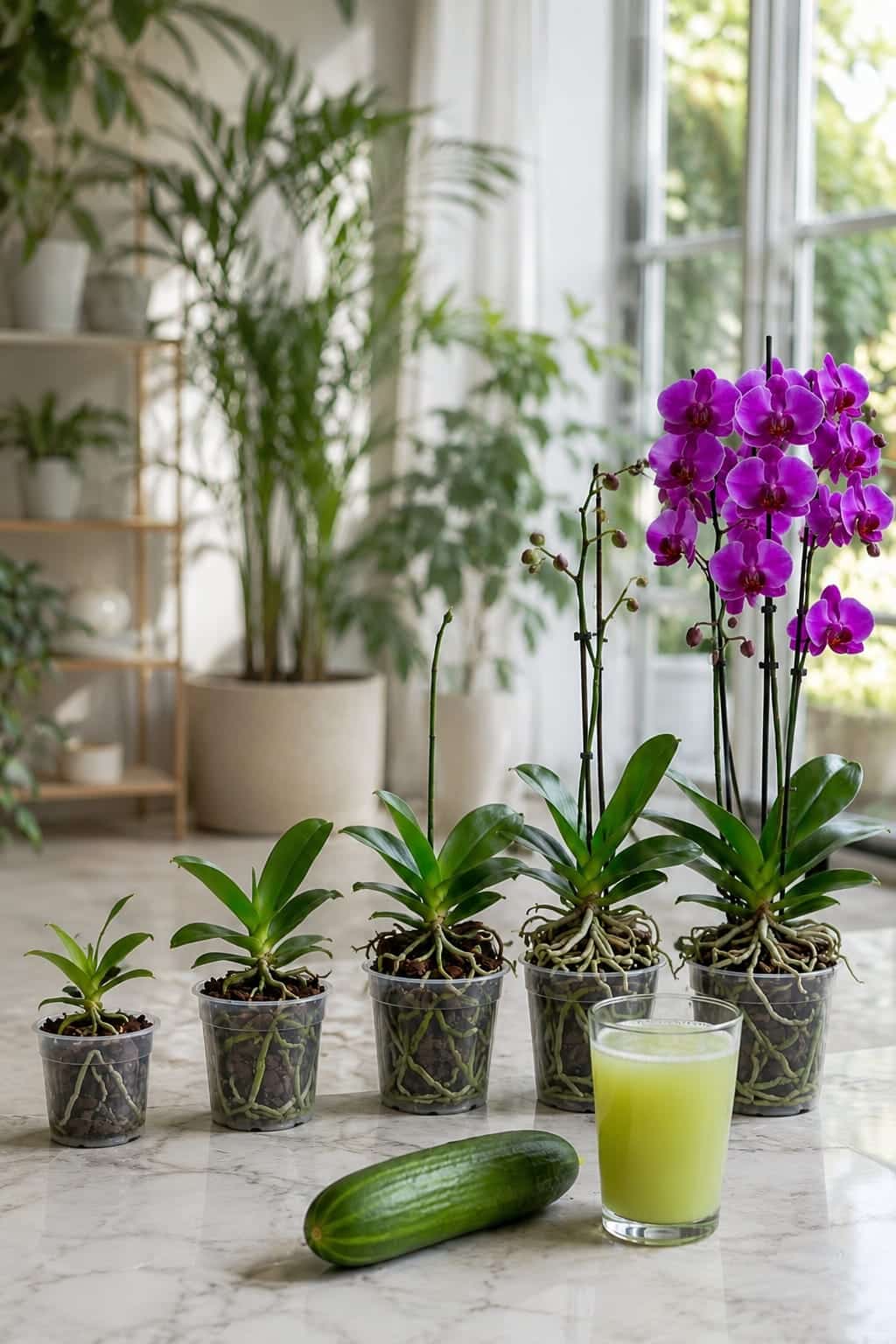
Why Clear Pots Help Orchids
The orchids in the image are growing in clear pots. This is helpful because clear pots allow you to observe the roots. You can see whether roots are green, silvery, brown, dry, or rotting.
Clear pots also help light reach the roots. Many orchid roots can photosynthesize slightly, especially when exposed to light. This is one reason clear pots are popular for Phalaenopsis orchids.
A clear pot also makes watering easier. If condensation remains inside the pot and roots are still green, the orchid probably does not need water yet. If the pot looks dry and roots are silvery, watering may be needed.
When using cucumber water, clear pots help you watch for problems like residue, mold, or root discoloration.
Best Potting Medium for Orchids
Most common orchids should not grow in regular soil. They need an airy medium such as orchid bark, bark mixed with perlite, sphagnum moss used carefully, or a chunky orchid mix.
The potting medium should hold some moisture but drain quickly. If bark breaks down into a dense, dark, soil-like texture, it can suffocate roots and cause rot.
Repot orchids when the medium becomes old, sour, compacted, or broken down. Fresh bark often improves orchid health more than any homemade treatment.
Cucumber water should only be used in a clean, airy medium. If the medium is already bad, fix the medium first.
How to Water Orchids Correctly
Orchids should be watered based on root and medium condition, not a strict calendar. In clear pots, check the roots. Green roots usually mean they are still moist. Silvery roots often mean they are ready for water.
When watering, let water flow through the medium and drain completely. Do not allow water to sit in the bottom of a decorative pot. Do not let water collect in the crown.
Overwatering is one of the biggest orchid problems. Underwatering can also cause shriveled leaves and dry roots. The goal is a healthy wet-dry rhythm.
Cucumber water should follow the same rule. It counts as watering, not an extra treatment on top of normal watering.
How to Keep Orchid Flowers Lasting Longer
To keep orchid flowers lasting longer, keep the plant in bright indirect light. Avoid harsh direct sun on the flowers, because heat can shorten bloom life.
Keep the orchid away from cold drafts, heating vents, air conditioners, and sudden temperature changes. Stable conditions help flowers last.
Water correctly, but do not overwater. Flowers may fade faster if the plant is stressed by root problems. Healthy roots support longer-lasting blooms.
Do not spray cucumber water, lemon water, or any homemade mixture onto orchid flowers. Wet petals can spot, age faster, or develop fungal problems.
How to Encourage Orchid Reblooming
After flowers fade, cut the spent flower spike depending on the type of orchid and the condition of the spike. For many Phalaenopsis orchids, a green spike can sometimes rebloom from a node, while a dry brown spike should be cut back near the base.
Give the orchid bright indirect light and gentle feeding during active growth. Let the plant grow new roots and leaves. A stronger plant is more likely to bloom again.
Many Phalaenopsis orchids respond to slightly cooler nights for several weeks. This temperature difference can help signal the plant to produce a new flower spike.
Cucumber water may be used occasionally during the growth phase, but reblooming depends mostly on light, roots, maturity, and temperature.
How to Feed Orchids Properly
Orchids benefit from gentle fertilizer during active growth. Use a fertilizer made for orchids and dilute it according to the label. Many growers prefer weak, regular feeding rather than strong doses.
Do not fertilize a severely dry orchid. Water first with plain water if roots are very dry. Do not overfertilize, because salts can build up and burn roots.
Flush the pot with plain water occasionally to remove mineral buildup from fertilizer and tap water.
Cucumber water cannot replace orchid fertilizer. It may provide a mild natural support, but it does not contain balanced nutrition.
Can Cucumber Water Replace Fertilizer?
No. Cucumber water is not complete fertilizer. It may contain small traces of minerals, but the amount is too low and unpredictable to feed orchids properly.
Orchids need balanced nutrients to produce strong leaves, roots, and flower spikes. A proper orchid fertilizer is more reliable.
Use cucumber water only as an occasional supplement. Use plain water and proper fertilizer as the main routine.
If you use fertilizer, do not use cucumber water on the same day. Keep the routine simple so the roots are not overloaded.
Can Cucumber Water Fix Limp Orchid Leaves?
Cucumber water will not automatically fix limp orchid leaves. Limp leaves usually mean the plant is not getting enough water into its tissues. This can happen from underwatering, but it can also happen from root rot.
If the roots are dead or rotten, the plant cannot absorb water even if the pot is wet. In that case, cucumber water will not help. The orchid needs root inspection, trimming, and repotting.
If the roots are healthy but dry, plain water is usually enough to rehydrate the plant. A diluted cucumber water may be used later, but it is not necessary.
Always check roots before treating limp leaves.
Can Cucumber Water Fix Yellow Orchid Leaves?
No. Yellow orchid leaves will not turn green again. Yellowing may be caused by natural aging, too much sun, low light, overwatering, root rot, cold damage, or nutrient issues.
If one lower leaf yellows slowly while the rest of the plant is healthy, it may be normal aging. If several leaves yellow at once, check the roots and growing conditions.
Do not use cucumber water as a cure for yellow leaves. Fix the cause first.
Healthy new leaves and roots are the real signs of recovery.
Can Cucumber Water Cause Mold?
Yes, if it is too thick, pulpy, old, or used too often. Cucumber is organic material. If residue remains in orchid bark, it can break down and encourage mold.
To prevent this, strain cucumber water very well and dilute it heavily. Use it fresh and rarely. Make sure the pot drains completely.
If mold appears, stop using cucumber water. Flush the pot with plain water and improve airflow. If the bark smells sour or looks broken down, repot into fresh orchid mix.
Mold is a sign that the treatment is too strong or the root zone is staying too wet.
Can Cucumber Water Attract Fungus Gnats?
Yes. Fungus gnats are attracted to moist organic conditions. If cucumber water is used too often, or if pulp remains in the pot, it can create conditions that gnats enjoy.
If gnats appear, stop using cucumber water immediately. Let the medium dry properly between waterings. Use sticky traps to catch adult gnats and check whether the bark is staying too wet.
Do not leave pieces of cucumber in the orchid pot. They can rot and attract insects.
A healthy orchid pot should smell fresh and clean, not sour or vegetable-like.
⚠️ Important: Never leave cucumber pieces in the pot. Always strain the liquid well and use only diluted, fresh cucumber water.
What to Do If You Used Too Much Cucumber Water
If you poured thick cucumber juice into the pot, flush the pot thoroughly with plain room-temperature water and let it drain completely. This helps remove residue from the bark.
If the potting medium smells sour after a few days, repot the orchid into fresh bark. Check the roots while repotting and remove any mushy or dead roots with clean scissors.
If cucumber liquid splashed onto leaves or flowers, wipe the leaves with plain water and gently blot flowers if needed. Avoid leaving moisture on petals.
After using too much cucumber water, return to plain water and stable care. Do not add fertilizer or another homemade treatment immediately.
A Safe Cucumber Water Routine for Orchids
Use cucumber water only as a mild occasional support. Soak a few cucumber slices in two cups of water for one to two hours, remove the slices, and use the liquid fresh. For a blended version, blend a small cucumber piece with water, strain very well, and dilute heavily.
Apply it only when the orchid is due for watering. Pour it through the bark, avoid the crown, and let the pot drain completely.
Do not repeat for at least four to six weeks. Use plain water most of the time and orchid fertilizer when needed.
This gentle routine is much safer than pouring thick cucumber juice into the pot.
Common Mistakes to Avoid
- Using thick cucumber juice with pulp – it can leave residue and encourage mold.
- Using cucumber water too often – orchids need clean airflow around roots, not constant organic liquid.
- Leaving cucumber pieces in the pot – they can rot and attract pests.
- Pouring cucumber water into the crown – this can cause crown rot.
- Using cucumber water as fertilizer – it is not complete plant food.
- Expecting immediate flowers – orchid blooming depends on light, roots, maturity, and temperature.
- Using cucumber water on orchids with root rot before fixing the roots.
Frequently Asked Questions
Is cucumber water good for orchids?
Diluted cucumber water can be used occasionally as a mild natural support, but it is not necessary for most orchids. Proper light, roots, watering, and fertilizer matter more.
Can cucumber water make orchids flower immediately?
No. Cucumber water cannot force immediate flowering. Orchids bloom when they are mature, healthy, and receiving the right light, temperature, and care.
How do I make cucumber water for orchids?
Soak a few cucumber slices in two cups of water for one to two hours, remove the slices, and use the liquid fresh. For blended cucumber water, strain it very well and dilute heavily.
How often should I use cucumber water?
Use it once every four to six weeks at most during active growth. Do not use it every watering.
Can I pour cucumber juice directly into orchid bark?
No. Thick cucumber juice can leave residue and cause mold or gnats. Always dilute and strain it well.
Can cucumber water replace orchid fertilizer?
No. Cucumber water is not complete fertilizer. Use a proper orchid fertilizer during active growth.
Can cucumber water make orchid flowers last longer?
It may support hydration indirectly if used correctly, but flowers last longer mainly because of stable conditions, healthy roots, bright indirect light, and correct watering.
What should I do if the orchid pot smells sour after cucumber water?
Stop using cucumber water. Flush with plain water, improve airflow, and repot into fresh orchid bark if the smell continues.
🌿 Cucumber water is a gentle occasional helper, not a miracle cure. For orchids with strong roots, healthy leaves, and longer-lasting blooms, focus on bright indirect light, proper watering, fresh bark, good drainage, and gentle feeding. Use cucumber water only as a rare support – and let consistent orchid care do the real work.