Snake plants are famous for being tough. They can survive missed waterings, low attention, average indoor air, and many lighting conditions that would make other houseplants struggle. Their tall sword-shaped leaves, bold green patterns, and yellow edges make them look clean, modern, and strong.
But even a snake plant can start to fail. When the leaves turn yellow, brown, soft, crispy, or limp, it can feel shocking because this plant is supposed to be “easy.” A struggling snake plant often looks like it is dying slowly: leaves collapse, tips dry out, the soil looks tired, and the plant stops producing new growth.
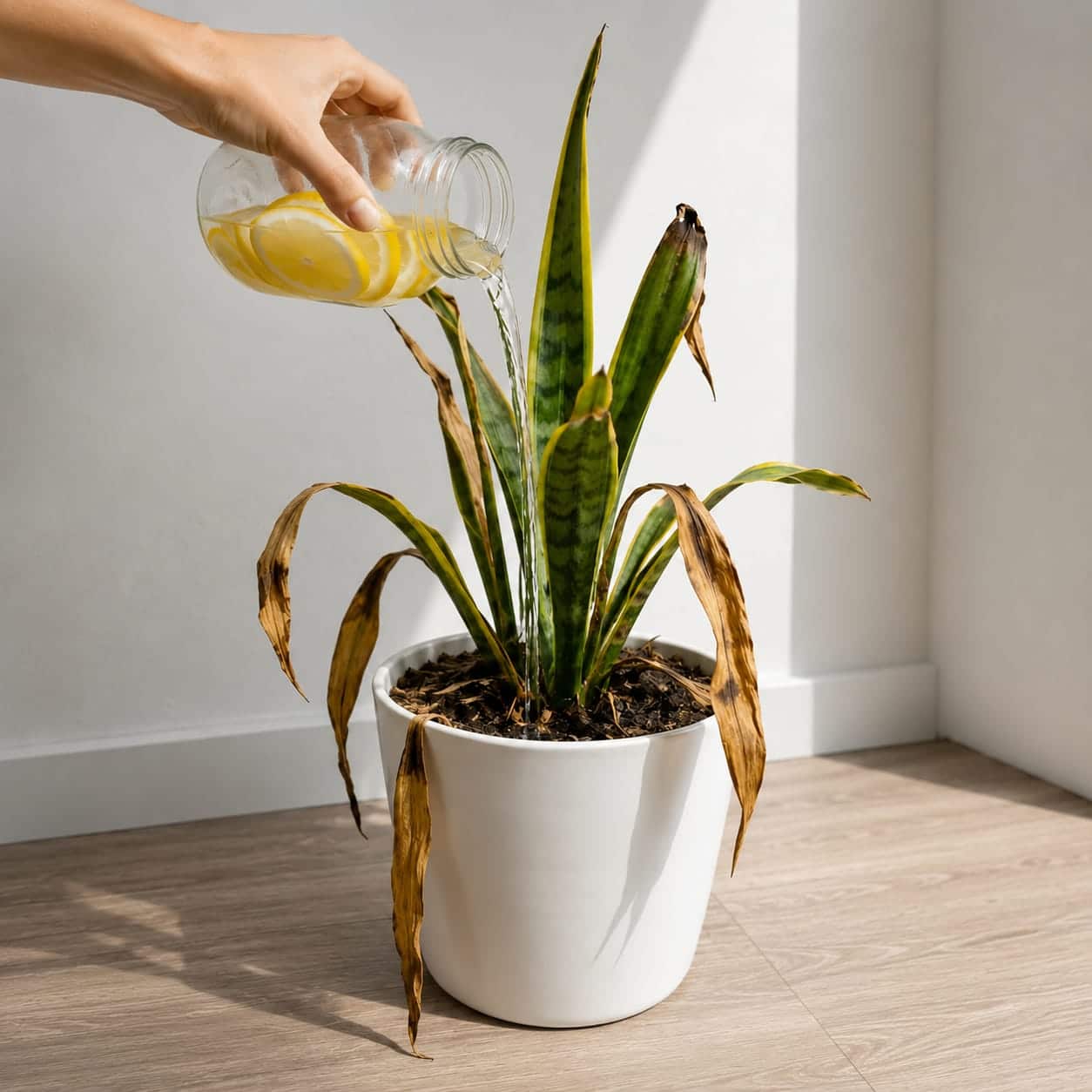
The image shows a dramatic before-and-after idea. On one side, a weak snake plant has yellowing and dried leaves while a jar of lemon water is being poured near it. On the other side, the plant looks full, green, upright, and even blooming with tall white flower spikes. This kind of image suggests a simple rescue trick using lemon water.
Lemon water can be useful in a very limited way, but it must be handled carefully. It is not a magic cure. It will not reverse dead leaves. It will not heal rotten roots unless the rotten roots are removed. It will not save a plant that is sitting in soggy soil. If lemon water is too strong, it can damage snake plant roots and make the situation worse.
The real way to save a dying snake plant is to diagnose the problem first. Most snake plants decline because of overwatering, poor drainage, dense soil, cold damage, or lack of enough light. Lemon water may be used only as a very weak occasional rinse after the main problem has been corrected.
This guide explains what lemon water can and cannot do, how to use it safely, and the real rescue steps that help a dying snake plant recover and grow strong again.
Why Snake Plants Start Dying
A snake plant usually starts dying because its roots and rhizomes are stressed. The leaves are what you see above the soil, but the real health of the plant is below the surface. Snake plants grow from thick underground rhizomes that store water and energy. If those rhizomes are firm and healthy, the plant can recover. If they become soft and rotten, the leaves begin to fail.
The most common cause of decline is overwatering. Snake plants store water in their leaves and rhizomes, so they do not need frequent watering. When the soil stays wet for too long, the roots cannot breathe. Over time, the rhizomes soften, rot, and stop supporting the leaves.
Poor drainage is another major problem. A beautiful decorative pot may look perfect, but if it does not have drainage holes, water can collect at the bottom. The top of the soil may look dry while the bottom remains wet and stale.
Dense soil can also cause trouble. Snake plants need a dry-friendly, fast-draining mix. Heavy indoor potting soil, garden soil, or old compacted soil can hold too much water around the roots.
Cold damage can make leaves yellow, pale, or mushy. Snake plants dislike cold drafts, freezing windows, and outdoor cold weather. Once cold damage appears, the affected tissue usually cannot recover.
⚠️ Important: Most dying snake plants are overwatered, not underwatered. Stop watering and check the roots first.
What Lemon Water Can Do for Snake Plants
Lemon water is sometimes used in plant care because lemon juice is acidic. A very weak lemon-water solution may help lightly acidify water or rinse away some mineral buildup in the soil. It may also be used as a mild cleaning solution for leaves when heavily diluted.
For snake plants, lemon water should be treated as an occasional support step, not a rescue miracle. It may help if your tap water is very hard and leaves mineral residue in the soil. It may also help refresh the potting mix slightly if used in a very weak form.
But lemon water does not provide complete nutrition. It is not fertilizer. It does not rebuild rotten roots. It does not create instant new leaves. It does not make yellow leaves green again.
If the plant is declining because the roots are rotting, lemon water is not the first solution. The first solution is to remove the plant from the pot, inspect the roots and rhizomes, cut away rot, and repot in fresh fast-draining soil.
Can Lemon Water Save a Dying Snake Plant?
Lemon water alone cannot save a dying snake plant. It can only be a small part of a recovery routine if used correctly. The plant must first be rescued from the real problem.
If your snake plant is dying because of soggy soil, pouring lemon water into the pot can make the problem worse. It adds more liquid to a root system that may already be suffocating.
If the leaves are yellow and soft at the base, the plant may have root or rhizome rot. In that case, the pot must be checked. The rotten parts must be removed. The plant needs dry, airy soil and time to recover.
If the leaves are dry and crispy because the plant has been underwatered for a long time, plain water and correct rehydration are safer than lemon water.
If the plant is pale because it is in a very dark location, better light matters more than lemon water.
The honest truth is simple: lemon water may support a corrected routine, but it does not replace diagnosis and proper rescue care.
Why Strong Lemon Water Is Dangerous
Strong lemon juice can harm snake plants. Snake plant roots and rhizomes do not need strong acidity. If lemon juice is poured into the soil without enough dilution, it can irritate roots and disturb the potting mix.
Using too much lemon may also make the soil environment unstable. A stressed plant needs gentle care, not harsh treatments. When a snake plant is already weak, its roots are more vulnerable.
Never squeeze lemon juice directly into the pot. Never pour pure lemon juice on the soil. Never rub lemon directly onto the leaves. Never use lemonade, sweetened lemon drinks, bottled lemon products with additives, or lemon water mixed with sugar.
The only safe form is a very weak solution made with a few drops of fresh lemon juice in plenty of water. Even then, it should be used rarely.
The Safest Lemon Water Ratio for Snake Plant
The safest beginner ratio is extremely weak: five drops of fresh lemon juice in one quart of room-temperature water. Stir well before using.
If your snake plant is already stressed, dilute it even more. Use only two or three drops of lemon juice in one quart of water. The water should not smell strongly like lemon. It should look like plain water.
Use fresh lemon juice only. Do not use lemon juice with preservatives, sugar, flavoring, or additives. Do not use lemon slices left sitting in water for days, because old lemon water can become contaminated or sour.
Room-temperature water is best. Cold water can shock stressed roots. Hot water can damage them.
This weak lemon water should be used only after the plant’s soil and roots are healthy enough to receive watering.
How Often Should You Use Lemon Water?
Lemon water should be used rarely. Once every two to three months is more than enough if you choose to use it. Many snake plants do not need it at all.
Do not use lemon water every week. Do not use it every time you water. Do not use it as fertilizer. Do not use it repeatedly on a dying plant in the hope that more will work faster.
Snake plants recover best from stability. They need the right soil, correct watering, bright indirect light, warmth, and patience. Too many treatments can slow recovery.
If the plant shows any negative reaction after lemon water, stop using it completely and return to plain water.
When Lemon Water May Be Useful
Lemon water may be useful only in specific situations. It may help as a very mild rinse if your water is hard and mineral buildup is visible on the soil surface. It may also be used occasionally after the plant has recovered and is growing in a healthy fast-draining mix.
It may be useful for cleaning leaves if heavily diluted, but plain water is usually enough. If you wipe leaves with weak lemon water, wipe again with plain water afterward to remove residue.
Lemon water may also be used as a one-time gentle soil refresh during active growth, but only when the soil is completely dry and the plant is otherwise healthy.
The best candidate for lemon water is a stable snake plant with firm leaves, no rot, good drainage, and dry soil that is ready for watering.
When You Should Avoid Lemon Water
- Do not use if the soil is wet – wet soil is already dangerous for snake plants, especially if the leaves are yellowing.
- Do not use if the leaves are soft, mushy, or collapsing from the base – this may mean rhizome rot.
- Do not use if the pot smells sour or rotten – that means the root zone is unhealthy and needs inspection.
- Do not use if the pot has no drainage holes – any added liquid can collect at the bottom and damage roots.
- Do not use on a newly cut or heavily damaged root system – give the plant time to dry and recover first.
- Do not use if the plant is suffering from severe underwatering – start with plain water and gentle rehydration instead.
The First Real Rescue Step: Stop Watering Immediately
If your snake plant is yellowing, soft, or collapsing, stop watering until you understand what is happening. Many people see a struggling plant and assume it needs more water. With snake plants, the opposite is often true.
Check the soil with your finger or a wooden stick. Push deep into the pot, not just the surface. If the lower soil is damp, do not water. If the soil smells sour, the roots may be sitting in stale moisture.
If the pot feels heavy, it may still contain water. A dry pot usually feels much lighter.
Stopping water gives you time to diagnose the plant. Pouring lemon water, garlic water, rice water, or any other homemade liquid onto wet soil can make root rot worse.
The Second Rescue Step: Remove the Plant From the Pot
If several leaves are yellow, brown, soft, or falling over, remove the plant from the pot and inspect the roots. This is the most important step. You cannot truly save a dying snake plant without checking what is happening underground.
Gently slide the plant out of the pot. Shake away loose soil. Look at the roots and rhizomes. Healthy rhizomes are firm. They may be cream, orange, yellowish, or light brown depending on the plant. Healthy roots feel firm, not mushy.
Rotten roots are dark, soft, slimy, hollow, or foul-smelling. Rotten rhizomes may feel mushy and collapse when pressed.
If rot is present, it must be removed. No liquid treatment can make rotten tissue healthy again.
How to Remove Rotten Roots and Leaves
Use clean scissors or a clean knife. Cut away all soft, mushy, black, slimy, or foul-smelling roots and rhizome sections. Keep only firm, healthy tissue.
If a leaf is yellow and soft from the base, remove it completely. Cut it near the rhizome without damaging healthy parts. If only the tip is dry but the rest of the leaf is firm, you can trim only the damaged section.
After cutting, let the healthy rhizome sections dry for several hours or even overnight before repotting. This helps the cut surfaces callus and reduces the risk of rot returning.
Do not apply lemon water to fresh cuts. Stressed and freshly cut roots need dryness, airflow, and clean soil first.
How to Repot a Dying Snake Plant
Choose a pot with drainage holes. This is not optional. A snake plant in a no-drainage pot is always at risk.
Use a fast-draining cactus or succulent mix. You can improve it by adding perlite, pumice, coarse sand, lava rock, or small bark chips. The mix should be loose, gritty, and airy.
Do not reuse sour, wet, compacted soil. Old infected soil can carry the same problem back into the new pot.
Place the plant at the same depth it was growing before. Do not bury the leaf bases deeply. Deep planting can trap moisture around the crown and cause rot.
After repotting a plant with trimmed roots, wait several days before watering. This is one of the most important rescue steps. The plant needs time to seal the cuts.
Continue to Page 2
Continue to page 2 for more details about this article and the key points many readers miss on the first page.