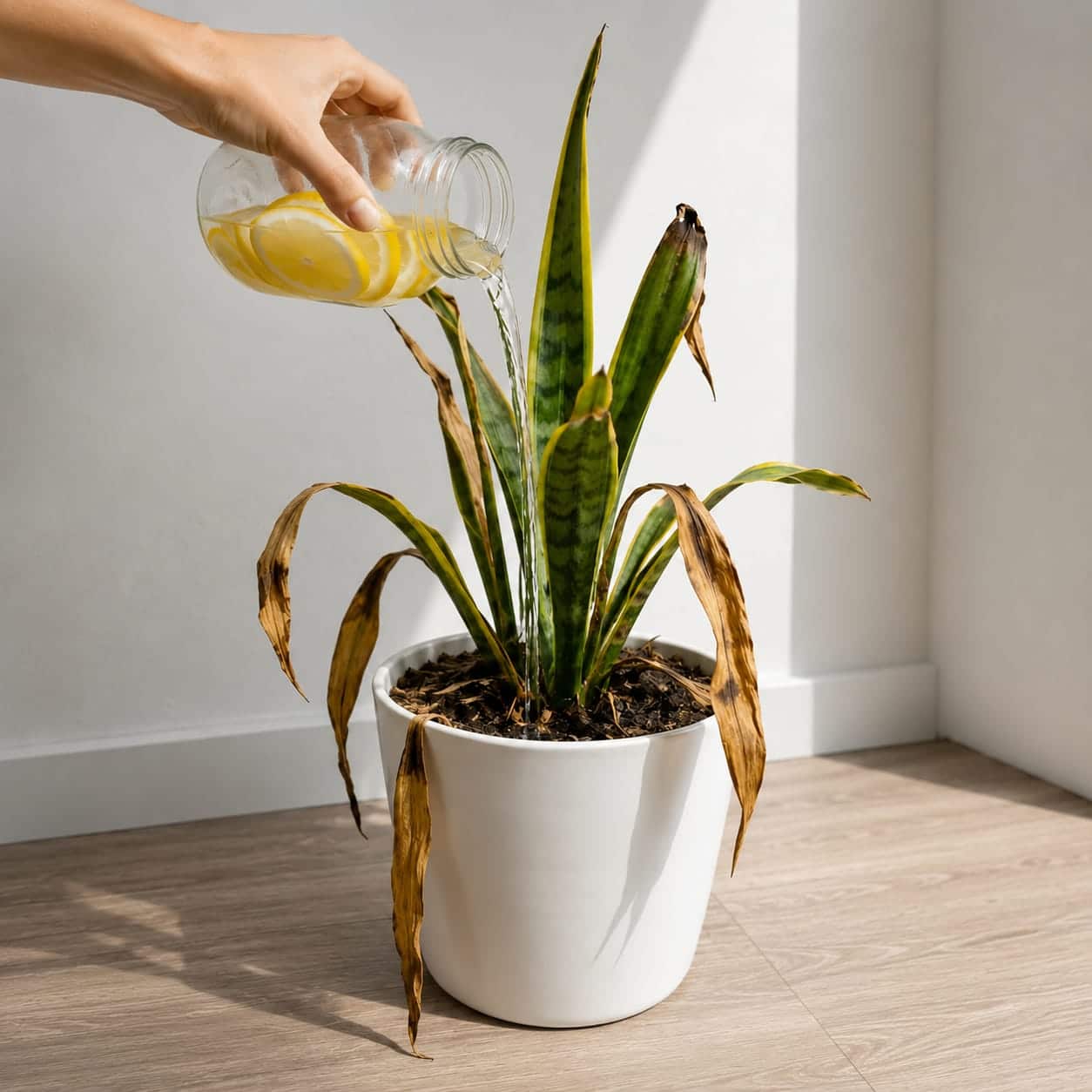
Best Soil for Snake Plant Recovery
The best soil for snake plant recovery is dry-friendly and fast-draining. Regular houseplant soil alone is often too moisture-retentive. It may work for tropical foliage plants, but snake plants need more air around the roots.
A good mix can include cactus soil, perlite, pumice, coarse sand, and orchid bark. The soil should not feel muddy or heavy. When watered, it should drain quickly.
If water sits on top of the soil for a long time, the mix is too compact. If the soil stays wet for many days, it is too heavy or the pot is too large.
Healthy soil is more important than lemon water. A snake plant in the right soil can recover. A snake plant in soggy soil will continue to struggle.
Choosing the Right Pot
A snake plant should be planted in a pot that is only slightly larger than the root system. A pot that is too large holds too much extra soil. Extra soil holds extra moisture, which increases the chance of rot.
Terracotta pots are helpful because they breathe and dry faster. Plastic and ceramic pots can work too, but watering must be more careful.
Decorative pots are fine if they are used as outer covers. Keep the actual plant in an inner pot with drainage holes. Remove it for watering and let it drain fully before placing it back.
Never allow water to sit in the bottom of a decorative container.
How to Water After Repotting
After repotting a damaged snake plant, wait before watering if roots or rhizomes were cut. Three to seven days is often safer, depending on how much cutting was done and how dry the environment is.
When you finally water, use plain room-temperature water. Water thoroughly and let excess drain away. Then wait until the soil dries completely before watering again.
Do not use lemon water for the first watering after heavy root trimming. Plain water is safer.
Once the plant is stable and showing signs of recovery, a very weak lemon-water rinse may be considered later, but it is not necessary.
How to Know If the Plant Is Recovering
A recovering snake plant may not show dramatic changes immediately. Old damaged leaves will not become perfect again. Yellow leaves will not turn green. Brown tips will not heal.
The real signs of recovery are firm remaining leaves, no spreading mushiness, dry fresh-smelling soil, and eventually new growth. New pups or new leaves may take weeks or months to appear.
Do not keep disturbing the plant to check every few days. Once it is repotted correctly, give it stability.
Snake plants recover slowly, but they can recover well if the rhizomes are still healthy.
Best Light for a Recovering Snake Plant
A recovering snake plant needs bright indirect light. Low light slows recovery because the plant has less energy. Low light also keeps soil wet longer, which can increase rot risk.
Place the plant near a bright window. Gentle morning sun can be helpful. Avoid harsh direct afternoon sun on a weak plant because damaged leaves can scorch more easily.
If the plant was in a dark corner, move it gradually to brighter light. Sudden intense sun can burn leaves.
Better light helps the plant rebuild energy and eventually produce new growth.
Temperature Matters More Than People Think
Snake plants prefer warmth. Cold stress can cause serious leaf damage. Keep the plant away from freezing windows, cold outdoor air, air conditioner blasts, and drafty doors.
A comfortable indoor temperature is usually best. Warmth helps roots recover and soil dry at a healthy pace.
If your snake plant was outside in cold weather, some leaf damage may not be reversible. Remove severely damaged leaves and protect the plant from future cold exposure.
A warm, bright, stable place is better than any quick trick.
Can Lemon Water Help Snake Plant Bloom?
The image shows a recovered snake plant with tall white flower spikes. Snake plants can bloom, but flowering indoors is rare and unpredictable. Lemon water does not cause blooms directly.
Snake plant flowers usually appear on mature, healthy plants that have strong rhizomes, bright light, and stable care. Sometimes a slightly snug pot may encourage blooming, but the plant must still be healthy.
If your snake plant is recovering from decline, do not focus on flowers yet. Focus on saving the roots and producing healthy leaves. Flowers can come later if the plant becomes mature and strong.
Lemon water is not a bloom trigger. Long-term good care is the real reason a snake plant may eventually flower.
Can Lemon Water Replace Fertilizer?
No. Lemon water is not fertilizer. It does not provide complete nutrition. Snake plants are light feeders, but they may benefit from a small amount of fertilizer during active growth.
Use a cactus or succulent fertilizer diluted to half strength once or twice in spring or summer. Do not fertilize a sick plant with damaged roots. Wait until the plant is stable and showing new growth.
Do not use fertilizer and lemon water on the same day. Too many treatments can stress the root system.
If the plant is weak, simple care is better than extra feeding.
How to Use Lemon Water as a Leaf Cleaner
If the leaves have mineral spots, a very weak lemon solution may help clean them. Mix two or three drops of lemon juice in one cup of water. Dip a soft cloth in the solution and wring it out well.
Wipe the leaves gently, then wipe again with plain water. Do not leave lemon residue on the leaves. Do not clean leaves in harsh direct sun.
Do not use lemon water on brown, damaged, mushy, or severely stressed leaves. Remove badly damaged leaves instead.
For regular cleaning, plain water is usually enough.
Can Lemon Water Fix Yellow Leaves?
No. Lemon water cannot turn yellow leaves green again. Once a snake plant leaf has turned yellow from rot, stress, cold, or age, the tissue is permanently damaged.
The best thing to do is identify the cause. If the leaf is soft or yellow from the base, remove it and check the rhizome. If the yellowing is from old age and the rest of the plant is healthy, simply trim it away.
If multiple leaves are yellowing, inspect the roots. Root problems are likely.
The goal is not to repair old damaged leaves. The goal is to create conditions for healthy new growth.
Can Lemon Water Fix Brown Tips?
Lemon water usually does not fix brown tips. Brown tips can come from underwatering, inconsistent watering, mineral buildup, overfertilizing, cold damage, sunburn, or physical injury.
Old brown tissue will not turn green again. You can trim brown tips with clean scissors for appearance.
If brown tips are caused by mineral buildup, occasional flushing with plain water or using filtered water may help more than lemon water.
Preventing new brown tips depends on stable watering, proper light, warmth, and avoiding excess fertilizer.
What to Do If You Used Too Much Lemon
If you used strong lemon water or poured lemon juice directly into the pot, flush the soil with plain room-temperature water if the pot drains well. Let all excess water drain completely.
If the plant is already in wet soil or has no drainage, do not keep flushing endlessly. Instead, remove the plant, check the roots, and repot into fresh dry-friendly soil if needed.
If lemon touched the leaves, wipe them with plain water. Keep the plant out of harsh sun while it recovers.
Do not add fertilizer, garlic water, rice water, or any other treatment right away. Let the plant stabilize.
🌿 Rescue summary: Stop watering → check soil and roots → cut away rot → repot in fast-draining mix → wait before watering → give bright indirect light → only then consider very weak lemon water (optional).
A Safe Snake Plant Rescue Routine
First, stop watering and check the soil. If the soil is wet, sour, or compacted, remove the plant from the pot. Inspect the roots and rhizomes. Cut away anything soft, mushy, black, or rotten.
Let healthy cut sections dry before repotting. Repot into a fast-draining cactus or succulent mix in a pot with drainage holes. Place the plant in bright indirect light and keep it warm.
Wait several days before watering if roots were cut. When you water, use plain water first. Let the pot drain completely.
Only after the plant is stable should you consider a very weak lemon-water rinse. Use five drops of lemon juice in one quart of water, and use it only when the soil is dry and the plant is due for watering.
This routine is much safer than pouring lemon water onto a dying plant without checking the roots.
Common Mistakes to Avoid
- Using lemon water before checking the roots – a dying snake plant often needs root rescue, not more liquid.
- Making lemon water too strong – strong acidity can damage stressed roots.
- Watering wet soil – snake plants need dry-down between waterings.
- Using a pot without drainage – drainage is essential.
- Expecting yellow leaves to turn green again – damaged leaves do not recover.
- Using dense soil – snake plants need fast-draining soil.
- Chasing flowers before the plant is healthy – save the roots first; blooms can only come from a strong plant.
Frequently Asked Questions
Is lemon water good for snake plants?
Very weak lemon water can be used rarely as a mild rinse, but it is not necessary for most snake plants. It must be heavily diluted and used only when the soil is dry.
Can lemon water save a dying snake plant?
Not by itself. A dying snake plant usually needs root inspection, removal of rot, fresh fast-draining soil, better light, and correct watering.
How much lemon should I use?
Use only five drops of fresh lemon juice in one quart of water. For a stressed plant, use even less.
Can I pour lemon juice directly into the soil?
No. Pure lemon juice can damage roots. Always dilute heavily.
Can lemon water make yellow leaves green again?
No. Yellow leaves will not turn green again. Remove badly damaged leaves and focus on healthy new growth.
Can lemon water make snake plants bloom?
No. Snake plant blooms come from maturity, bright light, healthy rhizomes, and stable long-term care.
How often can I use lemon water?
Use it rarely, about once every two to three months at most. Many snake plants do not need it.
What should I do first if my snake plant is dying?
Stop watering, check the soil, remove the plant from the pot, inspect roots and rhizomes, remove rot, and repot into fast-draining soil if needed.
🌿 Lemon water is a gentle occasional helper, not a miracle cure. To save a dying snake plant, start with the roots: stop watering, remove rot, repot in fast-draining soil, give bright indirect light, and water only when dry. Use lemon water only as a rare optional rinse after the plant has recovered. Patience and proper care bring it back.