Snake plants are known for being strong, upright, and easy to care for. Their sword-shaped leaves, bold green patterns, and architectural shape make them one of the most popular indoor plants in the world. They can tolerate missed watering, average indoor air, and lower light better than many houseplants. That is why many people think a snake plant can survive almost anything.
But even a snake plant has limits. When the leaves begin turning yellow, soft, pale, or brown at the tips, the plant is usually sending a warning. Something in the root zone, watering routine, light level, or soil condition is not right. A snake plant may look tough above the soil, but below the soil it depends on firm healthy rhizomes and roots. Once those rhizomes become stressed, the leaves quickly begin to show damage.
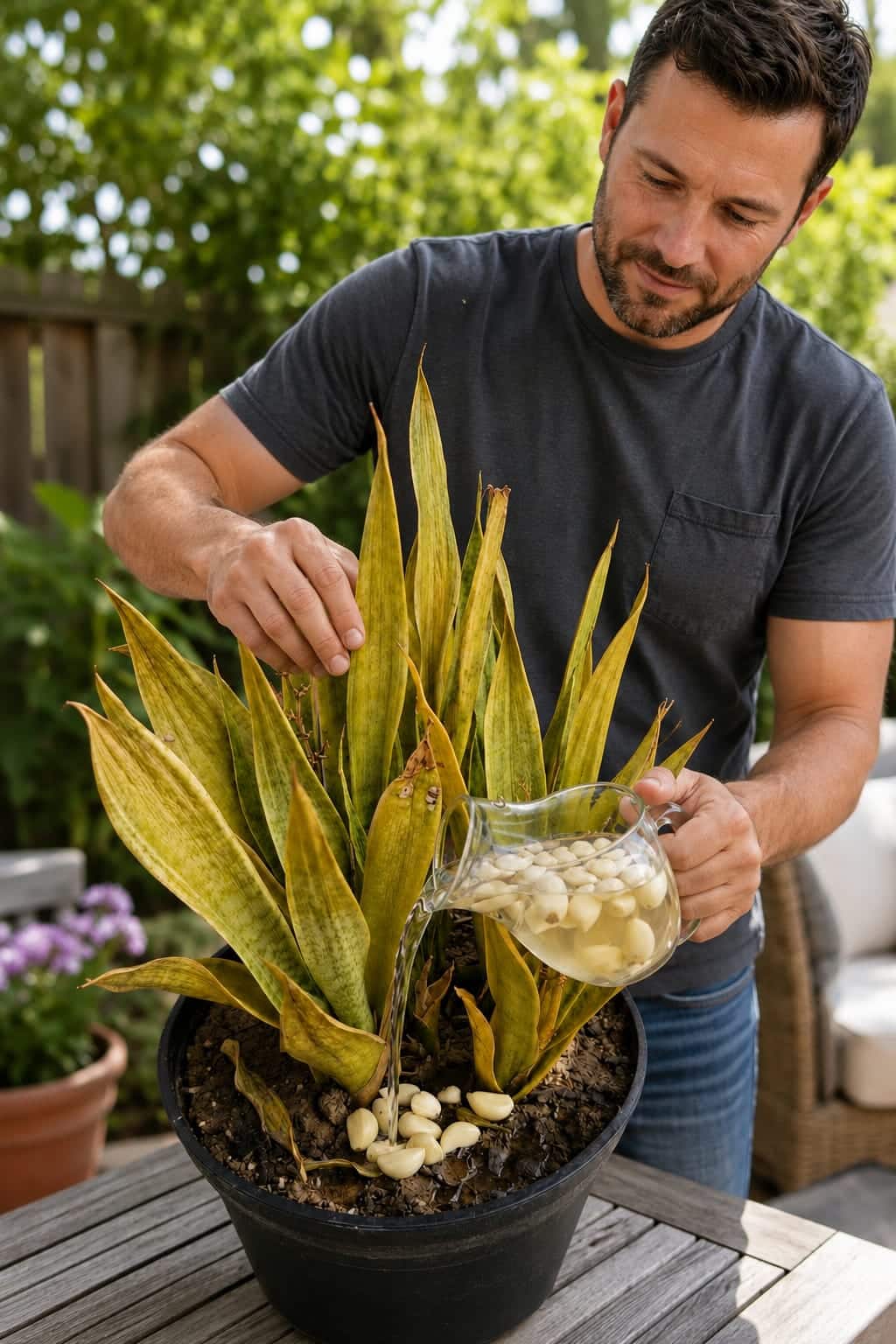
The image shows a yellowing snake plant being watered with a clear liquid from a glass container filled with garlic cloves. Garlic water is one of the most popular natural plant-care tricks because garlic contains sulfur compounds and strong natural properties that many gardeners use for mild pest and fungal support. It is often presented as a simple way to help weak plants recover.
However, garlic water must be used carefully. It is not a miracle cure. It will not reverse yellow leaves that are already damaged. It will not fix rotten roots unless the rot is removed. It will not save a snake plant that is sitting in soggy soil. If used too strong or too often, garlic water can irritate roots, smell unpleasant, attract problems, and make a stressed plant worse.
The safest way to use garlic water for a snake plant is as a mild occasional soil treatment after you correct the real cause of decline. The plant still needs fast-draining soil, a pot with drainage holes, bright indirect light, and a watering routine that allows the soil to dry completely between waterings.
This guide explains how garlic water may help a snake plant, how to prepare it safely, when to use it, when to avoid it, and what you must do first if your snake plant is already turning yellow.
Why Snake Plant Leaves Turn Yellow
Yellow leaves on a snake plant are not random. They usually mean the plant is stressed. The most common cause is overwatering. Snake plants store water in their thick leaves and underground rhizomes, so they do not need frequent watering. When the soil stays wet for too long, the roots lose oxygen and the rhizomes may begin to rot.
Another cause is poor drainage. A pot without drainage holes can trap water at the bottom even when the top of the soil looks dry. This creates a hidden wet zone around the roots. Over time, the plant begins to yellow, soften, and collapse.
Dense soil can also cause yellowing. Snake plants need a dry-friendly mix. Heavy garden soil or moisture-retentive potting mix can stay damp for too long, especially indoors.
Cold stress is another possible cause. Snake plants dislike cold drafts and freezing temperatures. If the plant is kept outside in cold weather or near a cold window, the leaves may turn pale, yellow, or damaged.
Low light can also slow the plant down. Snake plants tolerate low light, but they grow best in bright indirect light. In very low light, the soil dries more slowly, which increases the risk of overwatering.
What Garlic Water Can Do for Snake Plants
Garlic contains natural sulfur compounds. These compounds are why garlic has such a strong smell. In garden routines, garlic water is often used as a mild natural support against some pests and fungal pressure. Some plant lovers also use it as a root-zone refresh for weak or recovering plants.
For a snake plant, garlic water may help in a limited way. A weak diluted garlic infusion may support the soil environment and may discourage some minor pests around the pot. It may also be used after repotting a recovering plant, but only once the damaged roots have been removed and the plant has had time to settle.
Garlic water is not fertilizer. It does not provide complete nutrition. It does not contain a balanced amount of nitrogen, phosphorus, potassium, calcium, magnesium, and trace nutrients. It should not replace cactus fertilizer or proper soil care.
Most importantly, garlic water cannot undo rot. If the roots or rhizomes are already soft and mushy, the damaged parts must be removed. A natural liquid poured over rotten roots will not make them healthy again.
Can Garlic Water Save a Yellow Snake Plant?
Garlic water may support recovery, but it cannot save a yellow snake plant by itself. If your snake plant looks like the one in the image, with many pale yellow leaves, the first step is not to pour anything into the pot. The first step is to check the roots and soil.
If the soil is wet, compacted, sour-smelling, or heavy, adding garlic water may worsen the problem. The plant may already be suffering from too much moisture. More liquid, even natural liquid, can push it closer to rot.
If the leaves are yellow but firm and the soil is dry, the plant may be stressed from underwatering, nutrient issues, old soil, or light problems. In that case, a mild garlic-water treatment may be used carefully, but only as part of a broader rescue routine.
Yellow leaves that are already damaged will not turn green again. The goal is to stop the problem from spreading and help the plant produce healthy new growth later.
🌱 First step: Always check soil moisture and roots before adding any treatment. Garlic water cannot replace proper diagnosis.
Why Garlic Cloves Should Not Be Left in the Pot
The image shows whole garlic cloves sitting on the soil surface. This looks dramatic and natural, but it is not the safest long-term method for an indoor snake plant.
Garlic cloves are organic food material. If they are left on damp soil, they can soften, rot, smell strongly, or grow mold. They may attract fungus gnats or other insects. If they are buried near the roots, they can create decaying pockets in the soil.
Snake plants do not like rich, wet, decomposing material around their rhizomes. Their root zone should be clean, airy, and dry-friendly.
The safer method is to make a mild garlic infusion, remove all garlic pieces, dilute the liquid, and use only a small amount when the plant is ready for watering. Never bury garlic cloves in a snake plant pot. Never leave garlic pieces sitting on wet soil for days.
The Safest Garlic Water Recipe for Snake Plant
To make garlic water safely, use a very mild recipe. Strong garlic water is not better. Snake plant roots can be sensitive when they are already stressed.
Take one small garlic clove and crush it lightly. Place it in two cups of clean room-temperature water. Let it sit for one to two hours. Do not let it ferment for days. After soaking, strain the liquid very well and remove every piece of garlic.
Then dilute the garlic water with two more cups of plain water. This makes the mixture gentler and safer for the roots.
The final liquid should smell lightly of garlic, not strongly. If the smell is sharp and overpowering, dilute it again. Use the mixture fresh and discard any leftovers.
Do not use garlic powder with salt or seasoning. Do not use garlic mixed with oil. Do not use cooked garlic water from food. Only plain fresh garlic and clean water should be used.
How to Apply Garlic Water Correctly
Before applying garlic water, check the soil. If the soil is damp, do not water. Snake plants should dry out between waterings. This rule matters even more when the plant is yellowing.
If the soil is dry and the plant has no signs of mushy rot, pour a small amount of diluted garlic water around the soil surface. Do not flood the pot. Do not pour the liquid into the center of the leaf cluster. Avoid splashing the leaves.
The pot must have drainage holes. Let excess liquid drain completely, then empty the saucer. Never let the plant sit in garlic water runoff.
After one treatment, return to plain water. Do not repeat quickly. Watch the plant for several weeks before using garlic water again.
How Often Should You Use Garlic Water?
Garlic water should be used rarely. For a snake plant, once every six to eight weeks is enough if you choose to use it. Many snake plants do not need it at all.
Do not use garlic water weekly. Do not use it every time you water. Do not use it as fertilizer. Frequent garlic water can irritate the soil environment and create odor problems.
If the plant is recovering from stress, one mild garlic-water application after repotting and stabilizing may be enough. More treatments are not always better.
During winter or cold weather, avoid garlic water unless the plant is actively growing and the soil dries properly. Snake plants use less water in cooler months, so extra liquid can remain in the pot too long.
When Garlic Water May Help
Garlic water may help when a snake plant is mostly healthy but showing mild stress. It can be used as a gentle soil refresh after correcting watering problems. It may also be useful if there are minor soil-surface concerns and the plant is in fast-draining soil.
It may be used after repotting a plant that had a few damaged roots removed, but not immediately after cutting wet rot. Give the plant time to dry and settle first.
Garlic water may also be helpful as a mild natural support during the active growing season, especially if the plant is in bright indirect light and growing new leaves.
The best candidate for garlic water is a snake plant with firm leaves, dry soil, good drainage, and no active rot.
When You Should Avoid Garlic Water
- Do not use if the soil is wet. A yellow snake plant in wet soil is already at risk of rot. Adding more liquid can make the problem worse.
- Do not use if the leaves are soft at the base. Soft bases often mean rhizome rot.
- Do not use if the pot smells sour or rotten. This means the root zone is unhealthy and needs inspection.
- Do not use if the pot has no drainage holes. Snake plants need drainage, especially when any homemade liquid is added.
- Do not use if fungus gnats are already present and the soil is damp. First correct the moisture problem.
- Do not use strong garlic water on a newly cut or severely damaged root system. Let the plant recover in dry, fresh soil first.
Continue to Page 2
Continue to page 2 for more details about this article and the key points many readers miss on the first page.