Mini roses are some of the most charming flowering plants you can grow in a pot. Their compact shape, rich green leaves, and clusters of colorful blooms make them look like a tiny rose garden in one container. When they are healthy, they can produce bud after bud, filling a windowsill, balcony, patio, or bright indoor corner with beautiful flowers.
But mini roses can also be demanding. They may arrive from the store covered in blooms, then suddenly slow down. Buds may stop opening. Leaves may yellow. Flowers may fade quickly. The soil may dry too fast one week and stay too wet the next. Because of this, many plant lovers search for simple natural tricks that can help roses stay strong and keep blooming.
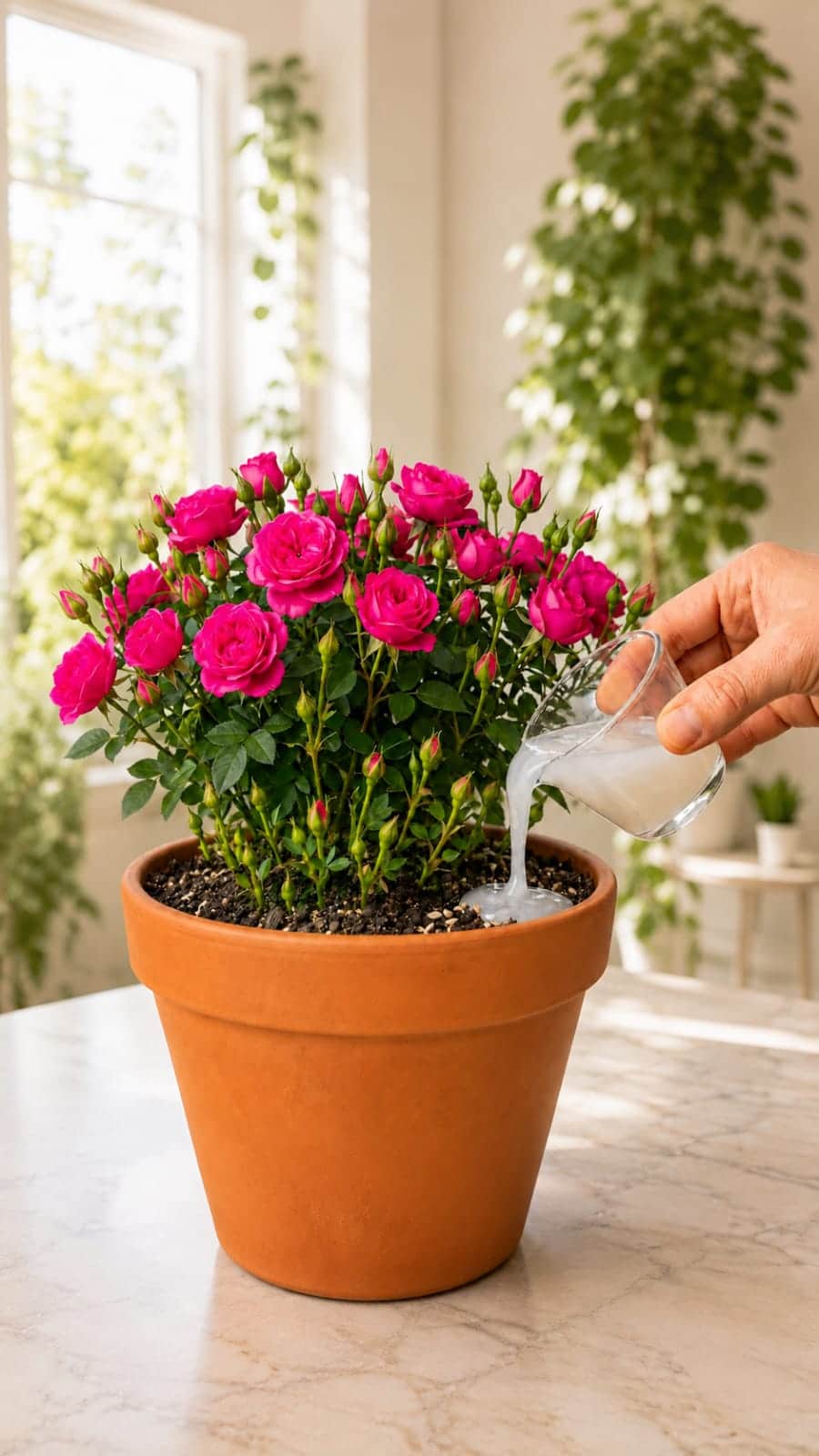
The image shows a potted mini rose covered in bright pink blooms while a pale white liquid is being poured into the soil. This liquid looks like rice water, a popular homemade plant-care treatment. Rice water is often used because it contains starches and small traces of nutrients released when rice is rinsed or soaked. Many gardeners believe it can gently support soil life, root activity, and overall plant strength.
However, rice water must be used correctly. It is not a miracle fertilizer. It will not instantly force roses to bloom. It will not fix poor light, weak roots, pests, compacted soil, or overwatering. If rice water is too thick, too old, or used too often, it can sour in the soil, attract fungus gnats, encourage mold, and stress the plant.
The safest way to use rice water for mini roses is to make it fresh, dilute it well, and apply it occasionally to the soil when the plant is already due for watering. It should never replace sunlight, proper pruning, balanced fertilizer, good drainage, and regular rose care.
This guide explains how rice water may help mini roses, how to prepare it safely, when to use it, when to avoid it, and what truly encourages more buds and brighter flowers.
Why Mini Roses Need Careful Feeding
Mini roses may be small, but they are still real roses. They need more energy than many common foliage houseplants because they are expected to produce flowers repeatedly. Every new bud takes resources from the plant. Every flush of blooms requires strong roots, good light, and steady nutrition.
This is why mini roses often decline after being brought indoors. They are usually grown in bright greenhouse conditions before sale. Once they move into a home with less light and less airflow, the plant may struggle to maintain the same level of flowering.
Mini roses need bright light, preferably several hours of direct sun or very strong filtered light. They also need soil that drains well but does not dry out completely for too long. Their roots prefer consistent moisture, but not soggy conditions.
Homemade treatments like rice water can only help if the basic care routine is already strong. If the rose is starving for light, rice water will not solve the problem. If the roots are rotting, rice water may make things worse. If the plant has pests, rice water will not remove them.
Think of rice water as a small support, not the main source of rose health.
What Rice Water Does for Plants
Rice water is the cloudy liquid left after rinsing or soaking uncooked rice. When rice is washed, some starches and tiny amounts of minerals move into the water. This is why the water turns pale white or milky.
In plant care, rice water is often used as a gentle natural tonic. The starches may feed beneficial soil microbes. A healthy soil microbe community can help create a more active root environment. This may support root function and general plant vigor over time.
Rice water may also contain small traces of nutrients, but the amount is not predictable. It is not a complete fertilizer. It does not provide a measured amount of nitrogen, phosphorus, potassium, calcium, magnesium, iron, and other elements that roses need.
Mini roses are flowering plants, and they need balanced nutrition. Rice water can be an occasional supplement, but it cannot replace a proper rose fertilizer or balanced flowering plant food.
Can Rice Water Make Mini Roses Bloom More?
Rice water cannot directly force mini roses to bloom. More blooms come from the right combination of light, pruning, feeding, root health, and plant maturity. A rose that receives enough sun and balanced nutrients will bloom better than a rose kept in a dim room with occasional kitchen treatments.
However, rice water may support blooming indirectly. If the mini rose is already healthy, actively growing, and receiving enough light, a mild rice-water application may support soil activity and help the root zone stay biologically active. Stronger roots can help the plant support more buds.
But the effect is gentle. It is not instant. If the plant in the image is blooming heavily, the main reasons are likely strong light, healthy roots, proper watering, and enough nutrients. Rice water may be part of the routine, but it is not the whole secret.
If your mini rose is not blooming, first check light. Roses need much more light than peace lilies, snake plants, or many common indoor plants. A mini rose on a dark shelf will not bloom well, no matter what you pour into the soil.
🌸 Bloom secret: Strong light (several hours of direct sun or very bright indirect light) is far more important for mini roses than any homemade tonic.
Why Thick Rice Water Can Be Risky
The liquid in the image looks pale and creamy. A lightly cloudy liquid is fine, but thick starchy rice water can be risky in a small indoor pot.
Too much starch can sour in the soil. It can feed mold, bacteria, and fungus gnats. It can leave the pot smelling unpleasant, especially if the soil stays wet or the room has poor airflow.
Mini roses already attract pests more easily than many houseplants. They can suffer from aphids, spider mites, whiteflies, and fungus gnats. Adding too much organic liquid to the soil may create additional pest pressure.
This is why rice water should always be diluted. It should look lightly cloudy, not thick like milk. It should be fresh, not fermented. It should be used rarely, not every watering.
More rice water does not mean more flowers. A gentle amount is safer and more effective.
The Safest Rice Water Recipe for Mini Roses
To make safe rice water, use plain uncooked rice and clean water. Do not use cooked rice water with salt, oil, butter, seasoning, broth, or spices. Only plain rice rinse water is suitable for plants.
Place two tablespoons of uncooked rice in one cup of water. Stir or swirl for one minute until the water becomes lightly cloudy. Strain out all rice grains completely.
Then dilute the cloudy water with two more cups of plain water. This creates a mild mixture that is safer for potted mini roses.
The final liquid should be thin and lightly cloudy. If it looks thick, add more water. If it smells sour, throw it away.
Use the rice water fresh. Do not leave it sitting for several days. Fresh rice water is safer for indoor pots than old rice water that has started to ferment.
Can You Use Fermented Rice Water?
Fermented rice water is popular in some plant-care routines, but it is not the safest choice for indoor mini roses. Fermented liquids can smell strong and may attract gnats or encourage mold if used carelessly.
In outdoor garden soil, fermented plant tonics may break down differently because there is more airflow, more soil volume, and more microbial diversity. In a small indoor pot, the same liquid can become too intense.
For mini roses in containers, fresh diluted rice water is usually safer than fermented rice water. It is gentler, cleaner, and less likely to cause odor.
If you choose to use fermented rice water, it must be diluted heavily and used very rarely. But for most home growers, there is no need to ferment it.
How to Apply Rice Water to Mini Roses
Use rice water only when the mini rose is already due for watering. Touch the soil first. If the top inch is still damp, wait. Do not add rice water to already wet soil.
When the plant needs water, pour the diluted rice water slowly onto the soil around the base of the plant. Avoid pouring it directly onto the leaves, buds, or flowers. Wet rose foliage indoors can encourage fungal problems, especially if airflow is poor.
Apply enough to moisten the root zone, but do not flood the pot. If the pot has drainage holes, let excess liquid drain completely. Empty the saucer afterward.
Never let a mini rose sit in rice-water runoff. Standing water can suffocate roots and cause rot.
After using rice water, return to plain water for regular watering.
How Often Should You Use Rice Water?
Rice water should be used occasionally. For mini roses, once every four to six weeks during active growth is enough. If the plant is indoors with lower light, use it even less often.
Do not use rice water every week. Do not use it every time you water. Do not use it as the main fertilizer. Too much rice water can create sour soil, fungus gnats, mold, and weak root conditions.
The best time to use rice water is during spring and summer, when the mini rose is actively growing and producing buds. During winter or low-light periods, the plant may slow down, and organic liquids are more likely to sit in the soil too long.
If the plant responds well and the soil stays fresh, you can continue occasionally. If you notice gnats, odor, mold, or yellowing, stop immediately.
When Rice Water May Help Mini Roses
Rice water may help when the mini rose is healthy, actively growing, and receiving enough light. It may support the soil environment and provide a mild natural boost between normal feedings.
It may be useful after a heavy bloom cycle, when the plant is preparing to produce new growth. It may also be used after light pruning, once the plant is stable and ready to grow again.
Rice water may help a plant that looks slightly tired but not diseased. If the leaves are mostly green, the stems are firm, and the soil drains well, the plant is a better candidate for this treatment.
The treatment should be gentle. A mini rose does not need thick starchy liquid or constant homemade feeding.
When You Should Avoid Rice Water
- Do not use if the soil is wet – adding more liquid can lead to root problems.
- Do not use if the plant has fungus gnats – starchy water can make gnat problems worse.
- Do not use if mold is already growing on the soil surface – mold means the pot is staying too damp or receiving too much organic material.
- Do not use if the plant has yellow leaves and wet soil – this may mean overwatering or root stress.
- Do not use on a mini rose that is badly infested with pests – treat the pest problem first.
- Do not use old, sour, fermented, salty, seasoned, or cooked rice water.
The Real Secret to More Mini Rose Blooms
The real secret to more mini rose blooms is light. Roses need bright light to flower. Indoors, this is the biggest challenge.
A mini rose should be placed in the brightest window you have. A south-facing or west-facing window is often best, as long as the plant does not overheat. East-facing morning sun can also be helpful. If natural light is weak, a grow light may be needed.
Without enough light, the plant may produce weak stems, fewer buds, pale leaves, or no flowers at all. Rice water cannot replace sunlight.
For abundant blooms, aim for several hours of strong light daily. The more energy the plant produces, the more flowers it can support.
Best Soil for Potted Mini Roses
Mini roses need soil that holds moisture but drains well. A potting mix that stays soggy can rot the roots. A mix that dries too quickly can stress the plant and cause buds to drop.
A good mix may include quality potting soil, perlite, composted bark, and a small amount of coco coir or peat. The goal is a balanced texture that stays evenly moist but not muddy.
If the soil becomes compacted, water may sit on top or run down the sides without soaking evenly. Old compacted soil can reduce root health and flowering.
If your mini rose declines after purchase, check the soil. Many store-bought mini roses are grown in dense nursery media and may need careful repotting after flowering.
Rice water should only be used in a pot that drains well. In heavy wet soil, it can make problems worse.
Choosing the Right Pot
A mini rose pot must have drainage holes. This is essential. Roses do not like sitting in stagnant water. Without drainage, roots can rot quickly.
Terracotta pots can work well because they breathe and help excess moisture evaporate. Plastic pots hold moisture longer and require more careful watering. Decorative pots are fine if the plant remains in an inner pot with drainage.
The pot should be large enough for the roots but not excessively large. A huge pot holds extra soil, and extra soil holds extra moisture. This can create root problems.
If you repot, choose a container only slightly larger than the current root ball.
How to Water Mini Roses Correctly
Mini roses prefer consistent moisture. They do not like to dry out completely for long periods, but they also do not like soggy soil.
Check the soil regularly. Water when the top inch begins to dry. In bright light, mini roses may need water more often than many houseplants. In low light or cool weather, they need less.
When you water, water thoroughly until excess drains from the bottom. Then empty the saucer. Do not let the plant sit in standing water.
Avoid splashing leaves if possible. Wet leaves in still indoor air can encourage fungal diseases.
Rice water should follow the same rule: apply only when watering is actually needed.
Continue to Page 2
Continue to page 2 for more details about this article and the key points many readers miss on the first page.