Why Airflow Matters for Mini Roses
Mini roses need good airflow. Indoors, still air can encourage mildew, fungal leaf spots, and pests like spider mites. A crowded windowsill with damp leaves can create problems.
Place the plant where air can move gently around it. Do not put it directly in a cold draft or hot heating vent, but avoid stagnant corners.
If you water or mist the plant, make sure the leaves dry quickly. In most cases, it is better to water the soil and keep the foliage dry.
Good airflow helps the plant stay healthier and supports longer-lasting blooms.
Feeding Mini Roses for More Flowers
Mini roses are heavier feeders than many foliage houseplants. To bloom repeatedly, they need balanced nutrition. A fertilizer made for roses or flowering plants is usually more reliable than any homemade tonic.
During active growth, feed according to the fertilizer label, usually at a gentle strength for potted plants. Avoid overfeeding, because too much fertilizer can burn roots and cause weak growth.
Rice water cannot replace fertilizer. It may support the soil slightly, but it does not provide complete nutrition.
If you use rice water, do not apply it on the same day as fertilizer. Keep the routine simple so the roots are not overwhelmed.
Can Rice Water Replace Rose Fertilizer?
No. Rice water cannot replace rose fertilizer. Mini roses need a reliable supply of nutrients to keep producing buds and flowers. Rice water is too mild and unpredictable to serve as the main food source.
Rice water may contain starches and tiny traces of minerals, but it does not deliver the balanced nutrients roses need. A proper fertilizer provides measured amounts of nutrients that support leaves, roots, stems, and flowers.
Use rice water as an occasional supplement only. Use a balanced flowering plant fertilizer as the main feeding tool when the plant is actively growing.
If the plant is stressed or newly repotted, wait before fertilizing heavily. Gentle care is best during recovery.
Pruning Mini Roses for More Buds
Pruning is one of the most important ways to encourage more blooms. Remove faded flowers regularly. This is called deadheading. When spent flowers remain on the plant, the rose may spend energy trying to form hips instead of producing new buds.
Cut the faded flower stem back to a healthy leaf set. Use clean scissors or pruners. Make a neat cut, and avoid crushing the stem.
Also remove yellow leaves, dead stems, and weak growth. This improves airflow and helps the plant focus energy on healthy shoots.
After pruning, the plant may produce fresh growth and new buds if light and nutrition are strong enough.
How to Deadhead Mini Roses
When a flower fades, look down the stem for a strong leaf set. Cut just above it. This encourages the plant to branch and possibly produce another bloom.
Do not simply pull faded petals off and leave the stem. The plant needs the spent flower head removed properly.
Deadheading should be done throughout the blooming season. It keeps the plant tidy and encourages repeat flowering.
After a heavy bloom cycle, the plant may need a short rest. Continue good care and wait for new shoots.
Common Pests on Mini Roses
Mini roses are beautiful, but they are pest-prone. Indoors, they may attract spider mites, aphids, whiteflies, thrips, and fungus gnats.
Spider mites are especially common in dry indoor air. They cause fine speckling on leaves and may create tiny webs. Aphids gather on new buds and soft stems. Fungus gnats appear around damp soil.
Rice water will not solve pest infestations. In fact, if used too often, it may worsen fungus gnats by adding organic material to moist soil.
Inspect your mini rose regularly. Check undersides of leaves, buds, and new growth. Early pest control is much easier than treating a severe infestation.
How to Keep Mini Roses Healthy Indoors
Mini roses can grow indoors, but they need strong conditions. Place them in the brightest possible location. Give them fresh air movement. Water carefully. Feed during active growth. Prune faded blooms.
Do not keep them in a dark room and expect continuous flowers. Do not let the soil stay soggy. Do not allow old petals and dead leaves to collect on the soil surface.
Clean fallen leaves and petals quickly because decaying material can invite pests and disease.
If your home does not provide enough light, consider moving the plant outdoors during mild seasons. Many mini roses perform better outdoors with sun and airflow.
Can Rice Water Fix Yellow Leaves?
No. Rice water will not turn yellow rose leaves green again. Yellow leaves can be caused by overwatering, underwatering, low light, nutrient deficiency, pests, disease, or natural aging.
If lower leaves yellow slowly while the plant is still blooming, it may be normal aging or light shortage. If many leaves yellow quickly, inspect the soil and roots.
If the soil is wet and leaves are yellowing, do not use rice water. The plant may be overwatered. Adding more organic liquid can worsen the problem.
If yellowing appears with webbing or speckled leaves, check for spider mites.
Can Rice Water Fix Drooping Roses?
Drooping mini roses may be thirsty, overheated, root-bound, overwatered, or stressed. Rice water is not the first solution.
Check the soil. If it is dry, water thoroughly with plain water and let the pot drain. If the soil is wet and the plant is drooping, roots may be stressed.
Check the temperature and sunlight. A rose in a hot window may wilt during the day if the pot dries too quickly.
If the plant is drooping from root problems, rice water will not help. Correct watering and root health first.
Can Rice Water Cause Fungus Gnats?
Yes. Rice water can contribute to fungus gnats if used too often or if the soil stays damp. Fungus gnats are attracted to moist organic conditions.
To prevent gnats, use rice water rarely and only when the plant needs watering. Let the top layer of soil begin to dry between waterings. Remove fallen petals and leaves from the soil surface.
If gnats appear, stop using rice water immediately. Use sticky traps, reduce excess moisture, and improve airflow.
A healthy rose pot should smell fresh and earthy, not sour or fermented.
Can Rice Water Cause Mold?
Yes, if it is too thick, too frequent, or applied to wet soil. Starchy liquid can feed mold in damp conditions.
If mold appears on the soil surface, remove the affected top layer. Stop using rice water. Let the soil dry slightly more between waterings and improve airflow.
If the soil smells sour or the plant declines, repot into fresh well-draining soil and inspect the roots.
Mold means the routine needs to be simplified.
⚠️ Important: Rice water is a gentle occasional supplement, not a substitute for good rose care. Stop using it if you see mold, gnats, sour soil, or pest problems.
What to Do If You Used Too Much Rice Water
If you poured thick rice water into the pot, flush the soil with plain water if the pot drains well. Let excess water drain completely and empty the saucer.
If the soil smells sour after a few days, repot the mini rose into fresh soil. Check the roots for rot. Remove any black, mushy, or foul-smelling roots with clean scissors.
If gnats appear, stop all homemade organic treatments and use pest-control steps.
After correcting the issue, return to plain water and proper rose fertilizer only when the plant stabilizes.
A Simple Rice Water Bloom Routine for Mini Roses
Place the mini rose in the brightest location available. Water when the top inch of soil begins to dry. Let the pot drain completely. Feed during active growth with a balanced flowering plant fertilizer.
Deadhead faded flowers regularly. Remove yellow leaves and fallen petals. Keep airflow gentle but steady. Watch for pests.
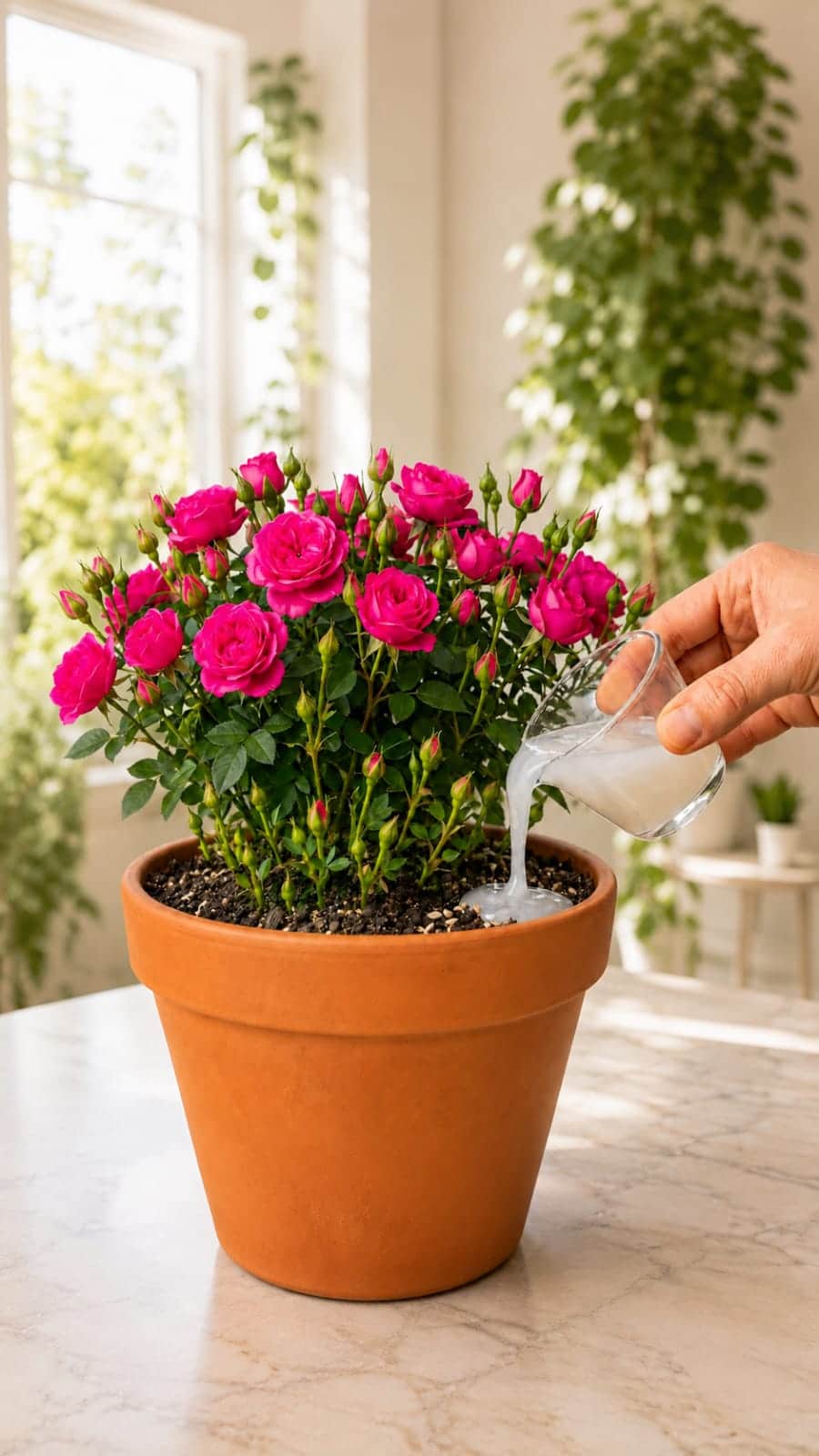
If you want to use rice water, use it once every four to six weeks at most. Make it fresh, strain it well, dilute it, and apply it only to the soil when watering is needed.
This balanced routine is much safer and more effective than relying on rice water alone.
Common Mistakes to Avoid
- Using thick rice water – it should be lightly cloudy and diluted.
- Using rice water too often – frequent use can cause sour soil and gnats.
- Using cooked, salted, or seasoned rice water – only plain rice rinse water is suitable.
- Applying rice water to wet soil – mini rose roots need oxygen.
- Using rice water as fertilizer – it is not complete plant food.
- Keeping mini roses in low light – roses need strong light to bloom.
- Ignoring pests – mini roses should be inspected often.
Frequently Asked Questions
Is rice water good for mini roses?
Fresh diluted rice water can be used occasionally as a mild natural supplement, but it is not necessary. Light, fertilizer, watering, pruning, and pest control matter more.
Can rice water make mini roses bloom?
Rice water cannot force blooms. Mini roses bloom best with strong light, balanced fertilizer, healthy roots, and regular deadheading.
How do I make rice water for roses?
Rinse two tablespoons of uncooked rice in one cup of water, strain out the rice, then dilute the cloudy water with two more cups of plain water. Use it fresh.
How often should I use rice water?
Use it once every four to six weeks during active growth. Do not use it every watering.
Can I use cooked rice water?
Only if it is completely plain, unsalted, cooled, strained, and heavily diluted. Light uncooked rice rinse water is safer.
Can rice water attract gnats?
Yes, if used too often or if the soil stays wet. Stop using it if fungus gnats appear.
Should I pour rice water on rose leaves?
No. Apply it to the soil only. Wet rose foliage indoors can encourage fungal problems.
What is the best way to get more mini rose buds?
Provide strong light, water correctly, feed with a balanced flowering fertilizer, deadhead spent blooms, prune weak growth, and inspect for pests.
🌿 Rice water is a gentle occasional supplement, not a miracle cure. For abundant mini rose blooms, focus on strong light, balanced fertilizer, proper watering, good drainage, regular deadheading, and pest control. Use rice water only as a rare support – and let consistent rose care do the real work.