Orchids are among the most admired indoor plants in the world. Their elegant arching flower spikes, glossy leaves, sculptural roots, and long-lasting blooms make them feel delicate, luxurious, and almost magical. A blooming orchid can transform a windowsill, kitchen counter, or plant shelf into something beautiful and calming.
But orchids can also be confusing. One season they bloom beautifully, and then they sit for months with only leaves. Sometimes the flowers fade too quickly. Sometimes the leaves look dull. Sometimes the roots turn brown or mushy. When this happens, many plant lovers begin searching for a simple kitchen ingredient that can help the orchid look healthier and bloom again.
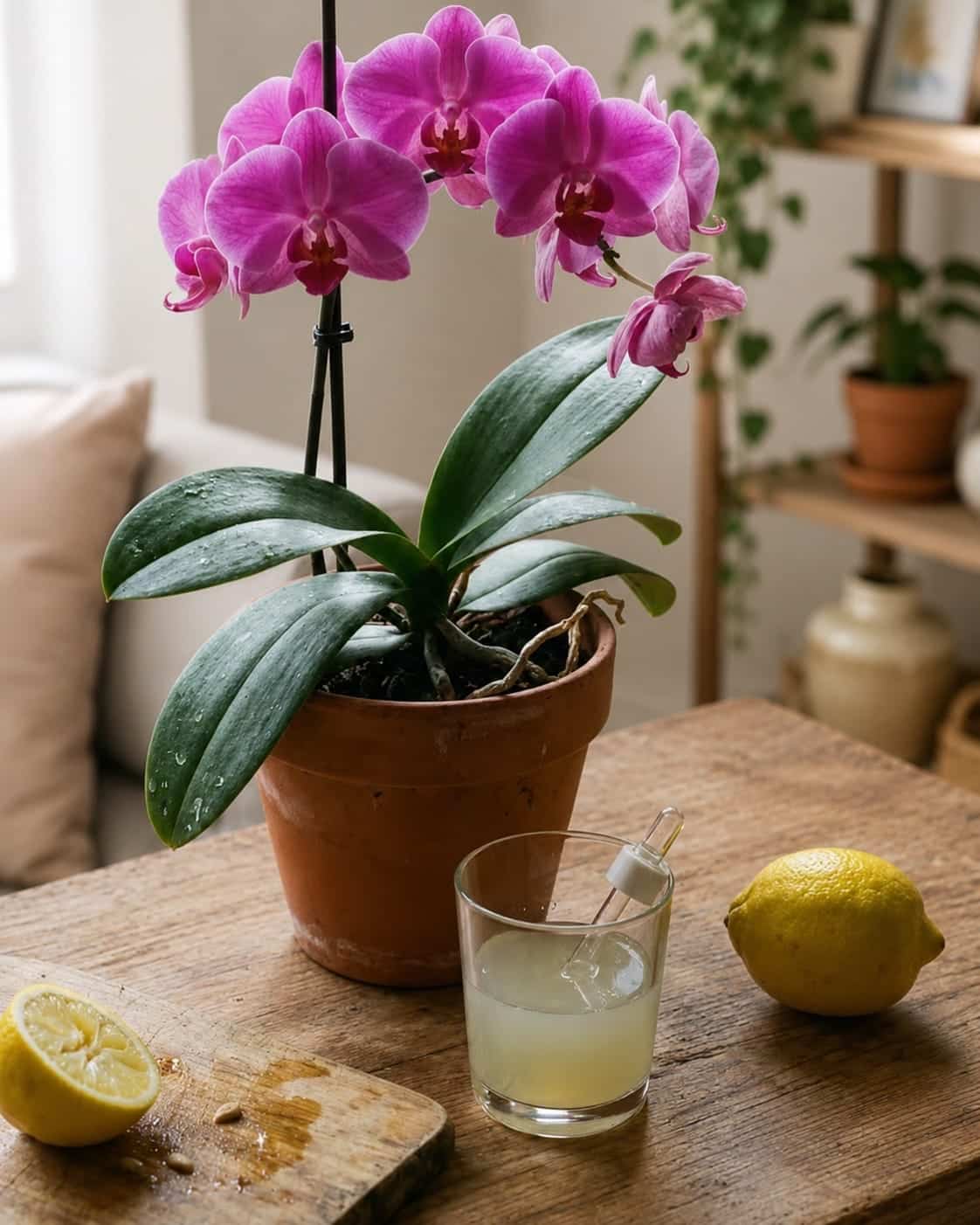
The image shows a blooming orchid beside fresh lemons and a pale lemon-colored liquid in a glass dropper. This suggests a popular orchid-care idea: using lemon water as a gentle natural treatment. Lemon is often used in homemade plant routines because it is acidic, fresh-smelling, and commonly believed to help clean surfaces, reduce mineral residue, and support a slightly acidic root environment.
However, lemon must be used with great care. Orchid roots are sensitive. Strong lemon juice can burn roots, damage leaves, and stress the plant. Lemon water is not fertilizer. It will not force an orchid to bloom overnight. It will not fix root rot, poor light, compacted potting medium, or incorrect watering. If used too often or too strong, it can do more harm than good.
The safest way to use lemon for orchids is to make a very weak lemon-water solution and use it only occasionally. It should be diluted heavily, applied carefully, and never poured directly into the crown of the plant. It should not replace proper orchid care: bright indirect light, airy bark mix, correct watering, good airflow, and gentle feeding.
This guide explains how lemon water may help orchids, how to prepare it safely, when to use it, when to avoid it, and what truly encourages healthier flowers and future blooming.
Understanding Orchid Blooming
Most indoor orchids, especially Phalaenopsis orchids, bloom when the plant is mature, healthy, and receiving the right environmental signals. A healthy orchid needs strong roots, firm leaves, enough light, and a stable care routine before it can support flowers.
Many people think an orchid stops blooming because it needs a special trick. In reality, orchids usually stop blooming because they are resting, rebuilding energy, or missing one of their basic needs. After flowering, an orchid often focuses on leaf and root growth before it produces another spike.
Light is one of the biggest factors. Orchids need bright indirect light to produce enough energy for flowers. A plant in a dark corner may stay alive but may not rebloom. A plant receiving too much harsh sun may scorch and become stressed.
Roots are just as important. Orchid roots need air. They should not be buried in dense soil. Most common orchids grow best in chunky orchid bark or another airy medium. If the roots are suffocating or rotting, the plant cannot bloom well.
Lemon water can only support a healthy routine. It cannot replace the care conditions that actually make orchids bloom.
What Lemon Water Can Do for Orchids
Lemon juice is acidic. When diluted heavily with water, it may help slightly lower water pH for a short time. Some orchid growers use weak acidic rinses because orchids often prefer a mildly acidic root environment.
Lemon water may also help reduce light mineral residue on leaves if used carefully as a wipe, not as a soaking treatment. Hard tap water can leave white spots on orchid leaves. A very weak lemon solution may help loosen this residue, making leaves look cleaner and shinier.
Some people also use lemon water as a gentle freshness treatment around the potting medium. But this must be done sparingly. Orchid roots do not like strong acidity, and lemon juice can quickly become too harsh if the mixture is not diluted enough.
Lemon water is not plant food. It does not provide balanced nutrition. It does not contain the nitrogen, phosphorus, potassium, calcium, magnesium, and trace elements that orchids need over time. For feeding, a proper orchid fertilizer diluted correctly is much more reliable.
Can Lemon Water Make an Orchid Bloom?
Lemon water cannot directly force an orchid to bloom. It is not a bloom stimulant in the way many social media posts make it sound. The real bloom triggers for many orchids include healthy roots, enough bright indirect light, proper feeding, and sometimes a slight nighttime temperature drop.
For Phalaenopsis orchids, a cooler nighttime period can help encourage a new flower spike. The plant often needs several weeks of slightly cooler nights while still receiving bright indirect light during the day. Lemon water will not replace that natural signal.
If your orchid has not bloomed for a long time, first check the light. The leaves should usually be medium green. Very dark green leaves may mean the plant is not receiving enough light. Yellowish or scorched leaves may mean too much direct sun.
Next, check the roots. Healthy orchid roots are usually firm. They may be green when wet and silvery when dry. Rotten roots are mushy, brown, hollow, or foul-smelling. A plant with rotten roots needs repotting and root care, not lemon water.
Lemon water may support a healthy orchid in a minor way, but blooming comes from complete care.
🌸 Bloom secret: Bright indirect light, healthy roots, and a slight nighttime temperature drop (for Phalaenopsis) matter far more than lemon water.
Why Strong Lemon Juice Is Dangerous
Strong lemon juice can damage orchids. Orchid roots are not like garden roots growing in a large bed of soil. They are exposed, fleshy, and sensitive. A strong acidic liquid can burn or irritate them.
If lemon juice is poured directly into the pot without enough dilution, it may damage root tips and disturb the potting medium. If it sits in the crown of the orchid, where the leaves meet at the center, it may encourage rot. If it is applied to leaves in strong concentration, it may cause spotting, dull patches, or tissue damage.
This is why lemon must be diluted heavily. More lemon is not better. A few drops in a large amount of water is enough for a gentle treatment.
Never squeeze lemon directly onto orchid roots or leaves. Never rub raw lemon on orchid leaves. Never pour undiluted lemon juice into the pot.
The Safest Lemon Water Ratio for Orchids
The safest beginner ratio is only a few drops of lemon juice in one cup of water. For example, use three to five drops of fresh lemon juice in one cup of room-temperature water. Stir well.
For watering the potting medium, make it even weaker: five to ten drops of lemon juice in one quart of water. The water should not taste or smell strongly like lemon. It should be extremely mild.
Use fresh lemon juice only. Do not use bottled lemon products that contain preservatives, sweeteners, flavorings, or additives. Do not use lemonade, lemon soda, lemon syrup, or sweetened lemon drinks.
Use room-temperature water. Cold water can shock roots. Hot water can damage them.
A weak lemon solution should be used rarely. It is a gentle occasional treatment, not a regular watering method.
How to Use Lemon Water on Orchid Leaves
If your goal is to clean mineral spots from orchid leaves, lemon water can be used as a very mild leaf wipe. This is different from feeding the plant.
Mix three drops of fresh lemon juice into one cup of water. Dip a soft cloth into the solution and wring it out well. The cloth should be damp, not dripping.
Gently wipe the top side of each leaf to remove dust and light mineral residue. Support the leaf with one hand while wiping with the other. Do not scrub hard.
After wiping with lemon water, wipe again with a cloth dampened with plain water. This helps remove any leftover acidity. Do not leave lemon residue sitting on the leaves.
Do not wipe the underside of the leaves heavily, and avoid getting liquid into the crown of the orchid. Crown rot is a serious risk when water collects in the center of the plant.
How to Use Lemon Water in the Orchid Pot
If you want to use lemon water around the roots, keep the solution extremely weak. Add five to ten drops of fresh lemon juice to one quart of room-temperature water. Stir well.
Use this only when the orchid is due for watering. If the bark is still wet, wait. Orchids need airflow around the roots and should not be kept constantly wet.
Pour the weak solution through the bark mix and allow it to drain completely. Do not let the orchid sit in lemon water. Empty any saucer or decorative pot afterward.
Do not pour lemon water into the crown. Aim for the potting medium only. Keep the leaves and flower spike as dry as possible.
After using lemon water once, return to plain water for normal care. Do not repeat often.
How Often Should You Use Lemon Water?
Lemon water should be used rarely. For most orchids, once every two to three months is more than enough if you choose to use it. Many orchids do not need lemon water at all.
Do not use lemon water every week. Do not use it every time you water. Do not use it as fertilizer. Frequent acidity can disturb the root environment and stress the plant.
If you are using lemon water only to clean leaves, use it only when mineral spots or dust are noticeable. Plain water is usually enough for regular leaf cleaning.
If your orchid reacts poorly after lemon water, stop using it immediately. Return to plain water and stable care.
When Lemon Water May Be Useful
Lemon water may be useful when your orchid leaves have light mineral residue from hard water. A very weak lemon wipe can help clean the leaves and make them look fresher.
It may also be useful as a rare mild acidic rinse if your water is very alkaline, but this should be done carefully. If you are unsure about your water quality, it is safer to use rainwater, filtered water, or distilled water occasionally instead of relying on lemon juice.
Lemon water may support a healthy orchid that is already growing well, but it should not be used as a rescue treatment.
The best candidate for lemon water is a stable orchid with firm leaves, healthy roots, good drainage, and no signs of rot.
When You Should Avoid Lemon Water
- Do not use on an orchid with root rot – rotten roots need trimming and fresh orchid bark, not acidic treatments.
- Do not use if the orchid is dehydrated and severely shriveled – first rehydrate carefully with plain water and correct the watering routine.
- Do not use if the plant is in direct hot sun – acidic residue on leaves combined with strong sun may increase the risk of leaf damage.
- Do not use on newly repotted orchids with damaged roots – give the roots time to recover.
- Do not use if you have already fertilized recently – too many treatments at once can stress the plant and make it harder to identify problems.
Continue to Page 2
Continue to page 2 for more details about this article and the key points many readers miss on the first page.